
Start by pulling every garment and sorting it into sell, keep, donate, or discard piles. Next, inspect each sale piece under good light, checking collars, cuffs, seams, and zippers for stains or damage. Wash what you can save, and empty every pocket. Then group items by type, sort by size, and set seasonal pieces aside. You’ll price faster that way. Below, you’ll find how to prep hanging, folded, and binned clothes, plus reset your closet.
Key Takeaways
- Sort every garment into four piles: sell, keep, donate, or discard, checking all pockets for receipts, cash, or personal items.
- Inspect each item under good light from collar to hem for stains, holes, pilling, fading, stretched seams, and faulty fasteners.
- Wash stained or odorous pieces and steam wrinkles, then reinspect before pricing to ensure every item looks presentable.
- Group clothing by type, then arrange each category by size from smallest to largest, keeping seasonal pieces in their own section.
- Hang items on sturdy hangers with visible price tags, fold others uniformly with size labels, and size-sort bins under one bundle-pricing sign.
How Can You Organize Clothes From Your Closets for a Yard Sale
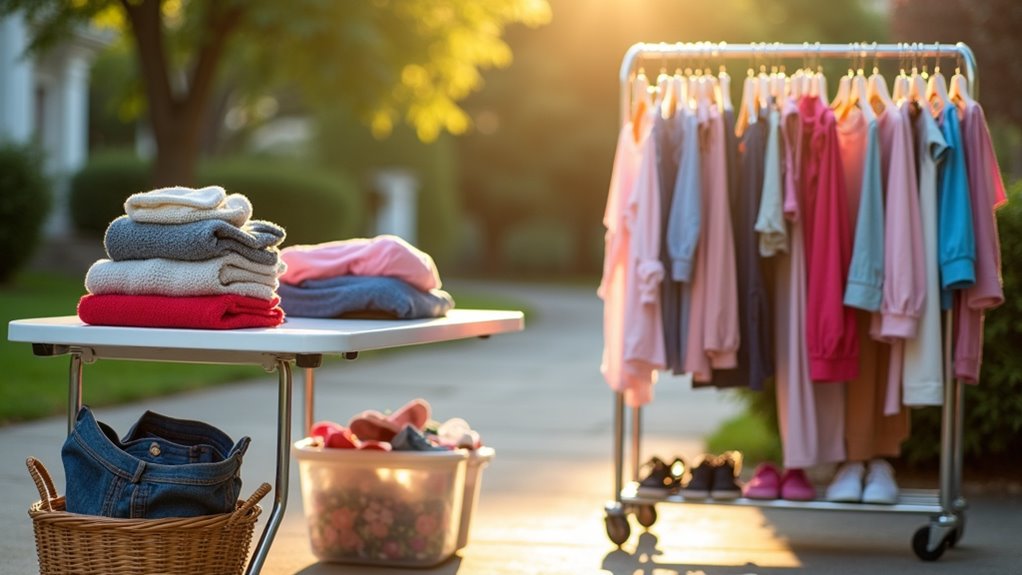
Organize clothes from your closets for a yard sale by sorting every garment into four piles well ahead of sale day: sell, keep, donate, or discard. Treat this closet decluttering clothes session as the foundation of your yard sale clothing organization. Inspect each item carefully for stains, damage, missing buttons, and wear. Pull anything unsellable, or put it in a clearly marked free box. Wash stained pieces, and make sure everything you’ll sell is clean and presentable. Check every pocket and bag for receipts, cash, or other personal items. Then store your selected clothes together in labeled boxes or tubs until setup. Organizing clothes for yard sale success this way means you’ll skip last-minute scrambling and can start pricing items immediately.
Which Clothes Should You Remove From the Closet Before Pricing Anything
Remove any garment with stains, tears, broken zippers, missing buttons, pilling, stretched seams, or heavy fading from your sale inventory before you price anything, since buyers pass over flawed pieces and they drag down the look of your whole display. Inspect each item under good light as you prepare clothes for yard sale shoppers, checking cuffs, collars, underarms, and hems where wear shows first. Wash anything with a removable stain, then reinspect it. If the mark won’t fade, pull it. Sort rejects into three piles: donate, discard, or a clearly marked free box. Next, empty every pocket and bag, removing receipts, cash, and personal items. Finally, store approved pieces in labeled boxes or tubs so your sale inventory stays clean and organized until setup.
How Should You Check Sale Clothing for Wear Stains Damage and Missing Pieces
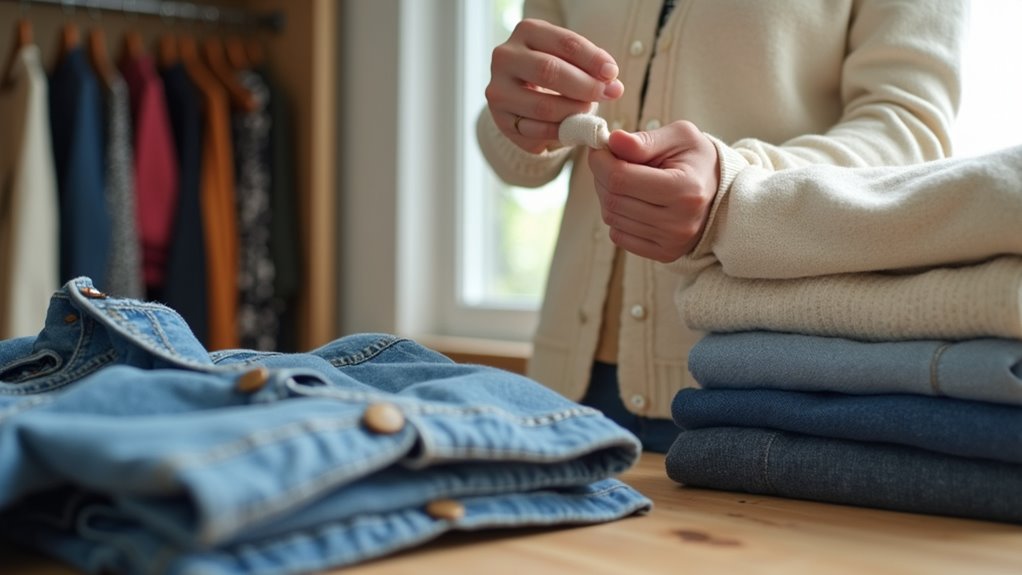
Check sale clothing by inspecting each garment in the same order every time, so you’re far less likely to miss a flaw a buyer will spot in seconds. Work in good light and start at the collar, then move down the front, sleeves, cuffs, and hem before flipping the garment over. Look for stains, pilling, fading, holes, and stretched seams. Test every zipper, snap, and button, and check that belts, drawstrings, or matching pieces are still attached. Empty the pockets as you go, since receipts, cash, and personal items often hide there. Wash anything with a removable stain before pricing it. If you can’t fix a flaw, pull the piece from your regular inventory and either discard it or place it in a clearly marked free box.
How Do Hanging Folded and Bin Staged Clothes Need Different Preparation
Hanging clothes need sturdy hangers and visible price tags, folded clothes need uniform folds and size labels, and bin-staged clothes need size sorting and one clear bundle-pricing sign. Start by confirming each piece is clean and its pockets are empty before sorting it.
| Display Method | Best Garments | Preparation Steps |
|---|---|---|
| Hanging | Dresses, coats, shirts, higher-value pieces | Use sturdy hangers, button tops, attach visible price tags |
| Folded | Jeans, sweaters, T-shirts | Fold uniformly, stack by size, label sizes on top |
| Bin-staged | Baby clothes, socks, low-cost items | Sort by size, post one clear sign with bundle pricing |
Keep bin-staged tubs packed and labeled until setup so inventory stays organized. Place hanging racks where shoppers spot standout pieces first, and set folded tables at a comfortable browsing height with space around them so shoppers don’t crowd together.
How Should You Group Clothing by Type Size or Season for Buyers
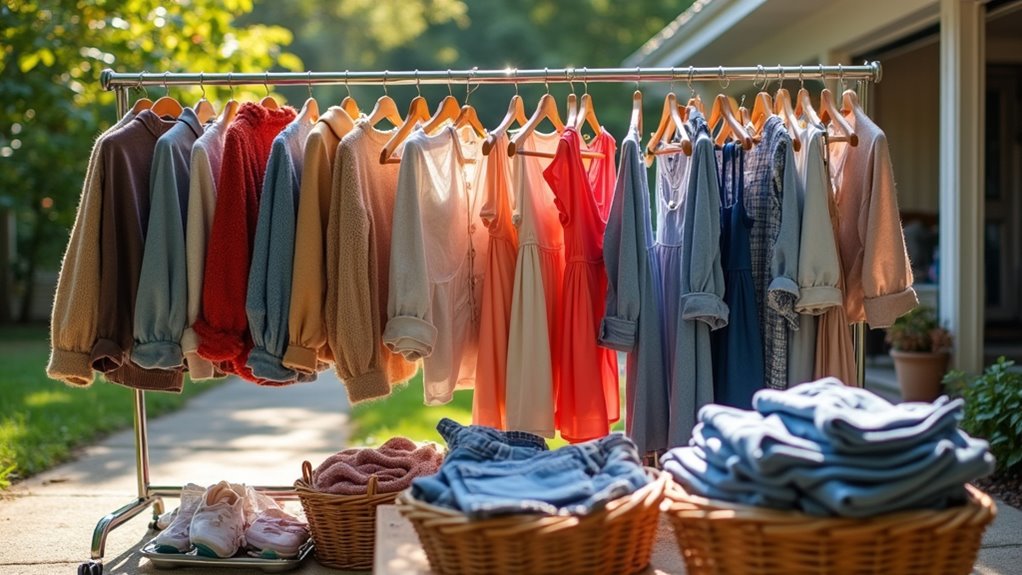
Group clothing first by type, then by size within each type, and pull seasonal items into their own section so buyers can find what they need in seconds. This order mirrors how shoppers think, and it keeps your tables from turning into heaps. Build your layout in three passes:
Sort clothing by type, then size, and give seasonal items their own section so buyers find what they need in seconds.
- Sort by type. Separate tops, bottoms, dresses, coats, and accessories, and split by gender where it helps.
- Order by size. Arrange each category smallest to largest, running children’s clothes from infant through adult sizes.
- Isolate seasonal pieces. Keep heavy sweaters, swimwear, and holiday items together so buyers shopping for current needs go straight there.
Label every section with a visible sign, and mark sizes on folded items, since shoppers can’t see tags in a stack.
Which Clothes Need Washing Steaming or Minor Repair Before the Sale
Clothes with stains, odors, or visible dirt need washing, wrinkled pieces need steaming or hanging, and items with missing buttons, loose hems, or small seam tears need minor repair. Inspect each garment piece by piece and sort it into one of three piles: ready to sell, needs washing or a quick fix, or unsellable.
Buyers judge quality at a glance, so every sale item should look clean and presentable. Prioritize steaming or hanging dresses, button-downs, and coats you plan to display on racks.
Sew on a button or restitch a seam if it takes only minutes. If damage or heavy wear remains, move the item to a clearly marked free box or discard it. Finally, empty every pocket and bag for receipts, cash, or personal items.
How Can You Reset the Closet as Sale Clothes Leave the Space
Reset the closet in stages as sale clothes leave: close the gaps, clear out rejects, and store sale bins elsewhere.
Pack each sale item straight into a labeled box or tub as it comes off a hanger or shelf, so your sale inventory stays in one place and nothing drifts back into the closet. Check its pockets for receipts, cash, or personal items first.
- Close the gaps. Slide remaining hangers together and restack folded pieces so you can see what you’re keeping.
- Clear out rejects. Bag unsellable, stained, or damaged items for donation, discard, or a clearly marked free box.
- Store sale bins elsewhere. Move full tubs to a garage or spare room until setup day.
Remove empty hangers you’ll need for display racks and bundle them together with your other sale supplies.
Give Your Closet a Better Reset
A successful clothing sale starts with a clear sort, but the real win is making sure the pieces you keep have a better place to go afterward. Creative Closet Design creates custom closet systems for Central Florida homeowners with hanging space, shelving, drawers, and storage sized around what they actually wear. Serving Lakeland, Auburndale, Winter Haven, Plant City, Polk County, and Hillsborough County, our designers will look at your wardrobe, available space, and storage needs before drawing anything. Call Our Team to schedule your free design consultation.
Frequently Asked Questions
How Should You Price Clothes for a Yard Sale?
Price clothing based on its condition, brand, age, and how quickly you want it to sell. Keep everyday pieces affordable, and price higher-quality or recognizable brands separately when they may attract more interest. Use clear individual tags or simple category signs so shoppers can see prices quickly. Bundle pricing can also help move lower-value clothing faster, especially when you have a large amount to sell.
Should You Offer Bundle or “Fill a Bag” Pricing for Clothes?
Yes, you should definitely consider bundle or “fill a bag” pricing, especially for small, lower-cost garments like baby clothes, kids’ tops, and socks. It helps you move more items quickly. Keep higher-value or distinctive pieces individually priced. Post a clearly visible sign stating the bundle price, such as $5 per bag, and use the same bag size for everyone. That way, you’ll keep your pricing consistent and your checkout fast.
How Can You Make Yard Sale Clothing Easier to Browse?
Group clothing by type first, then arrange each section by size so shoppers can find what they need quickly. Hang dresses, coats, and higher-value pieces on racks, and fold jeans, sweaters, and T-shirts neatly on tables. Use clear signs for each section, keep aisles open, and avoid overfilling bins so items stay visible and easy to sort through.
What Should You Do With Clothes That Don’t Sell by Day’s End?
Sort unsold clothes right away into donate, keep for another sale, or discard piles. Before closing, try “fill a bag” pricing or move leftovers into a clearly marked free box to clear more inventory. Pack clean, sellable pieces back into labeled tubs by type and size if you’ll hold another sale. Check pockets once more, then drop remaining items at a donation center so they don’t return to your closets.
What Should You Do With Higher-Value Clothing Before a Yard Sale?
Set higher-value clothing aside before you start arranging the rest of your sale inventory. Check each piece for stains, wear, missing buttons, or other damage, then clean and present it neatly. Keep these items separate from bargain bins and bulk-priced clothing so they do not get overlooked. You can also give them their own rack or clearly marked section during the sale.