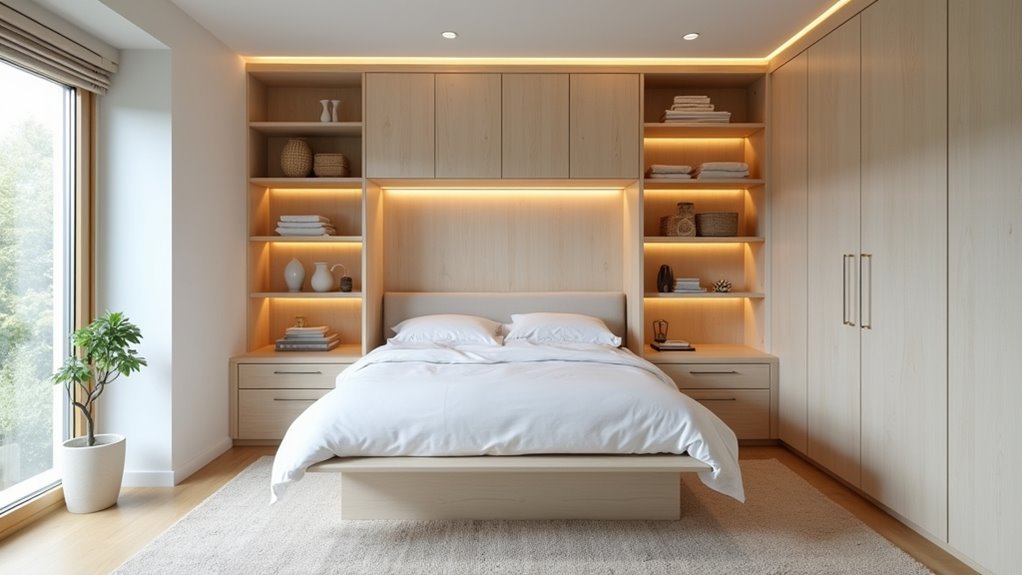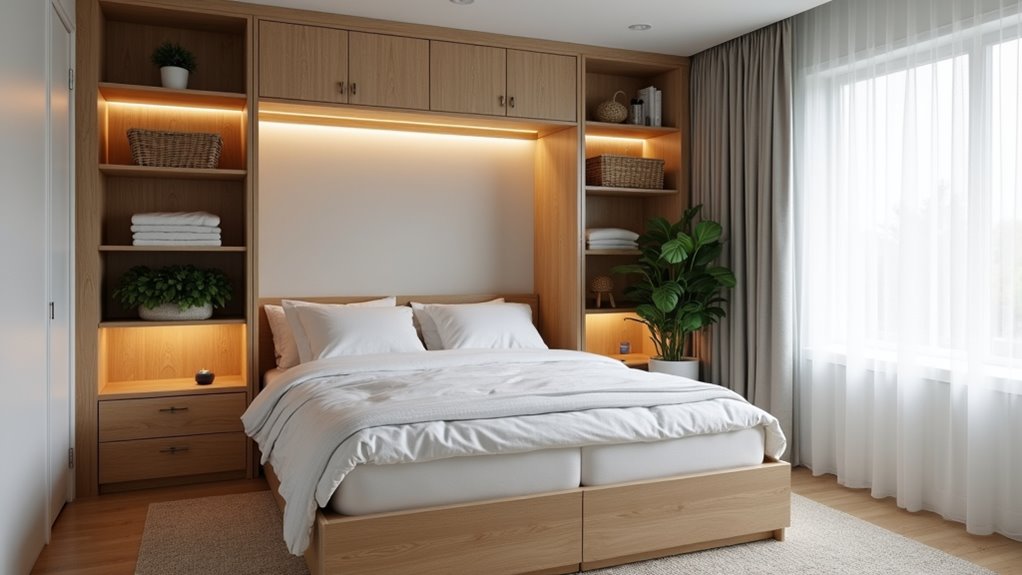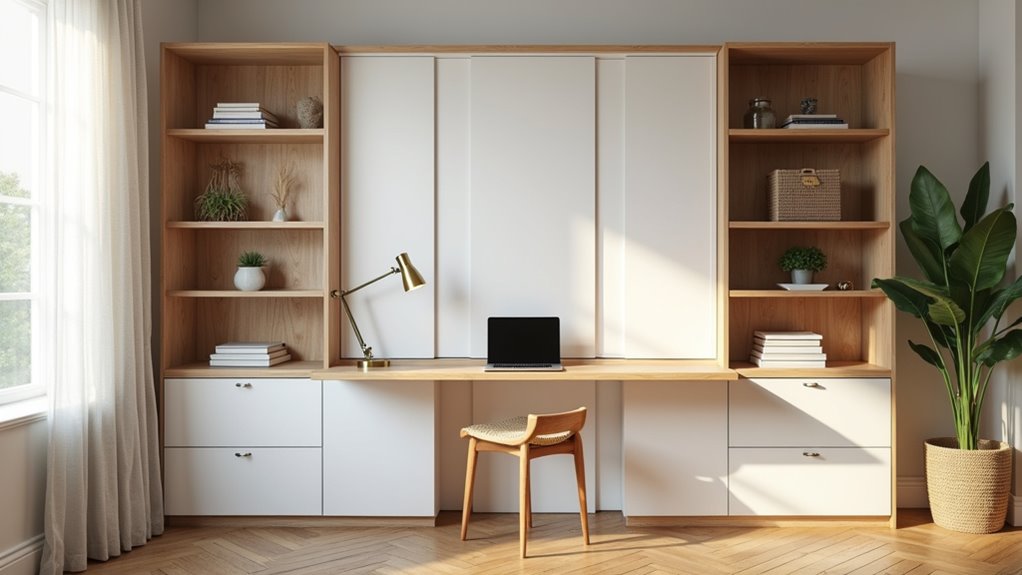
You build cabinets and shelves around a Murphy bed by planning the wall as one system, and you let the bed’s swing set every other dimension. Measure wall width, ceiling height, and floor space. A queen cabinet’s 65.5 in wide, 87.7 in high, and opens about 7 ft 3 in into the room. Keep storage beside the bed, give each cabinet its own gable, and anchor everything to studs. Here’s how each zone comes together.
Key Takeaways
- Measure wall width, ceiling height, and floor space, then confirm the bed opens fully, about 7 ft 3 in for a queen.
- Place storage beside or above the bed cabinet, never in front, keeping doors, shelves, and hardware clear of the moving frame.
- Give each cabinet its own vertical gable, anchor units to wall studs, and test bed operation after installation.
- Use adjustable shelving in side towers, drilling shelf-pin rows before assembly and confirming clearance at every shelf setting.
- Set hinges to swing away from the mattress, add lighting for deep shelves, and match finishes to existing trim.
How Can You Build Cabinets and Shelves Around a Murphy Bed

You build cabinets and shelves around a Murphy bed by planning the whole wall as one system, with the bed’s movement setting every other dimension.
Measure wall width, ceiling height, and floor space, then compare them with your model’s actual specs. One queen cabinet measures 65.5 inches wide, 87.7 inches high, and 16 inches deep, and opens about 7 feet 3 inches into the room. Position Murphy bed cabinets only where the bed can still open fully, and give each one its own vertical gable if your supplier prohibits shared gables. Keep Murphy bed shelving and doors clear of the frame and hardware. Anchor the bed cabinet to studs, then test operation to confirm your built-in storage around the Murphy bed never interferes.
Which Wall Zones Can Hold Storage Without Crowding the Bed Opening
Storage can safely go in the wall zones beside the bed cabinet, not in front of it, because the open bed claims the floor directly ahead: about 7 feet 3 inches for one queen plan and about 7 feet for a full-size plan. Add side wall bed cabinets only if your wall width still lets the bed open fully, and give each cabinet its own vertical gable when your system requires it. One supplier prohibits shared gables. Keep doors, shelf edges, and hardware on shelves around murphy bed openings from touching the moving frame. Measure ceiling height before adding upper storage, since one queen cabinet stands 87.7 inches high. Set shelf positions and cabinet openings before assembly, and follow manufacturer-approved layouts for integrated storage systems.
How Do Full Height Towers Bridge Cabinets Floating Shelves and Base Cabinets Change the Layout
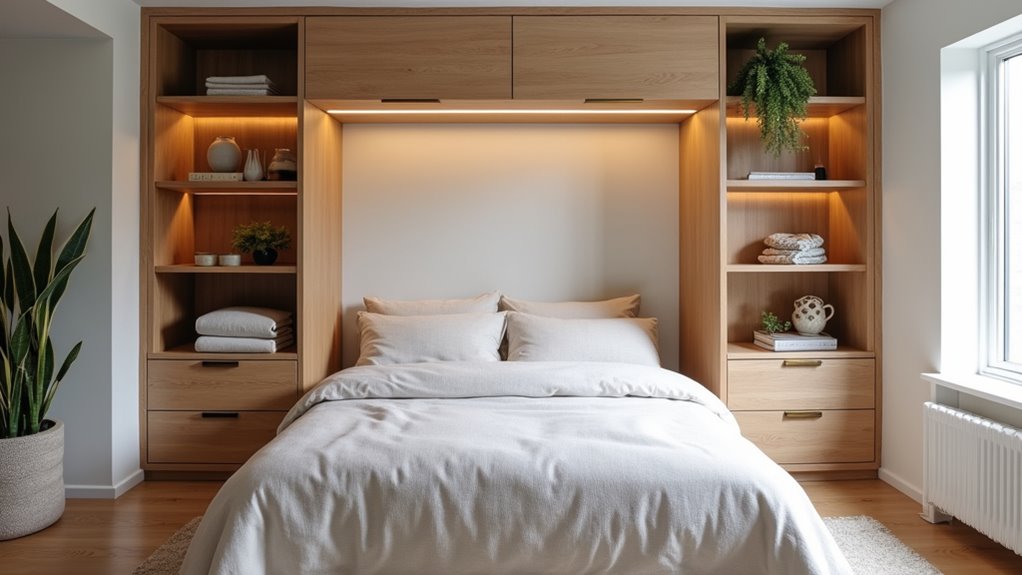
Full-height towers consume side width, bridge cabinets use the space above the bed, floating shelves add shallow storage, and base cabinets occupy side floor, so your choice decides how much width, height, and clearance the bed opening keeps.
| Storage Type | Layout Effect | Key Check |
|---|---|---|
| Full-height towers | Consume side width | Independent gables, full opening |
| Bridge cabinets | Use space above bed | Doors clear moving frame |
| Floating shelves | Add shallow storage | Stud anchoring, hardware clearance |
| Base cabinets | Occupy side floor | Walkway past open bed |
Measure your wall width and the system’s open projection first. A queen can extend about 7 feet 3 inches into the room. Towers need independent gables if your supplier prohibits shared ones. Keep bridge doors and shelves clear of the moving bed frame, and confirm every layout against manufacturer-approved dimensions before you assemble.
Where Should Adjustable Shelving Be Used to Handle Changing Storage Needs
Adjustable shelving works best in side towers, because their independent vertical gables can take shelf-pin holes along their full height. Adjustable shelves there let you shift from folded linens to books, bins, or electronics without rebuilding. Drill pin rows before assembly so every shelf position stays clear of the moving bed frame, pistons, and brackets. Check the bed system’s approved layout, since some manufacturers limit what you can attach near the mechanism. Keep bridge and base-cabinet shelves shallower or fixed where doors must swing freely. After installation, open and close the bed with each shelf at its highest and lowest settings to confirm nothing interferes. Record the safe positions.
How Can Cabinet Doors and Shelves Stay Usable When the Bed Is Open

Keep cabinet doors and shelves usable by placing side cabinets outside the open bed’s footprint and choosing hinges and swing directions that open away from the mattress. The frame and mattress extend about 7 feet into the room, and any door or shelf facing that zone can end up blocked or hard to reach.
Mark the open bed’s footprint on the floor with tape, using your system’s exact projection rather than generic figures. A queen plan can reach about 7 feet 3 inches. Place side cabinets outside that footprint so their doors swing freely, and keep shelves clear of the moving frame and hardware. Plan shelf heights and cabinet openings before assembly, since changing them later is harder. After installation, lower the bed and open every door and drawer to confirm nothing collides.
How Can Built In Lighting Improve Shelf and Cabinet Visibility
Built-in lighting improves shelf and cabinet visibility by putting light directly on their contents, especially in the deep corners and lower shelves that overhead fixtures leave in shadow.
Plan fixture locations before assembly, just as you’d plan shelf positions and cabinet openings. Mount lights under shelves or inside cabinet tops where they won’t contact the moving bed frame, lift mechanism, or hardware. Route cords and wiring away from the bed’s swing path so nothing snags when you open or close it.
Check the wall for electrical wiring, pipes, and ductwork prior to drilling for wires or switches. Get qualified help if you’re adding hardwired circuits. Open and close the bed after installation, then confirm lights, cords, and doors stay clear of moving parts.
How Should Cabinet Finishes Tie the Storage Wall Into the Rest of the Room
Cabinet finishes tie the storage wall into the room by matching elements already in the space, such as trim, doors, flooring, or existing furniture. Choose one dominant finish for the bed cabinet and side cabinets so the wall reads as a single built-in rather than separate pieces.
You can add contrast with open shelf interiors or back panels, but repeat that accent elsewhere, such as a lamp base or picture frame. Select door pulls that match existing hardware, and keep them low-profile so they don’t catch the moving bed frame.
Test paint or stain samples on leftover panel scraps under your room’s lighting before finishing every surface. Apply finishes before assembly when possible, and avoid thick coatings that can bind moving parts.
Built-Ins Planned Around the Bed
Cabinets and shelves around a Murphy bed work best when the bed’s opening path, wall dimensions, and storage zones are planned together from the start. Creative Closet Design creates custom entertainment centers for Central Florida homeowners with cabinetry, shelving, and finishes designed to fit the room as one complete wall. Serving Lakeland, Auburndale, Winter Haven, Plant City, Polk County, and Hillsborough County, our designers will look at your wall, storage needs, and layout before drawing anything. Call Our Team to schedule your free design consultation.
Frequently Asked Questions
Do Side Cabinets Need Their Own Vertical Gables Instead of Sharing One With the Bed?
Often, yes. It depends on your bed system’s design, so check its instructions first. One supplier prohibits shared gables outright, so you’d give each side cabinet its own independent vertical gable. Follow the manufacturer-approved layout and dimensions, and plan shelf positions and door openings so nothing obstructs the moving frame or hardware. Then attach each cabinet to the bed cabinet and wall with specified screws, cleats, or approved connections.
Should Baseboards Be Removed Before Installing a Murphy Bed Cabinet Against the Wall?
Yes, if they keep the cabinet from sitting flush. You’ll need to remove or trim baseboards wherever they create a gap between the cabinet back and the wall. Before final fastening, position the cabinet, then verify it’s plumb, level, and tight to the wall. Next, locate studs and secure the cabinet or supplied brackets into the wall framing. After anchoring, confirm it’s still flush and square so the bed operates smoothly.
Can Drywall Anchors Alone Safely Support a Murphy Bed and Surrounding Cabinets?
No, you shouldn’t rely on drywall anchors alone for primary anchoring. Locate the wall studs and fasten the bed cabinet or supplied bed-to-wall brackets directly into the framing. Attach side cabinets with the specified screws or cleats. Before drilling, check for wiring, pipes, and ductwork, and inspect walls for weakness. If the wall structure is uncertain, get qualified help. After installation, recheck the anchors and confirm the cabinet stays square.
How Do You Check for Wiring, Pipes, or Ductwork Before Drilling?
Use a multi-scanner stud finder with AC-wire and metal detection, then scan the full drilling area, not just one spot. Note outlets, switches, vents, and plumbing fixtures nearby. Wires and pipes usually run vertically or horizontally from them. Inspect the attic and basement for runs feeding that wall. Mark safe zones, shut off the circuit if you’re unsure, and drill shallow pilot holes. If doubts remain, don’t guess. Call a pro.
When Should You Hire a Professional to Install a Murphy Bed Storage Wall?
Hire a professional when you can’t confirm solid stud locations, your wall or floor shows damage or weakness, or you suspect wiring, pipes, or ductwork where brackets must go. You should also call qualified help if you’re unsure how to fit lift pistons, attach side cabinets with independent gables, or keep the cabinet square, level, and flush. Don’t gamble on anchoring. A falling bed cabinet can seriously injure someone nearby.