
Fold your sweaters instead of hanging them, since hangers stretch heavy knits and waste closet space. Tuck the sleeves in, fold each body into a compact rectangle, and stack or file them upright on shelves. Measure shelf depth and height before you buy bins so nothing overhangs. Keep everyday knits at eye level. Move off-season pieces to upper shelves or under-bed bins. Next, you’ll see how adjustable shelves and smart zones reclaim even more space.
Key Takeaways
- Fold sweaters instead of hanging them, tucking sleeves inward and folding the body into a compact rectangle to prevent stretching.
- File-fold or loosely roll sweaters upright in shallow bins so every piece stays visible and uses vertical space efficiently.
- Measure shelf depth, shelf height, and drawer height before buying bins or organizers to avoid overhangs and wasted gaps.
- Lower adjustable shelves to sit just above sweater stacks, and use dividers on wide shelves to keep stacks from toppling.
- Keep everyday sweaters at eye level, and move off-season pieces to upper shelves or sealed under-bed bins.
How Can You Store Sweaters in a Small Closet Without Wasting Space
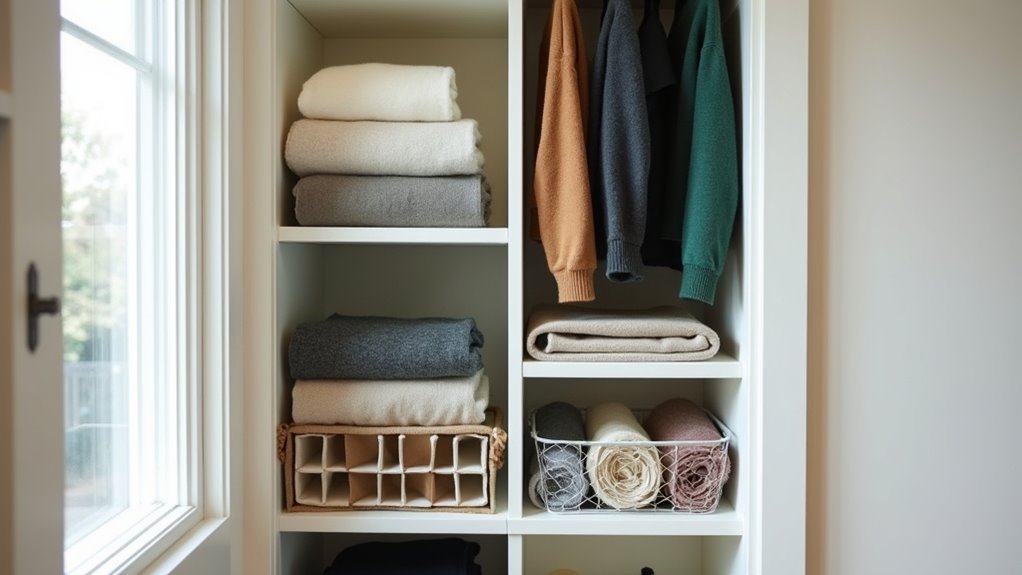
Fold sweaters instead of hanging them, and store them upright or in stacks on shelves so you use vertical space efficiently. Hangers stretch heavy knits and waste rod space. Fold sleeves inward, then fold the body into a compact rectangle; roll bulky knits loosely. For efficient small closet sweater storage, file-fold sweaters upright in shallow bins for visibility. Add shelf dividers to keep stacks from toppling, and choose clear containers. Group sweaters by type, color, or frequency of use, keeping everyday pieces at eye level. Good sweater storage for closet shelves uses vertical space: install adjustable shelves or stackable inserts. Move off-season sweaters into labeled bins on high shelves or under the bed. Smart closet storage for sweaters keeps essentials accessible.
What Measurements Matter Most When Fitting Sweater Storage Into a Small Closet
The measurements that matter most are shelf depth, shelf height, drawer height, and bin dimensions, because these few numbers prevent wasted gaps and returns when storing sweaters in a small closet. Measure the space you actually have before buying bins or shelf inserts.
- Shelf depth: Measure front to back so folded sweaters and bins don’t overhang or leave dead space behind them.
- Shelf height: Check the clearance between shelves to see whether stackable inserts fit and how high stacks can safely go.
- Drawer height: Measure drawer height before file-folding sweaters upright so they stand without crushing.
- Bin dimensions: Compare container width, depth, and height to your shelves and under-bed space.
Write every measurement down and bring them when you shop. Leave clearance so you can slide bins out easily and keep everyday sweaters accessible.
Which Sweaters Deserve the Most Accessible Space in a Small Closet
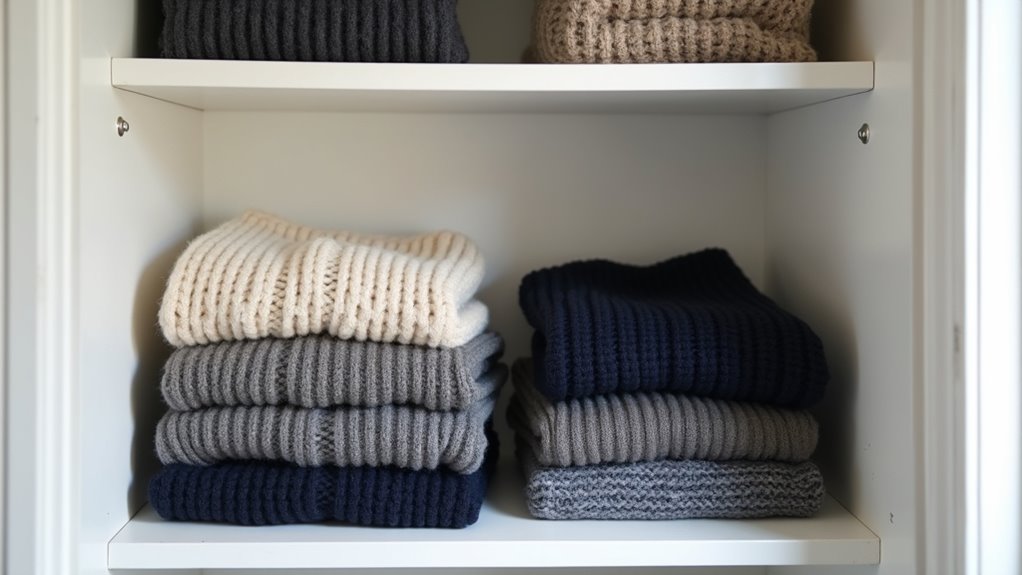
The sweaters you wear most often deserve the most accessible space in a small closet, so keep them at eye level and move less-used seasonal pieces to higher shelves or under-bed bins. Reassess which sweaters you actually reach for each week, then assign shelf space. Your everyday knits belong in front, where you can grab them without moving other stacks. Group them by type or color so you’ll find the right one quickly.
Separate in-season sweaters from off-season pieces to cut daily crowding. Place those off-season sweaters in labeled bins on high shelves, and don’t bury everyday pieces behind rarely used items. Refold and rotate your sweaters at each change of season so the ones you’ll wear next move forward into the prime, eye-level spots.
How Do Upper Shelves Cubbies Bins and Under Bed Storage Compare for Small Closet Sweaters
Cubbies suit the sweaters you wear most, since eye-level spots keep daily favorites visible and within reach. Upper shelves and under-bed bins suit off-season pieces you won’t miss for months, and clear bins help you find the right sweater without unpacking stacks. Match each spot to how often you’ll wear what’s in it.
| Storage Zone | What It Gives You |
|---|---|
| Upper shelves | Relief from crowding, with labeled bins keeping seasonal knits out of the way |
| Cubbies | Calm mornings, since your go-to sweaters sit visible and within reach |
| Clear bins | Confidence you’ll find the right sweater without unpacking stacks |
| Under-bed storage | Freedom to reclaim closet space for what you wear now |
Measure shelf depth before buying organizers so you don’t waste gaps. For wool and cashmere, choose tightly sealed containers over fabric ones, since moths can chew right through fabric.
How Can Adjustable Shelves Reduce Empty Vertical Gaps Between Sweater Stacks
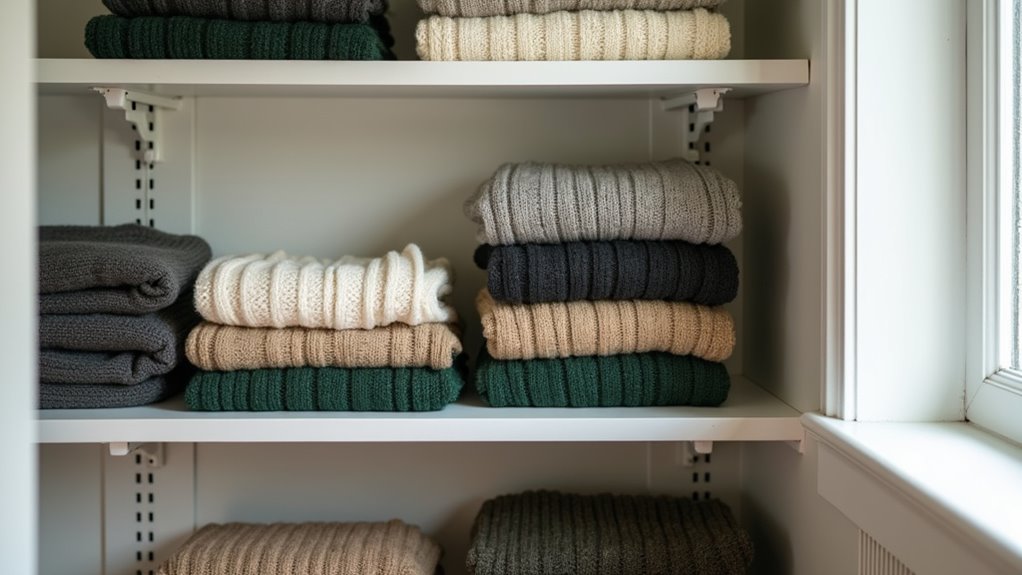
Adjustable shelves reduce empty vertical gaps by letting you lower each shelf to sit just above its sweater stack, reclaiming the foot or more of empty air a fixed shelf often leaves.
Lower each adjustable shelf to sit just above its sweater stack and reclaim the empty air a fixed shelf wastes.
- Measure first. Record your tallest stable stack height and shelf depth before buying inserts or shelving.
- Lower each shelf. Set it a few inches above the stack so you can still slide sweaters out easily.
- Add a shelf. Use the recovered height for an extra tier or a stackable insert.
- Divide wide shelves. Install shelf dividers to keep shorter, narrower stacks from toppling.
Keep everyday sweaters at eye level and reset shelf heights after seasonal changes, when bulky knits replace lighter ones and stacks grow or shrink.
When Should Off Season Sweaters Move to Overflow Storage
Move off-season sweaters to overflow storage after daytime temperatures stay consistently warm and you’ve gone two or three weeks without reaching for a heavy knit. Clean every sweater before packing, since moth larvae feed on wool and other animal fibers, and make sure each piece is fully dry. Fold them loosely rather than compressing wool or cashmere in vacuum bags. Place sweaters in tightly sealed containers to help protect against moths, then label each bin by season and contents. Slide bins onto high shelves or under the bed, keeping them cool, dry, and away from humid basements. Jot a quick inventory so you don’t forget stored pieces or buy duplicates. Your freed shelf space goes to the sweaters you’re wearing now.
What Should You Remove or Reassign if Sweaters Still Crowd the Closet
Remove or reassign rarely worn sweaters, unnecessarily hung knits, heavy stacks on the closet door, and duplicates or forgotten pieces. Give prime shelf space only to sweaters you actually wear, then reassign everything else methodically:
Prime shelf space belongs only to sweaters you actually wear. Reassign everything else methodically.
- Rarely worn sweaters: Move them to labeled bins on high shelves or under the bed so they don’t block everyday pieces.
- Hung garments that don’t need hanging: Fold heavy knits and free rod space for clothes that truly benefit from hangers.
- Heavy stacks on the closet door: Relocate them, and use the door only for lightweight accessories.
- Duplicates and forgotten pieces: Check your storage inventory, then remove sweaters that repeat what you already own.
Finally, refold and regroup what remains by type, color, or frequency of use. Compact, organized stacks keep your closet accessible.
Make More Room for the Sweaters You Wear
Small closets work better when sweaters are folded, grouped, and stored in zones that match how often you reach for them. Creative Closet Design creates custom closet systems for Central Florida homeowners with adjustable shelving, cubbies, drawers, and storage designed around real wardrobes. Serving Lakeland, Auburndale, Winter Haven, Plant City, Polk County, and Hillsborough County, our designers will look at your sweater collection, available space, and daily storage needs before drawing anything. Call Our Team to schedule your free design consultation.
Frequently Asked Questions
Can Vacuum-Sealed Bags Damage Wool and Cashmere Sweaters During Storage?
Yes, they can. Some textile-care guidance warns that tight compression can harm wool and cashmere, so you shouldn’t vacuum-seal these fibers. Instead, clean each sweater, make sure it’s fully dry, then fold it loosely and store it in a tightly sealed container that you don’t overpack. That setup protects against moths without flattening fibers. You’ll save space by stacking labeled bins on high shelves or sliding them under your bed.
Should Sweaters Be Washed Before Storing Them for the Season?
Yes, you should wash sweaters before you store them. Clothing moth larvae can damage wool and other animal fibers, so clean each piece first. Then let everything dry completely, since stored moisture raises the risk of damage. Once they’re dry, fold them compactly and place wool pieces in tightly sealed containers. Label each bin by season and contents, and you’ll retrieve sweaters quickly without unpacking your whole closet every time.
How Can You Protect Stored Sweaters From Moth Damage?
Store your wool and other animal-fiber sweaters in tightly sealed containers, since moths can chew through fabric bins. Before packing, vacuum shelves and corners so you’re not sealing pests in with your knits. Stack labeled bins on high shelves or under the bed to save space. Don’t leave the closet shut for months; open it periodically, rotate clothes, and inspect sweaters for holes or webbing so you catch damage early.
Is It Ever Okay to Hang Sweaters Instead of Folding Them?
Yes, but you’ll want to be selective. Hangers can stretch heavy knits, so you should fold those and keep them on shelves, in drawers, or in storage boxes. Reserve your hanging space for garments that benefit from hanging, which frees rod capacity for other clothes. For folded sweaters, tuck the sleeves inward, fold the body into a compact rectangle, and roll bulky knits loosely when folding creates too much bulk.
Are Fabric Storage Bins Safe for Wool and Other Animal-Fiber Sweaters?
Not really. You’re better off skipping them for wool, cashmere, and other animal fibers, since moths can chew right through fabric. Instead, clean each sweater, make sure it’s fully dry, then store it in a tightly sealed container. Don’t vacuum-compress wool or cashmere; fold it loosely. Label bins by season and contents, then slide them onto high shelves or under the bed. Inspect stored pieces periodically for holes or webbing.