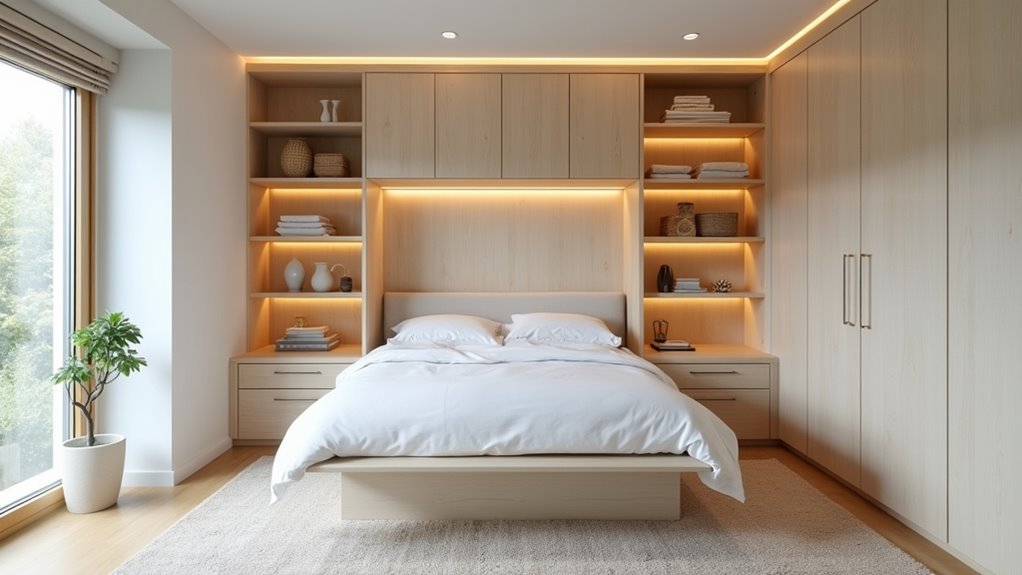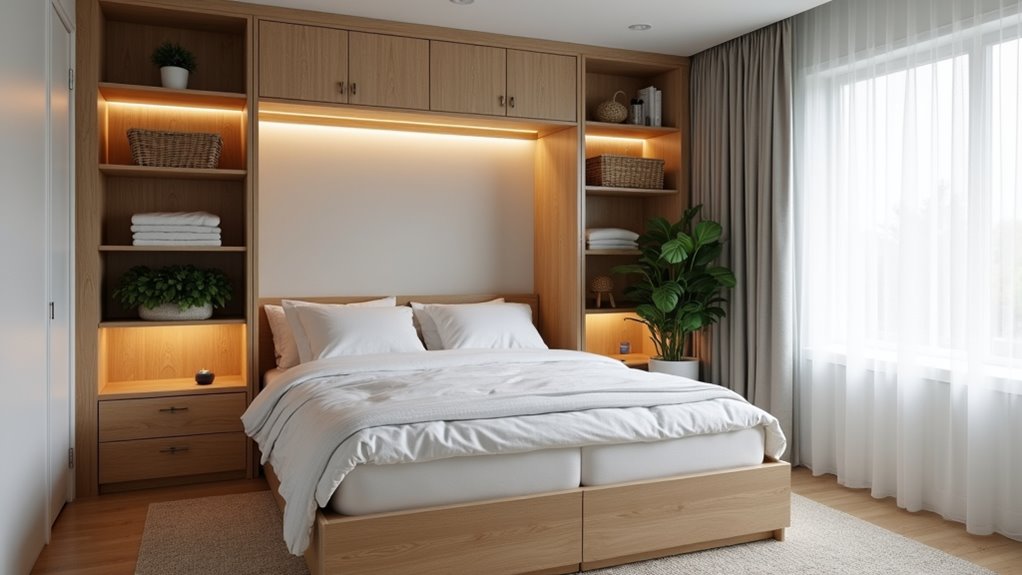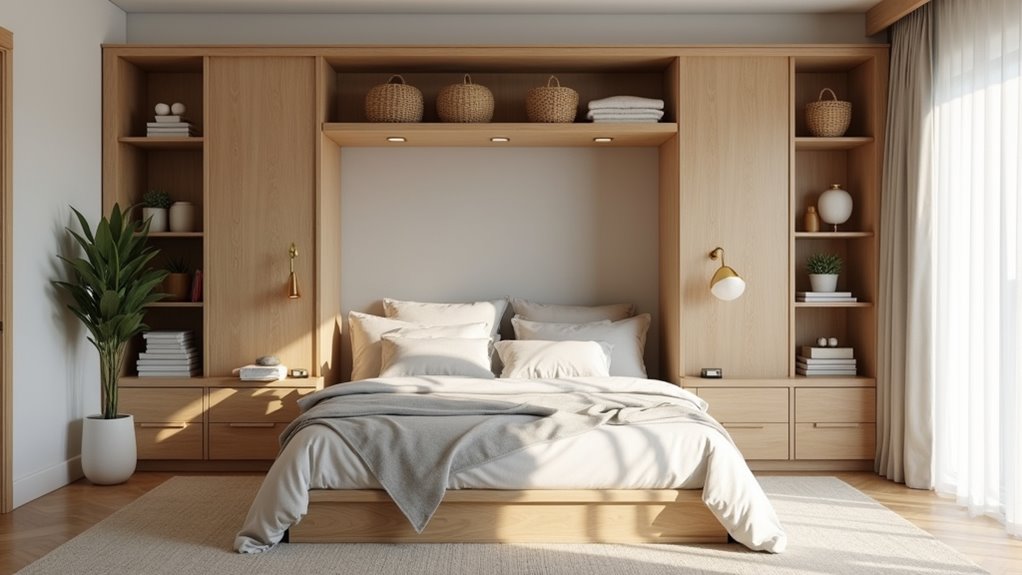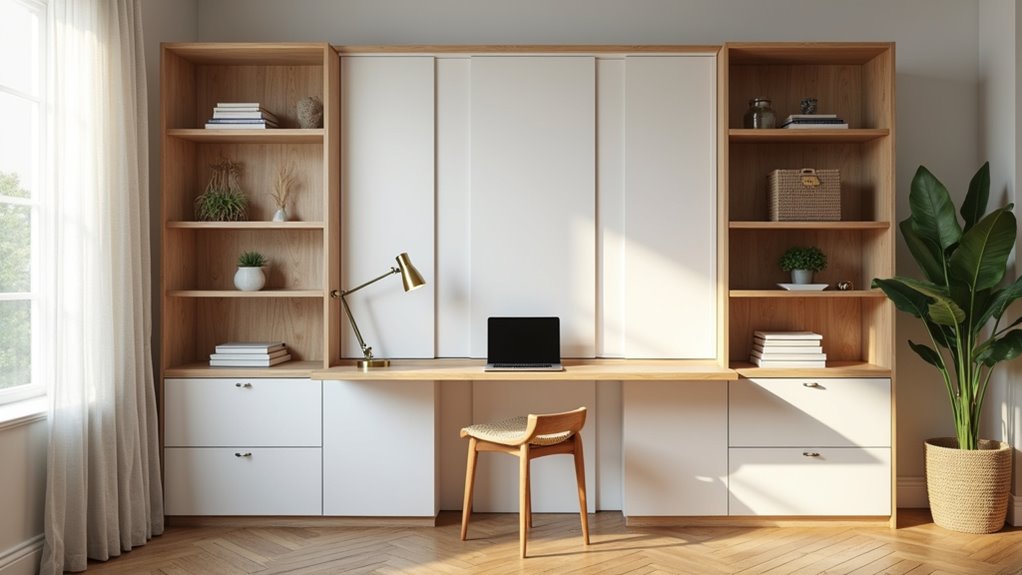
When choosing between cabinets and open shelves for your laundry room storage, you’ll want to weigh three key factors. First, consider the atmosphere, open shelves create an airy, curated vibe, while cabinets deliver a polished, formal look. Second, evaluate your budget since shelves offer DIY-friendly savings, but cabinets provide long-term value and moisture protection. Third, decide what stays visible versus hidden away. Each factor shapes your space’s functionality and style in surprising ways. Once you’ve made your decisions, the next step involves organizing towels and linens effectively to maximize your laundry room’s efficiency. This means designing your layout to keep essentials accessible, which can enhance both function and aesthetics. Consider using labeled bins or baskets that complement your chosen storage style, making it easier to keep everything in its rightful place.
Open Shelves or Cabinets: Which Fits Your Laundry Room?
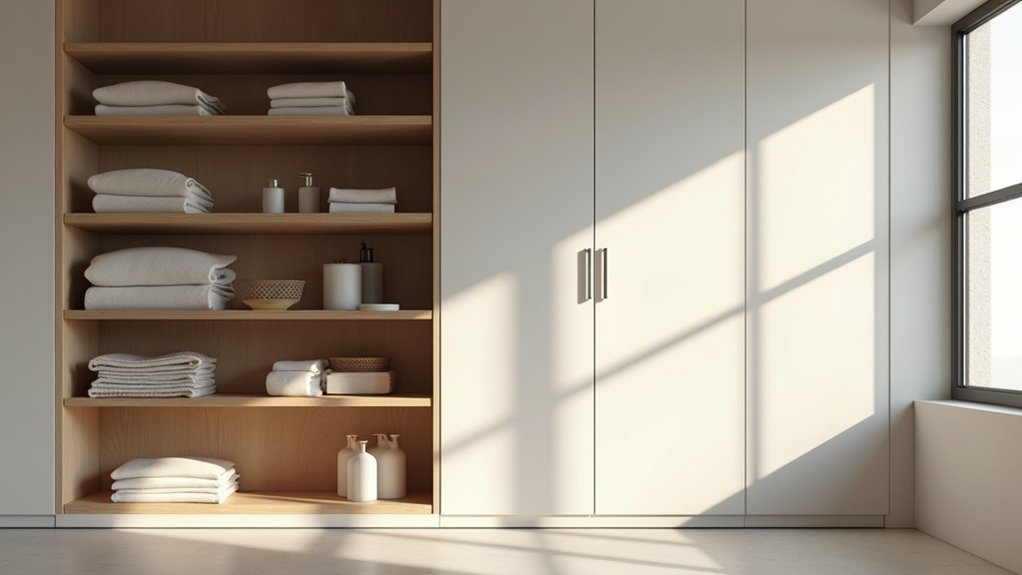
When you’re standing in your laundry room wondering whether to install open shelves or cabinets, the decision ultimately comes down to how you live and what you value most. Open shelves create an airy, spacious atmosphere perfect for smaller rooms, letting you display woven baskets, glass jars, and trailing plants that transform utility into style. When considering bins vs open shelves in closets, it’s essential to think about accessibility and organization. While bins can contain clutter and keep your items hidden, open shelves allow for quick access to your belongings, making it easier to grab what you need on the go. Ultimately, the choice will reflect your personal style and how you prefer to maintain order in your space.
Cabinets, however, offer superior storage capacity while concealing clutter behind clean lines. They’re ideal if you prefer a polished, formal aesthetic. Additionally, cabinets protect items from dust and moisture that can accumulate in laundry environments. Quality cabinetry can also increase your home’s value when it comes time to sell.
Consider material quality carefully, cabinets require sides, backs, and doors, increasing costs substantially. Open shelving remains budget-friendly for DIY enthusiasts. If you have tight budget constraints, you can start with open shelves now and convert to cabinets later when finances allow.
You might also blend both approaches: mount open shelves for daily essentials you’ll grab quickly, then install cabinets to secure chemicals safely away from curious children. Additionally, consider implementing entryway organization for busy families to ensure everyone knows where to find their belongings when rushing out the door. Hooks for bags, baskets for shoes, and a designated spot for keys can drastically reduce morning chaos. By creating an efficient system, you not only save time but also foster a sense of order in your home.
What Should Stay Visible vs. Hidden Away?
Because every laundry room tells a story through what you choose to display, the art of visible versus hidden storage transforms mundane utility into intentional design. You’ll want detergents, softeners, and sorting baskets within arm’s reach, items you grab mid-cycle deserve prime shelf real estate. Clear containers enable frequent inventory checks without disrupting your workflow. Using labeled containers for laundry soap and beach supplies adds both clarity and aesthetic appeal to your visible storage choices.
| Visible Storage | Hidden Storage | Why It Matters |
|---|---|---|
| Daily detergents | Hazardous cleaners | Safety + accessibility |
| Sorting baskets | Bulk supplies | Workflow efficiency |
| Clear containers | Seasonal tools | Limiting visual clutter |
Tuck overflow stain removers, spare hangers, and cleaning products into cabinets above your appliances. Wall-mounted cabinets provide a clean, organized appearance that elevates your laundry room’s overall aesthetic. This curated approach keeps pathways clear while showcasing only intentional elements, transforming functional necessity into aesthetic harmony.
The Real Cost of Shelves vs. Cabinets Over Time
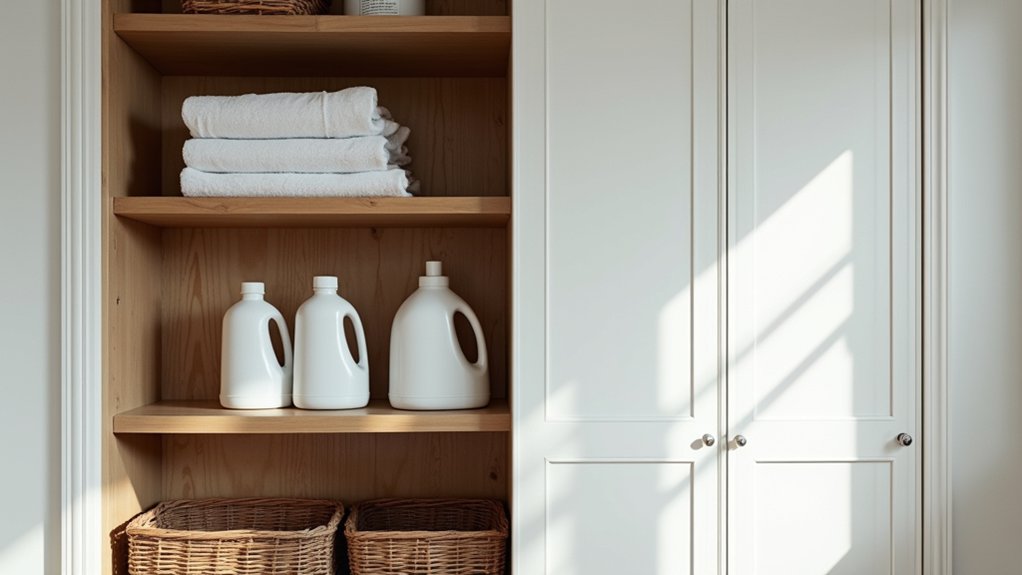
Though the upfront price tag often steers homeowners toward budget-friendly open shelves, the true financial picture unfolds across years of daily use, maintenance demands, and eventual resale considerations.
Initial Cost Comparisons
Open shelves range from $50 to $300, while cabinets command $100 to $1,500 per linear foot. Soft-close options push that ceiling to $2,000 for luxury finishes. Cabinets are generally considered a safe investment for resale value, making them worth the higher initial expense.
Cabinet investments can reach $2,000 per linear foot, but their durability often justifies the premium over budget shelving.
Long Term Cleaning Requirements
You’ll wipe down exposed shelving weekly as lint, dust, and humidity accumulate. Cabinets shield contents from airborne particles, cutting your maintenance time considerably. That enclosed design means you’re not constantly reorganizing visible clutter.
The Durability Dividend
Cabinets withstand laundry room moisture better, protecting your investment. Open shelves risk item damage from exposure, potentially raising replacement costs. Custom cabinetry also boosts resale value, buyers appreciate protected, ample storage that looks polished for years. When planning your budget, remember that installation costs typically represent 20-30% of your overall cabinet investment.
Ready to Transform Your Space?
A well-designed closet or storage system can completely change the way you live at home, and at Creative Closet Design, we make that transformation effortless. From custom closets and pantry systems to garage storage, office systems, and entertainment centers, our experienced team designs and installs solutions tailored specifically to your space and your lifestyle. Call (863) 591-4500 today to schedule your free design consultation.
Frequently Asked Questions
Can I Childproof Open Shelves, or Are Cabinets the Only Safe Option?
You can childproof open shelves, though cabinets aren’t your only safe option. Position shelves above 36 inches and remove nearby climbable items like baskets or stepladders. While child safety locks work beautifully on cabinet doors, they’re trickier with open designs. Consider the risk of falling items from machine vibrations dislodging bottles. For a curated aesthetic, pair raised floating shelves with decorative containers while locking your laundry room door as an added safeguard.
How Do Open Shelves Perform in High-Humidity Laundry Room Environments?
Open shelves actually thrive in high-humidity laundry rooms by promoting airflow that closed cabinets can’t match. You’ll notice better moisture resistance when air circulates freely around your stored items, preventing that dreaded musty smell. For condensation prevention, pair your shelves with an exhaust fan and choose moisture-resistant materials like sealed metal or treated wood. Add woven baskets for a beautifully curated look while protecting delicate supplies from lingering dampness.
What Cabinet Depth Works Best for Small Laundry Rooms or Closets?
For tight space considerations, you’ll want cabinets measuring 12-15 inches deep, they’re the sweet spot for compact laundry areas. These slimmer profiles keep walkways clear while satisfying minimal storage requirements for detergents, supplies, and folded linens. You can pair shallow wall cabinets with sleek open shelving below, creating a visually balanced design that feels airy rather than cramped. This depth preserves precious clearance around your appliances without sacrificing that polished, organized aesthetic you’re craving.
How Often Do Open Shelves Need Cleaning Compared to Closed Cabinets?
You’ll find yourself dusting open shelves daily to weekly, while closed cabinets only need monthly interior attention. The frequency of dusting increases dramatically with exposed surfaces, lint, detergent residue, and airborne particles settle constantly on your displayed items. The potential for dust accumulation transforms your once-curated vignettes into grimy collections quickly. Cabinets create a protective barrier, keeping contents pristine behind closed doors while you focus your cleaning energy elsewhere in your laundry sanctuary.
Can I Easily Convert Open Shelves to Cabinets Later Without Major Renovations?
Yes, you can convert open shelves to cabinets with remarkable ease of alteration. The structural feasibility works in your favor, your existing shelf brackets and wall anchors support cabinet doors beautifully without demolition. You’ll simply attach surface-mount hinges, add sleek trim panels, and transform the space in a single weekend. This seamless metamorphosis costs under $500 and preserves your room’s functionality while creating that polished, curated aesthetic you’re envisioning.