Wall systems give you lower upfront costs, instant reconfiguration, and quick access to frequently used tools, but they expose everything to dust and potential theft. Tall cabinets require a higher investment yet deliver long-term durability, concealed storage with lockable security, and protection from UV and moisture damage. You’ll also find that cabinets reduce cleaning frequency while garage wall systems maximize vertical space without floor obstruction. The right choice depends on your specific garage use, which we’ll break down below.
Wall Systems vs. Tall Cabinets: How to Choose
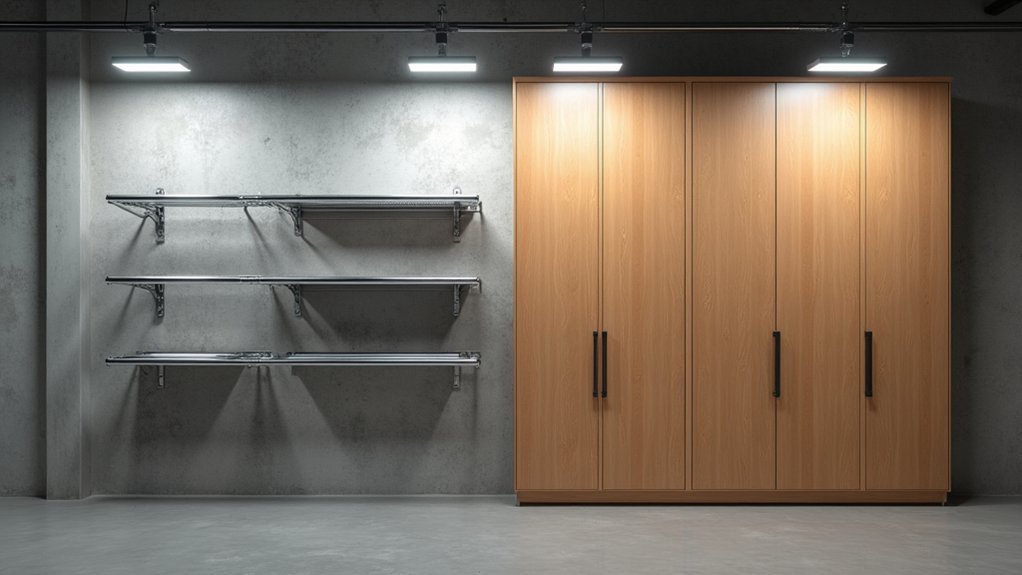
Several factors determine whether wall systems or tall cabinets work best for your garage, and understanding each one helps you invest wisely. Start by evaluating your budget, open shelving requires lower upfront costs, while cabinets demand higher initial investment but deliver long-term durability.
Consider your maintenance requirements next. Cabinets shield contents from dust, UV exposure, and moisture, reducing cleaning frequency. Shelving exposes items, increasing vulnerability to grit and dirt. This protection becomes especially important in Denver, where wood dust and magnesium chloride ride Front Range winds year-round and can cause abrasive wear on unprotected gear.
Your aesthetic appeal preferences matter too. Cabinets provide concealed storage for a sleek, finished look, while wall systems offer visible organization with instant reconfiguration options. Wall systems also provide accessibility and visibility for frequently used items, making them ideal for active workspaces. With 52% of homeowners dissatisfied with their current garage organization, choosing the right system becomes critical for long-term satisfaction.
Finally, assess your space. Wall systems optimize vertical areas without floor obstruction, whereas tall cabinets anchor heavy items efficiently along side walls. Hybrid setups often maximize both visibility and bulk storage.
Workshop, Daily Driver, or Both: Match Storage to Use
Your storage setup should reflect how you actually use your garage, whether it’s a dedicated workshop, daily parking zone, or a combination of both. If you’re running a workshop, you’ll need enclosed cabinets with lockable doors for sharp tools and full-extension drawers positioned for frequent access. For daily driver storage, prioritize keeping floors clear with overhead racks for seasonal items while placing everyday essentials at eye level on freestanding shelving units. Ceiling-mounted options like Fleximounts are perfect for tight garages since they provide storage off the floor, protecting items from mice and water while starting at just $189. Many homeowners find that a combination of DIY and store-bought solutions works best, allowing them to customize certain elements while saving time with ready-made options where it makes sense. When selecting freestanding units, steel wire shelving offers adjustable shelf heights and is available with casters for mobility, making it easy to reconfigure your space as needs change.
Workshop Tool Access Needs
How quickly you can access your tools directly impacts productivity, whether you’re running a dedicated workshop, tackling weekend projects, or splitting time between both environments. Your tool organization workflow determines whether you’re working efficiently or wasting valuable minutes searching through stacked boxes.
Drawer-equipped systems let you reach tools without unstacking, while full-extension gas struts on top chests enable smooth lid operation. Consider workbench space allocation when choosing between wall-mounted tracks and rolling cabinets. Systems like Milwaukee Packout offer modular design customization that lets you configure storage solutions specifically for your access patterns. The Flex Stack Pack features auto-latch drawers that provide secure yet easy access, making tool retrieval quick and seamless. Heavy-duty roller cabinets with industrial-grade casters allow you to reposition your entire tool collection wherever the job demands.
| Access Type | Best For | Key Feature |
|---|---|---|
| Drawer slides | Quick retrieval | 100 lb capacity per set |
| Removable cups | Small parts | Dividers included |
| Gas struts | Frequent access | Smooth lid operation |
Pair large toolboxes with small parts organizers to maximize your everyday carry efficiency.
Daily Parking Zone Storage
Whether you run a dedicated workshop, park your daily driver inside, or juggle both uses, your garage storage system must adapt to these competing demands. Over one-third of Americans can’t park inside because clutter consumes floor space. Wall-mounted systems and overhead racks solve this by lifting items vertically, preserving your designated driver parking area. Premium overhead options like the NewAge Products VersaRack can hold up to 600 pounds, giving you substantial storage capacity without sacrificing floor space.
For shared workspace privacy, slat walls position car accessories near your parking spot while keeping workshop tools separate. A golf caddy with shoe shelf mounts on slatwall systems and holds two golf bags, keeping bulky sports equipment organized and accessible. Lockable tall cabinets secure valuables without blocking drive paths. Pull-out cabinet shelves let you retrieve items quickly, and pegboards organize lightweight gear by the door.
Track systems manage seasonal equipment interchangeably, while modular wall panels rearrange based on shifting priorities. Match your storage choice to actual use patterns for maximum efficiency.
Grabbing Tools Fast vs. Opening Doors Each Time
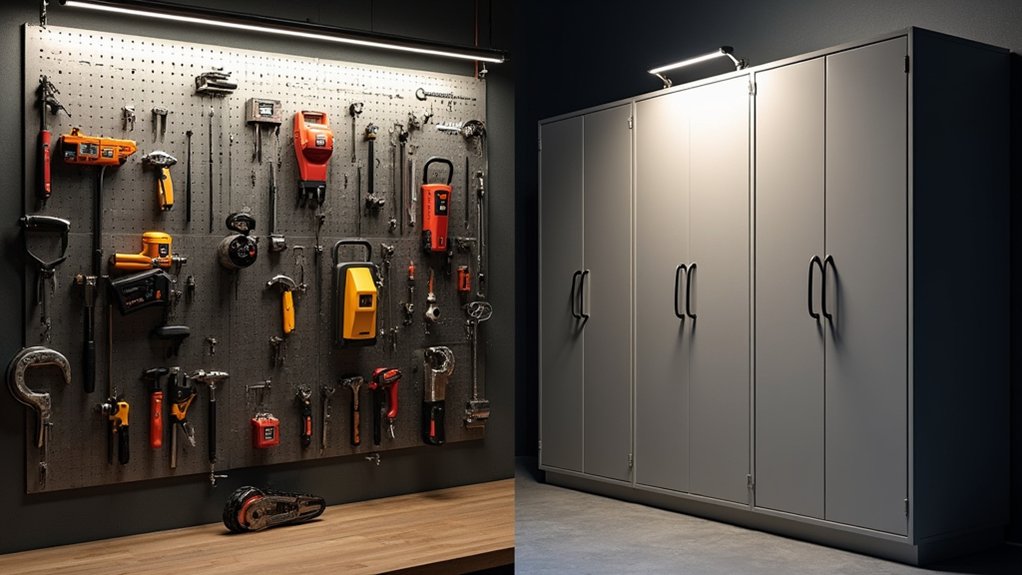
When you’re in the middle of a project, slatwall systems let you spot and grab your screwdriver instantly without fumbling through enclosed spaces. Tall cabinets force you to stop, open doors, and search inside each time you need something, adding unnecessary delays to your workflow. However, tall cabinets with full-extension ball-bearing drawers provide smooth operation that can speed up access when you do need to retrieve stored items. Mounting frequently used tools at arm’s reach on wall systems eliminates these interruptions and keeps your momentum going. Additionally, slatwall systems allow you to rearrange hooks and shelves as your project needs change, giving you flexibility that fixed cabinet interiors cannot match.
Instant Visual Tool Access
Because garage wall systems display your tools in plain view, you’ll identify and grab what you need in seconds rather than opening cabinet doors to search through hidden contents. Slatwall panels and open shelving create effective visual aid organization, letting you scan your entire inventory at a glance. This eliminates frustrating searches before projects begin.
Wall systems also support ergonomic item positioning, placing frequently used tools at comfortable heights without bending or climbing. You can also adjust shelf heights to accommodate different items, from small hand tools to larger storage boxes.
| Feature | Wall Systems | Tall Cabinets |
|---|---|---|
| Tool Visibility | Immediate | Hidden |
| Access Speed | Seconds | Requires door opening |
| Height Adjustment | Customizable | Fixed shelves |
| Visual Scanning | Unobstructed | Limited |
| Retrieval Effort | Minimal | Multiple steps |
You’ll maximize efficiency by positioning daily-use items front and center.
Door-Opening Time Delays
Every second counts during active projects, and the repetitive motion of opening cabinet doors creates measurable delays that accumulate throughout your workflow. Tall cabinets require you to open doors, reach inside deep profiles, and navigate multiple drawers for each tool retrieval. User reports indicate hinged doors add 2-5 seconds per grab, while locked units demand additional disengagement steps.
This workflow momentum disruption compounds quickly. Daily garage users report 10-15 minute weekly delays from door handling alone. Cabinet users average three extra steps per tool fetch compared to wall-mounted alternatives. However, these lockable doors for added security remain essential when storing hazardous materials that must be kept away from children and pets.
Wall systems eliminate these barriers entirely. You’ll benefit from parallel storage retrieval, grabbing multiple tools simultaneously without sequential door opens. Hooks and shelves allow direct pull-off access, reducing retrieval time by 50% through instant visual scanning and unobstructed reach.
Arm’s-Reach Convenience Factor
Although speed matters in any garage workspace, the arm’s-reach convenience factor separates efficient storage from frustrating retrieval patterns. Wall systems position your frequently used tools at ergonomic heights, guaranteeing repeated door openings that slow your workflow.
| Feature | Wall Systems | Tall Cabinets |
|---|---|---|
| Tool Visibility | Instant spotting | Hidden until opened |
| Access Speed | Grab-and-go | Multiple handling steps |
| Height Optimization | Eye-level placement | Often requires reaching |
| Rearrangement | Seconds to adjust | Fixed shelf positions |
| Best Use Case | Weekly-touch items | Infrequent retrieval |
You’ll benefit from improved vertical storage when mounting slatwall or pegboards at your natural reach zone. This client-focused approach confirms screwdrivers, wrenches, and gloves stay front-facing without elevation assistance. Your space-maximizing solution matches storage type to actual access frequency.
What Wall Systems Store Best vs. What Cabinets Hold
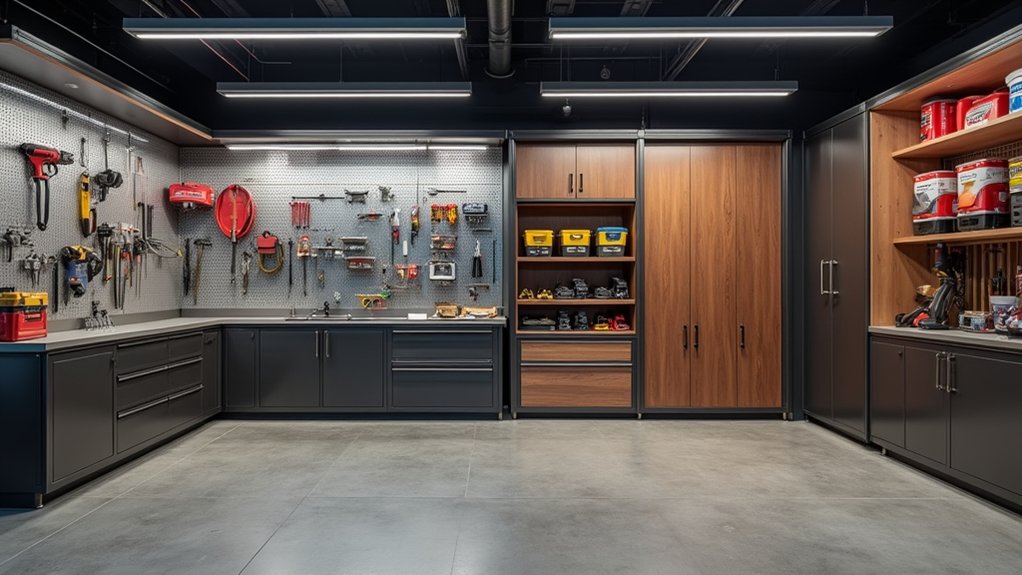
When you’re deciding what to store where, each system plays to its strengths. Wall systems excel at storing frequently used items you need within arm’s reach, hand tools, spray bottles, and gardening supplies stay visible and accessible. Their storage versatility means you can mix hooks, shelves, and baskets to match your workflow. Flexible accessory options let you reorganize as your needs change.
Tall cabinets handle what wall systems can’t protect. You’ll store bulk items, hazardous materials, and valuables behind locked doors. Deeper profiles accommodate power tools, automotive supplies, and seasonal gear that requires dust-free environments. Electronics benefit from vented drawer options that prevent overheating.
For maximum efficiency, pair both systems strategically. Mount everyday essentials on walls while securing bulky or sensitive items in enclosed cabinets.
Weight Limits for Heavy Gear: Walls vs. Cabinets
Understanding what each system stores best only matters if those systems can actually handle your gear’s weight. Wall-mounted systems typically support 40-100 kilograms per bracket, while premium PVC slatwall handles 50 pounds per square foot. Your wall composition directly affects capacity, solid brick outperforms plasterboard considerably.
Maximizing Your System’s Weight Capacity:
- Mount directly into wall studs, never drywall alone
- Use dual-anchor points for items exceeding 50 pounds
- Position heavy gear closer to the ground to reduce wall strain
- Spread large items across multiple hooks to balance weight distribution impacts
Before fully loading your system, implement load testing procedures by gradually adding weight. This reveals any bowing panels or misaligned components. Tall cabinets distribute weight to the floor, making them ideal for your heaviest equipment. Wall storage also protects heavy gear from water damage and corrosion that can occur when items sit directly on the garage floor.
Dust, Moisture, and Theft: Protection Compared
When you’re protecting valuable tools and equipment, you need to evaluate how each storage option shields against dust, moisture, and theft. Enclosed cabinets with lockable doors give you sealed protection that open wall systems simply can’t match, while powder-coated steel construction resists humidity damage in fluctuating garage conditions. Your security needs will determine whether you prioritize the concealment and locking mechanisms of tall cabinets or the accessible visibility of wall-mounted systems.
Environmental Shielding Capabilities
Both storage solutions offer distinct levels of environmental protection, and understanding these differences helps you make smarter decisions for your garage.
Tall cabinets deliver superior environmental shielding through complete enclosure. Steel and aluminum construction prevents moisture ingress while blocking dust accumulation on your tools. Wall systems like slatwalls prioritize accessibility over exposure resistance, leaving items vulnerable to airborne particles and humidity.
Key Protection Differences:
- Cabinets shield contents completely from dust, while slatwalls expose mounted accessories
- Steel cabinets resist moisture; open shelving risks rust on metal tools
- Enclosed storage conceals valuables from potential thieves
- PVC slatwall panels resist surface moisture but don’t protect attached items
You’ll maximize protection by choosing cabinets for sensitive equipment and reserving wall systems for frequently accessed, durable items.
Security Lock Options
Security locks bridge the gap between environmental shielding and active theft prevention, giving you control over how well your storage protects its contents.
Garage Wall Systems
You’ll find T-handle locks and deadbolts deliver strong weatherproofing capabilities while resisting forced entry. Slide bolt locks minimize dust ingress through their vertical latch design. Smart lock integration connects your garage to home monitoring systems, with rolling code technology preventing unauthorized access.
Tall Cabinets
Padlocks with high CEN Grade ratings secure cabinet hasps against cutting tools. Keyless locks eliminate keyholes, enhancing moisture barriers in damp environments. Biometric options add fingerprint verification, resisting picking attempts entirely.
Key Difference
Wall systems support automatic locks that engage on closure, eliminating forgetfulness. Cabinets offer rekeyable deadbolts with single or double cylinder configurations for flexible security management.
Theft Risk Assessment
Visible storage creates an invitation that hidden storage doesn’t. When you’re evaluating intruder visibility level, wall systems expose your valuables openly, while tall cabinets conceal contents behind solid doors. This distinction directly impacts your opportunistic theft prevention strategy.
Consider these security factors when choosing your storage solution:
- Concealment effectiveness, Cabinets hide high-value items from sight; slatwall displays everything openly
- Access barriers, Cabinet doors deter casual thieves; open shelving permits quick grabs
- Environmental protection, Enclosed storage shields against dust, moisture, and prying eyes simultaneously
- Strategic placement, Tall cabinets position items higher, complicating rapid removal
You’ll maximize security by reserving cabinets for theft-sensitive items and using wall systems for frequently accessed, lower-value tools.
DIY Wall Systems vs. Professional Cabinet Install
When you’re deciding between tackling a wall system yourself or hiring professionals for cabinet installation, understanding the skill requirements and structural demands of each approach helps you make the right choice for your garage.
DIY wall systems require you to locate studs, verify stud spacing at 16-inch intervals, and design panel layouts that align with structural supports. You’ll need basic tools like a level, impact drill, and stud finder.
Professional cabinet installation involves complex techniques: predrilling ledgers into studs, installing joist hangers, and counterboring screw holes with precision.
| Factor | DIY Wall Systems | Professional Cabinet Install |
|---|---|---|
| Skill Level | Moderate | Advanced |
| Tools Required | Basic drill, level | Ratchet, spade bits, specialized hardware |
| Structural Complexity | Low | High |
Cost Breakdown: Wall Systems vs. Tall Cabinets
Understanding the skill differences between DIY and professional installation sets the stage for your next decision: budgeting for each storage solution.
When comparing costs, material selection considerations greatly impact your final investment:
- Custom wall systems range from $130 to $350 per linear foot, including cabinetry, hardware, and installation
- Tall cabinets cost $200 to $400 per linear foot, making them pricier than lower cabinet options
- Budget friendly options like melamine surfaces run $100 to $200 per linear foot with moisture resistance
- Installation labor adds $60 to $120 per linear foot depending on complexity
You’ll maximize your space efficiently by matching your storage needs to your budget. Wall systems offer flexibility, while tall cabinets provide concentrated vertical storage for heavy-duty items.
Reconfiguring Storage as Your Gear Collection Grows
How quickly your garage storage needs evolve often catches homeowners off guard, but modular wall systems adapt right alongside your growing collection. Slatwall panels let you rearrange shelves, hooks, and baskets without tools, creating flexible gear configurations that shift as your inventory expands.
You’ll appreciate instant visual organization when items stay in plain view, eliminating wasted time searching through enclosed spaces. As your hobbies or side business grows, simply add panels vertically to maximize unused wall areas without sacrificing floor space.
Tall cabinets lock you into fixed dimensions, but wall systems scale gradually. Start small, then expand by adding components as tools, sports equipment, or business supplies accumulate. This systematic approach guarantees your storage investment grows precisely when you need it.
When to Combine Wall Systems and Cabinets Together
Although wall systems and tall cabinets each solve distinct storage challenges, combining both creates an extensive garage organization strategy that maximizes every square foot. Proper garage wall unit coordination with ideal tall cabinet positioning transforms cluttered spaces into efficient work zones.
Smart coordination between wall systems and tall cabinets turns wasted garage space into organized, efficient work zones.
- Slatwall panels integrate seamlessly with cabinet systems, keeping frequently used tools within arm’s reach while tall units store bulky equipment.
- Workbenches with overhead cabinets create dual-purpose setups for active projects.
- Matching finishes between wall systems and cabinets produce visually cohesive designs.
- Modular configurations allow you to add shelves, hooks, and drawers as your storage needs evolve.
You’ll eliminate wasted void space while protecting items from floor-level moisture damage.
Frequently Asked Questions
Can Garage Wall Systems Be Painted to Match My Home’s Interior?
Yes, you can paint most garage wall systems to match your home’s interior. You’ll find extensive paint color options ranging from neutral tones like grey and beige to lighter shades that brighten your space. Your customization possibilities include selecting latex or acrylic paints that resist temperature fluctuations common in garages. Start by cleaning and priming your panels properly, then choose a satin or semi-gloss finish for durability and easy cleaning.
How Long Do Tall Cabinets Typically Last Before Needing Replacement?
You can expect tall cabinets to last 20 to 50 years, depending on material quality and construction. The average lifespan extends considerably when you follow proper maintenance requirements like regular cleaning and hardware adjustments. Solid wood and plywood options give you the longest service, often exceeding 50 years. To maximize your storage investment, choose quality materials and maintain them consistently, ensuring your tall cabinets serve your space efficiently for decades.
Are Wall Systems Safe to Install on Drywall Without Studs?
You shouldn’t install wall systems on drywall without studs for heavy storage. The load bearing capacity of drywall alone can’t support substantial weight, risking damage or collapse. While the impact of wall anchors on drywall provides some support for lighter items, they’re insufficient for garage wall systems holding tools and equipment. You’ll maximize your space safely by locating studs or using alternative mounting solutions designed for your specific storage needs.
Do Tall Cabinets Come With Warranties Covering Rust or Corrosion?
Yes, many tall cabinets include manufacturer warranty coverage for rust or corrosion, though terms vary considerably. C+P offers 5 to 15-year corrosion protection depending on the environment class, while Strong Hold provides up to 99-year warranties on stainless steel models. However, you’ll find NewAge explicitly excludes rust damage. To maximize your product durability expectations, you should review each manufacturer’s specific terms, especially regarding humidity exposure and proper installation requirements.
Can Wall Systems Support Ceiling-Mounted Storage Extensions?
Wall systems don’t directly support ceiling-mounted storage extensions since they operate independently. However, you can strategically combine both for vertical storage expansion. Your ceiling mounted storage shelves utilize overhead space while wall systems handle frequently accessed items below. This space-maximizing approach lets you work around windows and doors with wall storage while overhead racks tap into unused ceiling real estate. You’ll maximize every square foot systematically without competing for the same space.