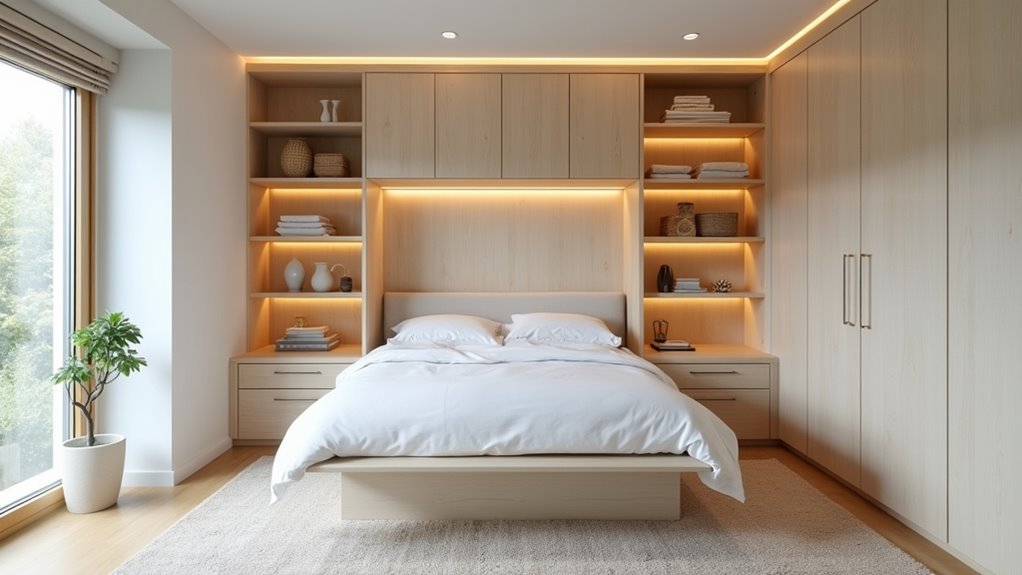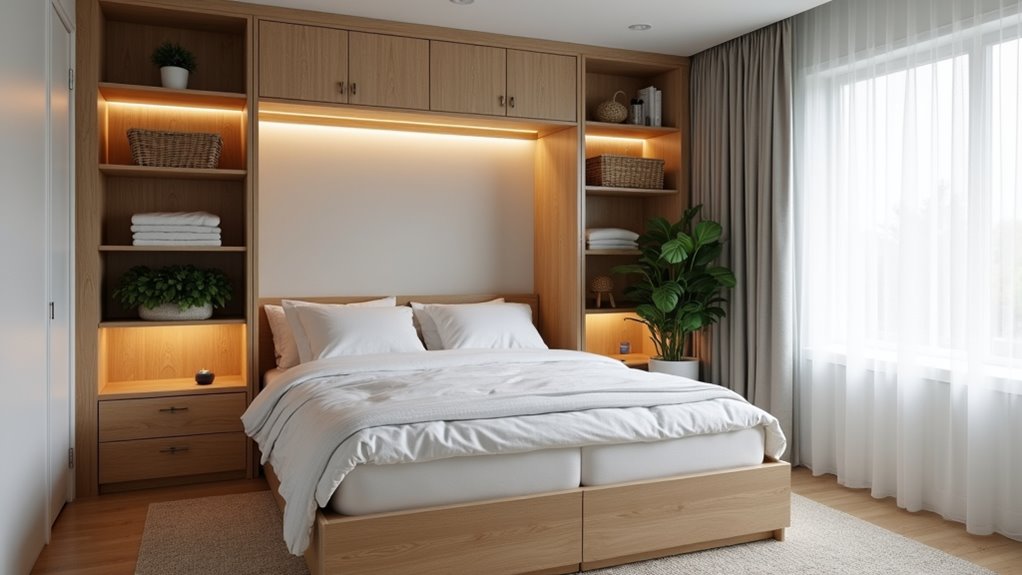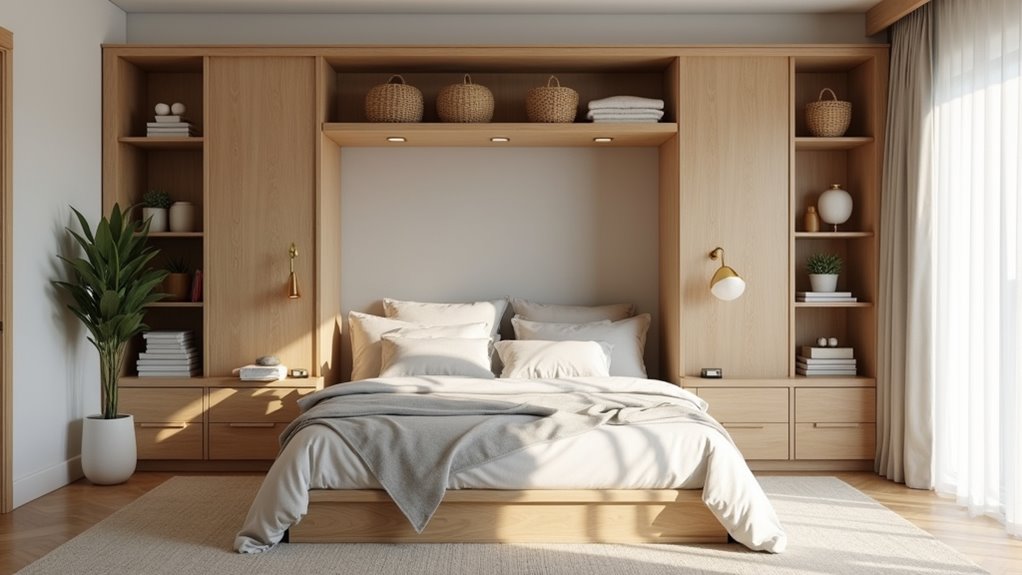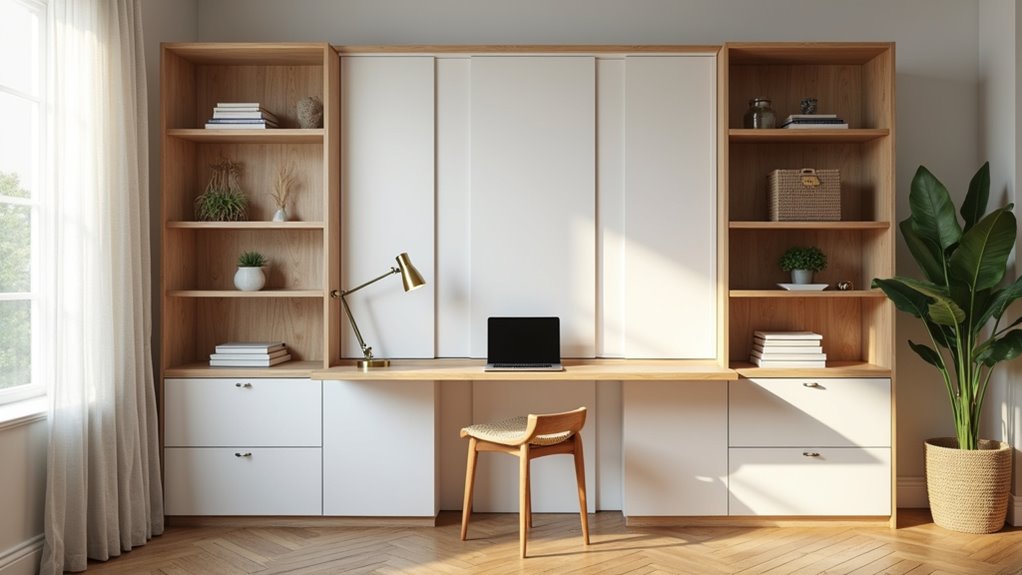
Custom storage solutions transform your home by converting neglected vertical space, corners, and entryways into functional zones through built-in shelving and pull-out systems. You’ll optimize capacity with right-sized compartments that match your actual needs while maintaining clean sight lines through concealed storage and handleless designs. Smart integration allows voice-controlled access and inventory tracking, while sustainable materials like FSC-certified wood guarantee durability. These strategic systems can reduce visible clutter by 65% and reclaim valuable floor area. The following breakdown reveals specific implementation tactics for each room type.
Maximizing Every Square Inch Through Strategic Space Utilization
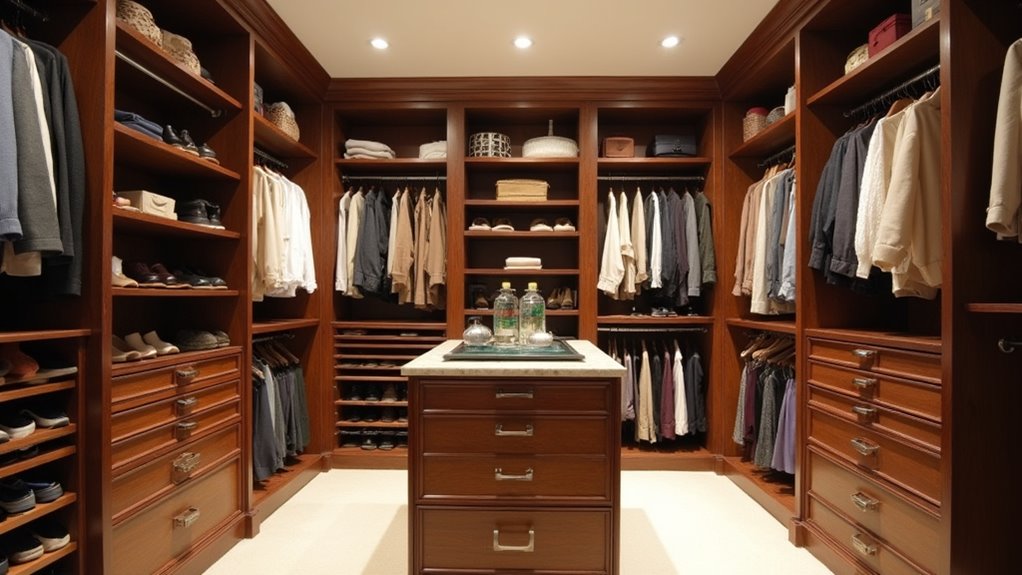
When you assess your home’s storage potential, you’ll likely uncover that only 20% of your belongings see regular use, a stark reminder that most spaces operate far below capacity. Begin with holistic space audits that map every corner, closet, and transitional zone. Deploy data-driven methods, surveys or smart sensors, to benchmark current utilization rates and pinpoint where you’re losing square footage to inefficiency. Quantifying underutilized square footage transforms guesswork into actionable intelligence. Track capacity, occupancy patterns, and usage trends in a centralized system that informs deployment decisions. Capitalize on vertical wall space, awkward corners, and overlooked areas like entryways through built-in shelving or custom millwork. Rightsizing storage capacity means matching solutions to actual needs rather than aspirational ones, eliminating vacant zones that drain budgets and resources while future-proofing configurations for evolving household demands. Regularly reviewing findings and obtaining household feedback allows you to refine storage solutions as living patterns shift. Poor storage planning can cascade into service delivery problems, from misplaced essentials to unplanned capital expenditure when rushed renovations become necessary. Focus particularly on modular and customizable configurations that adapt to changing requirements, as these solutions currently lead market demand and offer the flexibility needed for homes that serve multiple functions.
Enhancing Daily Accessibility With Smart Organization Systems
Strategic space planning delivers maximum capacity, yet accessibility determines whether those solutions serve you effectively in daily life. Smart home integration transforms static storage into responsive systems that adapt to your routines. You’ll automate morning sequences,coffee makers, lighting, and closet displays, through 41% adoption of routine-based automation. Remote management enables pantry inventory checks and appliance control from anywhere, with 84% of users adjusting systems via mobile apps. Voice assistants handle 68% of interactions, providing hands-free access to organized spaces. Custom alerts notify you of temperature changes in climate-controlled storage or entry events at secured cabinets. Matter-compliant devices ensure seamless coordination across 5.5 billion projected units, while geofencing triggers entryway lighting and opening based on proximity, eliminating friction during daily transitions. Smart thermostats installed in 28% of US homes can integrate with climate-controlled storage areas to maintain optimal conditions for sensitive items while contributing to overall energy efficiency. These connected systems leverage machine learning and natural language processing to successfully execute voice commands, making storage retrieval more intuitive and efficient. The market for smart speakers will see revenue increase by $9.5 billion from 2024 to 2029, expanding voice-controlled storage access options.
Seamlessly Blending Function and Design in Modern Interiors
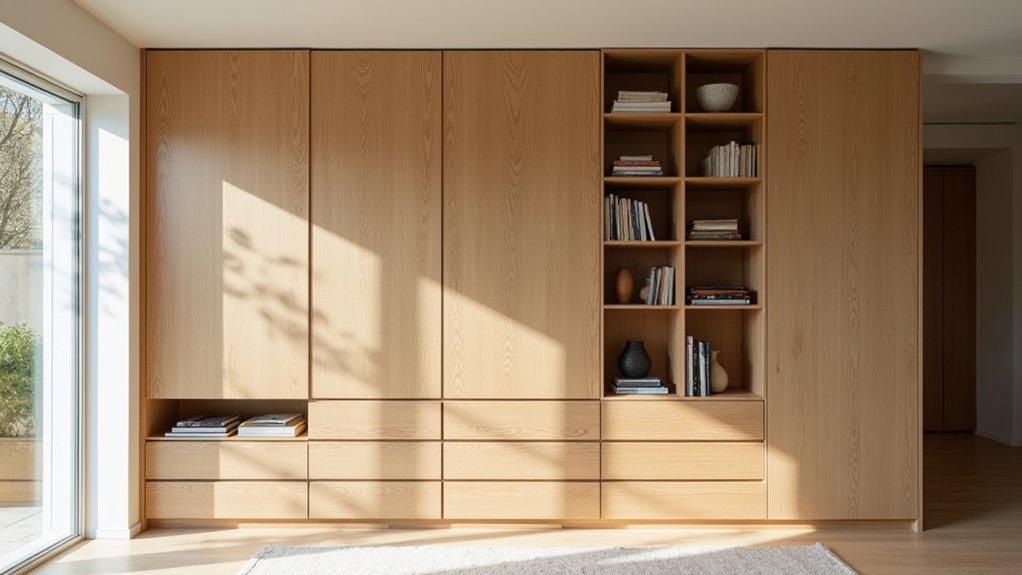
You’ll achieve a cohesive interior when your storage materials, woods, laminates, and metals mirror the finishes used throughout your space. Concealed compartments and handleless fronts preserve clean sight lines while maintaining full accessibility to your belongings. Pull-out drawers and sliding mechanisms maximize depth utilization in tight corners where traditional door swings would waste valuable square footage. Integrated LED strips or recessed lighting within cabinetry transforms functional storage into ambient features that enhance your room’s atmosphere after dark. Slim velvet hangers optimize hanging rod capacity while their non-slip surface prevents garments from shifting or falling. Mirrored wardrobe fronts serve double duty by reflecting light to make compact bedrooms feel more spacious while eliminating the need for a separate full-length mirror.
Material Selection Drives Aesthetics
Material selection establishes the foundation for how your storage solutions perform and appear within your living spaces. Your choice between wood, bamboo, laminates, or metals directly impacts durability and visual integration with existing décor. Material customization allows you to select finishes from classic wood stains to modern metallic accents that unify your storage with your room’s aesthetic scheme.
Sustainable options like FSC-certified wood and bamboo reduce environmental impact while delivering the natural textures that complement eco-conscious designs. High-quality materials guarantee material longevity, maintaining their appearance through years of daily use without degradation.
Combining tactile elements, wood grains with matte laminates or brushed metals creates layered, multidimensional storage that augments your interior’s sophistication. Eco-friendly materials like all-natural wood and bamboo prioritize occupant health by reducing exposure to harmful chemicals during production and throughout the lifespan of your storage installations. Bespoke storage systems adapt to your unique spatial requirements while maintaining cohesive material selections throughout. Proper hierarchy organization ensures efficient cataloging and retrieval of stored items, similar to how retail stores structure their inventory systems. Strategic material choices transform functional necessity into intentional design statements that improve your home’s overall value.
Hidden Storage Maintains Minimalism
Hidden storage systems eliminate visual clutter while preserving full functionality in your living spaces. You’ll achieve a 65% reduction in visible items by integrating discreet compartments within walls, furniture, and cabinetry. These invisible fixtures maintain your minimalist aesthetic while keeping essentials accessible through secret doors and sliding panels.
You can reclaim 20, 30% of your floor area by converting underutilized zones, beneath staircases, inside wall cavities, and behind flush panels, into organized storage. Pull-out drawers and built-in cupboards replace bulky furnishings without compromising your design flow. Voice-activated mechanisms enable hands-free access to concealed compartments, adding convenience to your daily routines. Multi-functional pieces serve dual purposes by combining seating, display, or workspace features with hidden storage capabilities. Storage ottomans blend seamlessly into your décor while offering both comfortable seating and discreet compartmentalization.
Your property value may increase up to 40% with these installations. Homeowners report 78% higher satisfaction with minimalist interiors after implementing concealed storage. You’ll transform kitchens with hidden pantries, bedrooms with integrated closets, and living rooms with wall-panel cabinetry that disappears completely.
Integrated Lighting Enhances Ambiance
When you embed lighting directly into your home’s architecture, you eliminate protruding fixtures while creating sophisticated visual layers that adapt to every activity. Linear LEDs along shelves and cabinetry deliver ambient illumination without visual clutter, while smart controls let you adjust brightness and color temperature for each task. This approach transforms storage areas into functional showcases that support your daily routines.
Strategic lighting integration delivers measurable benefits:
- LED strips consume 75% less energy than traditional bulbs, reducing utility costs while maintaining clean sightlines
- Color-tunable systems shift from cool morning tones to warm evening hues, supporting circadian health throughout the day
- Motion sensors activate closet and pantry lights automatically, enhancing visual comfort during routine access
- Dimmable task lighting eliminates harsh shadows in workspaces, optimizing focus without eye strain
Boosting Property Value Through Professional Storage Installations

As homeowners increasingly recognize storage as infrastructure rather than afterthought, professional storage installations have emerged as strategic investments that directly improve property values. Custom closets deliver 50, 100% ROI, effectively doubling your renovation dollars at resale. Organized garages with professional cabinetry distinguish properties during appraisals, creating measurable resale value increase. You’ll optimize buyer appeal enhancement through systems that showcase functionality, buyers prioritize homes appearing cleaner, more spacious, and move-in ready. Properties featuring tailored storage attract more showings and receive quicker offers than comparable listings. Modern buyers expect upgraded storage as standard, ranking these installations alongside kitchen and bath renovations. Cost-effective relative to other upgrades, professional storage solutions utilize high-end materials and finishes that signal investment in home care, elevating perceived luxury while addressing practical organizational needs that today’s market demands.
Adapting to Compact Living and Urban Space Constraints
Urban living demands strategic storage thinking where every square foot counts. You’ll amplify compact spaces by leveraging underutilized spaces like under-stair areas, which increase storage capacity by 15%, and gaps between appliances for rolling carts. Optimizing zoned storage through vertical wall-mounted systems enhances efficiency by 20, 40%, reclaiming valuable floor space.
Strategic solutions transform cramped quarters:
- Built-in furniture with hidden compartments reduces bedroom floor usage by 30% while beds with lift-up platforms eliminate dresser needs
- Double-rod closet systems store twice as many items compared to single-rod configurations
- Dual-purpose kitchen islands cut counter clutter by 40% through integrated deep cabinets
- Behind-door racks and ceiling-height shelving convert overlooked areas into functional storage zones
These systems address North America’s growing compact living trend, projected to expand 57% by 2027.
Building Long-Term Value With Durable and Sustainable Materials
Sustainable storage materials deliver measurable returns through extended lifespans and reduced replacement cycles. You’ll achieve eco friendly product longevity by selecting bamboo containers that resist moisture, mold, and pests through natural antimicrobial properties. Recycled plastic bins withstand temperature fluctuations and corrosion, maintaining structural integrity across years of daily use. Your renewable resource selection should prioritize woven reed and wicker baskets that support heavy loads while offering compostable end-of-life disposal. Cork and reclaimed wood options provide water-resistant performance with unique visual character from salvaged sources. These durable solutions reduce replacement frequency, lowering your long-term costs and environmental impact. Natural fiber storage decomposes without landfill accumulation, while recycled plastics containing 50% post-consumer content decrease virgin material demand and associated greenhouse gas emissions. You’re building organizational systems that retain functional value season after season.
Creating Zone-Specific Solutions for High-Traffic Areas
High-traffic areas demand storage systems that withstand constant contact while maintaining immediate accessibility. You’ll achieve this by optimizing entry/exit flow through strategic placement of frequently accessed items near doorways and juncture points. Position drop-off zones at primary entries to prevent bottlenecks, while maximizing productivity in high traffic zones with ergonomic solutions that reduce reaching and bending.
Design your high-traffic storage with these zone-specific elements:
- Install durable, adjustable shelving that accommodates changing needs without requiring complete reconfiguration
- Apply color-coded organization systems for instant item identification and faster retrieval times
- Incorporate mobile storage units that reposition based on daily usage patterns
- Add anti-fatigue flooring in standing areas where you frequently sort or access stored items
Monitor usage patterns and adjust configurations quarterly for continued efficiency.
Implementing Modular Systems for Evolving Household Needs
Adaptability transforms your storage from a fixed investment into a responsive system that evolves alongside your household’s changing demands. Modular system scalability enables you to add shelving units when your book collection expands, integrate drawer modules for new hobbies, or remove sections when downsizing. You’ll stack vertical configurations to optimize awkward spaces under stairs or reconfigure wall-mounted units as room functions shift from home office to nursery.
User-driven configurations put control in your hands, swap specialty modules like wine racks for file organizers, adjust shelf heights for oversized items, or relocate entire systems between rooms. This flexibility eliminates expensive replacements while accommodating work-from-home shifts, growing families, or seasonal storage fluctuations. You’ll customize compartment sizes, integrate lockable modules for valuables, and maintain organization through labeled sections that adapt as your household priorities change.
Frequently Asked Questions
What Is the Average Cost Range for Installing Custom Storage Solutions?
You’ll typically spend $1,081, $3,241 for custom storage installations, though projects range from $410, $6,460 depending on scope. Custom closets cost $28, $40 per square foot, while garage cabinets run $130, $350 per linear foot. To guarantee cost saving strategies, consider budget friendly options like targeting high-impact areas initially, choosing mid-grade materials over premium finishes, and phasing installations across multiple projects. Professional labor adds $60, $120 per linear foot but ascertains proper system integration.
How Long Does Professional Installation Typically Take for a Custom Closet System?
Professional installation of your custom closet system typically takes 1, 3 days for standard layouts, while complex walk-ins require 2, 5 days. You’ll experience space-saving benefits once installers complete assembly, usually with minimal disruption to your home. The timeline depends on your design’s customization flexibility; intricate features like islands or integrated lighting extend installation. From initial consultation to completion, expect 3, 8 weeks total, including design approval and manufacturing phases before installers arrive onsite.
Can Renters Install Custom Storage Without Damaging Walls or Losing Deposits?
You’ll protect your deposit by using rental-friendly shelving like tension rods, adhesive hooks, and over-the-door organizers that leave zero damage. DIY storage hacks including command strips, freestanding ladder shelves, and under-bed bins let you customize without drilling holes. You can install rolling carts, storage ottomans, and magnetic strips that won’t alter surfaces. These removable solutions eliminate patching, repainting, or repair costs at move-out while maximizing your space efficiently.
Which Rooms Provide the Highest Return on Investment for Custom Storage Upgrades?
Garages deliver the highest ROI at 64-81%, followed by closets at 50-60%. You’ll enhance limited space by installing modular garage systems with pull-out drawers and wall-mounted organizers. For closets, optimize layout versatility using adjustable shelving and custom cabinetry that adapts to changing needs. Focus on these high-traffic areas initially, they’re what 97% of realtors identify as buyer priorities. You’ll reduce market time while adding functional value that directly impacts sale price and buyer appeal.
Do Custom Storage Solutions Require Special Maintenance or Cleaning Procedures?
You’ll need specialized cleaning requirements based on your storage materials, wood needs a gentle polish, metal requires rust prevention, and fabric demands regular vacuuming. Proper installation techniques directly impact maintenance frequency; poorly mounted systems create gaps where dust accumulates and hardware loosens. Check hinges quarterly, vacuum ventilation slots monthly, and wipe surfaces weekly with appropriate cleaners. Monitor climate-controlled units‘ temperature settings, inspect seals for moisture damage, and maintain detailed service records to prevent costly repairs.