Choose shelves that are 12, 15 inches deep so your folded clothes won’t droop over the edges or get lost at the back. You’ll want to adjust your folding technique, like the KonMari file fold, to match your exact shelf depth, keeping stacks upright and visible. Install wire or acrylic dividers to act as bookends, preventing piles from sliding into each other. These three strategies work together to keep your closet organized long-term.
Keep Shelves 12, 15 Inches Deep for Stable Stacks
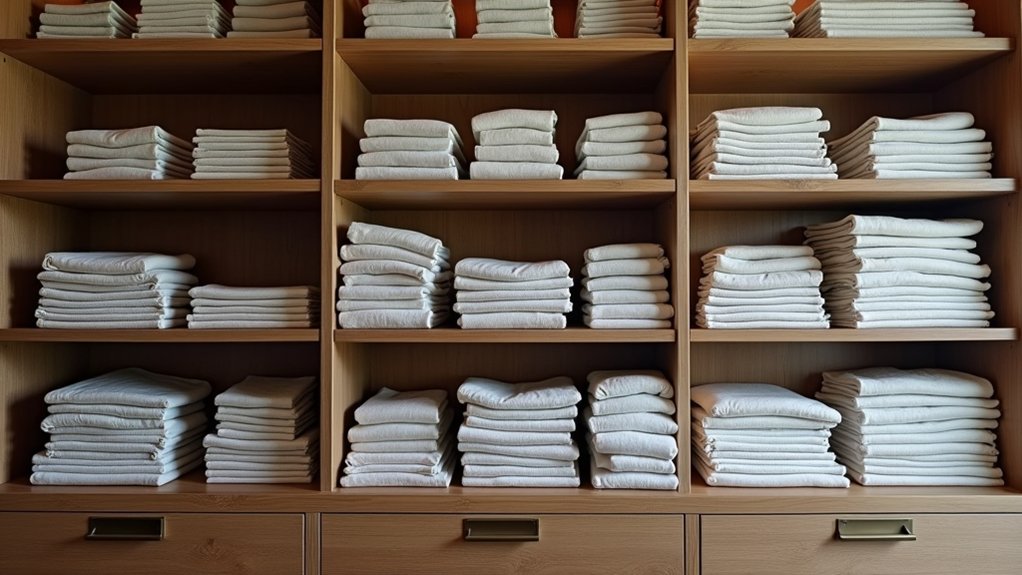
When you’re organizing a closet for folded clothing, shelf depth makes all the difference between neat stacks and toppling piles. A depth of 12 to 15 inches provides the ideal foundation for shirts, sweaters, and everyday apparel. This range prevents items from drooping over edges while keeping everything visible and accessible.
To maximize storage capacity, pair your shelf depth with proper vertical spacing of 10 to 12 inches between shelves. This combination prevents overstacking and maintains tidy arrangements. You’ll leverage vertical spacing effectively when shelves aren’t overcrowded. Adjustable shelving systems offer the flexibility to reconfigure your space as your storage needs change over time.
For reach-in closets 26 inches deep or less, stick with 12-inch shelves. Deeper closets of 28 inches accommodate 16-inch depths comfortably. Measure your available space carefully, accounting for doors that limit usable depth. Installing LED lighting under each shelf increases visibility, making it easier to locate and access your neatly stacked clothing without disturbing the arrangement.
Fold Clothes to Fit Your Shelf Depth Exactly
Mastering the KonMari file folding method lets you match each garment’s folded size to your exact shelf depth. Use an 8.5×11 notepad as your guide to divide garments into thirds vertically. This technique helps you maximize shelf capacity while creating stable, standing rectangles.
| Shelf Type | Folding Adjustment |
|---|---|
| Deeper shelves | Fold arms lengthwise once for longer bundles |
| Shallower shelves | Fold sleeves laterally across top in thirds |
Pull the bottom back five inches before your final fold to secure neat bundles. Leave a small gap at edges for stability when items stand upright. You’ll minimize empty space and prevent toppling. Smooth fabric after each fold and apply firm pressure to maintain crisp, uniform shapes that fit precisely. When working with bulkier items like sweaters, fold them in thirds instead of half to achieve the proper depth and ensure they stand upright without flopping over. For pants and shorts, fold the legs in half first, then fold upward toward the waistband before making your final folds to match your shelf dimensions.
Add Dividers to Stop Piles From Collapsing
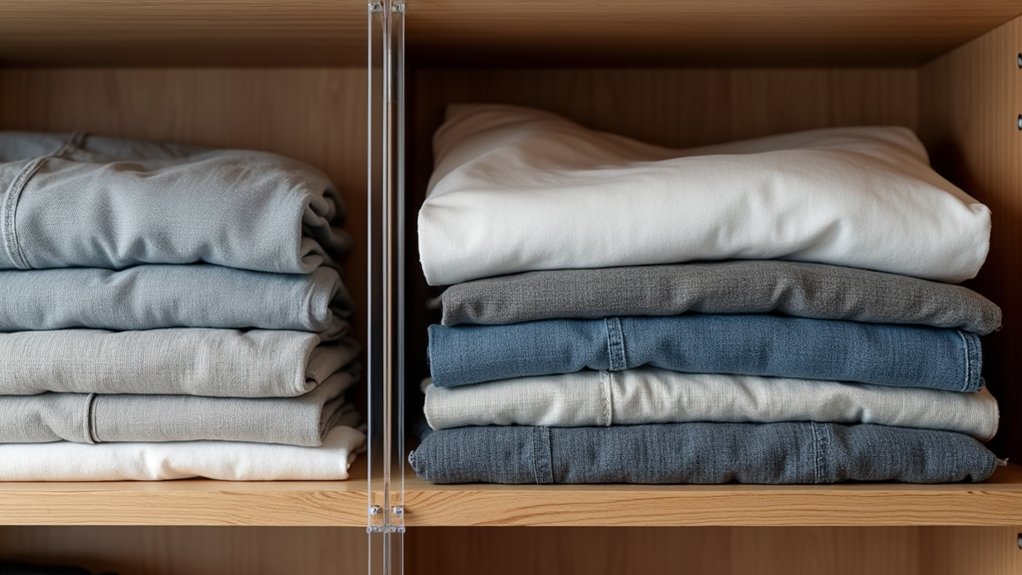
Even after you’ve perfected your folding technique, neatly stacked clothes can still topple onto adjacent piles without proper support. Shelf dividers act as bookends for your folded garments, maintaining separation between stacks and preventing the avalanche effect when you grab items.
Strategic divider placement creates structured compartments for sweaters, linens, and casual wear. Wire or acrylic models attach directly to shelves, while adjustable designs accommodate various shelf widths. Position dividers to establish designated zones, separating work clothes from weekend wear or organizing by color. This logical categorization leads to improved organization and enhanced visual appeal throughout your closet space.
Divider adjustment matters as your storage needs change seasonally. Increase compartment width for bulky winter sweaters or narrow sections for lightweight tees. This flexibility prevents items from shifting or disappearing toward the back of deep shelves, keeping everything visible and accessible while preserving your garments’ folded shape. Adding labels to each section makes it even easier to identify where specific items belong, streamlining your daily routine. Well-organized compartments also reduce clutter-related stress by eliminating the frustration of dealing with disorganized spaces and hard-to-find items.
Frequently Asked Questions
Can I Use Storage Bins Instead of Dividers on Deep Shelves?
Yes, you can use storage bins instead of dividers on deep shelves. Compact storage containers actually offer several advantages, they prevent items from getting lost at the back, and stackable options excel at maximizing shelf space vertically. Choose clear bins so you’ll see contents without opening them, and select sizes matching your shelf depth (12, 18, or 24 inches). Bins with reinforced edges guarantee stable stacking, while built-in dividers keep clothes organized and separated.
What Hanger Alternatives Work for Shelves Deeper Than 15 Inches?
You can replace hangers with vertical clothing racks that fit alongside deep shelves, keeping garments accessible without folding. For shelves deeper than 15 inches, shelved divider systems create compartments that mimic hanging storage by holding clothes upright. You’ll also benefit from pull-out trays for rear access and fabric bins with handles for organized stacking. These alternatives prevent mess while maximizing your shelf’s full depth capacity.
How High Can I Stack Folded Clothes Before They Topple Over?
You’ll find the ideal stacking height depends on your garment type and folding method. To prevent toppling, limit stacks to 6, 8 items for sweaters and 10, 12 for file-folded t-shirts. Stability relies on consistent fold sizes, heavier items at the bottom, and shelf depth matching your folded dimensions plus 1.5 inches. Check stacks regularly, humidity and temperature changes can shift materials and compromise your carefully organized piles.
Should Thick Sweaters Be Stored Separately From Thinner Clothing Items?
Yes, you should store thick sweaters separately from thinner items. Divide by fabric thickness to prevent stack collapse and maintain organization. Heavy knits require deeper shelf space, while thin garments compress under weight, causing wrinkles and damage. Utilize vertical space by file-folding sweaters upright in dedicated drawers and rolling thinner pieces in separate bins. This systematic separation prevents misshaping, reduces odor cross-contamination, and keeps your stacks stable and accessible.
Are Foldable Baskets Effective for Organizing Book-Folded Clothes on Shelves?
Yes, foldable baskets work effectively for organizing book-folded clothes on shelves. You’ll find fabric bins particularly useful since they attach at the back, creating stable support for upright folded stacks. Use stackable dividers to separate categories within each bin, preventing items from toppling. The open-front design lets you see and access your book-folded clothes without removing entire stacks. Limit each bin’s quantity to maintain easy retrieval and keep your system functional.