The ideal closet height depends on the types of garments you plan to store. Choose a double-hang configuration when your wardrobe consists primarily of shirts, blouses, pants, and skirts, position the upper rod at approximately 80 inches and the lower rod at 40 inches to maximize vertical storage. Opt for a long-hang section set at 66, 72 inches when you need space for dresses, coats, or gowns. Measure your longest garment first, then add 2, 3 inches to allow proper floor clearance. The sections below outline recommended shelf heights and layout testing considerations.
Double-Hang Rod Heights: Upper Bar at 80 Inches, Lower at 40
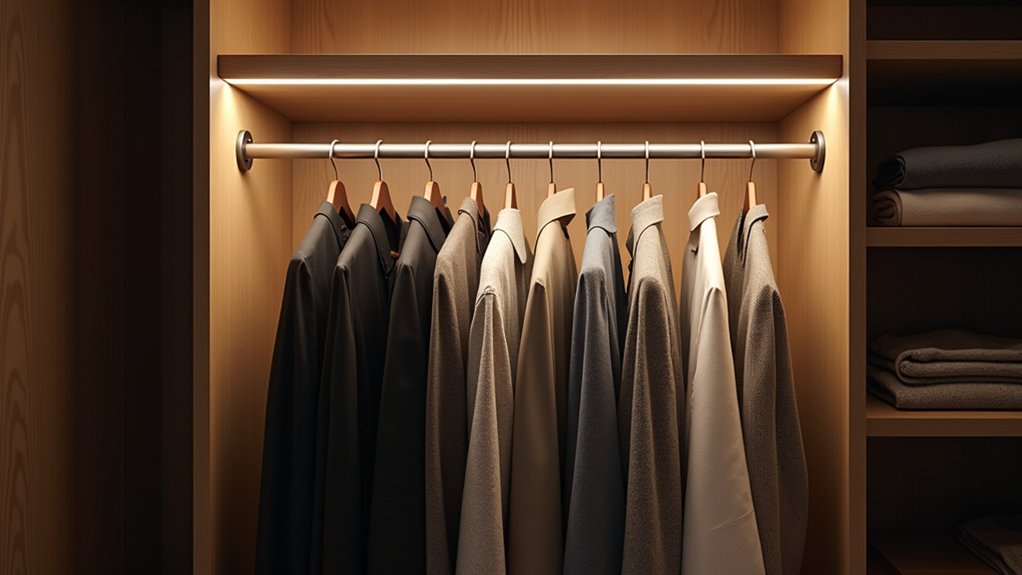
Most closet systems benefit from a double-hang rod configuration that positions the upper bar at 80 inches and the lower bar at 40 inches from the floor to the rod’s center. This rod spacing maximizes your vertical storage capacity while keeping garments accessible.
You’ll find the upper rod works perfectly for shirts and blouses, while the lower rod accommodates pants, skirts, and folded items. Your clothing considerations should include garment length, this setup prevents hangers from touching the floor and eliminates wrinkles. The upper rod is ideal for less frequently worn long coats and skirts, while the lower rod handles everyday garments like blazers and shorts.
For clients with specific needs, you can adjust heights slightly. Men’s suits often require an upper rod at 84 inches with a lower at 42 inches. Keep in mind that an 84-inch top rod may present accessibility challenges for shorter occupants. Always measure to the rod’s center for consistency across installations. If you’re using rods longer than 4 to 5 feet, install a center support bracket to prevent sagging and ensure stability.
Long-Hang Rod Height for Dresses, Coats, and Gowns
When setting up your long-hang section, you’ll want to position the rod between 66 and 72 inches from the floor to accommodate dresses, coats, and gowns. Start by measuring your longest garments, evening dresses can reach 69 inches, so you’ll need to account for hanger height plus adequate floor clearance. Maintaining at least 2-3 inches between your longest item’s hem and the floor prevents dragging and keeps your garments in pristine condition. Professional contractors ensure proper wall stud location to prevent rod failures under the weight of heavy coats and multiple gowns.
Optimal Rod Height Range
Everything in your closet’s long-hang section, from winter coats to evening gowns, demands careful rod placement to protect your garments while maximizing vertical space. You’ll want to position your rod between 66-72 inches from the floor, giving you rod height flexibility based on your specific wardrobe needs.
| Garment Type | Recommended Height |
|---|---|
| Floor-length gowns/robes | 60-64 inches |
| Long coats/dresses | 66-72 inches |
| Medium dresses | 54-60 inches |
Consider rod material factors when selecting hardware, sturdy materials prevent sagging under heavy coats. You should maintain 12 inches of depth from the rear wall to prevent wrinkling and allow 2-inch clearance below any shelf above. Installing adjustable shelving above your rod allows you to store shoes, accessories, and other items while complementing your overall wardrobe organization. This setup guarantees your longest items hang freely without brushing the floor.
Measuring Longest Garments
Before you can determine the ideal rod height for your long-hang section, you’ll need to measure your longest garments accurately. Start measuring garment lengths from the top of the hanger hook down to the hem while the item hangs naturally. Keep in mind that floor-length maxi dresses can elongate the body, making them a popular choice for formal occasions.
Focus on these key pieces when calculating custom maxi lengths:
- Maxi dresses: Typically 48-52 inches (122-132 cm) from shoulder to hem
- Evening gowns: Floor-length designs measuring 52 inches or longer
- Full-length coats: Often comparable to maxi dress measurements
Record your three longest items and add 2-3 inches for clearance below the hem. This prevents fabric from touching the closet floor or shelf below. When measuring yourself for new garments, take your hip measurement around the fullest part at the top of your leg to ensure proper fit for these longer pieces. For the most precise results, consider investing in professional tailoring services to ensure your garments hang at their optimal length. Your tallest garment dictates your minimum rod height, ensuring you maximize vertical space while protecting delicate hems.
Floor Clearance Requirements
Your long-hang rod height depends on three critical factors: your tallest garment’s length, adequate floor clearance, and your ceiling height constraints.
Add 2-3 inches of clearance beyond your longest garment to prevent floor contact. For gowns and full-length dresses measuring 60-64 inches, you’ll need rod heights between 66-72 inches. Fabric type considerations matter here, heavier materials like wool coats hang differently than flowing silk gowns.
Install your rod at 66 inches minimum for standard coats and dresses. Reserve 70-72 inches for trench coats and formal gowns that demand extra length. Your hanging system materials should support these heights while maintaining at least 12 inches from the rear wall. Consider using adjustable shelves above your long-hang rod to accommodate seasonal rotations and changing wardrobe needs throughout the year.
Measure to the rod’s bottom edge, ensuring garments hang mid-air without folding or brushing the floor.
How to Choose Between Double-Hang and Long-Hang Setups
When you’re deciding between double-hang and long-hang configurations, your wardrobe inventory should drive every choice you make. Count your shirts, blouses, and folded pants against your dresses and long coats. This tally determines your ideal space allocation between the two systems.
Let your wardrobe inventory guide your closet configuration, count what you own before deciding how to store it.
Double-hang setups instantly double your usable space for shorter garments. Reserve long-hang sections only for items that truly require full vertical clearance. Long coats can require up to 68 inches of vertical space, making accurate measurements essential before finalizing your configuration.
Consider these factors for your custom storage options:
- Wardrobe composition: More blouses than dresses favors double-hang dominance
- Daily accessibility: Position frequent-use items at convenient heights
- Space efficiency: Men’s closets rarely need single-hang except for long coats
Balance your long-hang sections with tower or drawer storage to maximize every square inch. The “closet zoning” concept helps you separate work and weekend wear into distinct areas for streamlined daily routines. Without strategic organization, your bottom rod may become overwhelmed while top space remains underutilized, defeating the purpose of your double-hang investment.
Closet Shelf Heights Above Rods and for Folded Storage
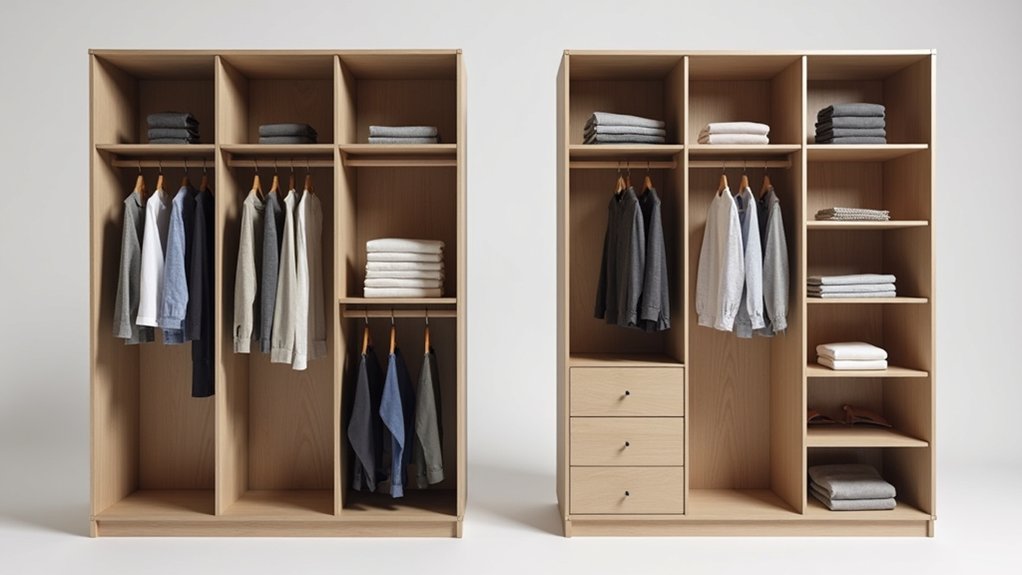
You’ll want to position your top shelf 12-18 inches above the closet rod, typically landing at 78-84 inches from the floor depending on your height and reach. For folded clothes storage, space your shelves 12-15 inches apart vertically, starting around 42 inches and working upward. Maintaining proper rod-to-shelf clearance of at least 2-3 inches guarantees your hangers move freely without catching on the shelf above.
Top Shelf Placement Standards
Proper top shelf placement depends on whether you’re working with a single or double rod configuration. Understanding shelf height minimums guarantees you’ll maximize vertical storage without sacrificing accessibility.
For single rod setups at 66 inches, position your top shelf at 84 inches from the floor. Double rod configurations with an upper rod at 80 inches require tighter rod to shelf clearance, typically 2-3 inches above the rod center.
Standard placement guidelines:
- Single rod: top shelf at 84 inches with 12-18 inches clearance above the 66-inch rod
- Double rod: top shelf 2-3 inches above the 80-84 inch upper rod
- User adjustments: 88-90 inches for taller individuals, 78-80 inches for shorter users
These measurements assure smooth hanger removal while creating usable storage for folded items and seasonal boxes.
Folded Clothes Shelf Spacing
Beyond top shelf placement, your closet’s functionality depends heavily on how you space shelves for folded items. The right shelf arrangement prevents crushed fabrics and toppled stacks while maximizing your storage capacity.
For shirts and t-shirts, you’ll need 10, 12 inches of vertical clearance between shelves. This spacing accommodates standard folded dimensions while maintaining visibility. Sweaters and bulkier knits require 12, 15 inches to preserve their shape without compression.
Your stacking organization improves when you match shelf heights to specific items. Jeans and pants work well with 10, 12 inch spacing, providing stability for heavier stacks. Accessories like handbags need 12, 16 inches to maintain their form. For boxes and bins on shelving, maintain 24 inches of space between them to ensure easy access and proper organization.
Never go below 8 inches between shelves, you’ll create frustrating, inaccessible storage that leads to messy piles and wasted space. Consider adjustable shelving systems that offer flexibility as storage needs change, allowing you to reconfigure spacing as your wardrobe evolves.
Rod-to-Shelf Clearance Requirements
When planning your closet’s vertical layout, the clearance between rods and shelves determines whether your system functions smoothly or creates daily frustration.
You’ll need a minimum 4-inch clearance between any rod’s top and the shelf above it. This spacing recommendation prevents clothing from bunching against the shelf and catching during retrieval.
For an ideal support stability, follow these clearance guidelines:
- Double-hang upper rod: Position shelves at 84-85 inches when your rod sits at 80-82 inches
- Long-hang configurations: Maintain 14-18 inches between rod top and shelf bottom
- Lower double-hang rod: Allow 25-28 inches clearance to overhead shelving
These spacing recommendations protect your garments from damage while maximizing accessibility. Proper clearance ensures hangers glide freely and clothing hangs without obstruction. Whether you’re working with a reach-in closet that’s typically 24 inches deep or a spacious walk-in, these vertical clearance principles remain consistent across all closet types.
Measure Your Longest Garment Before Setting Rod Height
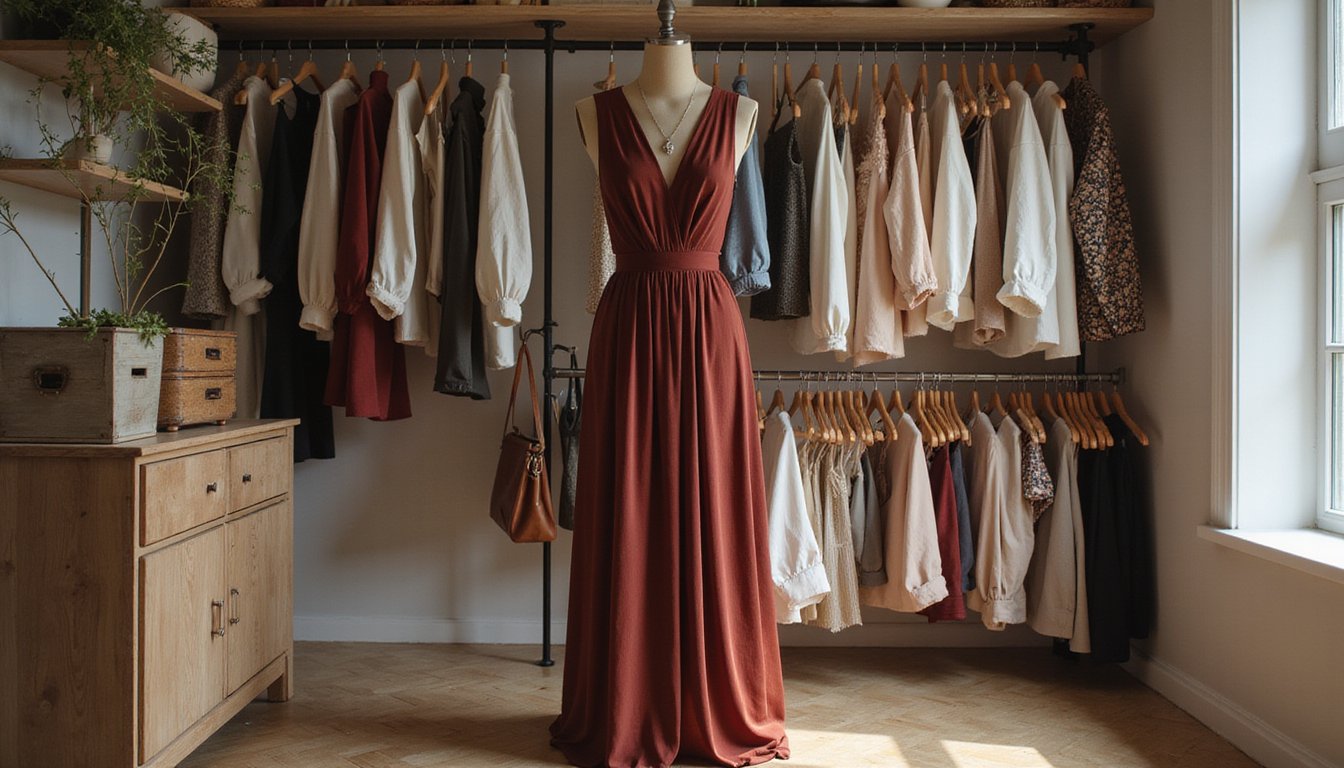
The single most critical step in closet rod installation starts with measuring your longest garment, whether that’s a floor-length gown, winter coat, or formal dress. Hang the item on a temporary rod and measure from the hanger hook to the hem, then add 4-6 inches for hanger height plus 2-3 inches for floor clearance.
Position your tape measure 12 inches from the rear wall to establish proper rod depth. With adequate lighting considerations, you’ll accurately mark the intersection point on both sidewalls. If your longest garment measures 68 inches total, set your rod at 70-72 inches minimum.
Before drilling, verify proper rod anchoring methods by locating studs. Test with actual garments to confirm nothing touches the floor, ensuring wrinkle-free storage that maximizes your available space.
Test Your Closet Layout With Painter’s Tape First
Before you drill a single hole into your closet walls, blue painter’s tape lets you map out your entire rod and shelf configuration with zero commitment. This layout prototyping method protects your walls while giving you a clear visual of your storage plan.
Run tape strips at your planned rod heights, 80.5 inches for a female double-hang top rod or 85.5 inches for male configurations. Use a bubble level to keep lines straight, then mark bracket positions directly on the tape.
Your tape measurements should include:
- Top rod placement for upper garments
- Bottom rod or shelf at 36 inches for double-hang setups
- Bracket spacing aligned with wall studs
Step back and assess before committing to permanent installation.
Frequently Asked Questions
What Weight Capacity Should Closet Rods Support for Heavy Coats and Garments?
You’ll need closet rods supporting 50-264 lbs for heavy coats and garments, with steel or chrome options delivering the strongest performance. For ideal rod load distribution, select metal rods rated for your specific wardrobe weight. Install sturdy bracket support by mounting heavy-duty brackets to wall studs, which hold up to 1,000 lbs per pair. Add center supports for longer spans to prevent sagging and maximize your storage space effectively.
How Far Should Closet Rods Extend From the Back Wall?
You’ll want to position your closet rod 11½ to 12 inches from the back wall for suitable rod placement depth. This ideal rod extension guarantees your garments hang freely without wrinkling against the wall while maximizing your usable space. For double-rod systems, maintain this same distance for both upper and lower rods. If you’re working with deeper hangers or bulkier items, you can adjust slightly, but never go below 10 inches minimum clearance.
Can I Combine Double-Hang and Long-Hang Sections in One Closet?
Yes, you can absolutely combine double-hang and long-hang sections in one closet. Flexible layout configurations allow you to divide your space into distinct zones, double-hang for shirts and folded items, long-hang for dresses and coats. You’ll maximize storage by using customizable shelving options with adjustable rods that shift easily between heights. This space-maximizing approach doubles your hanging capacity while accommodating all clothing lengths in one organized system.
What Rod Diameter Works Best for Preventing Hanger Marks on Clothes?
You’ll want a rod diameter of at least 1¼ inches to prevent hanger marks on your clothes. This size reduces stress concentration points where hangers contact the rod, allowing them to glide smoothly without catching or binding. Choose rods with sturdy construction, heavy-duty steel or polished chrome finishes work best since they maintain consistent diameter and smooth surfaces. This prevents the friction that causes fabric creasing and marks on delicate garments.
How Much Spacing Do I Need Between Hanging Clothes and Closet Doors?
You’ll need at least 24 inches of adequate clearance in front of sliding doors, while swing-open doors require a minimum of 36 inches. This spacing prevents your garments from brushing against door panels and getting caught during daily use. For storage optimization, guarantee your closet depth reaches 28-30 inches with sliding doors, giving you comfortable reach room beyond your hanging clothes’ 18-19 inch depth when selecting items.