Yes, wire shelves can damage your clothing in ways solid shelving won’t. The thin wires create pressure points that leave permanent grid imprints on sweaters and dress shirts, while rough edges cause pilling and tears in delicate fabrics. Small items like jewelry and lingerie slip through 1-2 inch gaps, and overloaded wire shelves sag or tip. However, wire shelving does offer better air circulation to prevent mold. Each shelving type has specific situations where it performs best.
How Wire Shelves Damage Your Clothes Over Time
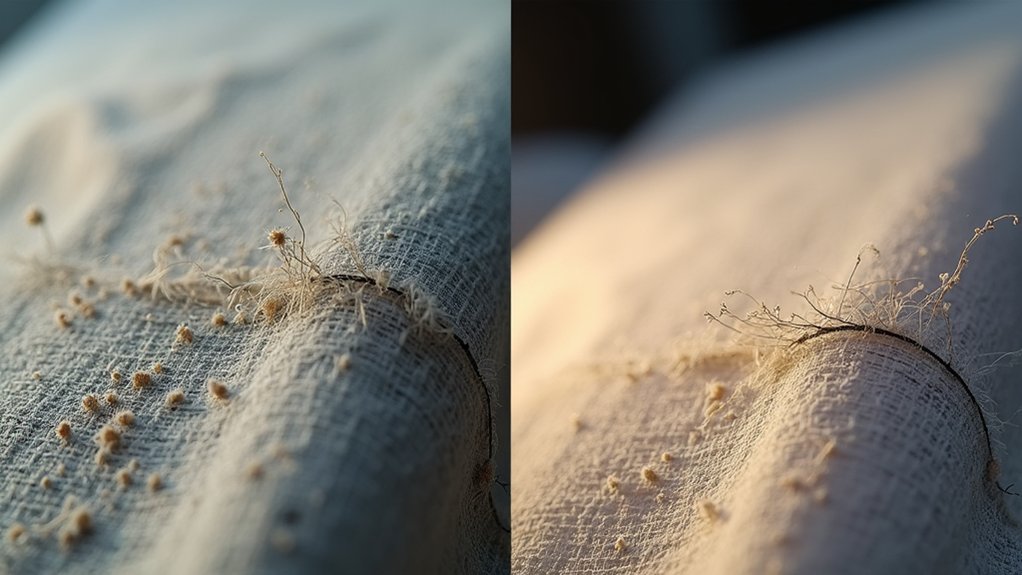
Wire shelves might seem like a convenient storage solution, but they can wreak havoc on your wardrobe in five distinct ways. First, the open slat design creates pressure points that leave permanent imprints on delicate fabrics. Second, fabric pilling concerns arise when materials repeatedly rub against rough wire edges.
Third, thin wires can tear lightweight garments, especially along sharp edges where clothing naturally shifts. Fourth, metal shelving introduces long term discoloration risks as rust develops and transfers onto stored items, compromising fabric integrity. Removing rust stains from affected clothing is almost impossible, making prevention essential.
Finally, the uneven surface prevents proper weight distribution, causing stretched fibers and misshapen garments. Heavy items like denim accelerate this damage, while delicate pieces suffer the most visible effects. The wire design also lacks support for heavy items like bags, shoes, and luggage, which can compound the stress placed on both the shelving and your clothing. When wire shelving becomes overloaded, the tendency to tip over can send your entire wardrobe crashing to the floor, causing additional damage. Your clothes deserve better protection than wire shelving provides.
Wire Marks and Wrinkles Solid Shelves Prevent
Beyond the structural damage wire shelving causes, you’ll notice immediate cosmetic problems every time you unfold your clothes. Sweaters develop grid patterns, and dress shirts show persistent creases from individual wires pressing into fabric. These marks require extra ironing and gradually weaken fibers with repeated contact.
Solid shelves eliminate these issues through flat surface integrity. Your clothes rest on a stable plane where evenly distributed weight prevents localized pressure points. The smooth, flat surface also makes it simple to wipe away any dust or debris that could transfer onto your garments. Additionally, solid shelving provides better stability since wire shelves can experience sagging or bowing when supporting heavier stacks of folded clothing.
| Issue | Wire Shelves | Solid Shelves |
|---|---|---|
| Surface marks | Grid patterns on fabrics | No imprints |
| Wrinkle formation | Uneven support creates creases | Flat support minimizes wrinkles |
| Fabric integrity | Repeated damage accumulates | Shape preserved long-term |
Wood and steel options both deliver the smooth, supportive surface your garments need. However, solid wood shelving comes with a higher cost, typically exceeding $100-$200 compared to wire alternatives.
Small Items That Fall Through Wire Shelf Gaps
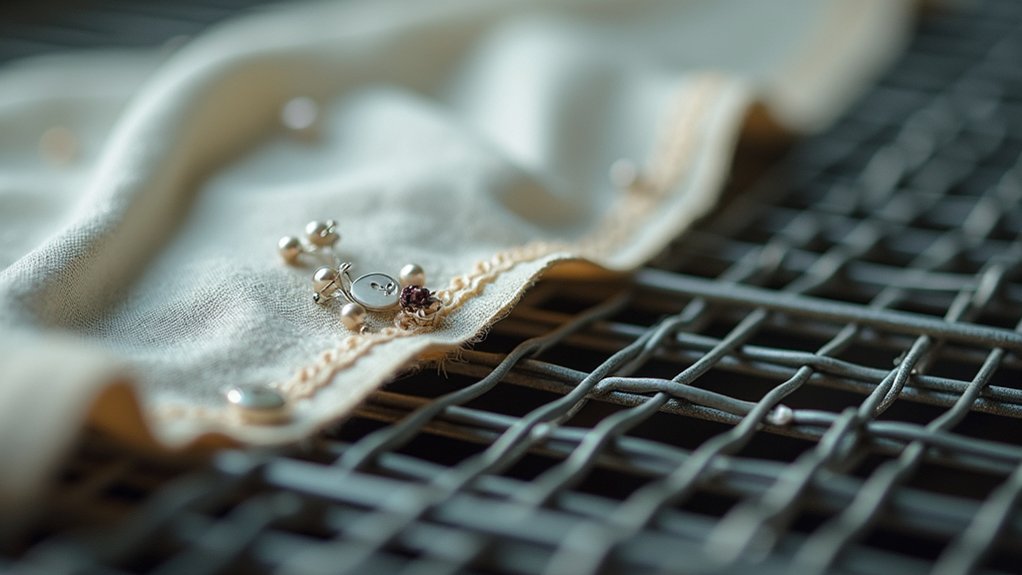
Wire shelf gaps measuring 1-2 inches create constant problems when you store small items like jewelry, which easily slips through the openings and disappears below. Your delicate lingerie and lightweight undergarments don’t fare much better, as they shift with shelf vibrations and drop through unsupported areas that exceed 50% of the surface. Accessories including belts and scarves become unstable on the irregular wire surface, requiring you to retrieve fallen items daily unless you install a solid liner to eliminate the gaps. Clear EasyLiner fits perfectly on wire shelving without sliding and provides a smooth, durable surface to prevent items from falling through. When heavier items stored above fall through unstable wire shelving, they can cause serious head injuries and other trauma that may require immediate medical attention.
Jewelry Slips Through Gaps
Anyone who’s stored small accessories on wire shelving knows the frustration of watching a favorite ring or earring disappear into the gap below. Standard wire shelf gaps measure 1-2 inches, creating perfect escape routes for your valuables.
Here’s what you’re likely losing:
- Rings and earrings slip through 1-inch gaps without resistance
- Bracelets slip through when they’re under 1 inch in diameter
- Necklace clasps catch momentarily on wires before releasing into the void
Small beads, pendants, and chains fall through these separations daily. Product reviews consistently report frequent jewelry losses on uncovered wire shelves. Just as particle accelerators like the ILC use precision to study tiny particles like the Higgs boson, your storage solutions require precision to protect your smallest valuables.
Your solution? Add shelf covers. Aluminum panels, PVC liners, or waterproof mats create solid surfaces that eliminate gap-related losses entirely. These covers mimic solid shelf performance and protect your jewelry from costly drops.
Delicate Lingerie Falls Below
Your jewelry isn’t the only casualty of wire shelf gaps, delicate lingerie faces the same fate. Silky camisoles and lightweight undergarments slip through spaces that reach up to 1 inch wide. When these items fall, they risk tears, snags, and fabric stretching from catching on wire edges during descent.
Wire grids create additional problems beyond falling. Direct contact causes ribbon discoloration on decorative trim, while bottom layers develop permanent creases from pressing against metal surfaces. Folding delicate pieces becomes frustrating when you’re constantly maneuvering around gaps. Wire shelves provide less support for folded clothing compared to solid shelves, making neat stacking nearly impossible.
Solid shelving eliminates these concerns entirely. Flat surfaces provide stable support that keeps lingerie in place without distortion. You won’t find irregular shapes slipping between wires or delicate fabrics sustaining impact damage. Steel shelves offer the secure, gap-free base your delicates require.
Accessories Become Unstable
Small accessories frequently slip through wire shelf gaps that reach up to 1 inch wide, creating ongoing frustration in your closet. Watches, jewelry, and other petite items lack the solid surface support they need, causing them to fall between wire slats regularly.
Your small accessory storage requires practical solutions to prevent losses. Consider these three approaches:
- Add wood covers over wire slats to create stable surfaces for delicate items
- Use bins specifically designed for box organization to contain accessories securely
- Inspect shelving frequently to guarantee wires haven’t loosened or shifted
Original accessory boxes remain unstable on wire surfaces and tip easily without proper containment. You’ll find that solid shelving eliminates these risks entirely, keeping your accessories visible and secure. Companies like Modular Closets, California Closets, and ClosetMaid are reshaping the industry with innovative alternatives that provide stable surfaces for all your items. For maximum stability, consider using 3/4 plywood shelving anchored directly into wall studs with deck screws to create a surface that won’t shift or collapse under weight.
Dust and Dirt Problems Unique to Wire Shelving
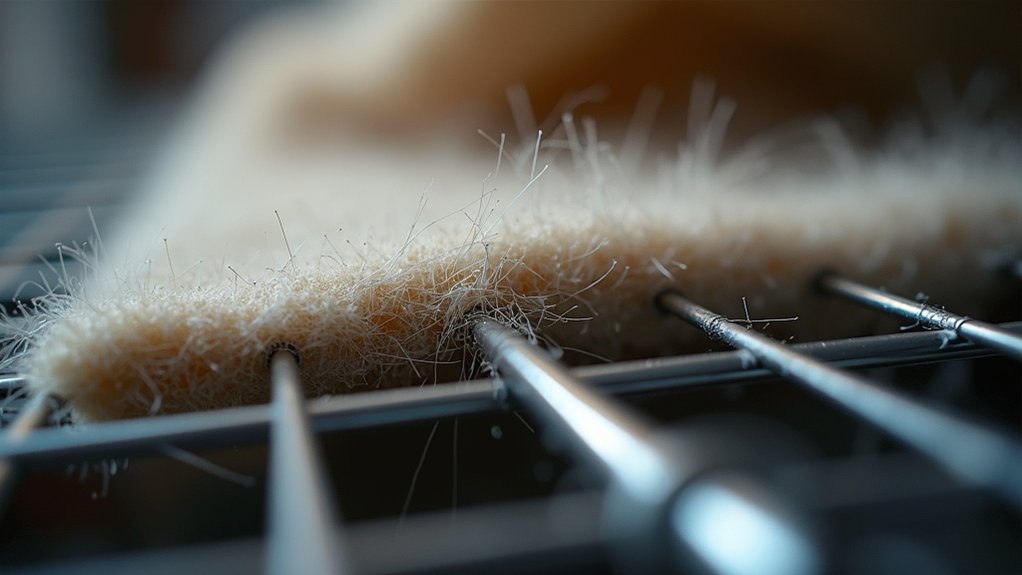
While many assume wire shelving collects more dust due to its open design, the opposite is actually true. The open weave promotes air circulation, which prevents dust accumulation on wires by eliminating stagnant air pockets. Solid shelving creates flat surfaces where particles settle and remain undisturbed. The reduced surface area also means there’s less space for allergens to accumulate, improving the overall air quality in your storage area.
You’ll also notice wire shelving reduces mold growth in small spaces like closets. Air moves freely between the rods, preventing the moisture buildup that feeds mold colonies. Choosing stainless steel wire shelving can further improve your closet environment by eliminating offgassing concerns associated with coated materials.
For maintenance, wipe wires monthly with a soft cloth and mild detergent. Vacuum debris that falls through to the shelf below. Always dry chrome-plated shelving thoroughly after cleaning to prevent rust. This straightforward routine keeps your clothing storage area hygienic with minimal effort.
Why Wire Shelves Sag and Warp Faster
When you load wire shelves unevenly, the center bears excessive weight that exceeds distributed load capacity, causing the middle to bow while ends stay flush against supports. Your wire shelving’s material fatigue compounds this problem, repeated stress in one direction amplifies sag by up to 50% over years of use, with initial deflection becoming permanent deformation. You’ll notice this progressive warping accelerates when shelves lack adequate bracket support or aren’t properly anchored into wall studs. Unlike hollow steel shapes that provide strength without excessive weight, wire shelving’s thin gauge construction offers minimal resistance to bending forces under heavy loads.
Weight Distribution Problems
Wire shelving units look sturdy, but they’ve got specific weight limits that’ll catch you off guard if you’re not careful. Even industrial-grade wire shelving maxes out at 800 pounds per shelf under ideal conditions. Place unevenly heavy objects in the center, and you’ll create stress points that accelerate warping and sagging.
Here’s how to prevent weight distribution problems:
- Spread heavy items across the entire shelf surface rather than concentrating them in one area.
- Add central support posts to convert standard triple-truss shelves into more stable five-truss configurations.
- Check for unsecured supports and loose hardware regularly to maintain structural integrity.
When you ignore these factors, minor sags become major deformations. Your clothing then slides toward low points, creating creases and stretching delicate fabrics unnecessarily.
Material Fatigue Over Time
Unlike solid steel panels that distribute stress evenly across their surface, the thin metal wires in shelving units flex and deform under loads that wouldn’t faze their solid counterparts. You’ll notice material wear patterns developing at wire intersections where stress concentrates, creating weak points that progressively worsen with each use.
When you repeatedly load your wire shelves near maximum capacity, you’re accelerating wire fatigue dramatically. The protective chrome or epoxy coatings crack at bend points, exposing bare metal to accelerated corrosion from humidity and temperature fluctuations. These compromised areas develop rough edges and protrusions that snag delicate fabrics.
To protect your clothing, inspect wire shelves regularly for sagging or warping. Replace damaged sections before sharp, corroded wires cause tears or permanent marks on your garments.
When Wire Shelves Still Work in Your Closet
Despite their drawbacks for delicate fabrics, wire shelves still earn their place in your closet under the right conditions. You’ll find they’re ideal for items that don’t require wrinkle-free storage, offering storage flexibility that solid shelving can’t match.
Consider using wire shelves for:
- Shoes and accessories, Ventilation prevents odor buildup while boxed items stay protected from wire marks
- Rolled casual clothing, T-shirts and workout gear tolerate wire contact when rolled instead of folded
- Seasonal storage, Items you won’t access frequently don’t need premium shelf real estate
Wire shelving excels at space optimization in humid environments where airflow matters more than fabric preservation. Add shelf liners to expand functionality without sacrificing ventilation benefits.
How Solid Shelves Solve These Storage Problems
When you’re ready to upgrade your closet storage, solid shelves address the core issues that wire alternatives create. You’ll notice immediate spill and damage containment benefits since flat surfaces prevent items from falling through gaps. Small accessories, folded sweaters, and delicate fabrics stay secure without risk of dropping or catching on wires.
Solid shelving offers versatile sizing options that accommodate everything from bulky blankets to tiny jewelry boxes. Your clothing won’t develop creases or wire imprints, maintaining fabric integrity over time.
Cleaning becomes straightforward, just wipe down smooth surfaces instead of traversing around individual wires where dust accumulates. The enhanced durability means these shelves resist sagging under heavy loads and rarely need replacement. You’re investing in long-term reliability that protects your wardrobe while simplifying maintenance.
Frequently Asked Questions
Can Shelf Liners Completely Protect Clothing From Wire Shelf Damage?
Shelf liners can’t completely protect your clothing from wire shelf damage, but they vastly reduce it. You’ll get better results when you prioritize shelf liner thickness, thicker options prevent wire marks from pressing through under heavy stacks. Shelf liner longevity matters too, since worn liners lose their protective cushioning over time. For excellent protection, choose sturdy vinyl or fabric liners and replace them when they show signs of wear or sagging.
How Often Should Wire Shelves Be Replaced in a Typical Closet?
You should replace wire shelves every 3-5 years in a typical closet, though this varies based on usage. Check your shelf weight capacity regularly, exceeding it accelerates sagging and warping. Inspect annually for bends, rust spots, or structural weakness. Proper shelf spacing helps distribute weight evenly, extending lifespan. If you notice clothes getting snagged or visible sagging under normal loads, it’s time for replacement regardless of age.
Do Coated Wire Shelves Cause Less Damage Than Uncoated Ones?
Yes, coated wire shelves cause less damage than uncoated ones. When you choose epoxy or vinyl-coated wires, you’ll benefit from improved shelf coating durability that resists rust, warping, and cracking under heavy loads. This protection prevents rough, corroded surfaces from snagging or staining your clothing. For ideal shelf coating maintenance, regularly wipe down coated surfaces to remove dust buildup. However, even coated wires still create pressure points that can leave marks on delicate fabrics.
What Clothing Materials Are Most Resistant to Wire Shelf Marks?
You’ll find moisture wicking synthetic materials like polyester and nylon are most resistant to wire shelf marks because their smooth, tightly woven surfaces glide over wire without catching. These durable fabrics bounce back quickly from pressure indentations. In contrast, delicate fabrics prone to snagging, such as silk, cashmere, and loose knits, show marks easily and can develop permanent damage. For best results, pair resistant synthetics with shelf liners for complete protection.
Is the Cost Difference Between Wire and Solid Shelving Significant?
Yes, the cost difference is significant over time. While you’ll pay less upfront for wire shelving ($20-50 per unit), shelf material durability becomes the deciding factor. Wire systems need replacement every 3-5 years, pushing 10-year costs 60-80% higher than wood alternatives. Shelf material maintenance also adds up, wire requires $850 annually versus $150 for scratch-resistant options. You’ll save approximately $6,000 per unit over a decade by choosing solid shelving.