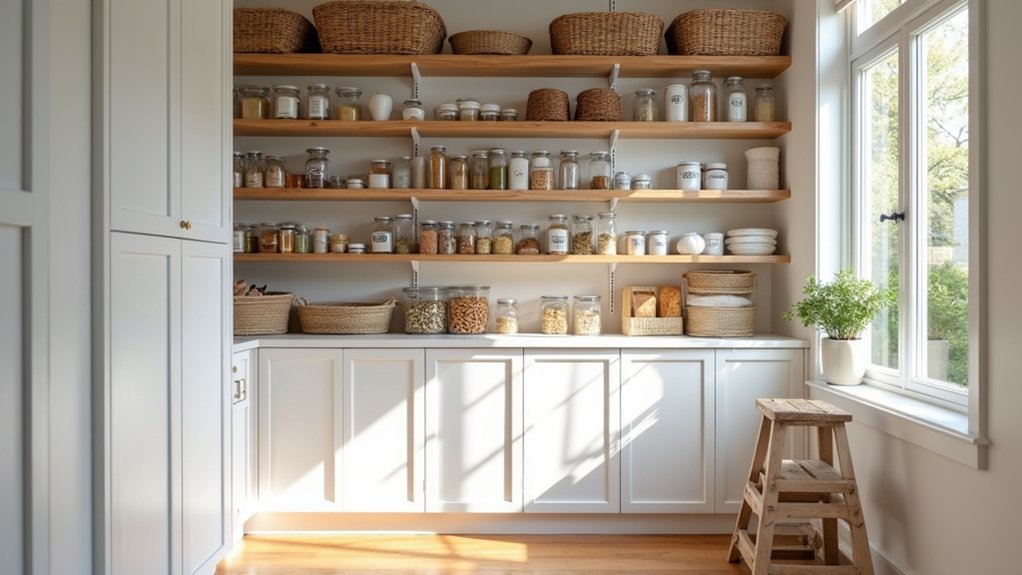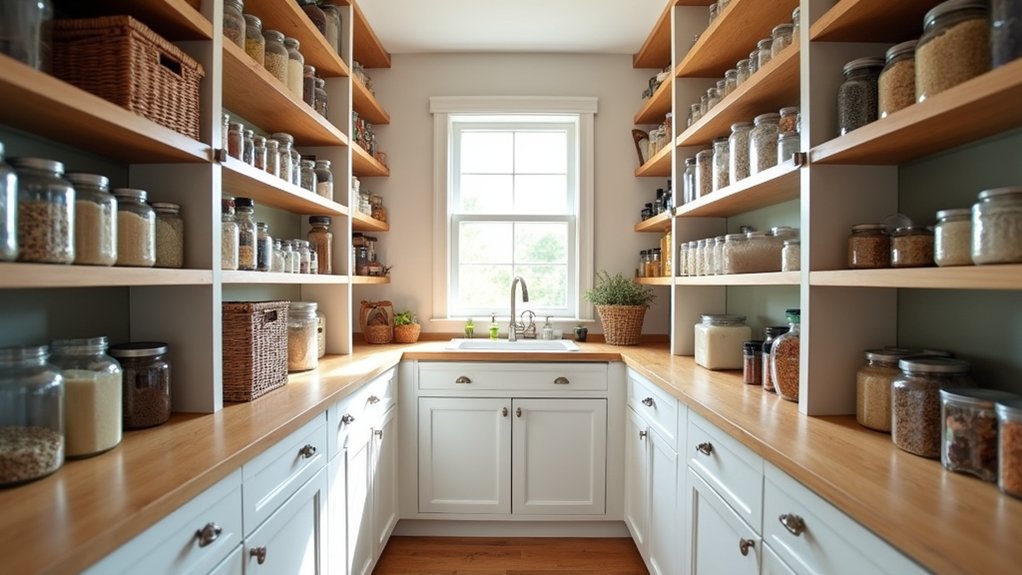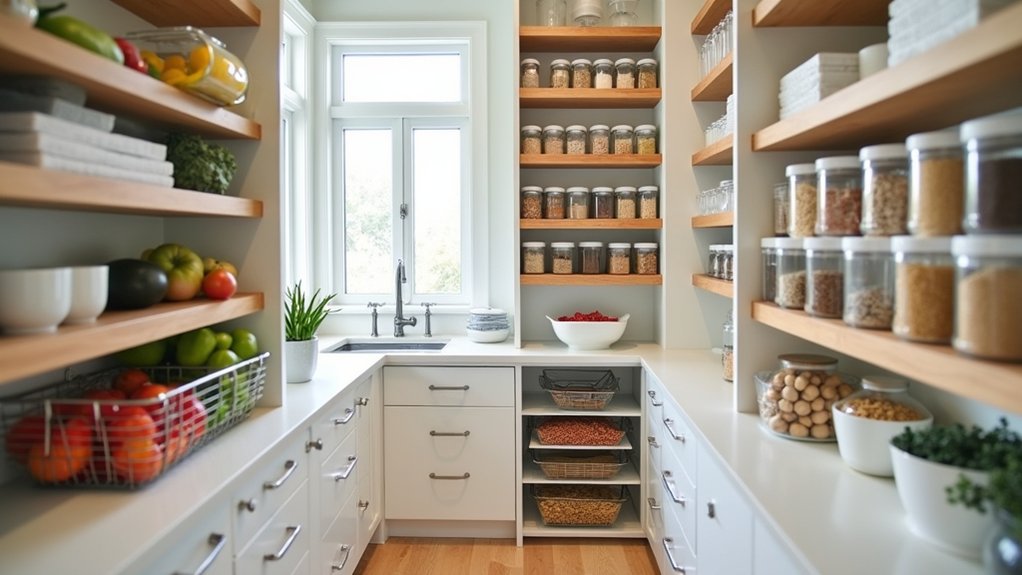
When deciding between bins and open shelves in your closet system, you’ll want to match each option to your specific items and habits. Use open shelves for frequently worn bulky items like sweaters and jeans, they’ll stay visible and won’t stretch. Choose bins for small accessories, seasonal items, or spaces prone to clutter. You can also combine both by stacking bins on shelves. The guidelines below will help you create a system that works for your space.
Open Shelves vs Bins: A Quick Guide to Choosing
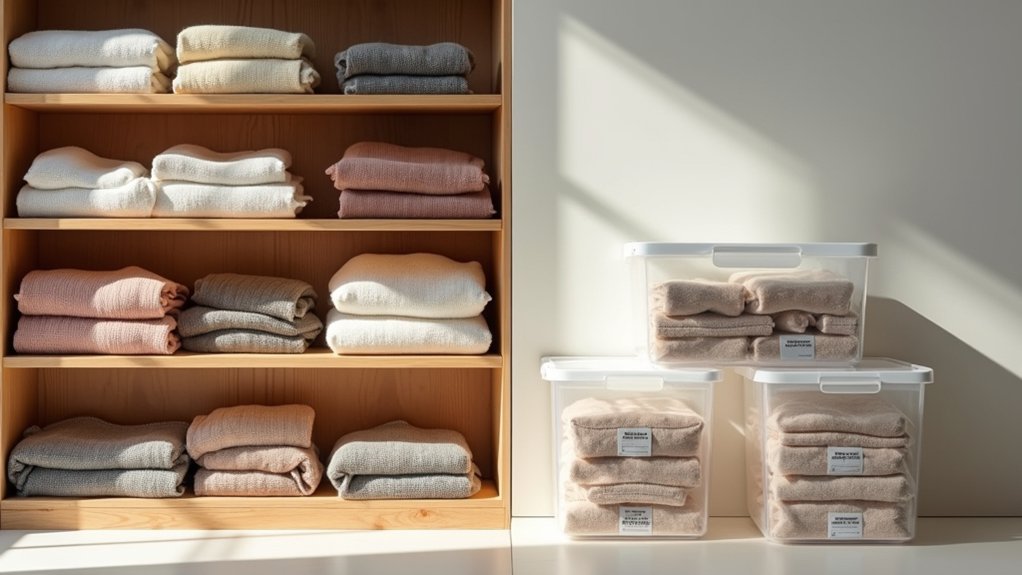
When you’re designing your closet system, the choice between open shelves and bins comes down to how you actually use your space each day. Open shelves give you instant visibility and quick access to frequently worn items, perfect for jeans, sweaters, and pieces you grab regularly. Sweaters should be stored on shelves rather than in drawers to prevent snagging.
Bins work best when you need concealment while maintaining organization. They’re ideal for seasonal items, accessories, or anything you’d rather keep tucked away. Consider decorative storage options like lidded containers to blend function with style. Bins come in materials ranging from plastic and fabric to woven wicker or metal, letting you match any closet aesthetic. Unlike industrial stacking bins designed for warehouses, residential closet bins prioritize aesthetics over heavy-duty durability.
The smartest approach combines both elements. Use open shelves for curated display presentations of daily essentials, then add bins for items that benefit from containment. This hybrid system delivers visibility where you need it and concealment where you don’t.
Use Open Shelves for Bulky Items Like Sweaters and Jeans
Open shelves protect your bulky sweaters and jeans from the snagging and compression that occurs when you stuff them into bins. You’ll spot outfit options instantly since folded stacks remain visible, making it simple to compare styles without digging through containers. With adjustable shelf spacing set to 12-14 inches, you’re maximizing every vertical inch of your closet while keeping chunky knits accessible. Shelving systems have earned the highest market share among closet organizer types because of their versatility in walled-in closets, reach-in wardrobes, or standalone setups. The home organizers and storage market is expected to grow at a 4.78% CAGR through 2030, reflecting continued consumer demand for practical closet solutions. This approach helps solve the common problem of wasted vertical space that makes even large closets feel cramped and disorganized.
Prevents Sweater Snagging
Folding heavy knits like wool and cashmere on open shelves consistently prevents the stretching and shoulder bumps that hangers cause. This approach minimizes sweater stretching while keeping your collection accessible and visible. You’ll notice less pilling when fibers aren’t rubbing against drawer walls or bin edges.
Open shelving prevents wardrobe tangles by giving each piece dedicated space. Use shelf dividers to separate items by weight or texture. Adjustable dividers allow customization to fit different sweater sizes while keeping your folded stacks from toppling over. Maximizing vertical space with overhead shelving gives you additional room to store bulkier seasonal items you’re not currently wearing. For out-of-season sweaters, stackable storage bins can be hidden under your bed until you need them again.
| Storage Method | Stretching Risk | Pilling Risk |
|---|---|---|
| Wire Hangers | High | Low |
| Padded Hangers | Medium | Low |
| Plastic Bins | Low | High |
| Open Shelves | None | Minimal |
| Drawer Stacking | Low | Medium |
Store smoother cashmere separately from heavier wool to limit friction damage between textures.
Easier Style Comparisons
Beyond protecting your knitwear from damage, open shelves solve another common closet frustration: seeing everything you own at once.
When you’re coordinating outfits, you need instant visual access to your options. Open shelving displays your sweaters and jeans in plain sight, eliminating the guesswork that slows your morning routine. You’ll spot color combinations and textures immediately, making layered outfit coordination faster and more intuitive. Unlike closed cabinets that can create dark interiors, open shelves provide better visibility without requiring additional LED lighting installations. Incorporating laundry room storage solutions can further streamline your space, ensuring everything from detergents to fabric softeners has a designated spot. This organization not only enhances the functionality of your laundry area but also contributes to a more polished look.
The bulk item visual appeal of neatly stacked sweaters and folded jeans creates a boutique-style display that simplifies decision-making. You can categorize items by color, weight, or season, then scan your choices without opening a single door or digging through bins. This systematic approach reduces decision fatigue and builds confidence in your daily style selections. With everything neatly displayed, your closet transforms into an enjoyable space that adds visual interest to your home. Open shelves also allow you to customize the layout to fit your specific storage needs, accommodating everything from chunky cable-knit sweaters to bulky denim stacks.
Maximizes Storage Space
When you’re working with limited closet square footage, vertical space becomes your most valuable asset. Open shelves let you exploit every inch above standard hanging rods, transforming dead zones into functional storage for sweaters and jeans. You’ll stack folded items flat with immediate visibility, eliminating the wasted overhead that bins create. organizing closet shelves effectively can enhance the overall look and functionality of your space. Consider using adjustable dividers to create sections for different types of clothing, making it easier to find what you need at a glance.
Your space saving strategies should focus on adjustable shelf heights that adapt to bulky item dimensions. Match shelf depth to your jeans stacks and sweater piles, this prevents overhang waste while maximizing capacity. Modular units allow you to reconfigure your shelving arrangement as your wardrobe evolves over time. Double-hang rod extenders can free up shelf space by handling lighter items, leaving your open shelving dedicated to bulkier pieces. This approach aligns with the trend toward customizable storage systems that let homeowners tailor solutions to their specific wardrobe needs.
Vertical integration works best when you position frequently worn bulky items at eye level and reserve upper shelves for seasonal pieces. Stackable modules in high-ceiling closets access additional room without consuming floor space, giving you systematic organization that grows with your wardrobe.
Choose Bins for Small Items That Topple When Stacked
Small items like socks, accessories, and collectibles often lack the stability needed to stay put on open shelves, they’ll topple, scatter, or shift every time you reach for something nearby.
Contained storage prevents tipping by corralling lightweight pieces that can’t stand independently. Fabric bins work perfectly for undergarments and hosiery, while SKUBB boxes offer compartmentalized solutions for sock drawers. Clear acrylic containers let you see nail polish bottles and belts without removing them from storage. Stacking pantry bins can also organize socks and undies while maximizing vertical space in your closet.
Smaller items require dedicated bins to maintain long-term organization. Y-weave bins separate hosiery by type, drawer dividers segment clutches and wallets, and labeled containers keep collectibles categorized. You’ll eliminate the frustrating cycle of restacking items after every use while protecting delicate pieces from dust and damage.
Pick Bins or Shelves Based on How Often You Reach for It
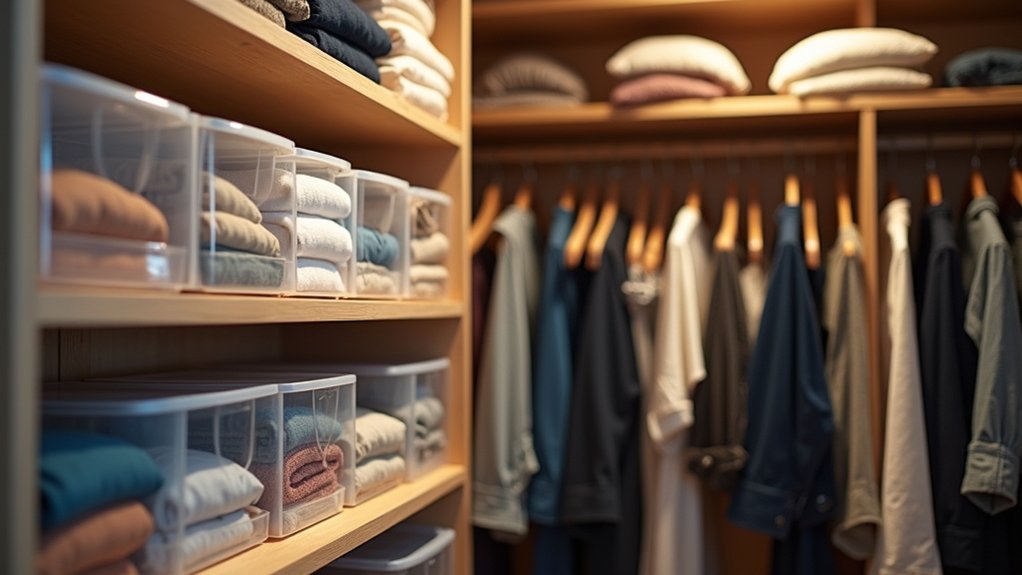
You’ll get the most from your closet when you match storage type to how often you use each item. Drawers work best for daily essentials like underwear and socks because they keep everything visible and within arm’s reach. Reserve bins for seasonal clothing and special occasion pieces you won’t need for months at a time.
Daily Items Need Drawers
Because your morning routine demands speed, the items you reach for daily, workout clothes, work attire, undergarments, shouldn’t hide behind bin lids. Drawers offer the perfect middle ground between open shelves and enclosed bins. They protect your clothing rotation from dust while maintaining quick access.
Consider drawers for:
- Everyday basics like socks, underwear, and loungewear
- Work essentials requiring wrinkle-free storage
- Folded items that stack neatly in multi use compartments
- Linens you swap weekly
- Accessories you grab without searching
Wood or fabric-lined drawers integrate seamlessly into your closet’s aesthetic while keeping frequent-use textiles organized. You’ll reduce rummaging time substantially compared to digging through bins. For items you touch multiple times daily, drawers deliver the accessibility shelves provide with the protection bins offer.
Seasonal Storage Suits Bins
While drawers handle your daily rotation, bins earn their place for items you won’t touch for months at a time. Seasonal wardrobe rotation becomes effortless when you store winter coats, holiday linens, and off-season blankets in enclosed containers. Professional organizers recommend bins specifically for items accessed less than monthly, they conceal bulky gear from daily view while keeping your closet streamlined.
Bin stackability maximizes vertical space on upper shelves where you’d otherwise waste square footage. Plastic containers slide easily for occasional retrieval, and their uniform shapes create clean sightlines. Consider under-bed options if your closet lacks height.
The key distinction: if you’re reaching for something weekly, shelves work better. But for quarterly pulls like guest bedding or ski gear, bins prevent clutter while protecting fabrics from dust.
Shelves Work Better When Tight Corners Limit Depth
When tight corners limit your closet depth to 24 inches or less, shelves outperform bins for both accessibility and storage efficiency. You can’t afford to lose items in deep bins when your tight corner dimensions restrict how far you can reach. Open shelving gives you full visibility and prevents belongings from getting pushed to inaccessible areas.
Customized shelving units adapt to your space’s specific constraints:
- Triangular shelves fit non-standard corner angles
- Modular units adjust to depths under 18 inches
- Stackable configurations maximize vertical storage
- Adjustable heights accommodate varying item sizes
- Open designs eliminate reach-and-search frustration
You’ll optimize every inch without deep protrusion issues. This approach explains why shelving units hold 64.1% market share in confined closet areas, they simply work better when space is tight.
Open Shelves Show Off Bags, Shoes, and Accessories
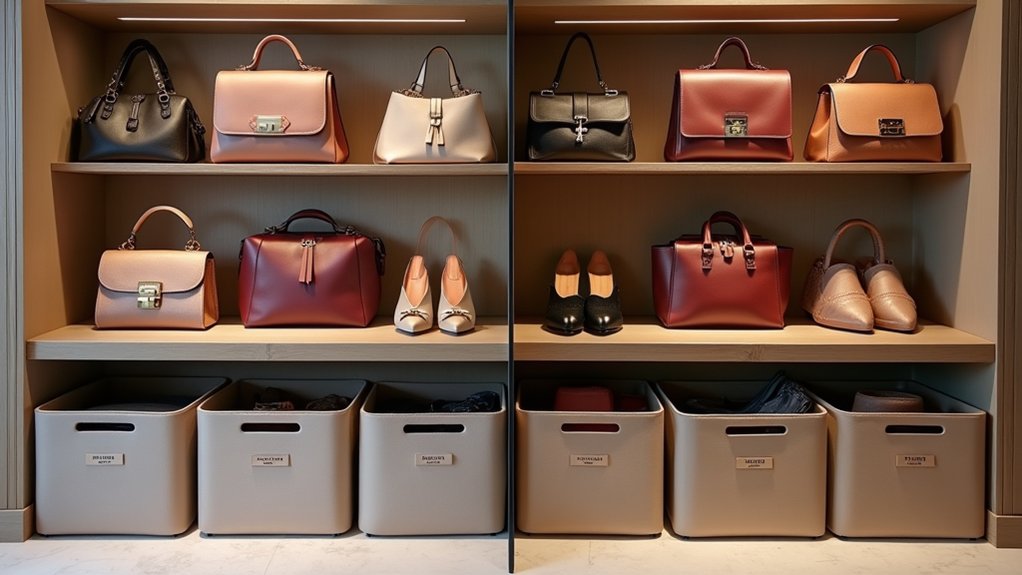
Beyond solving space constraints, open shelves deliver a distinct advantage that bins simply can’t match, they put your bags, shoes, and accessories on full display. You’ll create a luxurious aesthetic that transforms everyday items into featured display pieces, similar to high-end retail presentations.
This visibility serves practical purposes too. You’ll grab handbags and shoes instantly without searching through enclosed spaces. Overhead lighting reaches items directly, and family members locate accessories effortlessly.
To maximize this display approach, space shelves 10-12 inches apart for ideal presentation. Place heavier shoes on lower levels and lighter accessories higher. Group similar items together, and use hooks underneath shelves for hanging pieces. Strategic negative space between items keeps your display looking curated rather than cluttered.
Go With Bins When Kids or Clutter Create Chaos
If your household includes children or chronically disorganized family members, bins become essential rather than optional. Closed storage declutters visual space instantly, hiding the inevitable mess that accumulates when multiple people share a closet. You won’t see scattered toys, rumpled clothes, or items tossed haphazardly, and that alone reduces daily stress. Exploring creative backpack storage ideas can further enhance your organization efforts, providing designated spaces for each child’s belongings. Utilizing vertical space, such as hooks or wall shelves, allows for easy access and encourages children to be responsible for keeping their items tidy. With a few simple solutions, you can maintain a clutter-free environment that fosters a sense of order in your home.
Bins offer practical advantages that simplifies home organization:
- Contain kid-caused chaos by preventing easy access to items they’ll scatter
- Block dust and pet fur from settling on stored clothing and accessories
- Limit impulsive grabbing that leads to disorganized piles
- Categorize smaller items that get lost on open shelves
- Protect bulkier seasonal pieces from environmental debris
Choose enclosed systems when maintaining order matters more than displaying your wardrobe’s contents.
Shelves Cost Less, but Cheap Bins Break Fast
Budget-conscious homeowners often gravitate toward shelving because the numbers favor it immediately, basic wire closet organizers run $100-$500 for small spaces, while prefabricated systems like IKEA PAX start at $200-$1,000. You’ll avoid the added hardware expenses that bins and drawers demand.
However, cheap bins create problems. Stock systems use MDF or particle board that fails under regular use. Low-end drawers stick, break, and need replacement, erasing your initial savings.
Budget bins backfire, flimsy materials and sticky drawers mean replacements that cost more than you saved.
If you’re choosing bins, invest in quality materials for reliability. Custom options with solid wood construction outlast budget alternatives considerably. Professional custom installation guarantees drawers operate smoothly for years, not months.
Your best strategy? Start with affordable shelving for basic storage needs. When you add bins, skip the bargain versions. You’ll pay $2,000-$5,000 for semi-custom systems, but they won’t fail prematurely.
Stack Bins on Shelves to Get the Best of Both
You can combine bins and shelves to maximize vertical space while keeping items visible and contained. Transparent or open-front bins let you see contents at a glance without unstacking, and color-coded options speed up categorization so you’ll find what you need faster. This hybrid approach gives you the structure of bins with the accessibility of open shelving.
Visibility With Contained Storage
When you stack bins on open shelves, you’re combining the best features of both storage methods, containment and accessibility. Contained visibility lets you identify items instantly through transparent walls while keeping everything dust-free and organized.
Clear lidded bins deliver dust protection that open shelves can’t match, shielding your off-season clothing and linens from accumulation. You’ll reduce search time by up to 55% when you can see contents without opening each container.
To maximize this hybrid approach:
- Choose transparent bins with labeling panels for quick identification
- Select front-loading designs to access items without destabilizing your stacks
- Use color-coded lids for instant category recognition
- Position frequently used bins at eye level
- Opt for handled bins when you need to move containers regularly
Maximize Vertical Shelf Space
Stacking bins on open shelves transforms wasted vertical space into functional storage without expanding your closet’s footprint. You’ll create multiple storage layers within a single wall area by selecting stackable bins that fit your shelf dimensions precisely.
Position heavier bins at the bottom of each stack and lighter items on top to maintain stability. Clear bins let you identify contents without dismantling your system. Store off-season items in higher stacked bins while keeping everyday essentials between 30 and 65 inches from the floor.
Double hanging rod installations free up prime shelf real estate above lower rods. You’re maximizing storage volumes when you combine this configuration with strategic bin placement, stacking beneath short hanging garments eliminates dead space that most closets waste entirely.
Quick Categorization Using Colors
Color-coded bins stacked on open shelves give you instant visual access to your belongings while maintaining the organizational structure that keeps closets functional. This color coded categorization approach lets you spot what you need in seconds without rummaging through containers.
When implementing shelf bin stacking strategies, consider these practical applications:
- Assign specific colors to categories, blue for winter accessories, green for workout gear, red for travel items
- Stack no more than two bins high to maintain easy access and prevent toppling
- Use clear bins with colored labels when you need to see contents at a glance
- Place frequently used items in bins at eye level
- Reserve lower shelves for heavier, less-accessed seasonal storage
You’ll create a system that’s both visually intuitive and highly functional.
Build in Flexibility With Adjustable Shelves and Modular Bins
Adjustable shelves give you the freedom to customize shelf heights based on what you’re storing, whether that’s stacking two rows of sweaters on a 30-inch shelf or fitting three pairs of shoes across the same length. Pair these with modular bins for hybrid organization that adapts as your wardrobe changes.
| Feature | Benefit |
|---|---|
| Adjustable heights | Accommodate seasonal items |
| Stackable bins | Maximize vertical space |
| Collapsible designs | Save space when unused |
| Open-front bins | Access items without moving containers |
| Color-coded options | Sort categories quickly |
This modular compatibility lets you reconfigure your system without replacing components. Stack lidded bins on lower shelves for concealed storage while keeping frequently used items visible above.
Ready to Transform Your Space?
A well-designed closet or storage system can completely change the way you live at home, and at Creative Closet Design, we make that transformation effortless. From custom closets and pantry systems to garage storage, office systems, and entertainment centers, our experienced team designs and installs solutions tailored specifically to your space and your lifestyle. Call (863) 591-4500 today to schedule your free design consultation.
Frequently Asked Questions
Can I Use Fabric Bins Instead of Plastic Ones in My Closet?
Yes, you can absolutely use fabric bins instead of plastic ones in your closet. Fabric storage options actually outperform plastic in humidity-variable spaces since breathable bin materials resist mold and won’t warp from temperature swings. You’ll want to add corrugated fiberboard inserts for crush resistance and avoid stacking more than three high. Plan to replace them every 36 months, and you’ll maintain reliable, collapsible storage that adapts to your seasonal needs.
How Do I Prevent Sweaters From Getting Musty on Open Shelves?
To prevent musty sweaters on open shelves, you’ll want to keep shelves well ventilated by folding items loosely and avoiding tight packing. Rotate sweater storage every few weeks to guarantee proper airflow. Place cedar blocks or activated charcoal nearby to absorb moisture and neutralize odors. Always store clean sweaters only, since dirt attracts moisture and pests. You can also add lavender sachets for natural anti-fungal protection and a fresh scent.
What Bin Sizes Work Best for Standard Closet Shelf Dimensions?
For standard 12-inch deep shelves, you’ll want bins with 10-11 inch depths to allow easy access, bin depth considerations matter for pulling items out smoothly. Match your shelf spacing measurements to bin heights: choose 6-8 inch tall bins for shelves spaced 8-10 inches apart, and 10-12 inch bins for 12-15 inch spacing. Square or rectangular bins between 12-14 inches wide maximize space on typical 24-36 inch reach-in closet shelves.
Should I Label My Bins or Rely on Color Coding Alone?
You’ll get the best results by combining both methods. When weighing labeling versus color coding, consider that colors offer instant visual sorting, but labels prevent mix-ups for similar items like sweater types or accessories. Your bin material considerations matter too, fabric bins accept adhesive labels differently than plastic. Use color coding for broad categories you access frequently, then add labels for specifics in stacked or lidded bins where contents stay hidden.
How Often Should I Reorganize My Bin and Shelf Storage System?
You should adopt a seasonal reorganization approach, reviewing your bin and shelf system twice yearly during spring and fall shifts. This biannual schedule achieves 79% adherence rates compared to just 22% with quarterly reviews. Try rotating bins on a schedule that aligns with wardrobe changes, moving off-season items to less accessible spots while bringing current-season storage forward. This prevents premature discarding and keeps your system working efficiently year-round.