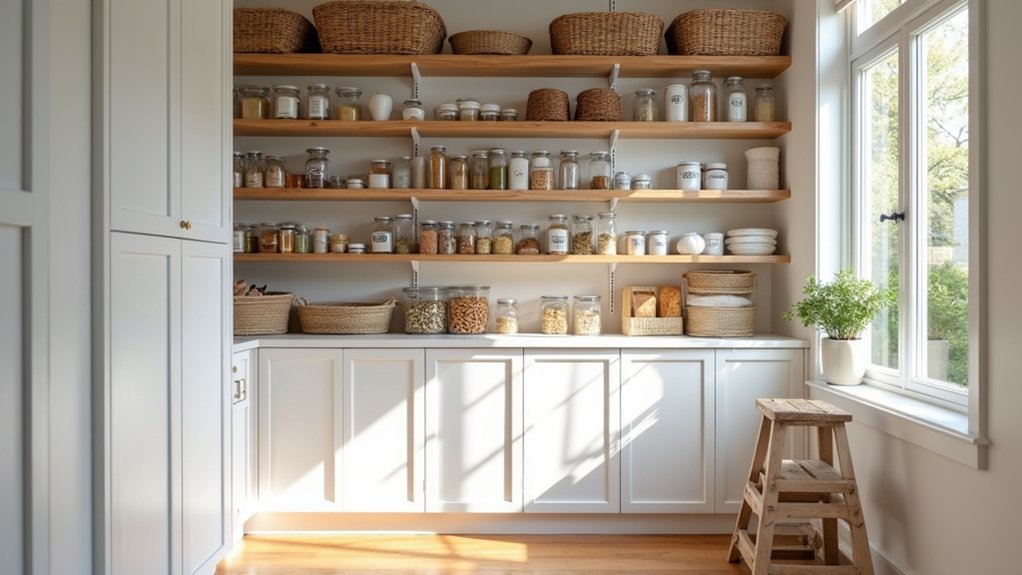
When you’re sharing a closet with a partner, three layouts stand out for maximizing space and minimizing conflict. A symmetrical split creates equal territories down the middle, giving each person dedicated zones. Category-based organization groups clothing by type rather than owner, streamlining your morning routine. Modular systems offer flexibility, letting you reconfigure shelves and rods as your storage needs evolve. Each approach solves different challenges, and the details below will help you choose what’s right for your space.
A Symmetrical Split Gives Each Partner Their Own Side
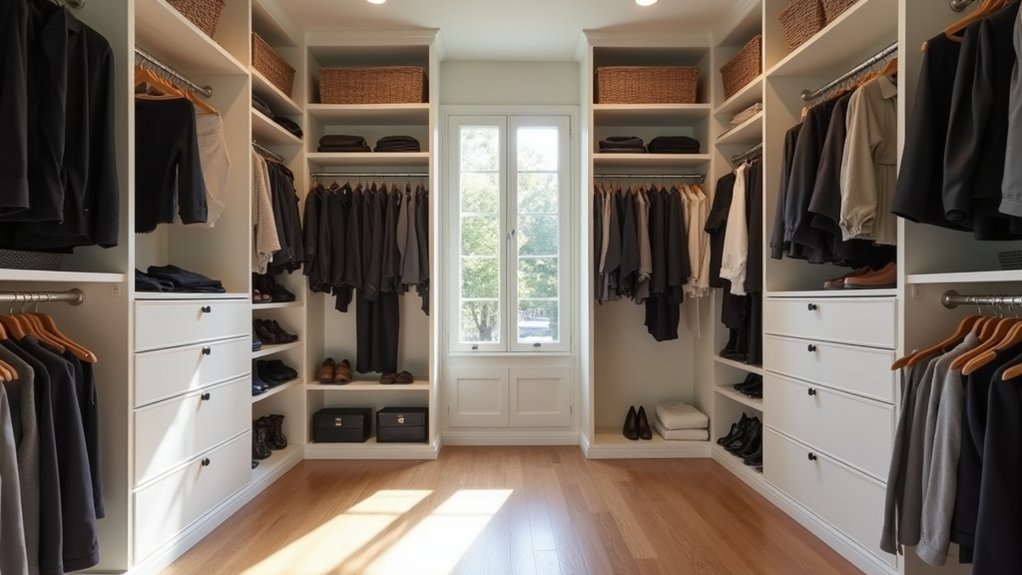
A symmetrical split transforms shared closet space into two distinct territories, eliminating the daily friction that comes from overlapping wardrobes. You’ll achieve visual equilibrium by mirroring the layout down the middle, using a central divider or vertical tower to define each zone clearly.
Your design doesn’t require identical contents, just balanced structure. One side might feature double-hang sections for shirts and slacks while the other accommodates long-hang space for dresses or coats. Adjustable shelves and modular components let you adapt each territory to specific needs. Plan for a clearance aisle of 3′ (91 cm) between facing storage sections so both partners can access their belongings comfortably without crowding each other.
This approach provides customized access for both partners through soft-close drawers, pull-out racks, and strategic shelf placement. You’ll prevent arguments over space, maintain calm morning routines, and add resale value. The symmetry signals fairness even when wardrobes differ vastly in size. Integrated LED strip lighting beneath shelves ensures both partners can easily see their belongings without encroaching on each other’s territory. Dedicated shoe racks and cubbies on each side prevent floor clutter that often triggers daily disagreements between partners.
Zone Your Shared Closet by Clothing Type Instead of Owner
When couples abandon owner-based divisions and organize by clothing type instead, they open a more intuitive system that streamlines daily dressing.
To coordinate shared apparel inventory effectively, pull everything out and sort into categories: dresses, tops, pants, and sweaters. Assign dedicated zones using hanging rods, shelves, and floor space for each clothing type rather than splitting by person.
Within each zone, arrange items by subcategory and color. Group tops by sleeve length, then organize in rainbow order. Hang pants together on add-on hangers, separating jeans from work trousers. Stack folded sweaters by weight, keeping cardigans with zip-ups. For couples with extensive wardrobes that exceed typical closet space, clothing racks can supplement built-in storage while maintaining the category-based system.
You’ll maintain communal closet layout best with clear labels or dividers containing each category. Use uniform velvet slimline hangers throughout for a cohesive appearance that maximizes every inch of rod space. Reserve wooden hangers for suits and heavy coats to provide proper support for these weightier garments. Installing a double-hanging rod system allows you to store two rows of shorter items like shirts and pants, effectively doubling your available hanging space.
Modular Systems Let Your Shared Closet Grow With You
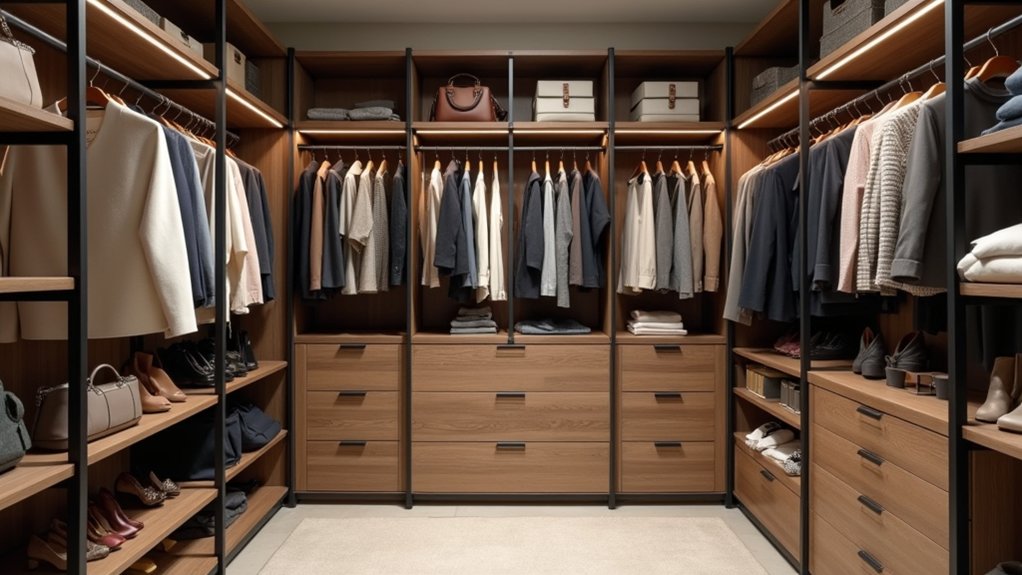
Organizing by clothing type creates an efficient shared closet, but your storage needs won’t stay static forever. Modular systems offer focused storage solutions that adapt as your life changes. When wardrobes expand or downsize, you’ll simply reconfigure components rather than starting over. These stackable units can be arranged to fit any space, resembling a built-in closet when assembled.
These intentional organization approaches maximize every inch of available space. Adjustable shelves move to accommodate varying item heights, while movable hanging rods shift for short or long garments. Stackable drawers and pull-out baskets configure based on current priorities. Integrated lighting ensures both partners can easily see and access items in deeper storage areas.
Your shared closet can evolve with lifestyle shifts, whether you’re transitioning to work-from-home routines or accommodating seasonal wardrobe changes. The same system that serves your master closet today can repurpose for different rooms tomorrow. You’ll enjoy quick installation, cost-effective customization, and increased home value without lengthy wait times. Quality closet systems last many years, making them a worthwhile investment for couples building a home together.
Frequently Asked Questions
How Do We Handle Accessories Like Jewelry and Watches in a Shared Closet?
You’ll want to use divided storage trays and designated jewelry organizers to keep each partner’s accessories separate and accessible. Start by assigning specific drawers or compartments to each person, then add velvet-lined inserts to protect watches and delicate pieces. Stackable sections let you customize storage for rings, earrings, and bracelets individually. Consider pull-out trays that maximize vertical space while keeping everything visible, you’ll both find what you need without disrupting each other’s collection.
What Lighting Works Best for Partners With Different Morning Schedules?
You’ll want motion activated lighting in your individual zones so you can navigate without disturbing your sleeping partner. Install battery-powered puck lights in drawers and LED strips under shelves, they’ll illuminate only when you’re present. Position your closet near natural daylight sources when possible, reducing reliance on artificial light during daytime routines. Add smart dimmers to each zone, letting you customize brightness levels independently while maximizing your shared space efficiently.
Where Should We Place Laundry Hampers to Avoid Clutter and Arguments?
Place pull-out hampers within each partner’s designated storage zones to eliminate floor piles and ownership disputes. You’ll want to install dual compartments, one per person, inside your shared closet cabinetry, using soft-close slides for quiet morning use. Strategic laundry hamper placement near where you undress prevents clothes from landing on chairs or floors. Consider tilt-out options between your hanging sections, maximizing vertical space while keeping dirty laundry hidden and sorted.
How Often Should Couples Reorganize Their Shared Closet Together?
You should reorganize your shared closet together twice a year, at the start of spring and fall. This biannual approach maintains a 79% adherence rate over three years, making it sustainable for busy couples. Schedule 48 hours of pre-audit time so you can each sort independently before shared decision making on overlapping items. Frequent communication during these seasonal check-ins prevents boundary disputes and keeps your space-maximizing layout functioning smoothly.
What’s the Best Way to Store Seasonal Items Without Losing Space?
You’ll maximize space by combining vacuum storage bags with strategic placement. Compress bulky winter items to 50-70% of their original volume, then utilize top shelves for these flattened bags during off-seasons. Rotate storage bins seasonally, place winter items high and summer gear low, then swap when temperatures change. Label everything clearly so you and your partner can quickly locate what you need without disrupting each other’s organized sections.