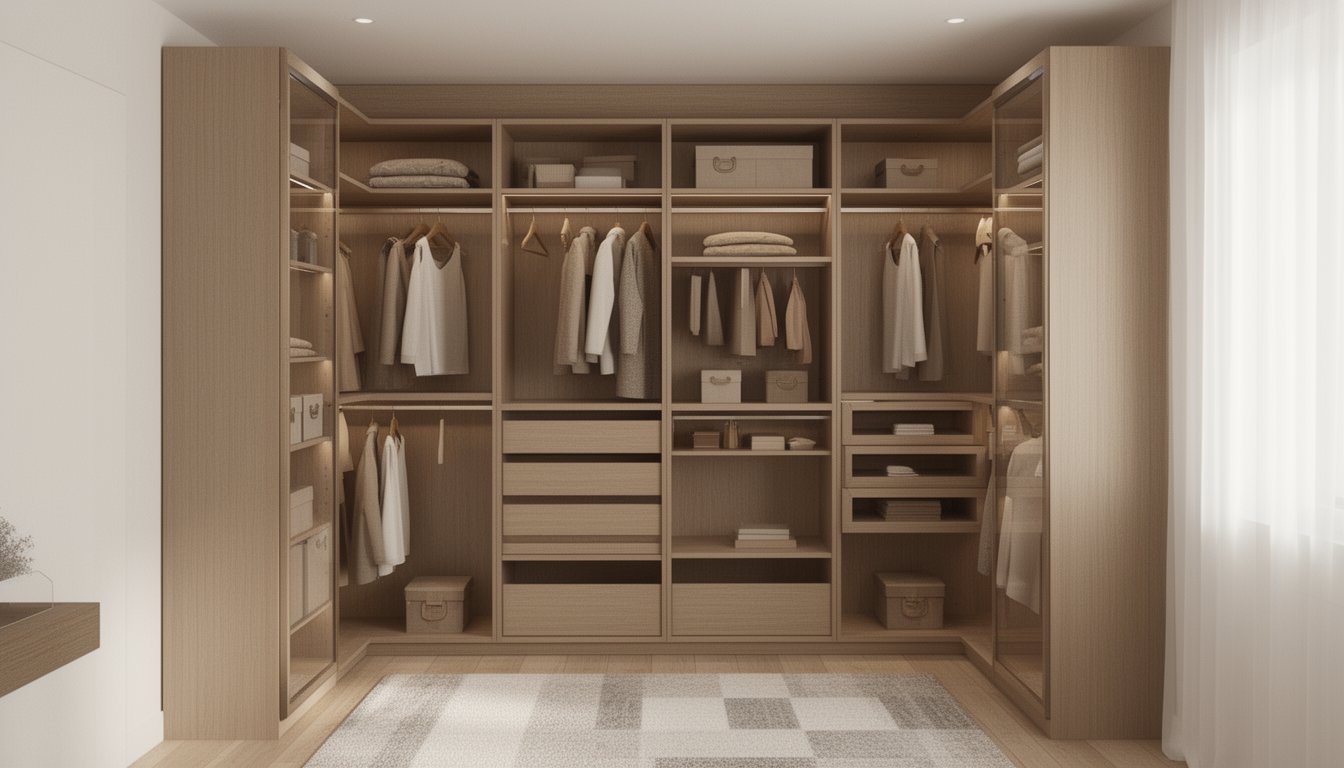
Closet rods and drawers serve distinct functions in your custom storage design. You’ll want rods for maintaining the shape of structured garments like suits and dresses, while drawers excel at organizing smaller items and accessories. Rods maximize vertical space through double-hanging configurations, offering twice the capacity, and drawers provide concealed storage with smooth-operating ball bearing slides. Understanding these key differences will help you create the ideal storage ratio for your specific wardrobe needs and space limitations.
Understanding Basic Storage Functions
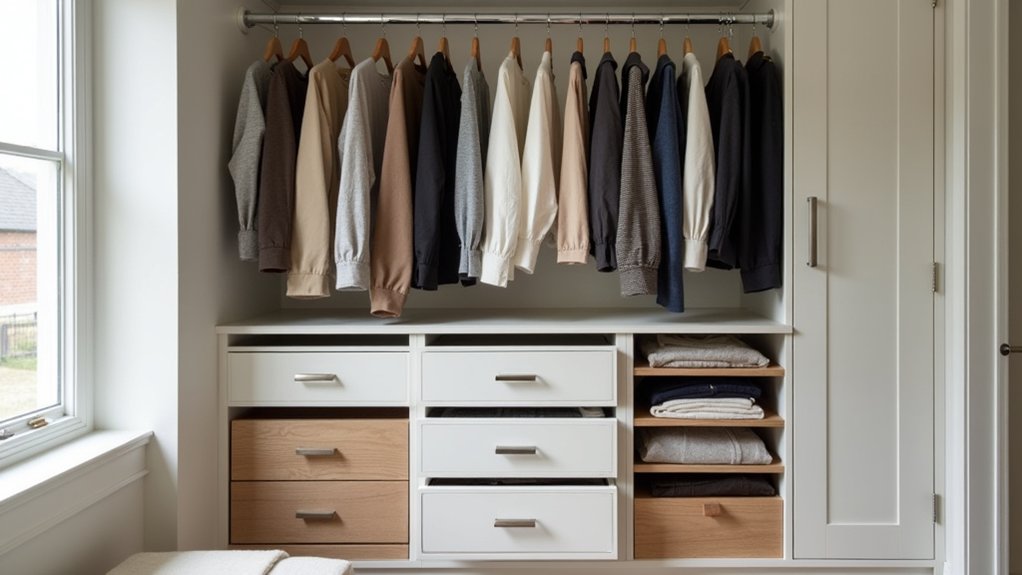
When designing an effective storage solution, understanding the fundamental functions of both closet rods and drawers helps optimize your space utilization. These storage essentials serve distinct purposes in your organizational system, with rods maximizing vertical space for hanging bulky items while preventing wrinkles, and drawers providing enclosed storage for smaller, foldable pieces. Label makers provide clear identification of drawer contents for streamlined organization. Regular assessment shows that 80% of clothing typically sits unused in most closets, making smart organization crucial.
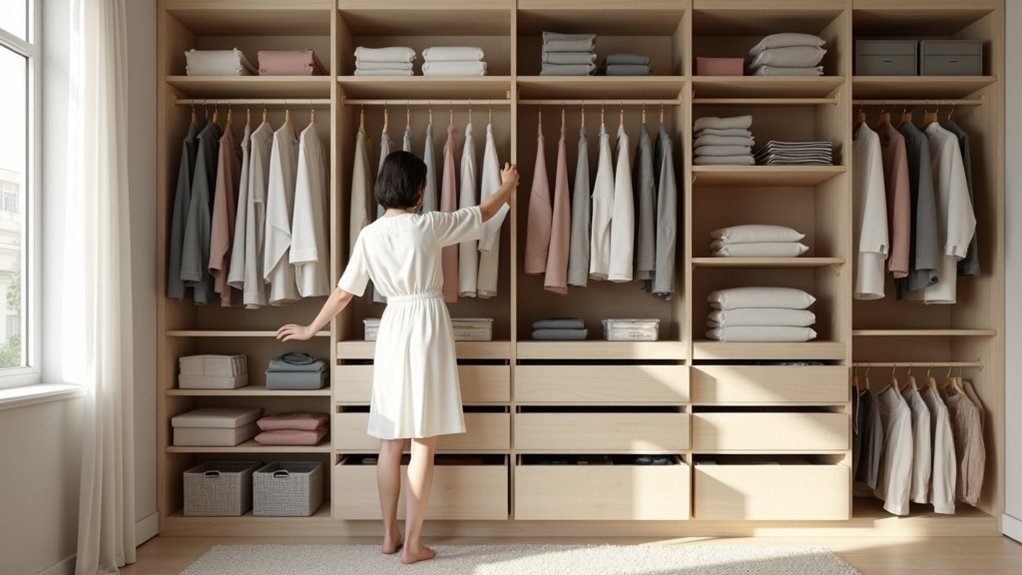
Your organization strategies should leverage the strengths of each component. Closet rods offer immediate visual access and support garment preservation, particularly for suits, dresses, and coats. Installing double hanging rods dramatically increases storage capacity for shorter garments like shirts and pants. Drawers excel at consolidating smaller categories like accessories and undergarments while keeping them dust-free. You’ll find that combining both elements creates a thorough system – use rods for items requiring hanging storage and drawers for pieces that benefit from protected, compartmentalized spaces. This balanced approach guarantees efficient space utilization while maintaining garment integrity.
Matching Storage Types to Your Wardrobe
Every garment in your wardrobe demands specific storage solutions to maintain its structural integrity and accessibility. For ideal wardrobe organization, you’ll want to match each clothing type to its most suitable storage method. Install closet rods for your structured pieces like suits, dresses, and dress shirts to prevent wrinkles and maintain shape. Dedicate drawers to smaller items such as undergarments and accessories, using dividers to prevent tangling.
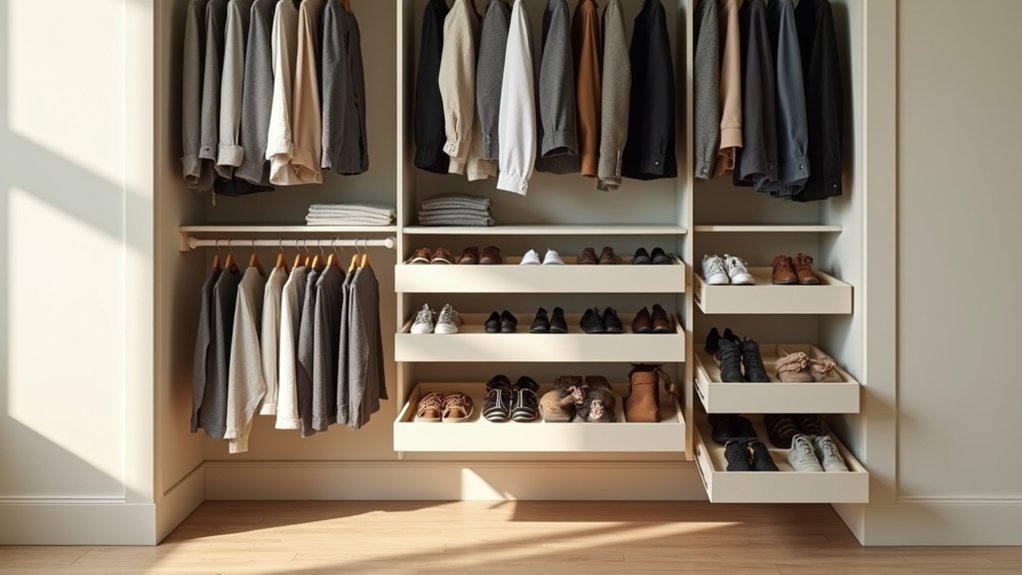
The included ball bearing slides ensure smooth drawer operation for easy access to your stored items. To maximize storage efficiency, position shelves for bulky knits, denim, and athleisure wear, as these items don’t require hanging and can lead to wasted vertical space. A standard 30-inch shelf can accommodate two stacks of sweaters or three pairs of shoes, making it easy to plan your storage needs. Professional systems utilize intelligent zone planning to create dedicated areas for both hanging and shelving functions. Consider your lifestyle when allocating space; if you’re primarily wearing business attire, prioritize rod space. For a casual wardrobe, emphasize shelving for folded items. You’ll achieve better clothing longevity and easier access by aligning storage types with garment needs.
Accessibility and Daily Usage
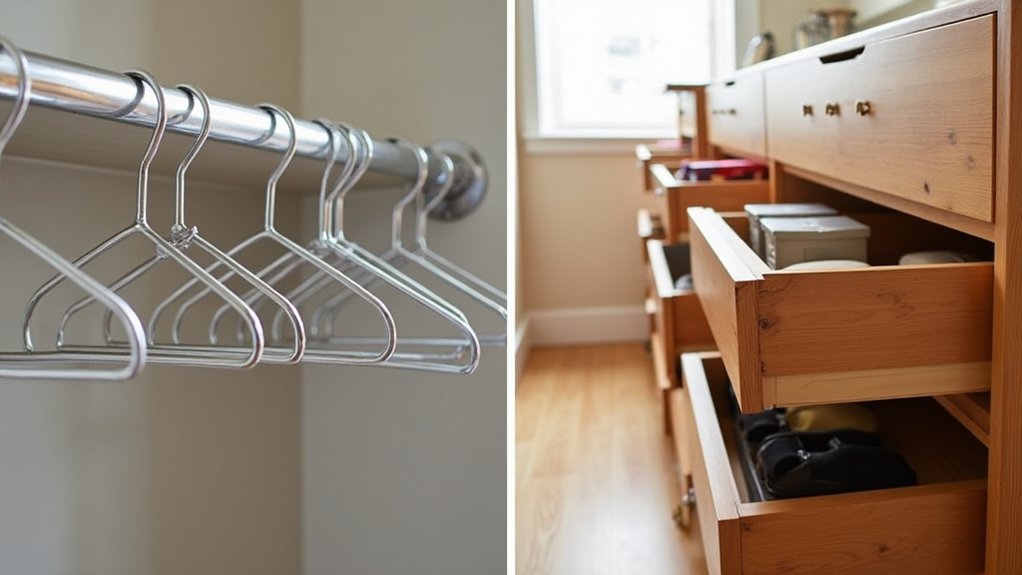
As storage accessibility impacts daily routines, the height placement of closet components directly affects their usability across diverse user populations. Accessible designs enhance daily efficiency through strategic positioning of rods and drawers within the ADA-recommended 15″-48″ reach range. Pull-out drawers positioned between 8″-33″ above the floor enable ergonomic access without overextension, while adjustable or pull-down rods accommodate users of varying heights and abilities. Sliding barn doors can enhance the overall accessibility of closet systems by eliminating swing-door obstructions. The standard 40-inch spacing between double hanging rods prevents clothes from dragging and ensures optimal accessibility. LED lighting systems provide essential visibility for identifying garments and accessories in dimly lit areas.
Strategic closet design with adjustable components ensures accessibility for all users while maximizing storage efficiency and daily functionality.
- Slide-out storage solutions minimize physical strain during wardrobe selection
- Horizontal zoning enhances workflow by keeping frequently-used items at ideal heights
- Universal design features support independent dressing routines for mobility-impaired users
- Deep drawer configurations (18″-24″) maximize storage while maintaining ergonomic reach zones
The integration of these accessibility considerations guarantees your storage system serves all users effectively while streamlining daily wardrobe management.
Design Flexibility and Organization
While both storage solutions offer distinct advantages, the design flexibility of closet systems hinges on your ability to mix rods and drawers strategically. Rods provide exceptional design versatility through adjustable heights and double-tier configurations, while drawers excel in space optimization with custom sizing and modular placement options. Custom tall cabinetry allows for versatile, adjustable shelving based on changing storage needs. You’ll find that rods enable quick visual organization and seasonal rotation, reducing garment wrinkles through proper hanging. Meanwhile, drawers enhance compartmentalization through internal dividers and concealed storage, streamlining your daily routines with dedicated spaces for folded items and accessories. For maximum accessibility, consider installing pulldown closet rods that eliminate the need for step stools when reaching high storage areas. Adding a 14-inch shelf depth ensures proper storage capacity and prevents overcrowding of larger items. Both components integrate seamlessly into modular systems, allowing you to reconfigure your storage as needs change. The key is leveraging each element’s strengths – use rods for hanging clothes that need shape retention and drawers for items requiring protected, compartmentalized storage.
Maximizing Available Space
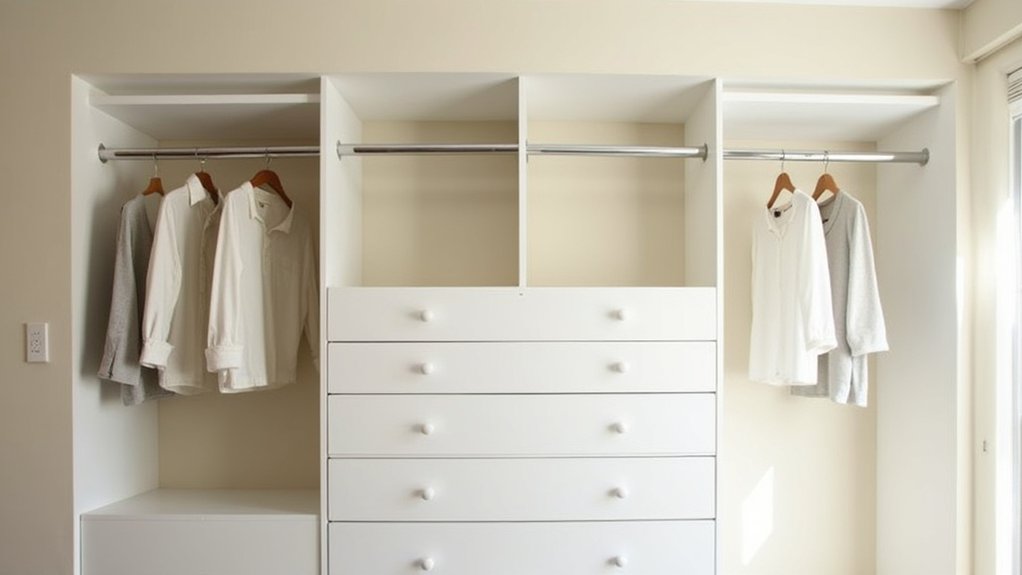
Three key principles govern effective space maximization in closet design: vertical optimization, dead space elimination, and strategic component placement. You’ll maximize your storage potential by implementing organization strategies that utilize every available inch, from floor to ceiling. Double-hanging rods can double your hanging capacity, while pull-down mechanisms make high spaces accessible for everyday use. Allowing 1 inch between garments helps prevent overcrowding and makes accessing clothes easier. Walk-in closets provide the most extensive storage options and often include additional features like mirrors and storage benches.
Smart closet design transforms wasted space into valuable storage through vertical optimization, dead zone elimination, and strategic placement of components.
- Install upper rods at 80″ and lower at 40″ to create perfect clearance for multi-tier hanging
- Integrate full-extension drawers beneath hanging sections to eliminate dead zones
- Utilize vertical space up to 90″ with adjustable shelving systems for dynamic storage
- Position standard 24″ drawers strategically to optimize folded item storage
Through calculated space optimization, you’ll transform underutilized areas into functional storage while maintaining easy access to all your belongings.
Visual Impact and Style Elements
When designing your storage solution, you’ll find that the interplay between closet rods and drawers creates distinct visual rhythms in your space. While rods showcase your wardrobe as design elements through open display, drawers offer clean lines and concealment that minimize visual clutter. Your choice between exposed or hidden storage greatly impacts the room’s aesthetic harmony, with rods creating vertical movement and drawers establishing horizontal planes that anchor the design. Wooden closet rods add a timeless, traditional elegance that can elevate any custom storage design. The addition of various material finishes in custom drawer designs allows you to perfectly complement your space’s overall style and decor.
Design Creates Visual Harmony
Visual harmony stands at the forefront of successful closet design, where the interplay between rods and drawers creates a cohesive aesthetic experience. You’ll achieve visual cohesion through synchronized finishes, proportional spacing, and coordinated hardware choices. The aesthetic alignment between these storage elements reinforces your closet’s overall design direction, whether modern or traditional.
- Strategic placement of rods creates vertical rhythm, enhancing perceived ceiling height
- Drawer block shapes anchor lower sections, establishing visual weight distribution
- Unified material finishes minimize visual disruption across storage zones
- Coordinated hardware ties design elements together for seamless flow
Hidden vs. Displayed Storage
The choice between hidden and displayed storage fundamentally shapes your closet’s aesthetic impact and design narrative. Hidden aesthetics through drawer systems create a minimalist environment by concealing items behind clean surfaces, effectively expanding your perceived space while maintaining visual serenity. You’ll find this approach particularly beneficial in smaller rooms where visual clutter can feel overwhelming.
Displayed organization, achieved through rod systems, transforms your closet into a curated showcase. While this approach offers immediate access and styling opportunities, it demands consistent maintenance to preserve its intended visual appeal. You’ll need to reflect on how your wardrobe’s color palette and arrangement contribute to the overall room aesthetic. For best results, you might integrate both storage types strategically, balancing the subtle sophistication of hidden storage with the dynamic expression of displayed elements.
Creating the Perfect Balance in Your Closet
You’ll need to conduct a thorough wardrobe audit to determine your specific rod-to-drawer ratio, considering factors like your lifestyle needs and clothing composition. When planning your closet configuration, integrate a strategic mix of hanging and drawer storage solutions, aiming for the industry-recommended 60/40 split to optimize both functionality and aesthetic appeal. In compact spaces, maximize vertical storage potential by installing double-hanging rods above drawer units, while maintaining proper spacing requirements for different garment types.
Assess Your Storage Needs
Understanding your specific storage requirements marks the first essential step in achieving a perfect rod-to-drawer ratio for your closet design. By analyzing your storage priorities and item frequency, you’ll enhance space allocation while preventing the common pitfall of disorganization that affects 25% of Americans.
- Evaluate your wardrobe composition; hanging items (dresses, suits, coats) require vertical rod space, while folded items need drawer capacity
- Track your usage patterns; allocate prime accessibility to the 20% of items you wear most frequently
- Measure your high-rotation items against seasonal pieces to determine ideal rod placement
- Calculate drawer requirements for small accessories, undergarments, and folded items
Mix Function With Style
After pinpointing your storage needs, mastering the artful blend of function and style becomes your next design priority. Integrate high-functionality aesthetics by combining rods, drawers, and shelves in a visually harmonious layout that maximizes both storage and style integration.
Position open shelving to display color-coordinated pieces and accessories, while utilizing drawers with designer fronts to conceal items that could create visual clutter. Select hardware and materials that complement your room’s decor, ensuring the storage system acts as a design feature rather than just utility space. Create symmetrical arrangements of hanging rods at multiple heights, paired with strategically placed drawers for a sophisticated appearance. This balanced approach delivers practical storage solutions while maintaining the polished, luxurious feel you’re seeking in your custom closet design.
Maximize Limited Space
While limited closet space presents a common challenge, strategic deployment of rods and drawers can dramatically increase storage capacity. By maximizing vertical storage through double-hanging rods and implementing smart drawer organization, you’ll optimize every cubic inch of available space. Studies indicate that 80% of home clutter stems from disorganization rather than actual space limitations.
- Install ceiling-height rods and shelving to capture often-overlooked upper zones
- Utilize drawer dividers for efficient small-item storage, preventing scattered accessories
- Implement double-rod systems to double your hanging capacity
- Position drawers beneath hanging sections to maximize previously wasted space
Your closet’s efficiency hinges on the strategic integration of both storage types. Consider implementing adjustable systems that allow for reconfiguration as your needs evolve, ensuring long-term functionality and space optimization.
Frequently Asked Questions
How Often Should Closet Rods Be Replaced Due to Wear and Tear?
You’ll need to replace your closet rods every 5-10 years under normal residential use, though this varies based on rod durability factors like material and loading patterns. Heavy-duty metal rods last longer, while wooden or plastic ones may need replacement every 2-5 years. Monitor for key closet maintenance tips: check annually for sagging, loose fittings, or surface wear. Replace immediately if you notice bending or hear persistent noise during use.
Can Drawers Be Retrofitted With Soft-Close Mechanisms After Installation?
Yes, you can retrofit your existing drawers with soft-close mechanisms after installation. Most standard drawers accommodate aftermarket soft-close kits from manufacturers like Blumotion. You’ll need to verify your drawer slide type (side-mount, under-mount, or Euro) to ascertain compatibility. Installation typically requires basic tools and minimal skills; you’ll secure the damper device inside the cabinet and align it properly for smooth operation.
What Weight Capacity Should Closet Rods Have for Heavy Winter Coats?
You’ll need closet rods rated for 50-65 lbs minimum for heavy winter coats, though it’s safer to opt for 80-100 lb capacity systems. Choose steel or high-density hardwood rod materials with a 1.1-1.3 inch diameter for ideal support. Guarantee proper weight distribution by installing metal brackets less than 32 inches apart. For extensive winter wardrobes, consider commercial-grade rods rated at 100+ lbs with center support brackets.
Are Cedar-Lined Drawers Worth the Additional Investment for Clothing Protection?
Yes, cedar-lined drawers are worth the investment if you’re storing valuable garments, especially woolens. The cedar benefits include natural pest deterrence, moisture regulation, and chemical-free protection. While drawer longevity requires periodic maintenance through sanding or oil treatments, you’ll find the long-term protection justifies the upfront cost. Just remember to use barrier films to prevent direct fabric contact, and you’ll maximize both garment preservation and cedar’s effectiveness.
How Do Humidity Levels Affect the Operation of Drawers Versus Rods?
Drawer humidity impacts are considerably more disruptive than rod maintenance concerns. You’ll notice your drawers can stick or bind when materials swell from moisture, particularly with wood components. While rods (especially metal ones) remain largely functional in humid conditions, your drawers require extra attention to prevent operational issues. To protect both systems, you’ll want to maintain humidity below 50% and consider installing dehumidifiers for peak performance.