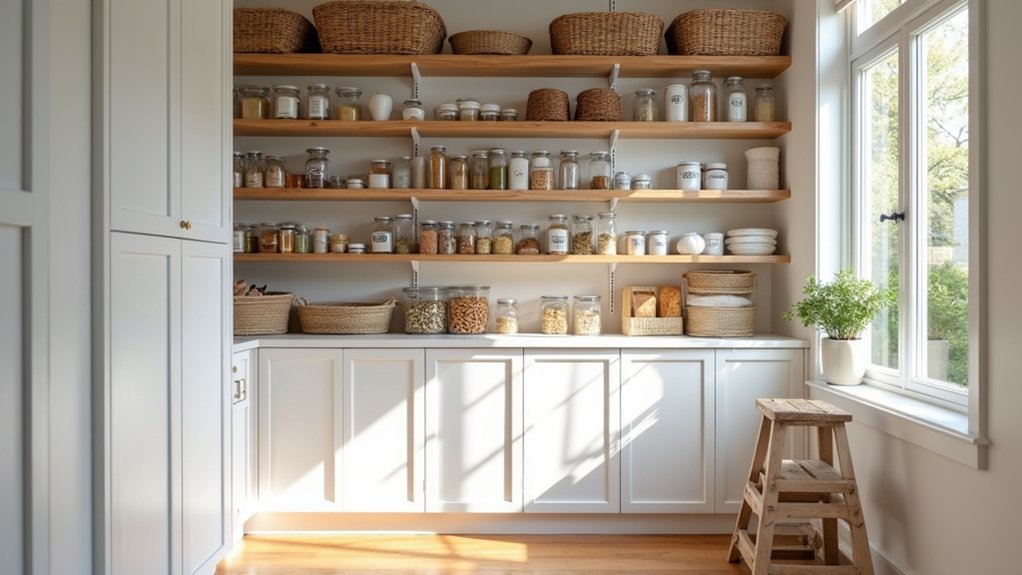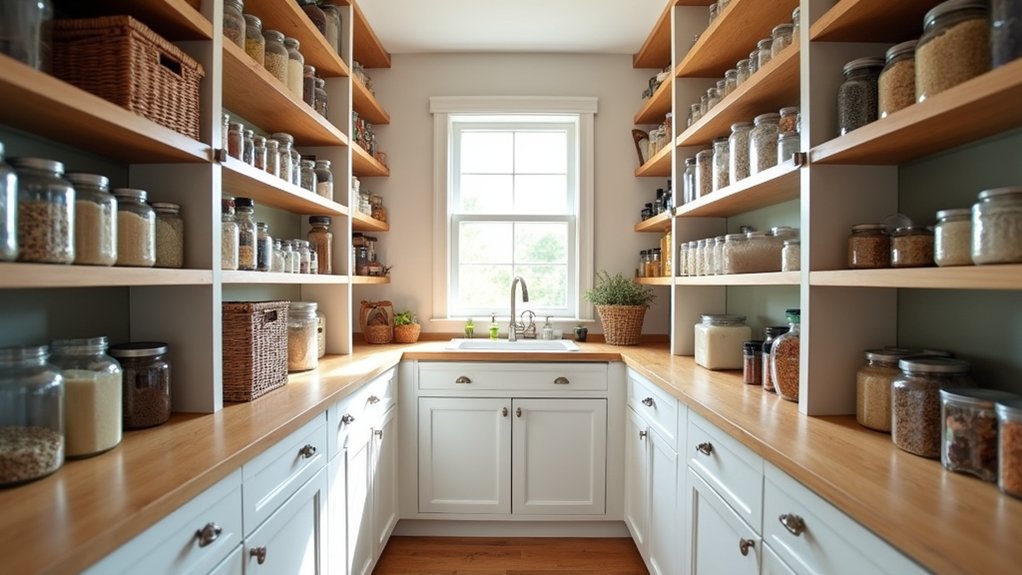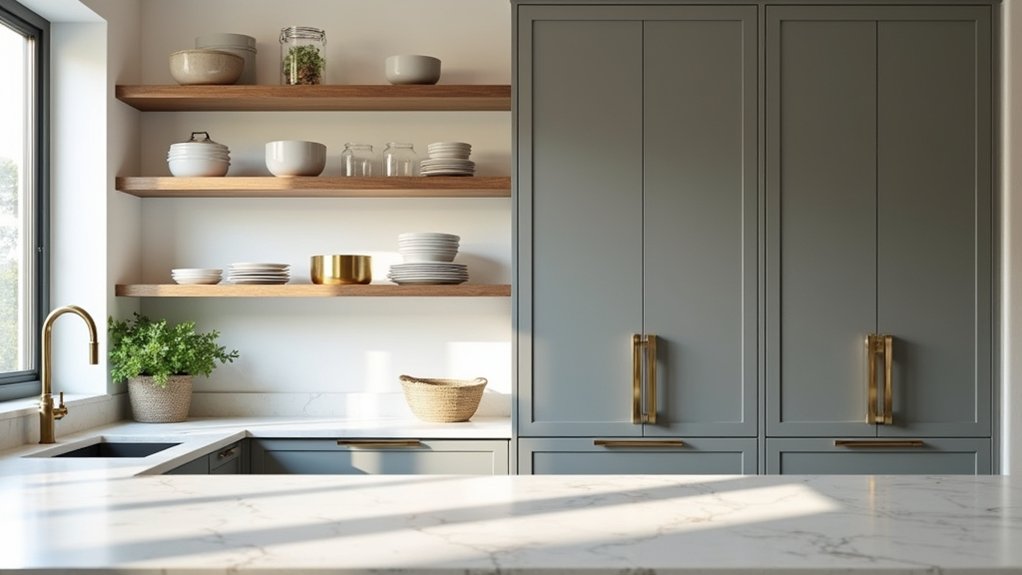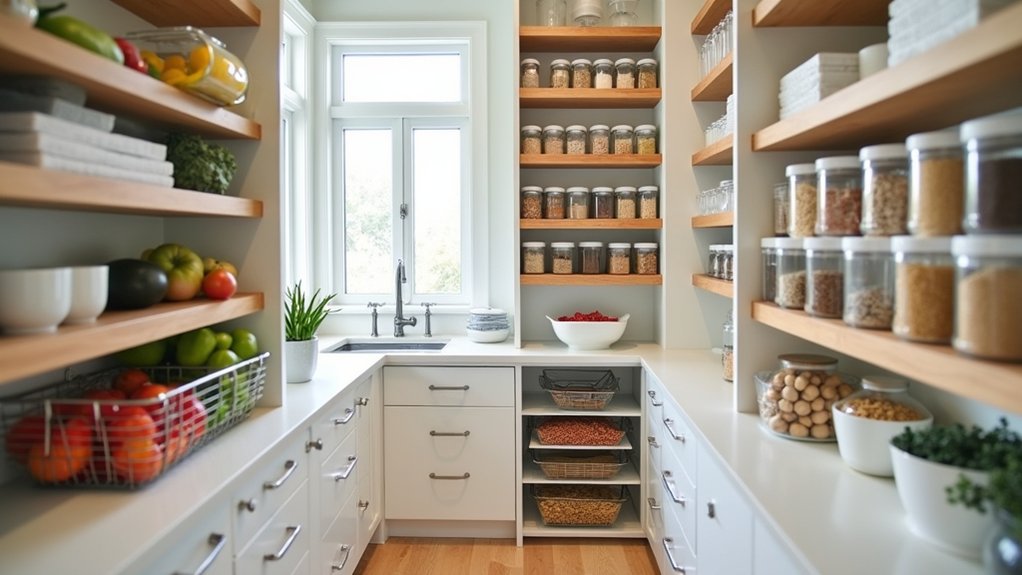
Custom storage systems deliver 95% space utilization compared to standard options’ 60-70%, achieved through precision engineering that adapts to your exact dimensions and inventory needs. While you’ll pay more upfront and wait weeks for installation versus standard storage’s immediate availability, you’re investing in premium materials that last 20+ years instead of 5-10. Custom solutions seamlessly integrate with your home’s aesthetic, incorporate advanced features like climate control and inventory monitoring, and reconfigure as your needs evolve, advantages that transform how effectively your space functions for decades ahead.
Customization and Flexibility: Tailored Solutions vs. One-Size-Fits-All Options

When you’re evaluating storage solutions, the fundamental difference lies in how each approach addresses your specific space and needs. Custom storage optimizes your available area through precision engineering, achieving up to 95% space utilization versus the 60-70% typical of standard options. You’ll get personalized compartmentalization designed around your exact inventory: dedicated zones for shoes, jewelry, seasonal clothing, and accessories positioned where you actually use them.
Standard systems follow generic templates with fixed dimensions, leaving gaps and requiring filler panels that waste valuable square footage. They can’t accommodate your awkward corners, sloped ceilings, or unique architectural features.
Custom solutions also offer lifestyle adaptability; they’re designed to reconfigure and expand as your needs evolve, while standard systems remain locked into their pre-set modular parameters. Professional systems typically include warranty coverage and ongoing support, providing long-term protection for your investment that standard DIY options rarely match. Custom closets incorporate floor-to-ceiling storage to maximize vertical utilization, ensuring every inch serves a functional purpose. Skilled artisans craft custom solutions with attention to detail and durable materials that outlast mass-produced alternatives.
Upfront Costs vs. Long-Term Value: Understanding Your Investment
The storage investment decision splits into two distinct financial pathways: immediate affordability versus total cost of ownership. You’ll face higher upfront expenses with custom solutions, design fees, premium materials, and installation labor, while standard options deliver fixed pricing and immediate cost clarity. However, your cost-benefit analysis shifts dramatically over time. Custom storage’s superior craftsmanship and quality materials extend lifespan extensively, reducing replacement frequency. You’ll benefit from extensive warranties and modular components that enable targeted repairs rather than full replacements. Long-term maintenance costs favor custom systems through easy-access design and upgrade compatibility. Standard storage’s mass-produced construction often requires complete replacement as needs evolve. Similar to cloud storage providers’ tiered pricing models, custom installations offer scalable solutions that adapt to changing capacity needs without requiring complete system replacement. Custom installations also preserve property value, creating tangible resale advantages that standard solutions can’t match. Just as businesses avoid over-provisioning resources, custom storage eliminates wasted space through precise measurements and tailored configurations that match your exact requirements. When comparing options, remember that prices are estimates only and actual costs may vary depending on your specific agreement with vendors, purchase date, and regional market conditions.
Timeline Expectations: Immediate Access vs. Professional Design and Installation
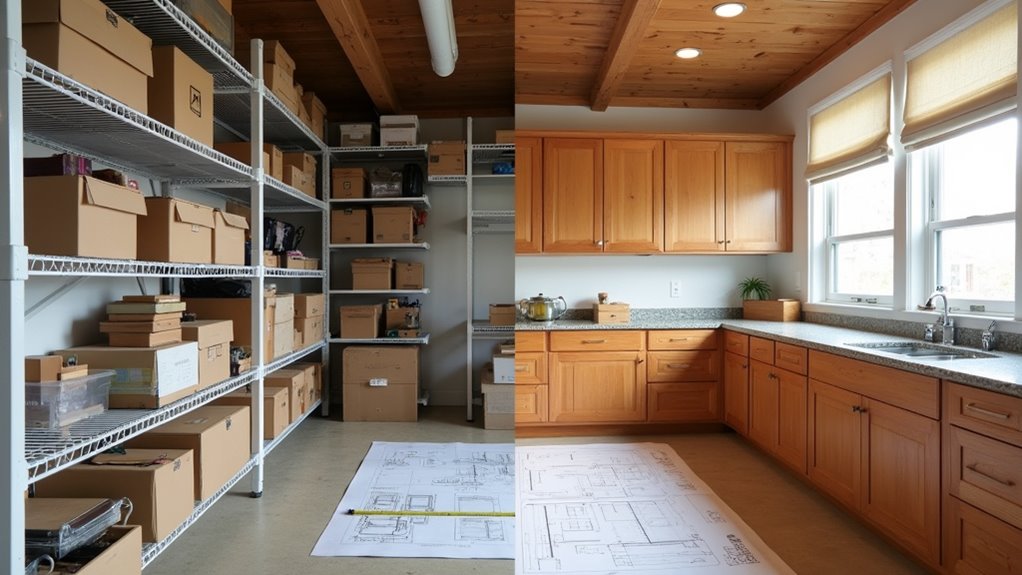
When you need storage, timing matters as much as capacity. Standard storage units offer immediate access, often within 24, 72 hours, letting you secure space the moment you need it. Custom installations require weeks or months of design, permitting, and construction before you’ll gain functional storage, making advance planning essential for your project’s success. The construction phase alone typically spans 6-16 months, depending on the project’s complexity and the availability of materials and labor. Weather and subcontractor availability can further extend these timelines, as these factors remain outside your direct control throughout the building process. Understanding the typical build sequence, from grading and utilities through foundations, driveways, buildings, and systems, helps you set realistic expectations for when your custom storage will be ready for use.
Standard Storage: Instant Setup
Unlike custom installations that require weeks of planning and construction, standard storage units deliver immediate access to secure storage, often within hours of your initial inquiry. You’ll finalize rental agreements online or in-person, streamlining the entire process for urgent needs. Most facilities offer same-day move-in, with 24/7 access options that accommodate your schedule without contractor coordination or design delays.
Climate control units are available for instant reservation, protecting temperature-sensitive items immediately. However, you’re responsible for organizing and maximizing your space; facilities don’t provide professional layout planning or built-in systems. This rapid setup means no customized shelving or spatial assessment, potentially leading to inefficient use. While you gain speed, you’ll need to implement your own labeling system and strategic placement to optimize retrieval and prevent wasted square footage. Many renters secure a unit two months prior to their move, allowing adequate time to gradually transfer belongings and organize items before the actual moving day arrives. Some facilities even provide free truck rentals to further simplify the moving process and reduce transportation costs. Professional packing crews can prepare most houses in one day, making storage transitions remarkably efficient for those with compressed timelines.
Custom Installation: Planned Process
Custom storage installations flip the timeline equation, instead of immediate access, you’ll invest weeks in strategic planning that transforms your space into a precision-engineered system. Your undertaking begins with space assessment and expert consultation, where professionals measure your area, analyze your storage needs, and draft optimized layouts. This planning phase spans days to weeks, depending on project complexity.
Manufacturing your custom components occurs offsite, adding several days to weeks before installation. Installation scheduling typically occurs 2-4 weeks after order placement and down payment. Once delivered, experienced teams require one to two days for standard closets, extending to multiple days for multi-room systems. You’ll clear existing contents beforehand, then watch professionals assemble units, mount hardware, and verify precise alignment. Professional installers bring expertise in handling various configurations, ensuring a smooth and efficient installation process. Access restrictions may be temporarily implemented for security reasons during the installation phase to protect both workers and your property.
The payoff? Personalized functionality and aesthetic integration that standard systems can’t match.
Material Quality and Durability: Premium Construction vs. Mass-Produced Components
You’ll notice dramatic differences in how custom and mass-produced storage structures hold up over time. Premium components like treated lumber, architectural shingles, and high-grade siding systems in custom builds resist environmental stress for decades, while standard options using basic materials deteriorate within 5-10 years. The construction quality you choose directly determines whether you’re investing in a long-term storage solution or accepting a temporary structure that’ll require costly replacement.
Custom Uses Superior Materials
When your storage investment needs to perform for decades rather than years, material quality becomes the defining factor between solutions that endure and those that deteriorate. Custom storage utilizes engineered components and sustainable materials that outperform standard options across every metric.
You’ll benefit from these superior material choices:
- Premium hardwoods and metals replace particle board, delivering structural integrity that supports heavier loads without sagging
- Industrial-grade fasteners and soft-close mechanisms guarantee smooth operation through thousands of cycles
- Low-VOC, moisture-resistant coatings protect surfaces from wear while maintaining indoor air quality
- Specialty panels with fire-resistant or antimicrobial properties meet specific environmental requirements
These engineered components transform your storage from temporary furniture into permanent infrastructure, maximizing your space’s functional lifespan while adapting to your exact specifications.
Mass-Produced Deteriorates Faster
Standard storage units begin showing measurable deterioration within their initial year of use, a timeline that reflects the fundamental compromise between manufacturing efficiency and material integrity. You’ll notice particle board swelling from moisture exposure, laminate surfaces peeling under normal cleaning routines, and hardware failing from repeated drawer operations. These material deficiencies create increased maintenance needs that compound over time, misaligned doors, sagging shelves, and stripped screw holes become recurring problems rather than isolated incidents.
The economic impact extends beyond repair costs. Mass-produced units typically require complete replacement within 5, 15 years, while visible wear substantially impacts reduced resale value when potential buyers encounter warped doors, scratched surfaces, or malfunctioning hardware. Your investment depreciates rapidly rather than contributing to long-term property value.
Structural Integrity and Longevity
- Architectural-grade roofing with 25+ year warranties versus standard asphalt options
- Solid wood or metal alloy framing that resists deformation under weight and environmental stress
- Anti-weathering treatments providing UV protection and moisture resistance
- Precision joinery and reinforced anchoring that eliminate structural weak points
This construction approach directly addresses the degradation patterns you’ve seen in mass-produced units. Custom installations integrate climate-specific materials and professional-grade fasteners, ensuring your storage investment maintains structural integrity through decades of use while adapting to your site’s unique environmental challenges.
Aesthetic Integration: Seamless Design vs. Basic Off-the-Shelf Appearance
One glance reveals the fundamental difference between custom and standard storage: how each relates to your room’s architecture. Custom solutions achieve architectural cohesion through precise measurements that accommodate sloped ceilings, alcoves, and uneven walls, spaces where pre-built units leave awkward gaps. You’ll notice visual continuity as finishes, trims, and moldings match your existing surfaces, creating seamless integrations between storage and structure.
Standard storage stands apart, creating visible lines and mismatched proportions. You’re limited to mass-produced materials, typically laminate or particleboard, that rarely complement upscale interiors.
Custom work offers extensive material choices: real wood, veneer, glass, metals. You’ll select stains, paints, and specialty hardware that align with your décor. Floor-to-ceiling installations eliminate dead zones, maintaining clean lines while built-in lighting and hidden fasteners refine your room’s streamlined appearance.
Functionality and Specialized Features: Advanced Capabilities vs. General Purpose Storage
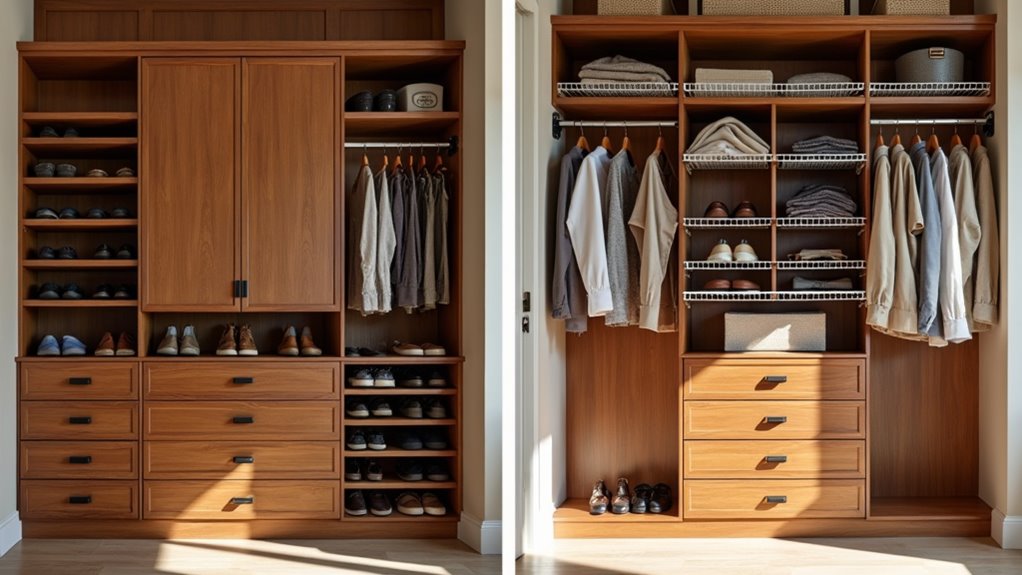
Beyond visual harmony lies a more fundamental distinction: how each storage approach adapts to your actual needs.
Custom solutions deliver operational flexibility that standard units can’t match:
- Sensor integration enables real-time inventory monitoring and automated alerts for items requiring attention
- Climate control features protect wine collections, artwork, electronics, and other sensitive materials from environmental damage
- Adjustable shelving and modular compartments evolve alongside your changing requirements
- Reinforced construction supports heavy equipment, while locking mechanisms secure valuables or hazardous materials
Standard storage offers basic shelving for everyday items but lacks adaptability. Fixed layouts restrict your options, modest weight capacities limit versatility, and absent environmental controls leave sensitive belongings vulnerable.
Your choice determines whether storage merely contains your possessions or actively supports your household’s workflow and specialized requirements.
Space Optimization: Maximizing Every Inch vs. Working Within Standard Dimensions
When square footage comes at a premium, the difference between custom and standard storage isn’t merely aesthetic; it’s mathematical. Custom solutions deliver 15, 60% better space utilization by exploiting awkward corners, alcoves, and vertical clearance that standard units ignore. You’ll gain floor-to-ceiling integration instead of the 1, 3 feet typically wasted above manufactured cabinets.
Standard storage forces your room to accommodate fixed dimensions, leaving dead zones and inefficient gaps. Custom systems adapt to your exact measurements, transforming unusable areas into functional capacity. This design flexibility enables high-density configurations, mobile shelving and cube systems achieve up to 75% footprint savings compared to traditional setups.
The outcome? You’ll store more without expanding your footprint, eliminate offsite storage costs, and reduce retrieval times by 30% through smarter segmentation customized to your actual needs.
Frequently Asked Questions
Can I Upgrade Standard Storage to Custom Storage Later?
You can’t directly upgrade standard storage to custom storage; you’ll need to establish a new custom storage system instead. This addresses storage space limitations by letting you configure premium features from the start. The migration requires transferring your items manually, but custom storage feasibility improves markedly when you plan the shift carefully. You’ll validate everything works before removing the old system, ensuring your belongings remain protected while you gain augmented organization and performance benefits.
Does Custom Storage Increase Home Resale Value?
Yes, custom storage considerably enhances your home’s resale value. You’ll typically see a 56% ROI, and buyers often pay up to 10% more for homes with custom solutions. While storage costs vary, the resale advantages are clear; 60% of homebuyers will pay extra for organized spaces. Custom storage makes your property stand out in competitive markets, sells faster, and attracts higher offers by maximizing space efficiency and demonstrating thoughtful design throughout your home.
What Maintenance Do Custom Storage Systems Require?
You’ll need regular cleaning with manufacturer-approved products to protect specialty finishes and prevent dust buildup in your custom configurations. Periodic inspections are essential, check for structural integrity, loose hardware, and signs of wear at load-bearing points. Monthly lubrication of moving parts keeps drawers and mechanisms functioning smoothly. Address minor damages immediately to prevent escalation. Your system’s unique materials and dimensions demand more attentive care than standard storage, but proper maintenance optimizes longevity and performance.
Are There Financing Options Available for Custom Storage Solutions?
Yes, you’ll find multiple financing plans designed to make custom storage accessible. Many providers offer payment options, including 0% interest introductory periods, $0 down payments, and flexible monthly installments customized to your budget. You can choose from traditional loans, store credit cards, or rent-to-own programs, some requiring no credit check. These solutions let you start your space-maximizing project immediately without the financial stress of lump-sum payments, while potentially increasing your property value.
How Do I Choose Between Custom and Standard Storage?
Choose based on your budget and space constraints. If you’re working with limited funds or need immediate solutions, standard storage works well. However, if you’ve got unique room dimensions, awkward corners, or specific organizational needs, custom storage optimizes every inch efficiently. Consider your long-term plans too, custom systems offer durability and adaptability as your needs evolve. Evaluate what you’re storing, your available space, and how much you’re willing to invest in a personalized, space-optimizing solution.