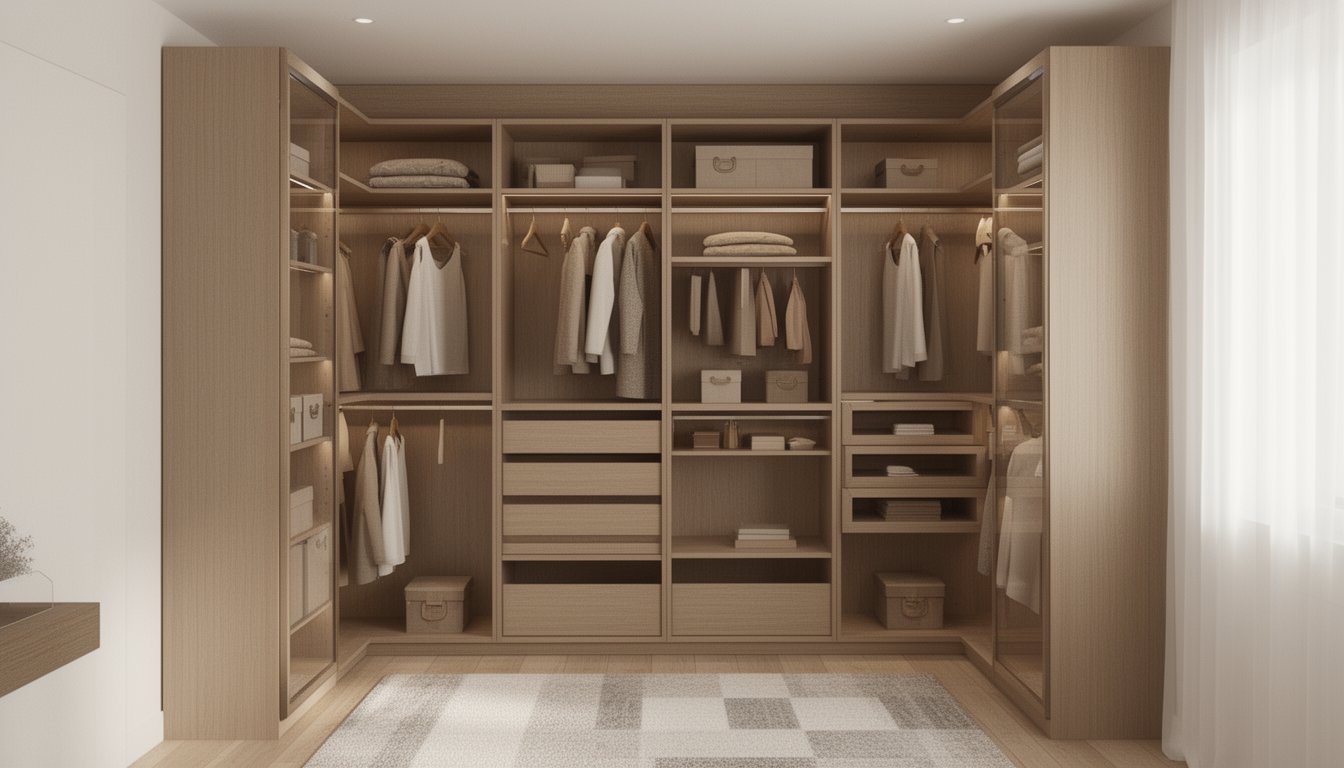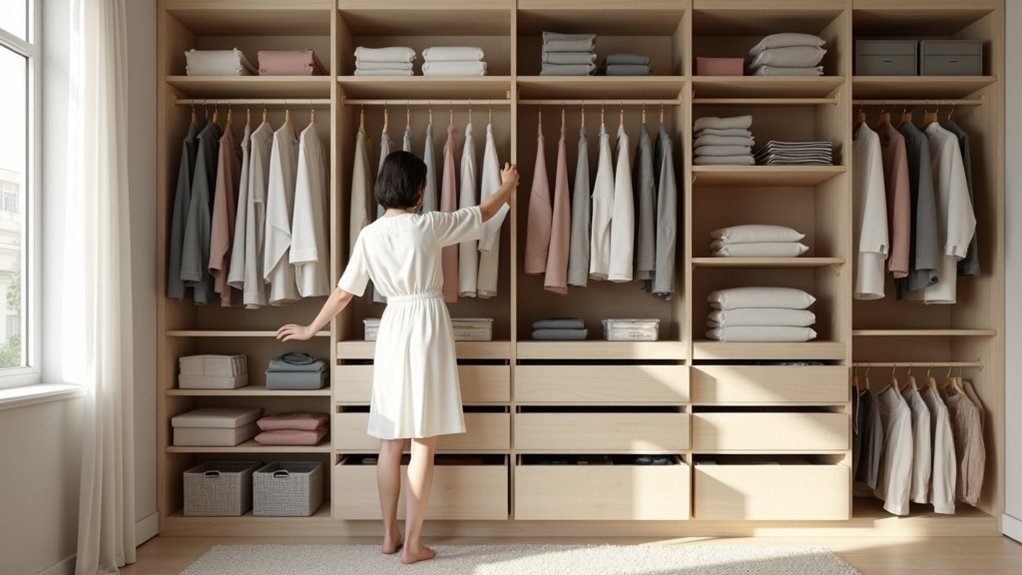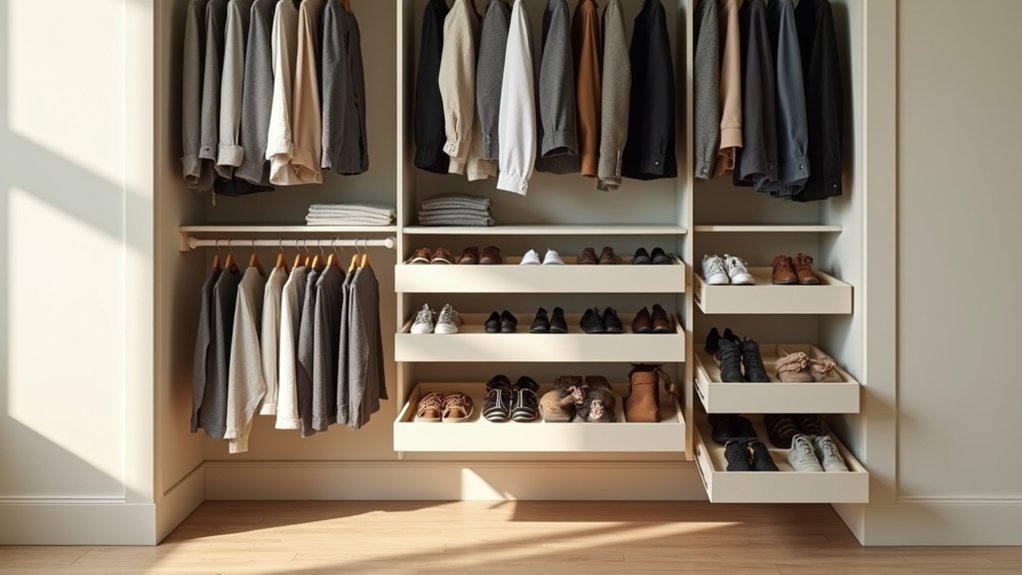
The best entryway drop zone organization for families combines personal zones with smart storage solutions. You’ll want labeled hooks at kid-friendly heights for backpacks and coats, cubby storage for shoes and gear, and a small catch-all bowl for keys and essentials. Position your drop zone near your most-used entry door where it matches your family’s natural dumping patterns. The right system eliminates morning chaos and teaches children responsibility, and there’s more to discover below.
What Makes Drop Zone Organization Essential for Families
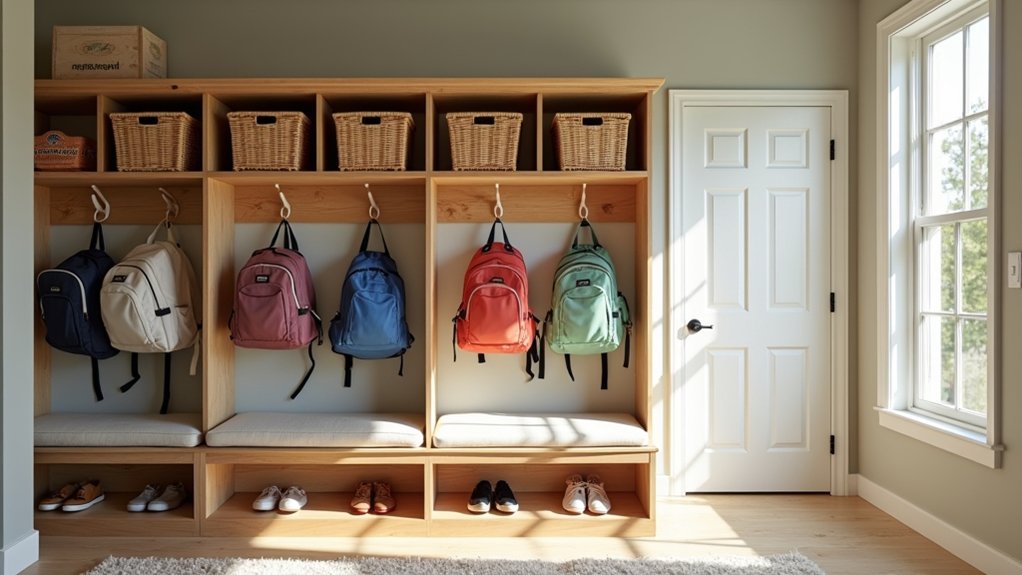
When daily essentials have no home, chaos spreads through every room, keys end up on counters, backpacks land on floors, and mail piles up on dining tables. A dedicated drop zone eliminates this disorder by giving every item a designated spot.
The organized drop zone impact extends beyond tidiness. You’ll experience reduced stress, calmer mornings, and smoother passages from home to school or activities. Children learn responsibility when they have specific hooks for backpacks and bins for school gear. This teaches children accountability for managing their own belongings from an early age.
The organized drop zone benefits your entire household’s well-being. You’ll stop wasting time searching for misplaced items and gain mental clarity through structured spaces. Research shows that walking to school serves as an important source of daily physical activity for children aged 6 to 12. Guests also appreciate having one convenient location for their belongings during visits. This single functional space transforms your family’s daily routines.
Best Locations for Your Family Drop Zone
Where you position your family drop zone determines how consistently everyone will use it. Strategic drop zone placement means identifying where your family naturally dumps items when entering your home.
The garage entry area works exceptionally well since it’s often the primary access point for families with kids. You’ll catch backpacks, coats, and shoes before they scatter throughout your house.
A dedicated mudroom offers customized drop zone systems that corral clutter behind closed doors. If you lack a mudroom, your foyer near the most-used entry door serves as an effective alternative. A split foyer entry can be maximized with a colorful bulletin board as the focal point to create an organized and visually appealing drop zone.
Consider back hallways that match natural dumping patterns or kitchen adjacencies near side doors. The key is observing your family’s habits first, then building your organization system around those existing behaviors. This approach also gives you a good starting point when items inevitably get misplaced. Just make sure your chosen spot is highly visible and accessible so family members are more likely to use it consistently.
How to Create Personal Zones for Each Family Member
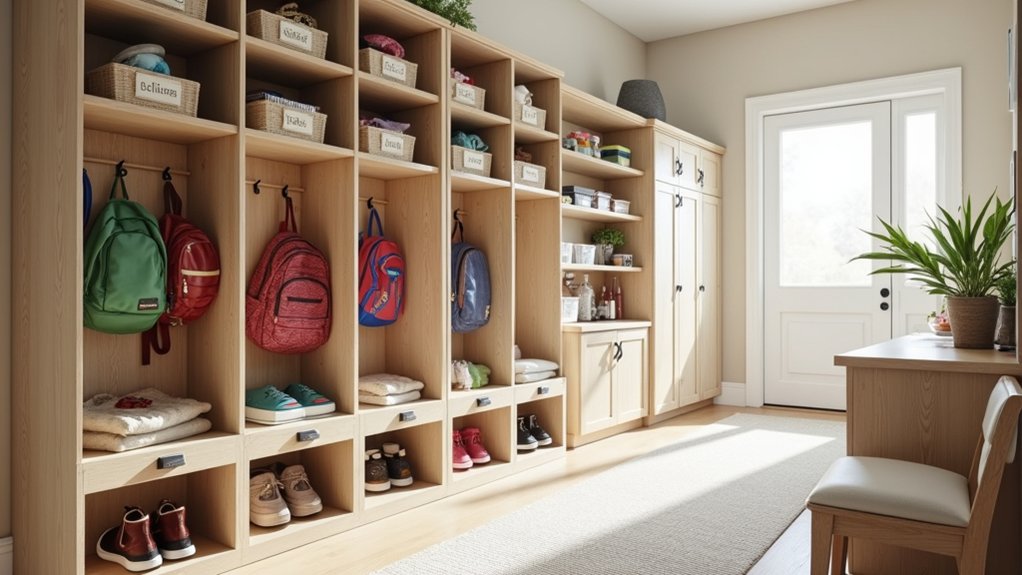
You’ll keep your entryway functional by giving each family member their own cubby or storage unit for daily essentials. Labeled bins and hooks eliminate confusion about where items belong, making it easy for everyone to grab what they need and put things away. Position storage at age-appropriate heights so kids can independently manage their backpacks and shoes without your help. Locker-style storage works especially well for children’s belongings since each child gets a dedicated vertical space for coats, bags, and gear. Adding a bench or chair with storage underneath provides a convenient spot for children to sit while putting on shoes and keeps extra items tucked away. A catch-all bowl placed in a central location gives family members a designated spot to drop keys, wallets, and other small essentials so nothing gets lost in the morning rush.
Individual Cubbies Per Person
Assigning each family member their own cubby transforms a chaotic entryway into a streamlined drop zone where everyone knows exactly where their belongings go.
Space saving cubby designs maximize vertical square footage while keeping daily essentials accessible. You’ll find cube storage units work perfectly for this purpose, each slot holds one person’s shoes and backpack without encroaching on another’s territory. Open cubes provide quick grab-and-go access, while fabric inserts conceal clutter when you need a cleaner look.
Modular cubby configurations let you adapt as your family grows. Start with units from retailers like IKEA, then add sections when needed. Bench-integrated cubbies offer dual functionality, seating plus storage in one footprint. You can scale from three cubbies to thirteen or more, combining lower shoe storage with upper hooks for backpacks and coats. Adding storage baskets underneath the bench gives each family member their own designated spot for overflow items like hats, gloves, and sports gear. Quality entryway systems include anti-tipping straps to ensure safety and stability, especially important in homes with active children. Using labeled bins or baskets makes cleanup quick and easy, helping kids learn to sort their own belongings independently.
Labeled Bins and Hooks
Every family member needs a clearly marked spot for their daily essentials, and labeled bins paired with strategic hooks create the accountability that keeps entryways clutter-free.
Start by assigning one hook per person at appropriate heights, lower for kids’ backpacks, higher for adult purses and coats. Command hooks work well on walls or coat racks, and you can stack dollar store trash cans on them for hats and mittens. Placing hooks at child-appropriate heights not only makes items accessible but also teaches children the benefits of organization early on.
Your labeled systems should eliminate guessing. Apply chalk stickers or printed labels directly to bins and hooks so everyone knows exactly where their items belong. Clear bins boost visibility during rushed mornings, while woven baskets add material texture that balances functional storage with style. When everyone places items where they belong on the first try, you’ll spend less time searching for misplaced belongings during hectic mornings.
Reserve one unassigned hook or basket for guests, and you’ve built a complete zone system. Perform a weekly check to remove any non-essential items that have accumulated in each person’s designated space.
Age-Appropriate Storage Heights
When you customize storage heights for each family member, you create personal zones that actually get used, eliminating the morning chaos of items piled on floors or stuffed wherever they’ll fit.
Install adult hooks at 60-66 inches from the floor, aligning with eye level for easy coat and bag access. Position a lower row at 36-48 inches for children ages 3-10, enabling independent use without adult assistance. This adjustable storage height approach reduces floor clutter considerably.
Your entryway bench serves as the foundation at 17-19 inches, accommodating both adults and children comfortably. Maintain 12-18 inches between the bench and lowest hooks for clearance. Forgetting storage in your entryway design leads to constant clutter that defeats the purpose of organized personal zones.
Height customization options let you stack vertical zones efficiently, bench base, child hooks, then adult hooks, while preserving 36 inches of clear walking space for smooth traffic flow.
Kid-Friendly Drop Zone Hooks, Cubbies, and Bins
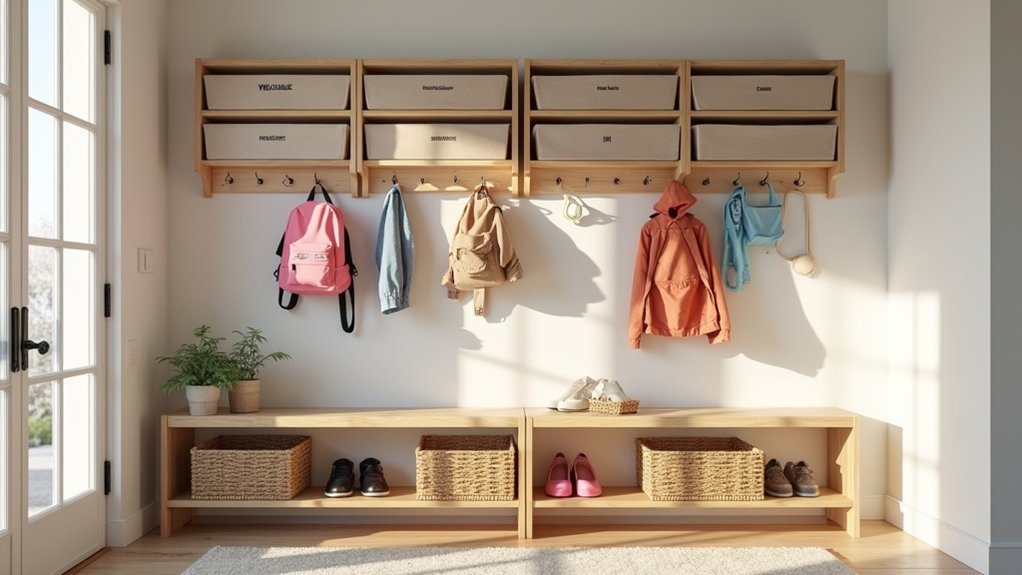
When you’re designing a drop zone that works for your entire family, you’ll need to position hooks at heights your children can actually reach, typically 36 to 48 inches from the floor for younger kids. Color-coded cubby systems take this accessibility further by giving each child a designated storage section they can identify and manage independently. This combination of age-appropriate hook heights and visual organization systems builds daily habits while reducing the morning scramble for backpacks and gear.
Age-Appropriate Hook Heights
A well-designed family drop zone accounts for the physical differences between adults and children, ensuring everyone can access their designated storage independently.
Ergonomic height considerations determine where you’ll install hooks for each family member. Adult hooks work best at 60, 66 inches above the floor, while children’s hooks should sit at 42, 48 inches. Adjustable hook placement lets you modify heights as kids grow.
| User | Hook Height | Best For |
|---|---|---|
| Adults | 60, 66 inches | Coats, heavy backpacks |
| Older Kids | 48 inches | School bags, jackets |
| Young Children | 42, 48 inches | Lightweight coats, small bags |
Space hooks 6, 12 inches apart to prevent backpack overlap. This staggered approach eliminates floor clutter while promoting independence for every family member.
Color-Coded Cubby Systems
Color-coding transforms chaotic entryways into streamlined family command centers where everyone knows exactly where their belongings go. Assign each family member a dedicated color for hooks, baskets, and storage zones to create clear personal boundaries that minimize morning chaos.
Your family-friendly storage system works best when you integrate coordinated color schemes across open cubbies and labeled bins. Pair 14-inch deep upper cubbies with 23-inch deep bottom sections for layered backpack and boot storage. Add chalkboard-tagged baskets in each person’s assigned color so kids instantly identify their belongings.
This systems-oriented approach reduces time spent searching for coats and backpacks while keeping high-traffic areas clutter-free. Wall-to-wall cubby configurations with adjustable shelving adapt as your children grow, ensuring your entryway organization evolves with your family’s changing needs.
Backpack Storage That Ends the Morning Scramble
How much time does your family waste each morning searching for backpacks buried under coats or forgotten in random corners? Intentional storage solutions eliminate this chaos by creating predictable drop points everyone can follow.
Start with designated cubby spaces that assign each family member their own spot. Custom mudroom cubbies work especially well positioned near jackets and shoes, creating a complete launch station. For tighter spaces, staggered hooks at varying heights let both kids and adults hang backpacks without reaching or stooping.
Rail systems with S-hooks provide expandable capacity as your family grows. Double hook rows mounted on decorative paneling maximize wall space while adding style. The key is consistency, when backpacks have a permanent home, the morning scramble becomes a smooth routine.
Family Shoe Storage That Clears Entryway Clutter
Once backpacks have their designated spots, the next culprit of entryway chaos demands attention: shoes scattered across floors, kicked under benches, or piled in mismatched heaps. You’ll eliminate this daily frustration by implementing multipurpose bench storage that combines seating with shoe organization underneath.
Assign each family member designated cubbies or rows to streamline morning routines. Custom-sized compartments accommodate everything from toddler sneakers to adult boots, while pull-out drawers keep pairs organized and accessible.
For smaller entryways, stylish entryway organizers like over-door racks or corner shelving maximize unused vertical space. Enclosed cabinets with doors protect shoes from dust while maintaining a clean aesthetic.
The goal is simple: every pair gets a home, preventing tripping hazards and eliminating the frantic shoe hunt before school.
The One-Touch Rule That Stops Drop Zone Chaos
Even after you’ve established designated spots for backpacks and shoes, clutter will still accumulate if family members drop items “just for now” instead of putting them away immediately.
The simple one touch habit eliminates this problem. The rule: handle each item once by storing it directly in its designated spot, never on a chair, counter, or floor.
Here’s how immediate item storage works in your entryway:
- Hang coats on hooks the moment you walk in
- Place backpacks directly in cubbies, not on furniture
- Sort mail into action, file, or recycle bins upon arrival
- Store keys in their designated dish or hook instantly
This system prevents the re-handling that creates visual chaos and wasted time. Trial it for one week, kids often buy in when they realize faster tidying means more free time.
Drop Zone Organization Ideas for Small Entryways
Small entryways present unique challenges, but limited square footage doesn’t mean you can’t create an effective drop zone system.
Maximize Vertical Space
Wall-mounted hooks provide grab-and-go access for jackets and backpacks without consuming floor space. Entry zone key containers like rattan baskets store wallets and keys compactly on narrow tables, while hanging organizers assign each family member dedicated spots for seasonal accessories.
Smart Entryway Drop Zone Layouts
IKEA shoe cabinets maximize storage in tight areas, and wall strips hang daily shoes without blocking vents. Tassel-decorated baskets blend style with functionality, holding purses and umbrellas in wicker containers that maintain daily order.
Multi-Functional Furniture
Storage ottomans serve double duty, they hold pet items and kids’ activity bags while providing seating. You’ll create systems that work within your space constraints.
How an Organized Drop Zone Adds Home Value
Beyond daily convenience, a well-designed drop zone directly impacts your home’s marketability and resale potential. Buyers under 45 rank drop zones among their top priorities, viewing organized entryways as signals of a move-in ready home.
Your drop zone investment delivers increased home appeal through these measurable returns:
- First impression power: Steel entry doors return 188% of cost, and organized entries reinforce that positive signal
- Faster sales: Homes in move-in condition spend fewer days on market
- Premium pricing: Remodeled homes sell for 3.7% above listing price on average
- Customized storage value: Personalized closet systems yield higher returns than many other renovations
To achieve maximum resale value, treat your drop zone as functional infrastructure rather than simple decoration.
Frequently Asked Questions
How Often Should Families Completely Reorganize Their Entryway Drop Zone System?
You should completely reorganize your entryway drop zone system every three to four months, aligning with seasonal rotation changes. This timing lets you swap out weather-specific gear while conducting a periodic deep clean of the entire space. Between major reorganizations, maintain your system with weekly resets and monthly decluttering sessions. This approach keeps your family’s drop zone functional without overwhelming your schedule, ensuring backpacks, coats, and essentials always have designated spots.
What Drop Zone Materials Hold up Best Against Wet Weather Gear?
You’ll want materials that resist moisture and clean easily. Choose stone, non-slip tile, or vinyl flooring that handles daily wet exposure. Install corrosion-resistant hooks for dripping coats and add rubber boot trays with raised edges to contain water and mud. Use durable storage bins with perforations for airflow, and select weather resistant shelving that won’t warp or rust. These systems protect your space while keeping wet gear organized and drying efficiently.
Can Renters Create Effective Drop Zones Without Damaging Walls or Floors?
Yes, you can absolutely create a functional drop zone without permanent changes. Use freestanding storage benches and slim console tables as your foundation for space saving storage options. Add Command hooks and adhesive-mounted peg rails for coats and backpacks. Floating shelves provide easy to access shelving solutions without wall damage. Place a small rug to define your zone, and use baskets underneath furniture to corral shoes and gear systematically.
How Do You Handle Drop Zone Conflicts When Siblings Share Storage Spaces?
You’ll resolve sibling drop zone conflicts by assigning dedicated personal spaces with clear labels and color-coded containers for each child. Create sharing schedules that rotate access to common areas during busy times. Post visual charts dividing responsibilities for maintaining individual zones, so everyone knows their role. Use adjustable shelving to accommodate different ages and storage needs. When each sibling has ownership over their designated space, daily disputes naturally decrease.
What’s the Ideal Height for Installing Hooks for Different Aged Children?
You’ll want to install hooks at 36 inches for preschoolers and toddlers, 48 inches for children over 7, and 60-65 inches for adults. Adjustable hook heights let you modify placements as your kids grow, eliminating future reinstallation hassles. For family friendly organization, create tiered rows so everyone reaches their designated spot independently. Space hooks 4-6 inches apart to prevent overcrowding, and you’ve built a system that adapts to your family’s changing needs.