Hanging space for shirts, dresses, and coats requires planning based on garment width and length. You will need approximately 1 inch of rod space per shirt, 2, 6 inches per dress, depending on fabric and fullness (with evening gowns requiring more), and 3, 4 inches per coat. A standard 48-inch closet rod can hold about 48 shirts, 16 dresses, or 12 coats. Vertical clearance is also important, shirts typically require 28, 39 inches of height, dresses 45, 78 inches depending on length, and coats 44, 70 inches. Understanding these measurements helps maximize the functional capacity of your closet.
Closet Measurement Basics: Depth, Width, and Height Standards
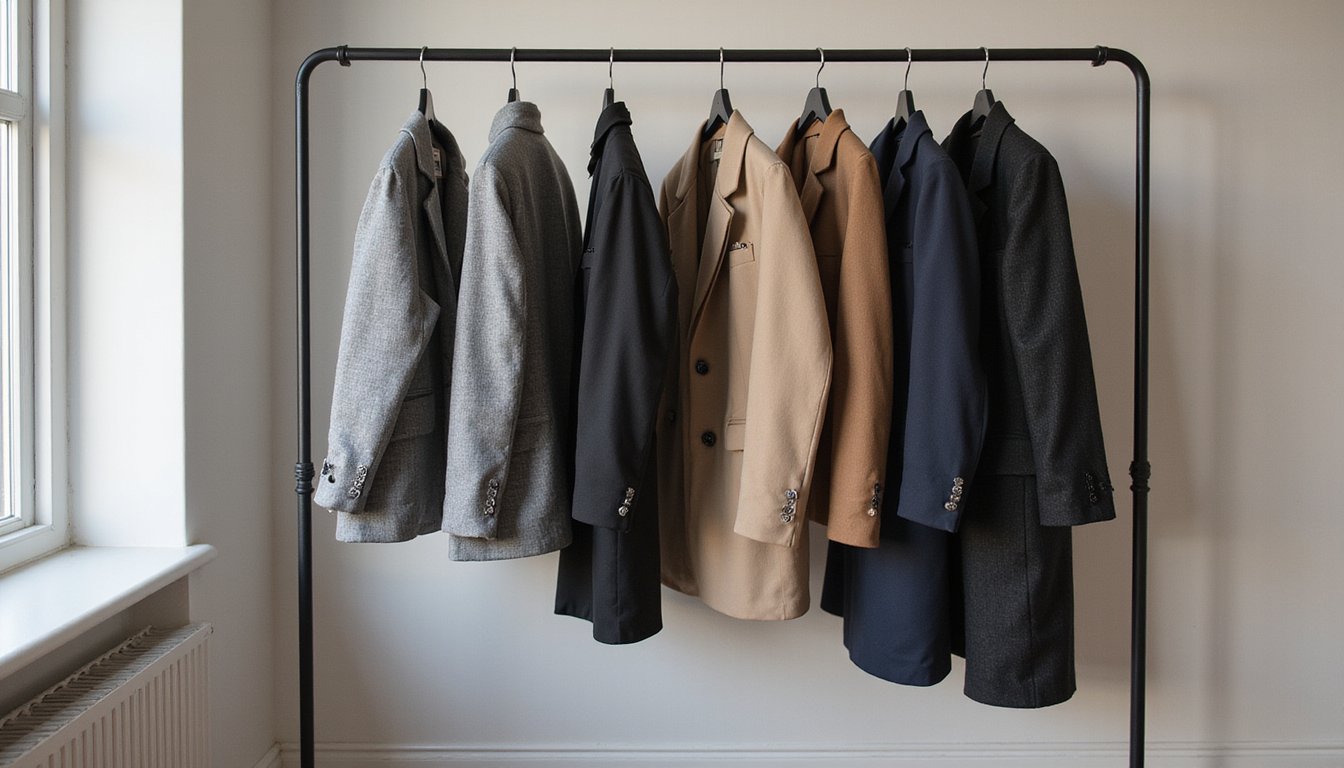
Before you start measuring for hanging space, you’ll need to understand the basic dimensions that define different closet types. Reach-in closets span 24-30 inches deep, 3-8 feet wide, and extend to ceiling height. Walk-in closets require minimum dimensions of 4×4 feet with 30-36 inch depth for comfortable movement.
Your depth measurement matters most for hanging clothes. You’ll need at least 24 inches to prevent garments from touching the back wall, while 30 inches accommodates bulkier items. Width determines your wardrobe subdivisions, single rod setups need 48 inches, while double-sided walk-ins require 6-8 feet. For larger walk-in closets, a standard size of 6.5 by 10 feet provides ample room for hanging areas, drawers, shelves, and even seating.
For shelf spacing within your closet system, limit depth to 15-20 inches to maintain accessibility. Keep 12 inches between shelves for storing folded clothing items efficiently. Standard closet rod height sits 60-66 inches from the floor, maximizing vertical space efficiently. When installing double hanging rods, position the lower rod at 40 inches and the upper rod at 80 inches from the floor for optimal organization.
Pole Space Requirements by Garment Type
Three key measurements determine how many garments your closet rod can hold: pole space per item, total rod length, and garment type. You’ll need to calculate based on how much horizontal space each piece consumes on the rod.
| Garment Type | Pole Space | Notes |
|---|---|---|
| Shirts/Blouses | 1″ | Standard blouse dimensions apply |
| Dresses | 2-6″ | Evening styles need more space |
| Coats | 3-4″ | Coat hanging length affects spacing |
For a 48″ rod, you can fit approximately 48 shirts, 16 dresses, or 12 coats. Heavier outerwear requires additional clearance to prevent crushing. When planning your layout, account for seasonal rotation, winter coats demand more pole space than lightweight jackets, directly impacting your storage capacity. For long garments like dresses and coats, position your rod at 70-72 inches height to ensure items hang freely without touching the floor. Keep in mind that rods extending beyond 4 to 5 feet in length require a center support bracket to prevent sagging under the weight of multiple garments. To maintain optimal performance, distribute weight evenly across the rod to prevent sagging or bending over time.
Hanging Lengths for Shirts, Dresses, and Coats
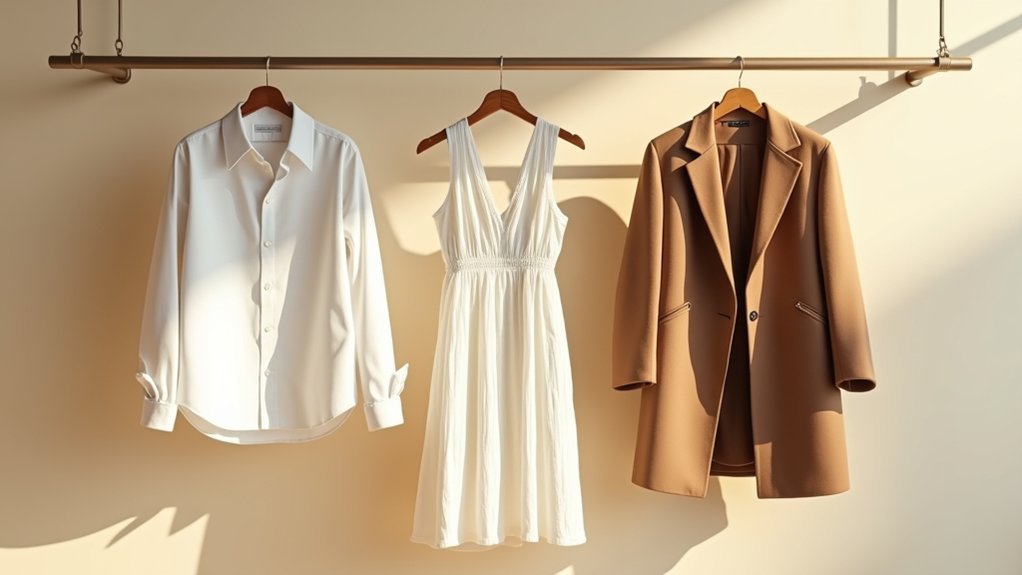
Understanding vertical hanging lengths guarantees you’ll install closet rods at the correct height for each garment category. Dress shirts require 33-39 inches, while casual shirts and blouses need 28-36 inches. When optimizing storage capacity, you can stack double rods for shorter items. For men’s wardrobes specifically, ensure 3-inch clearance between rail and wardrobe top to allow easy hanging and removal of garments.
Dresses demand considerably more vertical space. Short dresses need 45-54 inches, standard women’s dresses require 68 inches, and formal gowns extend 70-78 inches. Consider garment folding considerations for items exceeding your available height.
Coats present the greatest challenge, ranging from 44-66 inches for standard styles to 70 inches for overcoats. Jackets fall between 38-45 inches. You’ll want dedicated full-length sections for longer pieces while reserving double-rod configurations for shirts and shorter garments to maximize every vertical inch.
Closet Rod Placement: Height Positions That Work
Once you’ve determined how much vertical space your garments need, you’ll want to position your closet rods at heights that accommodate those measurements. For single rod setups, mount the rod at 66 inches from the floor, with adjustable heights ranging from 60 to 72 inches based on your longest items. This height allows long garments to hang without brushing against the floor, keeping them clean and wrinkle-free.
Double rod systems maximize efficient organization by utilizing vertical space. Position your upper rod at 80 inches and your lower rod at 40 inches from the floor. This configuration separates shorter items like shirts and folded pants across two levels. The lower rod height accommodates shorter garments like skirts while the upper rod handles longer attire such as dresses and suits.
For children’s closets, lower the bottom rod to 30 inches, ensuring easy access without step stools. Always maintain 12 inches of depth from the rear wall and 2 inches of clearance below any shelving.
Single Rod vs Double Rod: Which Setup Fits Your Wardrobe?
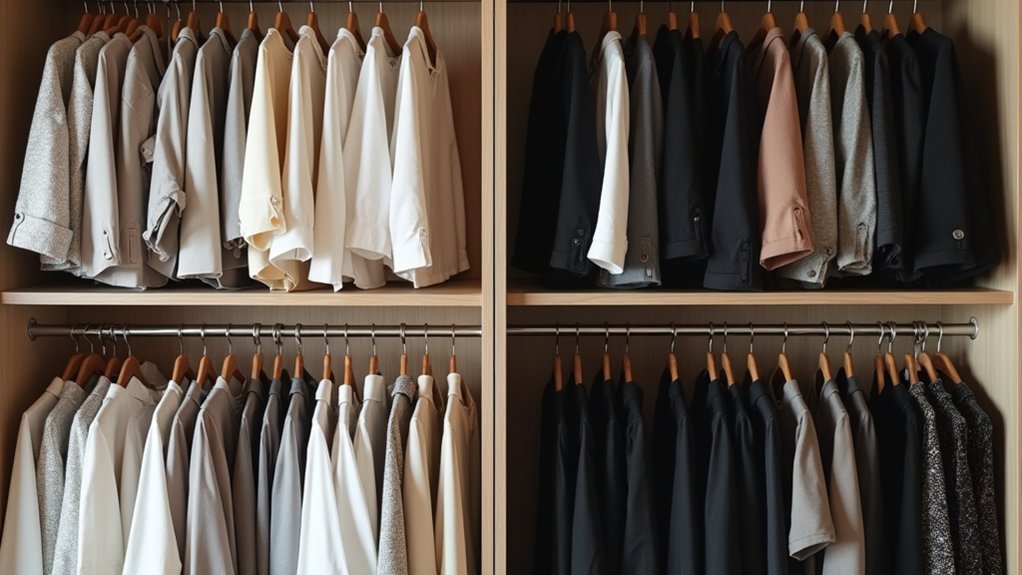
How effectively does your closet serve your actual wardrobe? A thorough wardrobe composition analysis reveals whether you need single or double rods. Count your long items versus short pieces before deciding.
Double-rod systems store 16-20 pieces per linear foot, while single rods accommodate only 8-10 items. Here’s how to maximize your space:
- Dedicate 60-70% of rod space to double-hang configurations for shirts, blouses, and folded pants
- Reserve 30-40% for long-hang sections housing dresses and coats
- Space multiple rods 12-24 inches apart for proper clearance
- Install into wall studs for reliable hanging system maintenance
If you own 50 shirts but only 10 dresses, full-length hanging wastes valuable space you can’t afford to lose. This two-tier system unlocks vertical space that would otherwise go unused in your closet. Research shows that 40% of closet space goes unused due to improper wardrobe rod installation, making proper planning essential. For optimal double-hang setups, position your top rod at 80-82 inches and your bottom rod at 40-42 inches from the floor.
Minimum Closet Width for Different Configurations
While rod configurations determine how many garments you can store vertically, your closet’s width dictates which layout options are actually feasible.
For optimizing single wall space, you’ll need 4 to 5 feet minimum width. This setup works well in hallways and tight spaces but requires selective storage choices.
Double-sided layouts demand 6 to 8 feet width, with 24 inches clearance between opposing rods. A standard 6 x 8-foot configuration gives you comfortable dual-wall access. This depth accommodates everything from delicate blouses to bulky winter coats while maintaining an organized appearance.
When strategizing mixed wardrobe layouts, U-shaped designs require at least 7 feet width. You’ll gain storage on three sides with 24 to 30 inches central clearance, ideal for medium closets between 20 and 45 square feet.
Walk-in minimums start at 5 x 5 feet, though couples should target 6 x 10 or 7 x 10 feet. For full walk-in functionality with room for islands and additional features, aim for 100 square feet of overall space. Remember to maximize your vertical capacity by installing full-height shelving that extends from floor to ceiling.
How to Calculate Hanging Space for a Mixed Wardrobe
Understanding your closet’s width limitations helps you choose the right layout, but you’ll still need to calculate exactly how much linear rod space your specific wardrobe requires.
For effective mixed wardrobe organization, measure each garment type from hanger top to hem. Use these space saving storage tips to maximize every inch:
- Shirts and blouses need 40 inches from hanger top, fitting perfectly on lower double-hang rods
- Folded pants require 22 inches plus 6 inches clearance for upper tiers
- Dresses and coats demand 52-66 inches of uninterrupted vertical space
- Allow 24 inches hanging depth to prevent garments from protruding
Combine shorter items below with folded pants above. Place out-of-season clothes on top tiers, keeping frequently worn pieces accessible.
Measurement Mistakes That Waste Closet Space
You’re losing valuable closet space when you ignore how far garments extend from the wall and where you position your hanging rods. Standard 24-inch depth works for most clothing, but coats need 28-30 inches while shirts crammed into shallow spaces bunch up and wrinkle. Placing a single rod at 66 inches wastes 2-3 feet below when double-rod configurations could double your hanging capacity for shorter items.
Ignoring Garment Depth Needs
Many closet designs fail because they overlook front-to-back depth requirements, creating spaces where clothes can’t hang freely. When you don’t account for garment thickness demands, you’ll find hangers pressing against walls and doors.
Standard appropriate depth provisions vary by clothing type:
- Shirts and blouses: 24 inches minimum allows 18-inch hangers to swing freely
- Jackets and suits: 24 inches works, but tighter fits occur
- Coats and outerwear: 28 inches accommodates bulkier fabrics
- Evening wear: 24-28 inches prevents crushing delicate materials
You’ll also need 11½ inches from the rear wall to your rod placement. Depths below 24 inches force garments to bunch against surfaces, causing wrinkles and damage. Edge-in configurations require at least 18 inches for comfortable access.
Wrong Rod Height Placement
Getting your closet’s depth right solves only half the equation, rod height errors waste just as much usable space and create daily frustrations.
Mismatched rod height occurs when you measure to the rod’s top or bottom instead of its center, creating 1-2 inch miscalculations that compound across your system. For single rods, center placement should hit 66 inches from the floor, anything lower and your dresses drag; anything above 72 inches becomes inaccessible.
Improper rod placement in double-hang configurations demands precise spacing: upper rods need 76-80 inches, lower rods 38-40 inches. Maintain at least 36 inches between rods for hanger maneuverability. Always account for rod diameter (1-1.5 inches) in your calculations, and leave 2-3 inches of floor clearance for your longest garments.
Quick Reference: Closet Dimensions by Garment Type
When planning your closet layout, having exact measurements at your fingertips saves time and prevents costly mistakes.
Precise measurements transform chaotic closets into functional spaces, know your numbers before you build.
Essential Dimensions by Category:
- Shirts and blouses: Allow 1 inch rod space per item, 34 inches hanging length, 24 inches depth
- Dresses: Reserve 2-3 inches rod space each, 50-68 inches length depending on style, 28-30 inches depth for bulkier pieces
- Coats and jackets: Allocate 2-3 inches rod space, 36 inches minimum length, 28-30 inches depth
- Appropriate accessory storage: Install shelves at 12-16 inches deep for bags, scarves, and smaller items
Customizing closet organization starts with these baseline measurements. You’ll need minimum 48 inches width for single rod setups and 84 inches height for double hanging configurations.
Frequently Asked Questions
Can I Use Slim Velvet Hangers to Fit More Shirts in Limited Space?
Yes, you can substantially increase your hanger density with slim velvet hangers. Their 0.2 to 0.25-inch thickness lets you fit up to 50% more garments than wooden hangers allow. You’ll maximize your hanging capacity by fitting seven shirts where fewer hung before. The velvet surface keeps shirts secure without slipping, while the slim profile creates uniform spacing. This systematic approach transforms cramped closets into efficiently organized storage spaces.
How Do I Store Seasonal Coats When Closet Space Is Limited?
You can store seasonal coats effectively by using vacuum-sealed bags to compress bulkier items, freeing up valuable rod space. Rotate seasonal garments by moving off-season coats to under-bed storage, high shelves, or a self-storage unit. Optimize closet layout with double hanging rods for lighter jackets and wall-mounted hooks for drying wet coats. Consider freestanding racks in mudrooms or entryways to handle overflow during winter months.
What Lighting Works Best for Seeing Clothes in Deep Closets?
You’ll get the best visibility in deep closets by installing LED lighting strips under shelves and along hanging rods to eliminate dark corners. Position vertical LED strips on both sides so beams meet in the middle for even coverage. Add motion activated lights that turn on when you open doors or drawers, providing instant illumination exactly when you need it while saving energy between uses.
Should I Remove Dry Cleaning Bags Before Hanging Clothes Long-Term?
Yes, you should always remove dry cleaning bags before hanging clothes long-term. Those plastic bags trap residual solvents, moisture, and fumes that prevent discoloration over time from being avoided, actually causing yellowing and fiber damage instead. Let your garments air out for 24-48 hours after pickup. To keep clothes wrinkle free and protected, switch to breathable cotton garment bags that allow proper air circulation while still shielding against dust and light exposure.
How Often Should I Replace Worn Closet Rods to Prevent Sagging?
Replace your closet rods every 3, 5 years, or sooner if you notice sagging, slippage, or warped locking collars. Check rod weight capacity against your current wardrobe, steel rods spring back after stress, while aluminum won’t recover. During closet renovation considerations, upgrade to steel-reinforced systems and add center supports for spans over 4, 5 feet. You’ll extend rod lifespan considerably by matching hardware to your heaviest seasonal items.