Transform your closet office with three strategic lighting approaches: Initial, layer ambient overhead LEDs with focused task lamps and accent strips to create depth and eliminate dark corners. Second, install motion-sensor dimmable fixtures that automatically adjust brightness based on occupancy and time of day, maximizing energy efficiency. Third, position lights directly above your workspace at appropriate intervals to prevent shadow interference across your desk surface. These foundational principles form the framework for a thorough illumination strategy that addresses the unique challenges of compact, enclosed professional environments.
Layer Multiple Light Sources for Complete Coverage and Task Flexibility
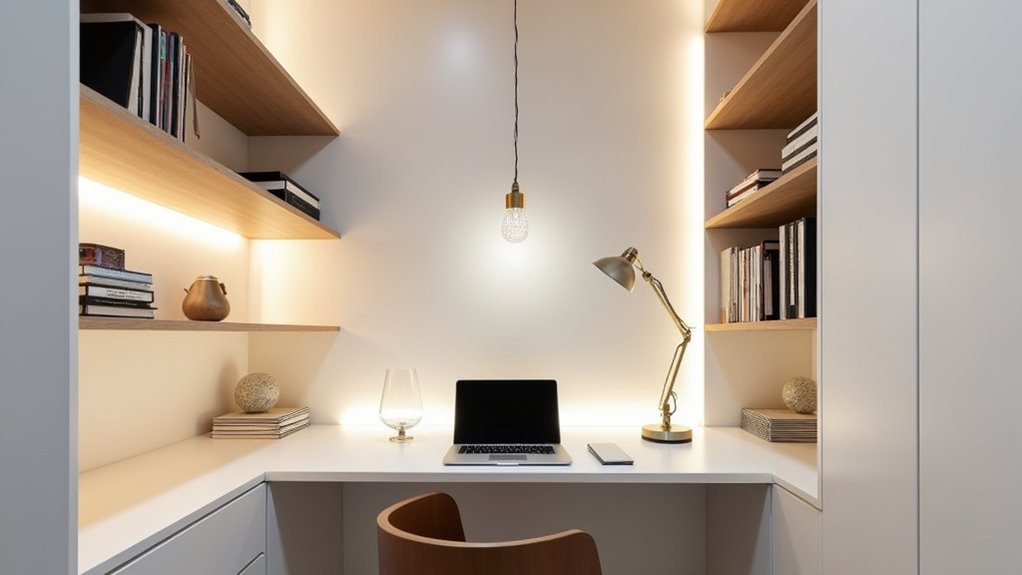
When converting a closet into a functional office, the confined dimensions demand a strategic approach to illumination that optimizes both visibility and spatial perception. You’ll need to establish a foundational ambient layer through overhead fixtures or recessed downlights that boost ambient illumination without overwhelming the compact space. Position task lighting, such as adjustable desk lamps with cool color temperatures (5000K), directly over your workspace to eliminate shadows during focused activities. To prevent visual monotony in tight quarters, incorporate decorative accent lighting through wall-mounted sconces or LED strips along shelving units, which adds depth while highlighting architectural features. This three-tier system creates dimensional interest and functional flexibility. Smart bulbs enable you to adjust color temperature throughout the day, shifting from energizing cool tones during work hours to warmer settings during evening tasks. Each layer of light complements the others to establish a comprehensive lighting solution that addresses the unique challenges of a compact workspace. Install dimmers to control light levels for different activities, allowing you to adjust brightness based on whether you’re conducting video calls or working on detailed documents. Ensure your ambient lighting is evenly distributed throughout the closet office to avoid dark corners that can make the already small space feel even more cramped.
Install Motion-Sensor and Dimmable LEDs for Energy-Smart Performance
Beyond establishing your layered lighting framework, optimizing energy performance requires intelligent automation that responds to your workspace patterns. Motion-sensor LEDs activate only when you’re present, eliminating wasted electricity in unoccupied closet offices while delivering up to 25 times longer lifespan than conventional bulbs. You’ll appreciate the hands-free convenience when entering with supplies, as automatic illumination prevents fumbling for switches in confined spaces.
Pair sensors with dimmable LED fixtures to customize brightness for specific tasks, reducing eye strain during computer work while further decreasing energy consumption. Smart home integration enables remote adjustments and flexible lighting schedules aligned with your workflow. Battery-powered models offer placement versatility through adhesive mounting, while adjustable sensitivity settings accommodate distinctive closet configurations. The passive infrared sensors detect changes in heat from your movement, triggering immediate illumination when you enter your workspace. These systems make it difficult for thieves to approach undetected when motion-activated lighting surrounds your home office entry points. These automated systems help ensure compliance with energy-saving regulations while optimizing your workspace efficiency. This combination delivers responsive, energy-efficient performance adapted to your professional requirements.
Position Fixtures Strategically to Eliminate Shadows and Maximize Workspace Visibility
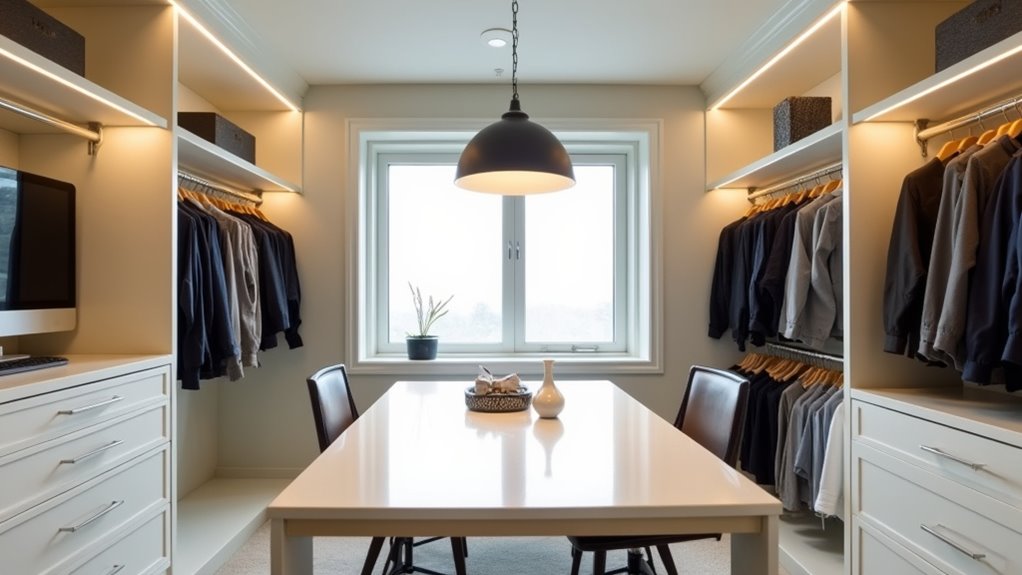
Strategic fixture positioning transforms closet offices from dim, shadow-prone spaces into well-illuminated work environments that support sustained productivity. Begin with a shadow test: observe existing light output to identify persistent dark spots in corners and beneath shelving. Fill shadowy recesses with focused task lighting, LED strips beneath upper shelves or adjustable track heads targeting specific work zones. Layer ambient overhead illumination with vertical strip lights along side walls to eliminate overlapping shadows. Adapt fixture types to ceiling height: flush-mount LEDs suit compact spaces, while wall-wash recessed fixtures augment vertical coverage in taller configurations. Position lights directly above or slightly forward of your desk surface to prevent casting shadows across keyboards and documents. For L-shaped layouts, install multiple focal points at strategic intervals, ensuring every work zone receives adequate, shadow-free illumination. Recessed can lights create a clean, unobtrusive appearance while providing even coverage throughout the workspace. Incorporate dimmable lighting options to adjust brightness levels throughout the workday, allowing you to create the ideal atmosphere for different tasks while adding a personal touch to your workspace. Select bulbs in the daylight color temperature range to ensure accurate color rendering when reviewing documents, matching materials, or participating in video calls.
Frequently Asked Questions
What Color Temperature Is Best for a Closet Office Workspace?
For your closet office workspace, you’ll want 4000K to 4500K, this range offers excellent productivity while maintaining visual comfort in compact spaces. Since closet offices lack windows, prioritize LEDs with a high color rendering index (CRI of 90+) to guarantee accurate color perception. This neutral temperature provides natural daylight simulation, reducing eye strain during extended work sessions. You’ll find this balanced spectrum improves focus without the harshness of cooler temperatures, making it perfect for confined workspaces.
How Do I Measure Current Light Levels in My Closet?
Use a calibrated lux meter to measure ambient light levels by placing the sensor directly on your work surface at multiple points throughout the closet. Take readings with lights at typical brightness to assess task-oriented illumination accurately. Measure during different times if natural light enters the space. Compare your readings against the 320, 500 lux standard for office workspaces. Account for reflective surfaces and obstructions that affect light distribution, ensuring measurements represent your actual working conditions.
Can Battery-Powered LEDS Provide Enough Brightness for Office Work?
Yes, battery-powered LEDs can provide adequate brightness for office work when you select models offering 500+ lumens with brightness adjustment options. Position units strategically within your workspace to optimize coverage and minimize shadows. However, you’ll need to factor in battery life considerations, higher lumen settings drain power faster, typically lasting several hours. For all-day functionality, choose rechargeable models with battery indicators, or plan to deploy multiple units to guarantee continuous illumination throughout your work sessions.
Do LED Fixtures Work Safely in Humid Closet Conditions?
Yes, LED fixtures work safely in humid closets when you select models meeting moisture resistance requirements with IP65+ ratings. You’ll need vapor-tight housings with sealed lenses to prevent condensation infiltration. Proper ventilation considerations are critical, guarantee adequate airflow to dissipate any residual heat and moisture accumulation. Position your fixtures, maintaining NEC-mandated clearances from stored items. Choose corrosion-resistant materials like polyurethane shells with metal linings. This approach certifies reliable performance while mitigating fire hazards in confined, humidity-prone environments.
Are There Rebates Available for Energy-Efficient Closet Lighting Upgrades?
Yes, you’ll find substantial rebates through utility company rebates covering up to 50% of LED installation costs in closet office spaces. These incentives often stem from energy audit recommendations identifying high-efficiency upgrade opportunities. You must verify your fixtures meet ENERGY STAR qualifications and submit proper documentation, including invoices and product specifications, within program windows. With 77% of US regions offering active lighting rebate programs in 2025, you can greatly reduce upfront investment while achieving ideal task illumination and spatial efficiency.