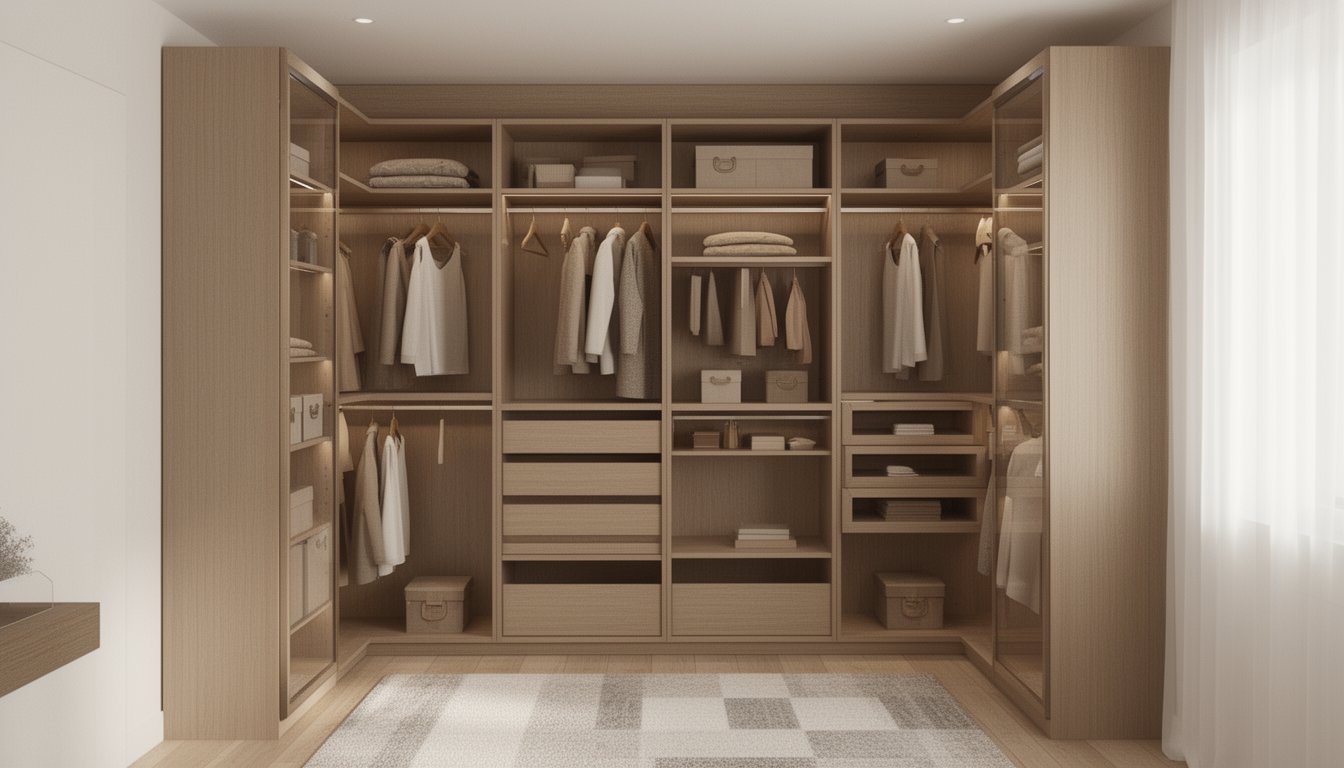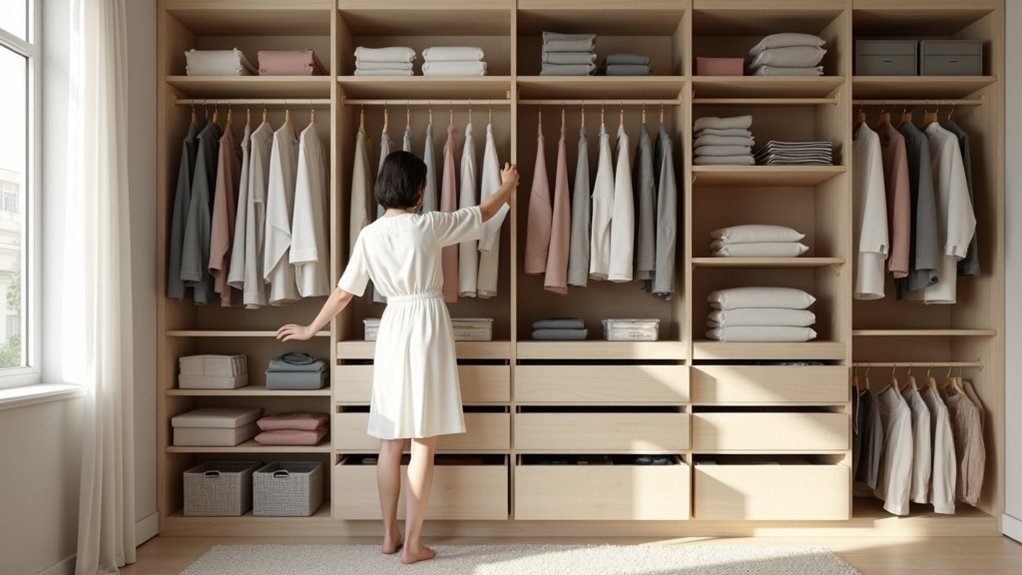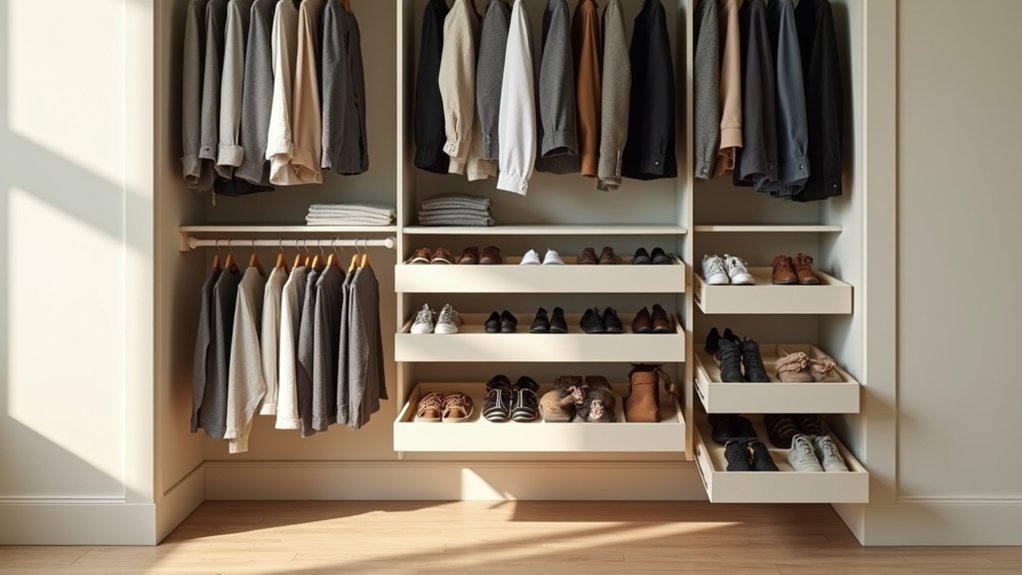
To prevent closet shelves from becoming unused piles, you’ll need to create structural boundaries and dedicated zones. Assign each shelf a single purpose, then install vertical dividers to keep folded items upright. Add bins and baskets sized precisely to your shelf dimensions, and label every section for quick identification. Schedule a weekly 10-minute reset to catch items that’ve migrated from their designated spots. These foundational strategies work even better when you understand the system behind them. When considering different storage solutions, the bins vs open shelves comparison can highlight the advantages and disadvantages of each approach. Bins offer a more contained and organized option, perfect for small items, while open shelves can provide easy access and visibility to your belongings. By weighing these factors, you can make an informed decision that best fits your storage needs.
Why Closet Shelves Become Clutter Magnets
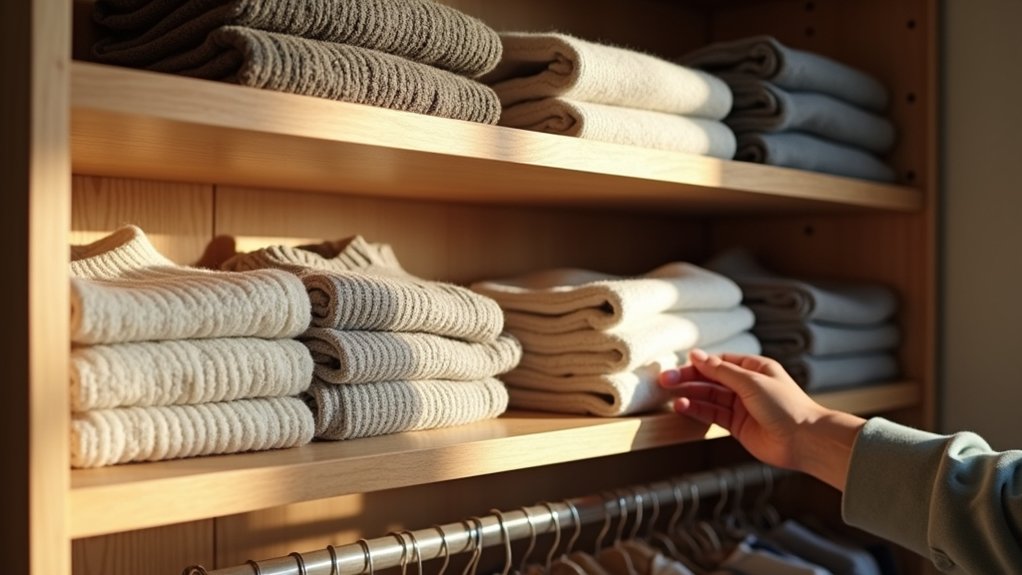
When closet shelves lack drawer and shelf inserts, they quickly transform into disorganized piles. Open shelves allow folded clothing to slump sideways within two weeks, creating mountains of wrinkled garments. Without structured dividers, your neat stacking deteriorates rapidly, requiring constant reorganization. One effective solution is to incorporate pullout shelving for closet organization, providing easy access and maximizing space. By utilizing these systems, you can maintain visibility and order for all your garments, ensuring a tidy and efficient closet.
A lack of shelf maintenance compounds this problem when you fail to utilize vertical space. You’re leaving valuable airspace above existing items unexploited, creating the illusion of insufficient storage. This inadequate shelf accessibility forces horizontal spreading across surfaces, accelerating clutter accumulation. Adding a second rod for shorter items like shirts and folded pants instantly doubles your hanging capacity while freeing up shelf space.
Store-bought systems worsen the situation by creating awkward gaps that attract more disorder. These pre-made solutions rarely fit your specific space, leaving corners and shelf tops underutilized. Generic shelving assumes uniform dimensions, ignoring your individual wardrobe composition and lifestyle requirements. When items lack a designated home, tidying up simply becomes moving things from one place to another where they still don’t belong. Decision fatigue sets in when you face these cluttered shelves, causing you to feel overwhelmed about what to keep or discard.
Give Every Shelf a Single, Specific Purpose
The solution to shelf chaos starts with assigning each shelf one dedicated function. Designate bottom shelves for daily wear you grab frequently, while reserving upper shelves for formal attire or off-season items. Keep middle shelves for folded casual clothes you access regularly.
Maximize vertical space by creating distinct zones throughout your closet. Assign one shelf exclusively for accessories like scarves and belts, another for handbags, and a separate section for shoes with pull-out racks. Use vertical shelf dividers to prevent items from toppling into neighboring categories. Storage bins and baskets work perfectly for grouping similar items together within each designated zone. This organized approach prevents purchasing duplicate items since you can clearly see everything you already own.
Label each shelf clearly and implement color coding for quick identification. Include inventory lists on shelf fronts to guarantee what belongs where. Audit your shelves routinely to confirm items haven’t migrated from their designated spots. This systematic labeling eliminates the frustration of searching through a disorganized closet each morning.
Use Vertical Shelf Dividers to Create Zones
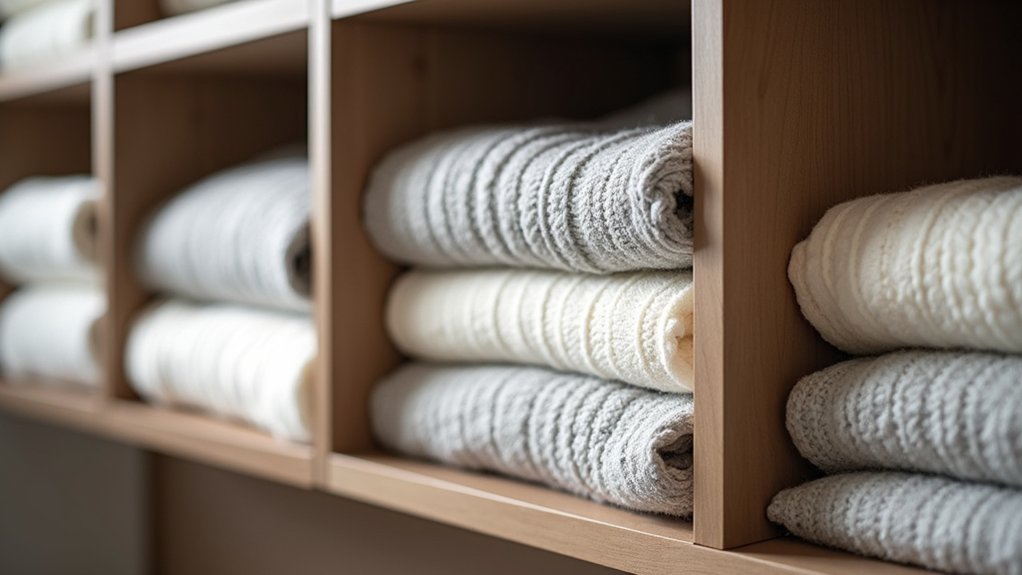
Vertical shelf dividers transform chaotic stacks into organized zones by creating physical boundaries between categories like sweaters, jeans, and handbags. You’ll maximize your vertical space when you use adjustable metal or clear acrylic dividers to keep folded items upright instead of letting them topple into messy piles. These simple tools prevent clothes from bleeding into each other while making every item instantly visible and accessible. Using dividers also helps reveal gaps or duplicates in your wardrobe that you might not have noticed before. Shelf dividers also provide flexibility to rearrange and adapt your storage as your wardrobe changes over time.
Separate Stacks by Category
Most closet shelves eventually devolve into messy piles because folded items lack structural boundaries to keep them contained. Vertical shelf dividers solve this by creating distinct zones for each clothing category. You can customize divider placement to match your specific wardrobe needs, whether separating sweaters from pajamas or designating sections for towels and linens.
For ideal organization, arrange dividers by height to accommodate different stack sizes. Place taller dividers behind bulkier items like sweaters and shorter ones for thinner categories like t-shirts. This systematic approach eliminates the dresser entirely while keeping everything visible and accessible.
In shared spaces like dorms, add labels between dividers to clarify ownership and prevent random tossing. The clear boundaries encourage consistent placement, transforming chaotic shelves into functional storage zones.
Maximize Vertical Space Usage
Beyond organizing by category, you’ll want to capture every inch of available height on your closet shelves. Vertical shelf dividers transform wasted wall space into functional zones, keeping sweaters, purses, and accessories upright without toppling. A strategic shelf zone arrangement guarantees clear visibility and instant access to every item.
| Zone Type | Best Items | Configuration Tip |
|---|---|---|
| Narrow | Clutches, scarves | 4-6 inch spacing |
| Medium | Folded sweaters | 8-10 inch spacing |
| Wide | Handbags, totes | 12+ inch spacing |
| Tall | Boots, bins | Adjustable height |
| Mixed | Daily accessories | Flexible divider configuration |
You’ll maximize existing shelves by stacking items vertically rather than horizontally. Acrylic dividers offer durability with transparent visibility, fitting most standard shelf depths without tools.
Add Bins and Baskets Sized to Your Shelves
Before you purchase bins and baskets, grab a tape measure and record the exact height, width, and depth of each shelf space you want to organize. You’ll want containers that fit snugly without wasting valuable inches or leaving awkward gaps that collect clutter. Match each bin’s size to its intended contents, shallow baskets work well for accessories you need to see at a glance, while deeper bins suit bulkier items like sweaters or handbags. Using shelf dividers alongside your bins helps keep folded piles contained and prevents them from toppling over. Natural baskets made from woven reeds and wicker are especially sturdy for holding heavier items like handbags or stacked sweaters.
Measure Before You Buy
When you’re shopping for bins and baskets, your shelf measurements determine everything, grab a tape measure before you grab your wallet.
Your shelf measurement strategies start with recording width, depth, and vertical spacing between each shelf. Standard closet shelves range from 12 to 48 inches wide and 12 to 16 inches deep, but your specific dimensions matter most.
For unique shelf layout solutions, measure corner spaces separately, they typically accommodate 12-18 inch wide containers. Account for irregular angles and non-square closets by measuring each wall individually. Hardware includes corner units to fit angles when your closet walls aren’t perfectly square.
Calculate your vertical clearance: folded clothes need 12 inches between shelves, while shoes require just 6-7 inches. Don’t forget to subtract an inch from depth measurements for easy container access. These precise numbers prevent returns and guarantee your storage solutions actually fit. Consider installing adjustable shelving systems that allow you to reconfigure shelf depths as your storage needs change over time. Reach-in closets are typically 24 inches deep, so factor this standard measurement into your bin selections for optimal fit.
Match Bin to Contents
Now that you’ve got your shelf dimensions mapped out, it’s time to pair each storage zone with bins that actually fit what you’re storing. Customizable containers work best when matched to specific item categories.
- Small bins (40 quarts or less), Perfect for T-shirts, hats, gloves, and office supplies on closet shelving.
- Medium bins (41-80 quarts), Ideal for bulky sweaters, extra blankets, and shoes under beds.
- Large bins (81-120 quarts), Store winter coats and seasonal wardrobe rotation items on floor-level shelving.
- Extra-large bins (121+ quarts), Reserve for garages and attics holding camping gear or sports equipment.
Choose smaller containers for heavy items like books to prevent shelf strain and guarantee easy lifting during organization sessions. Opt for clear plastic bins rather than solid colors so you can see exactly what’s inside without opening each container. For visible storage areas, consider decorative baskets with woven textures that add visual appeal while keeping contents accessible. Look for bins with sturdy faux leather handles that provide a comfortable grip when pulling containers from high or deep shelves during your organizing sessions.
Label Every Shelf Section: Even Obvious Ones
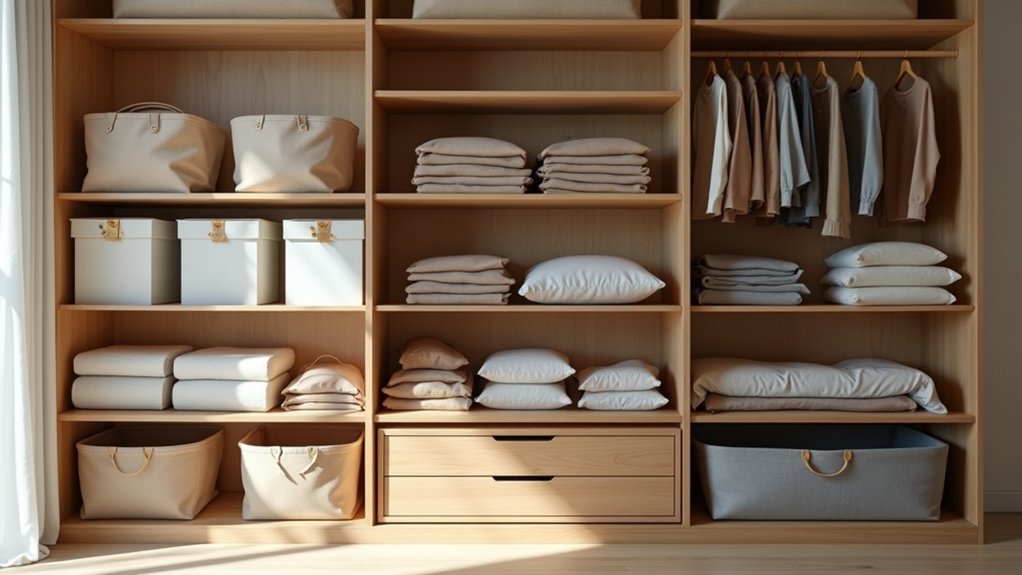
Though it might seem excessive to label a shelf section that holds only winter sweaters or workout clothes, this simple step eliminates the gradual drift that turns organized spaces into chaotic piles. Section labels enhance clarity by creating visual boundaries that define exactly where each category belongs.
Without labels, you’ll spend 3.2x longer locating items according to a 2023 Cornell study. Labeled shelves prevent clutter by increasing the likelihood you’ll return items to their proper homes rather than tossing them onto the nearest available surface.
Labels also set clear boundaries on storage space, helping you recognize when a category has accumulated too much. This awareness encourages you to discard uncertain items during the put-away process, maintaining your system’s integrity without constant reorganization efforts.
Store Your Most-Used Items at Eye Level
When you position your most-used clothing and accessories at eye level, you eliminate the daily frustration of searching through stacked piles or reaching into awkward spaces. This prime visibility zone puts your go-to items directly in your line of sight the moment you open the closet door, cutting your morning routine time considerably. Rotating seasonal items out of this accessible middle zone and onto upper or lower shelves keeps your active wardrobe front and center while preventing forgotten pieces from accumulating into disorganized stacks. Creating a functional drop zone space is essential for maintaining order in your closet. Designate a specific area for items you frequently use, such as bags or shoes, ensuring they are easily accessible. This approach not only streamlines your morning routine but also enhances the overall organization of your closet, making it a pleasant and efficient space.
Prime Visibility Reduces Searching
Most closet owners spend countless hours searching for misplaced items, time that adds up to roughly one year over a lifetime. When you position daily essentials at eye level (48-52 inches), you eliminate the rummaging that buries your most-worn pieces.
Visual cues promote mindful use by keeping your active wardrobe in clear sightlines. Since you wear only 25% of your clothes regularly, an accessible layout aids frequent access to that working rotation.
Follow these prime zone guidelines:
- Position everyday clothing between 30-60 inches from the floor
- Store daily shoes and folded pants at waist-to-eye level
- Use shelf dividers to prevent stacks from collapsing into hidden piles
- Reserve space above 60 inches for seasonal items only
Rotate Items by Season
Because closets hold an average of $550 in unworn clothing, items often buried beneath seasonal pieces you don’t currently need, rotating your wardrobe twice yearly prevents this costly neglect. When you store summer sundresses during winter months, you eliminate rummaging through irrelevant items and protect off season contents from damage and wrinkles.
Start by sorting your wardrobe into current and off-season categories. Place winter jackets and thick sweaters at accessible eye-level shelves during cold months, then swap them for lightweight pieces come spring. This approach helps you maximize storage density by using every shelf efficiently rather than cramming everything together year-round.
The result? You’ll reduce the 17 minutes daily spent deciding what to wear while maintaining a curated, functional wardrobe that serves your actual needs.
Arrange Shelves Around Your Daily Routine
Since you likely wear just 20% of your clothes 80% of the time, your shelf arrangement should reflect this reality rather than treat every item equally. Track recurring patterns in what you reach for daily, then position those items at eye level.
Your wardrobe favorites deserve prime real estate, arrange shelves around how you actually dress, not how you think you should.
To optimize your layout:
- Place frequently worn items on middle shelves within arm’s reach
- Store seasonal or occasional pieces on higher shelves
- Use lower shelves for shoes and bulky items
- Declutter unused items that haven’t been worn in twelve months
Consider installing valet rods to hold tomorrow’s outfit wrinkle-free. Visible compartments speed up outfit selection, and 67% of people report organized systems save them 30 minutes daily. Your shelves should work for your routine, not against it.
Keep Shelf-Unfriendly Items Off Your Shelves
Not every item belongs on a closet shelf, and recognizing this distinction prevents wasted space and frustrating retrieval experiences. Avoid overloading heavy items on upper shelves where they create safety hazards and accessibility problems. Instead, guarantee proper weight distribution by placing bulky objects on lower levels or the floor.
Electronics and fragile equipment require hip-height positioning to prevent fall damage. Upper shelf locations expose delicate items to temperature fluctuations that compromise functionality.
Opaque, lidded containers cause stored belongings to disappear from memory entirely. Switch to clear or drop-front bins that maintain visibility without sacrificing organization.
Valuables need accessible, secure placement rather than hidden corners on high shelves. Position important items where you can monitor and retrieve them without climbing or extensive searching.
Follow a One-In-One-Out Rule per Shelf
When you add a new item to any closet shelf, commit to removing an existing one, this simple exchange prevents the gradual accumulation that transforms organized storage into chaotic piles.
Apply this rule systematically with these shelf maintenance essentials:
- Mark removal candidates first, identify worn-out or unused items before shopping trips
- Use an outbox, place uncertain removals in a holding zone for final decisions
- Match by category when possible, swap a sweater for a sweater to maintain balance
- Combine with seasonal shelf changes, review stored items quarterly to catch creep
This approach curbs impulse purchases by forcing thoughtful decisions. You’ll condition yourself to pause before adding anything new, keeping each shelf at a stable, manageable capacity rather than watching piles grow unchecked.
Schedule a 10-Minute Weekly Shelf Reset
A dedicated 10-minute weekly reset transforms shelf maintenance from an overwhelming project into a manageable routine that prevents clutter accumulation before it starts.
A 10-minute weekly reset keeps shelves organized and stops small messes from becoming overwhelming projects.
Your shelf scan frequency determines how quickly disorganization spreads. Daily returns to designated spots take five to ten minutes, but a weekly reset catches anything you’ve missed. This shelf reorganization timing prevents small piles from becoming overwhelming projects that require hours to resolve.
During your reset, assess misplaced items, return them to correct categories, and verify visibility remains intact. You’ll eliminate overpacking that hides shelf contents and reduces usage rates.
This consistent habit formation saves you from the 60+ hours annually lost searching through disorganized spaces. You’ll maintain functional shelves without ever needing periodic overhauls.
Ready to Transform Your Space?
A well-designed closet or storage system can completely change the way you live at home, and at Creative Closet Design, we make that transformation effortless. From custom closets and pantry systems to garage storage, office systems, and entertainment centers, our experienced team designs and installs solutions tailored specifically to your space and your lifestyle. Call (863) 591-4500 today to schedule your free design consultation.
Frequently Asked Questions
How Much Does Installing Custom Closet Shelving Typically Cost per Square Foot?
You’ll typically pay $25 to $50 per square foot for custom closet shelving installation. Typical shelf installation costs vary based on materials, laminate runs cheaper while natural wood veneer pushes toward premium pricing. Professional organization service fees factor into your total, with labor adding $55 to $200 per linear foot. For accurate budgeting, calculate your closet’s square footage by multiplying height and width, then select materials matching your budget and design needs.
Can Smart Closet Features Like Automated Lighting Help Prevent Shelf Clutter?
Yes, smart closet features greatly diminish shelf clutter. Sensor activated lighting provides immediate, consistent illumination that allows you to rapidly identify and return items to their assigned locations, eradicating the “toss and forget” habit. When you combine this technology with customizable shelf dividers, you’ll create defined zones for specific categories. The combination guarantees you’ll see everything clearly, place items precisely, and sustain organization effortlessly through enhanced visibility and structured storage systems.
What Eco-Friendly Materials Work Best for Durable Closet Shelf Systems?
You’ll find sustainable bamboo shelves offer excellent durability while being a fast-growing renewable resource that regenerates within six months. FSC-certified wood guarantees responsible forestry practices, and recycled wood provides superior hardness from older growth materials. For storage solutions, pair these shelving systems with recyclable plastic storage bins to maintain organization. Choose solid wood plywood with formaldehyde-free soy glue for non-toxic framing that’s both eco-friendly and long-lasting.
Do Adjustable Shelving Systems Like freedomRail® Reduce Clutter Better Than Fixed Shelves?
Yes, adjustable shelving systems like freedomRail® reduce clutter more effectively than fixed shelves. You’ll benefit from shelf adjustability that lets you reconfigure layouts as your needs change, eliminating wasted vertical space where clutter accumulates. You can modify shelf heights to match item dimensions precisely, boosting storage efficiency considerably. Fixed shelves lock you into rigid configurations that create dead zones, while adjustable systems let you continuously optimize your space without tools or renovations.
How Much Storage Capacity Can Optimized Closet Systems Add Without Expanding Space?
You can add 25, 30% more storage capacity by installing optimized modular closet systems. IKEA’s customizable built-in systems deliver 25% more capacity, while GoldenHome Living’s advanced units optimize storage by up to 30%. To maximize storage density, you’ll want adjustable shelves, stackable modules, and integrated drawers. These components optimize vertical space utilization effectively, letting you store clothing, shoes, and accessories efficiently without expanding your closet’s physical footprint.