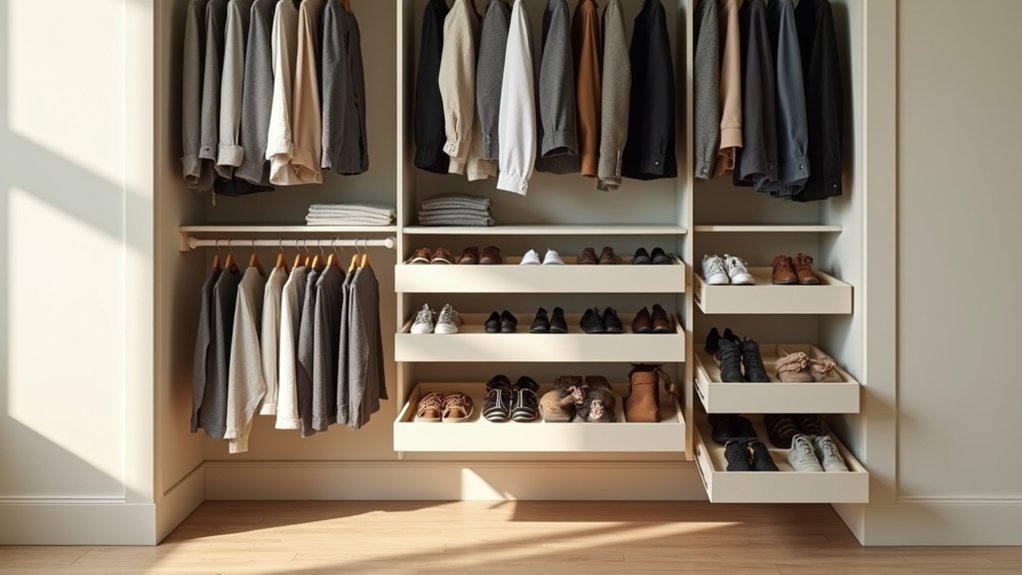
To organize towels and linens without overstuffing shelves, you’ll want to start by purging worn, stained, or mismatched items that waste valuable space. Next, master compact folding techniques, try rolling towels tightly or tucking fitted sheets inside matching pillowcases. Finally, use labeled baskets to categorize linens by type and frequency of use. These three strategies work together to maximize every inch of your linen closet, and the sections below break down each method step by step.
Toss Worn, Stained, and Mismatched Linens First
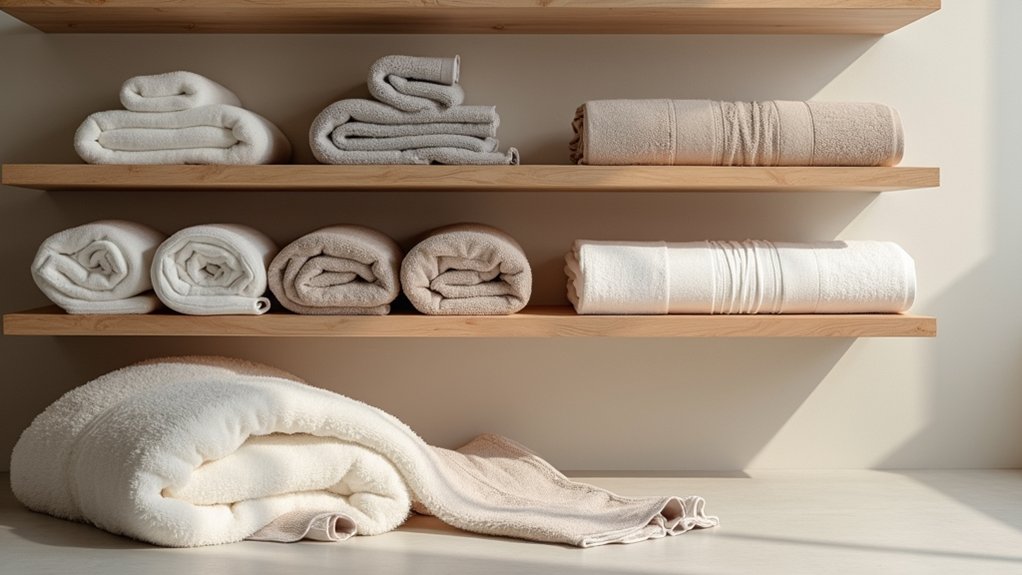
Before you organize a single shelf, you’ll need to purge linens that no longer serve you. Start by identifying worn items: frayed edges, thinning fabric, and holes signal immediate replacement. Pillows losing support after 1-2 years contribute to neck pain and must go.
Worn edges, thinning fabric, and flat pillows aren’t just eyesores, they’re your signal to start fresh.
Next, discard stained sheets and towels with permanent discoloration. These pieces compromise visual uniformity and risk cross-contamination during laundry cycles. Don’t forget to check for old, musty linens that may have developed odors from prolonged storage.
Finally, eliminate mismatched sets. Orphan fitted sheets and lone pillowcases accumulate quickly, especially after bed count changes. Categorize everything by size to identify high traffic linen usage patterns and spot excess inventory. You may be surprised to discover excess sheet sets accumulating, one household found nine unnecessary twin bed sheet sets during their decluttering session.
Prioritize seasonal linens rotation annually to prevent overstocking. This systematic purge typically removes 11-15 unnecessary items per closet, cutting future housework by up to 40%. Once you’ve decluttered, adopt the Rule of Two by maintaining just two sets of towels per person and two sets of sheets per bed to prevent future overstuffing.
Fold Sheets and Towels to Save Six Inches of Space
When you master precise folding techniques, you’ll reclaim up to six inches of valuable shelf space that standard methods waste.
Flat Sheets
Start with the tri-fold method: fold lengthwise into thirds, then horizontally into thirds again. This eliminates wrinkles while optimizing vertical storage options in your linen closet.
Fitted Sheets
Tuck elastic corners into one another to create a square base. Fold into thirds or quarters for a clean, organized finish. Store inside matching pillowcases to keep sets together.
Towels
Apply compact roll techniques by folding towels lengthwise in half, then rolling tightly from one end. Place rolls vertically in drawers to maximize dead space. For shelves, fold into thirds lengthwise, then thirds again for uniform stacking that increases shelf density without overstuffing. For bath towels specifically, you can also fold from top to bottom, then fold in three into a square for a neat, compact shape. Folding towels lengthwise also allows you to hang them directly on a rack for immediate use. To maintain your linens’ quality, store them in conditions that are clean, dry, and cool.
Organize Your Linen Closet With Labeled Baskets
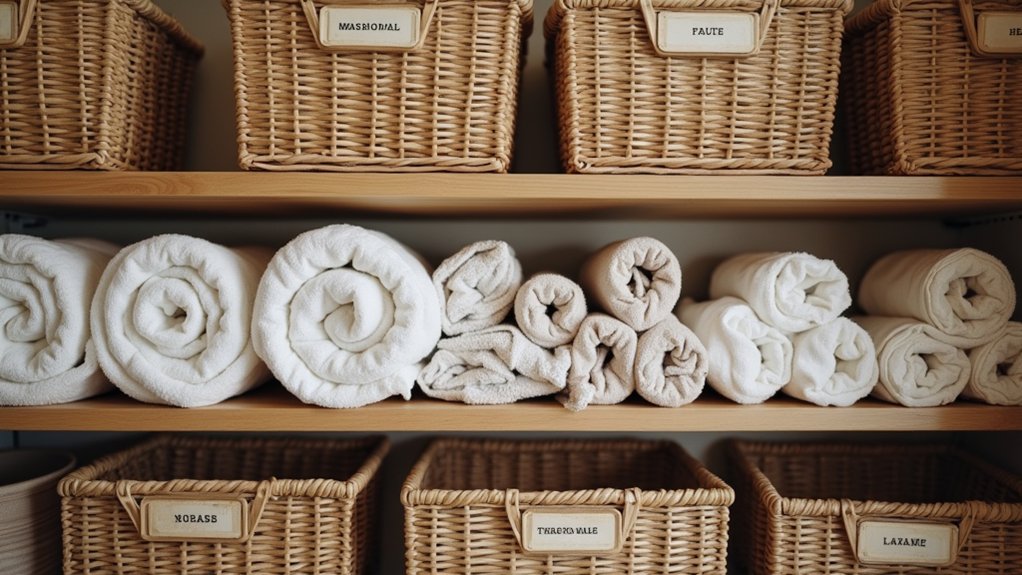
Neatly folded linens deserve an equally organized storage system to maintain their compact shape and accessibility. Labeled baskets transform cluttered shelves into functional zones where every item has a designated home.
Labeled baskets turn chaotic linen closets into organized havens where every towel and sheet finds its perfect home.
To optimize basket placement, position containers by usage frequency. Prioritize daily item accessibility by storing everyday towels and sheets at eye level, while seasonal blankets occupy top or bottom shelves. Choose uniform, washable baskets with handles for easy retrieval from deep shelves. Y-weave baskets from Target offer a consistent white aesthetic while remaining easy to clean.
Categorize contents strategically, separate bathroom linens from bedding, and subdivide pillowcases from sheets. Dedicate smaller baskets to toiletries like cotton balls and razors. Apply adhesive or chalkboard labels so every family member knows exactly where items belong. Using shelf dividers alongside your baskets prevents tall stacks from toppling over and keeps categories neatly separated. For added organization, consider storage bins with lids to protect bedding, towels, and paper products from dust and moisture.
This system prevents misplacing essentials, enables quick inventory checks, and eliminates time wasted searching through disorganized piles.
Frequently Asked Questions
How Often Should I Rotate My Linens to Prevent Wear and Tear?
You should rotate between 2-3 sets of linens, allowing each set to rest 12-24 hours after laundering before using again. By rotating linens seasonally and implementing a FIFO system, you’ll extend their lifespan by 20-30%. This approach also helps with maximizing shelf space since you’re maintaining ideal PAR levels, one set in use, one in laundry, and one resting, rather than overstocking items that’ll wear out prematurely.
What Is the Ideal Number of Towel Sets to Keep per Person?
You should keep three towel sets per person as the ideal towel set quantity per family member. This gives you one set in use, one in your linen closet, and one in the laundry. For determining the appropriate towel set quantity per household, multiply this number by your family members and add two guest sets. This rotation system maximizes your shelf space while ensuring you’ll never run short between wash cycles.
Can I Store Linens in Humid Bathrooms Without Causing Mildew Damage?
You shouldn’t store linens in humid bathrooms long-term. Without proper humidity control, mold growth begins within 24-48 hours in warm, damp conditions. Bathrooms trap steam and limit airflow, causing moisture absorption into fabrics even when they feel dry. Instead, you’ll want to relocate linens to cool, well-ventilated spaces with humidity below 45%. If bathroom storage is your only option, use open shelving and guarantee complete drying before folding to protect your investment.
How Do I Prevent Yellowing on White Linens During Long-Term Storage?
You’ll prevent yellowing on white linens by storing them in breathable cotton bags or cedar chests rather than plastic containers. Avoid bleach use before storage, as chlorine weakens fibers and causes discoloration over time. Maintain proper humidity levels by choosing cool, dry locations away from direct sunlight. Always wash and thoroughly dry linens before folding them neatly for storage. This methodical approach keeps your whites bright while maximizing shelf space efficiently.
Should I Keep Seasonal Blankets in the Linen Closet or Elsewhere?
You should store seasonal blankets separately from everyday linens to safeguard against overcrowding your linen closet. Use under-bed bins, bedroom closets with hangers, or dedicated armoires for bulky items. Vacuum-sealed bags compress blankets efficiently while airtight containers guard against pests and moisture. Keep them in cool, dry, dark spaces to preserve fabric quality. Rotate seasonal bedding periodically, this maintains freshness and ascertains you’re maximizing every inch of your available storage space.