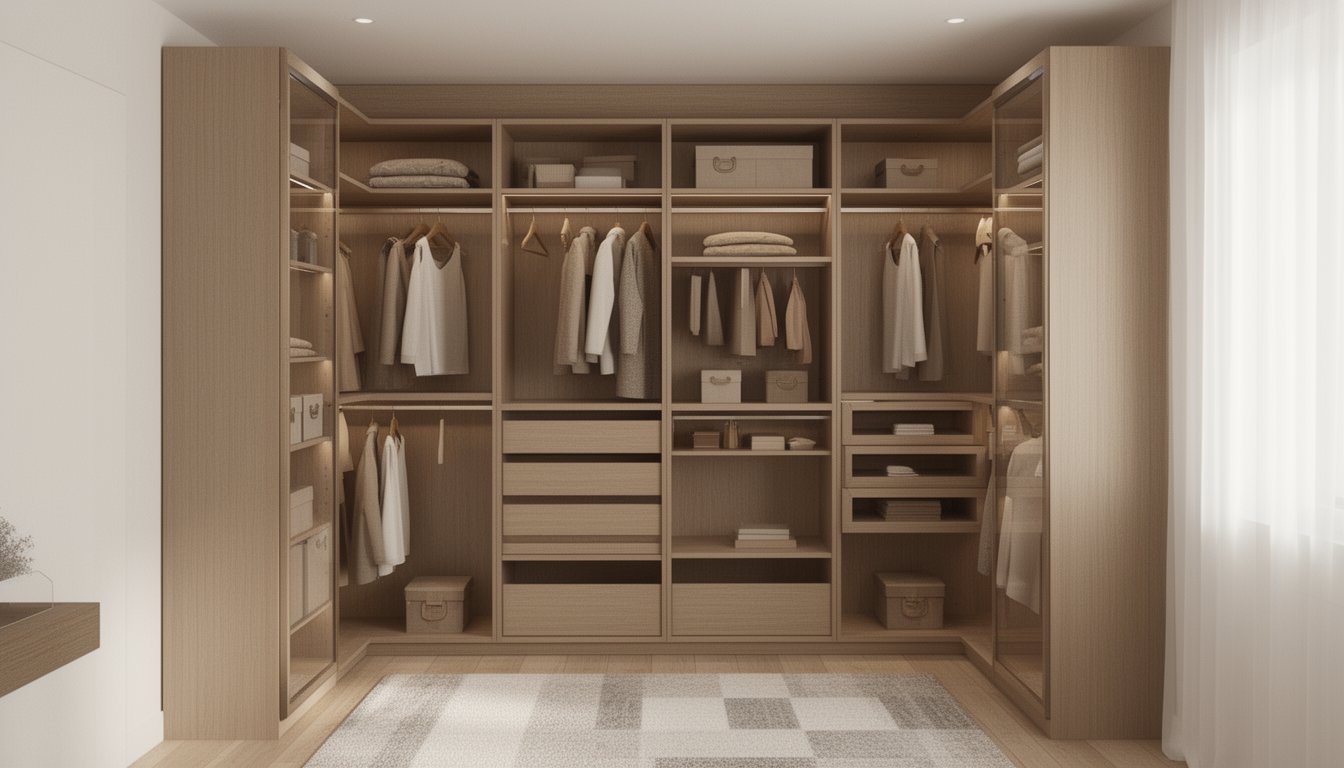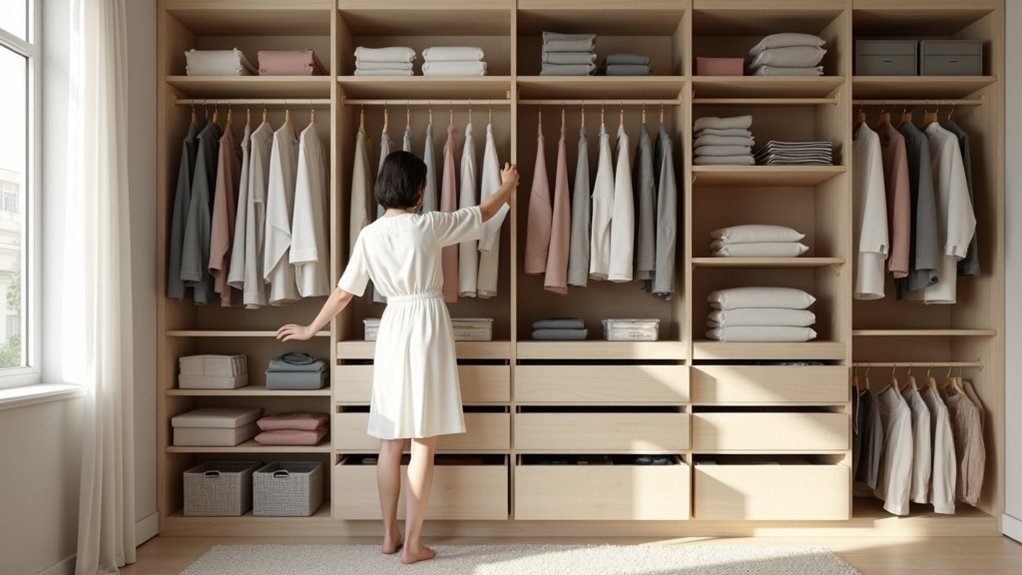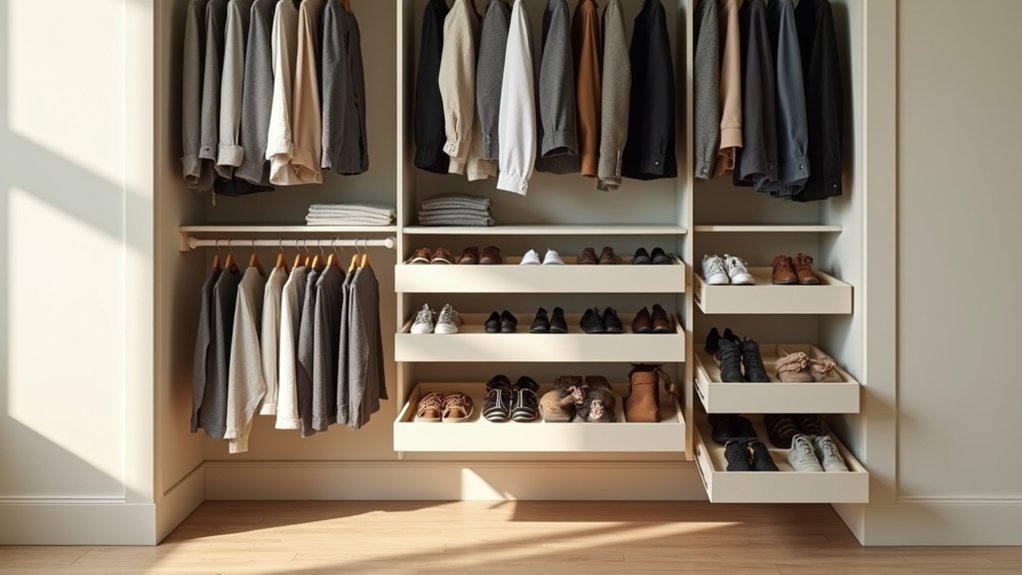
A weekly closet reset keeps your wardrobe organized in under 10 minutes when you follow these seven steps: choose a consistent reset day, clear your closet floor into hamper/hooks/hangers, return stray items to their rooms, fold and hang clean laundry, set aside pieces needing repairs or donation, prep tomorrow’s outfit on a valet hook, and time yourself to stay efficient. Each step below breaks down exactly how to execute this routine seamlessly.
Choose Your Weekly Closet Reset Day
When should you tackle your weekly closet reset? Sunday works best for most people because it aligns with weekly weather checks and lets you prep five complete outfits before Monday arrives. You’ll create compartments labeled for each weekday, including shoes and jackets.
Wednesday evening offers an alternative for midweek assessment. This timing helps you adjust for unexpected schedule changes without weekend overload. Your commitment considerations should include matching reset day with laundry day for seamless put-away. This approach saves mental energy by eliminating the daily decision of what to wear each morning.
Use your planner or app to lock in your fixed day. Consider seasonal adjustments quarterly to rotate appropriate items into your active wardrobe. Keep your emotional mindset in check before starting, pick a time when you’re energized, not exhausted. When you’re feeling confident, take everything out of your closet to see what’s available and assess what truly deserves space in your weekly rotation. Before beginning, develop a vision statement to guide your decluttering decisions and help you stay focused on your goals. This single decision streamlines every future reset session.
Clear the Floor First: Hamper, Hooks, or Hangers
Start your weekly reset by scanning your closet floor for any items that don’t belong there. You’ll use a quick floor sweep method to gather stray clothing, shoes, and accessories into a central pile for sorting. Once collected, you’ll direct each item to its proper storage destination, whether that’s a hanging hamper for dirty clothes, wall hooks for worn-once pieces, or back onto uniform hangers. A hanging hamper with dual compartments for sorting lights and darks makes this step even faster since clothes are pre-sorted before laundry day. Velvet or flocked hangers work especially well for this routine since their no-slip design prevents delicate fabrics from sliding back onto the floor. For shoes that tend to pile up, use a stackable shoe rack to keep favorite pairs visible and off the floor.
Quick Floor Sweep Method
Every item on your closet floor creates an obstacle that slows down your weekly reset, so you’ll want to clear the space before tackling any actual cleaning.
Start with broom selection, a standard broom works best for closet floors, while a soft dust mop handles open spaces efficiently. Push shoes, bags, and storage bins to one side to create an unobstructed sweeping path. If you notice shoes scattered throughout the space, focus on one type of clothing or accessory at a time to avoid feeling overwhelmed during your quick reset.
For your dust sweep technique, use short, deliberate strokes while holding the broom with one hand at the top and one near the middle. Angle the bristles into corners and along baseboards where dust accumulates. Work from the back of your closet toward the door, pulling debris into a central pile. If you find items on the floor that you haven’t worn in years, quickly transfer hesitant items to a designated storage bin for later review rather than letting them slow down your reset.
Sweep dust into your dustpan at a steep angle, then empty carefully into the trash.
Choose Your Storage Destination
Before you sweep a single dust bunny, you’ll need to relocate every item sitting on your closet floor to one of three destinations: hamper, hooks, or hangers. This systematic approach helps you evaluate storage quality while you optimize storage space vertically.
| Destination | Best For | Time to Clear |
|---|---|---|
| Hamper | Dirty clothes, worn items | 2 minutes |
| Hooks | Bags, belts, scarves | 3 minutes |
| Hangers | Clean, wrinkle-prone garments | 5 minutes |
Start with your hamper, toss all soiled clothing inside immediately. Next, grab accessories and hang them on wall or over-door hooks. Finally, transfer clean garments directly onto hangers. As you handle each piece, consider whether it sparks joy and deserves a spot in your weekly rotation. You’ll prevent reaccumulation by keeping items raised off the floor, making future resets faster. Consider how often you wear each item, since frequency of access should determine whether something earns prime real estate on easy-to-reach hooks or gets stored higher up. If you’re finding your current setup lacks adequate hook and hanger space, budget-friendly modular systems like ClosetMaid allow you to start small and build over time with add-on accessories.
Return Stray Items to Their Proper Rooms
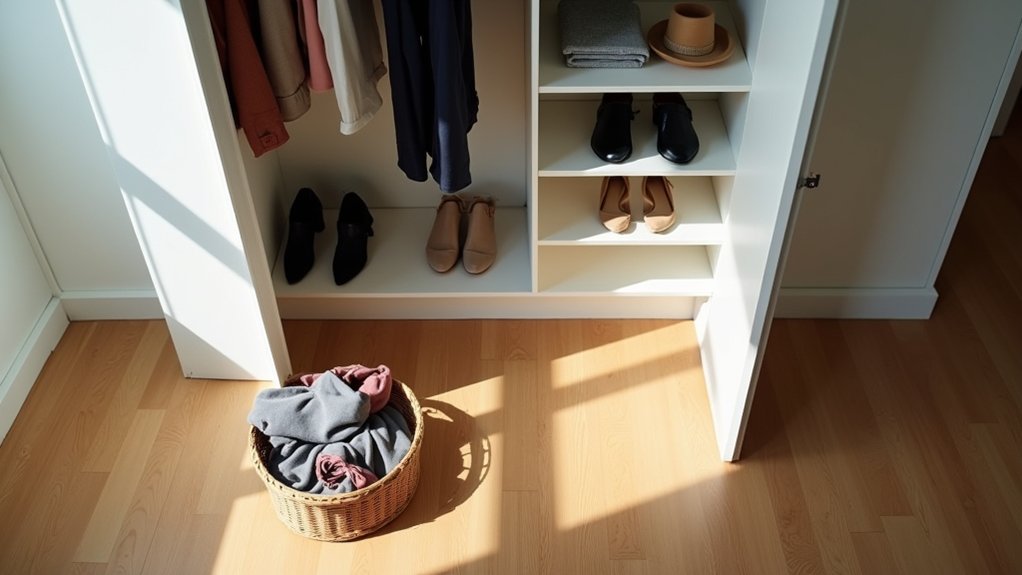
Grab a collection basket and work through each room in your home, gathering any clothing or accessories that have migrated from your closet. You’ll quickly spot stray items on chairs, bathroom hooks, and laundry areas that need to return to their designated spots. This room-by-room sweep takes just minutes but immediately restores visibility to your full wardrobe, helping you avoid duplicate purchases and wasted time searching for misplaced pieces. Recovering those 5, 10 minutes daily you’d otherwise spend hunting for misplaced items translates to 30, 60 hours saved annually. With the custom closets market growing significantly due to demand for personalized storage solutions, investing in designated spaces for every item makes this weekly reset even more efficient. Since closet systems rank as the top product category in the home organization industry, you’ll find plenty of professional options available when you’re ready to upgrade your storage setup.
Quick Room-By-Room Sweep
A quick room-by-room sweep serves as the foundation of your weekly closet reset, ensuring that stray items don’t accumulate and create visual clutter throughout your home. Start with stray item segregation by scanning each space for misplaced clothing, accessories, and linens. Apply these spatial organizational tips: check hallways for shoes, bathrooms for robes, and living areas for clothing drift.
| Room | Common Strays | Return Zone |
|---|---|---|
| Living Room | Pajamas, sweaters | Bedroom drawers |
| Bathroom | Robes, hair accessories | Closet hooks |
| Kitchen | Jackets, scarves | Entryway storage |
Prioritize daily-wear items for immediate return while directing seasonal pieces to higher shelves. You’ll maintain order by categorizing items by origin room and integrating this sweep into your regular cleaning routine. This consistent practice of putting clothes back where they belong keeps your closet tidy and prevents the weekly reset from becoming an overwhelming task. By performing this weekly sweep, you’re essentially conducting routine check-ins to reorganize that prevent clutter buildup and keep your closet functional year-round.
Use a Collection Basket
Designating one collection basket per floor or zone transforms your weekly reset from a scattered scavenger hunt into a streamlined sorting system. Choose open wire or center baskets that provide visibility, allowing you to identify items without rummaging. This approach creates designated catch all bins that corral stray remotes, toys, and utensils efficiently.
During your quick sweep, drop misplaced items into the basket rather than making multiple trips. Once you’ve completed each room, sort the contents and return everything to proper locations. Concealed storage solutions like tucked corner baskets blend seamlessly with your decor while maintaining functionality.
Select lightweight, durable materials like stainless steel that resist bacteria and clean easily. When baskets overflow, that’s your signal to declutter, keeping your reset routine under ten minutes weekly.
Fold and Hang This Week’s Clean Laundry
Once your laundry’s fresh from the dryer, you’ll want to tackle folding immediately while the fabric’s still warm and pliable, this reduces wrinkle-smoothing time considerably.
Start by separating items into hang versus fold piles, grouping similar types together. For fitted sheets, tuck corners into each other, shake taut, then tri-fold into thirds twice to store sheets efficiently. To fold towels neatly, lay pattern-side down, match corners, and fold outer edges inward by thirds.
Roll t-shirts tightly after folding the bottom up four inches, then flip the lip over to secure. For jeans, hook hangers through belt loops or accordion-collapse them for stability.
Designate a flat workspace and use a folding board for uniform results, you’ll complete everything under ten minutes with practice.
Set Aside Items for Mending, Cleaning, or Donation
Before returning everything to your closet, grab four baskets and label them: keep, toss, sell, and donate. This visual system relieves the psychological burden of clutter and speeds up your decision-making process.
For items needing repair, remove hangers and fold them neatly. Either follow through on mending within a week or donate immediately.
When you evaluate donation condition criteria, include only clean items in good working order. Launder everything before donating, even pieces that appear clean may have hidden odors.
Organize donations by purpose using this guide:
| Donation Type | Organization |
|---|---|
| Professional women’s wear | Dress for Success |
| Men’s interview suits | Career Gear |
| General clothing | Big Brother Big Sister |
| Textile recycling | American Textile Recycling Service |
| Local trading | Freecycle |
Prep Tomorrow’s Outfit on a Valet Hook
A valet hook mounted near your closet entrance transforms your evening routine into a streamlined outfit staging system. You’ll eliminate morning scrambling by hanging your complete ensemble, jacket, shirt, pants, and accessories, together for full visual assessment. This outfit arrangement convenience guarantees you catch mismatched items before leaving home.
A valet hook turns evening prep into morning confidence, stage your outfit once, step out polished every time.
The closet staging efficiency you gain prevents decision fatigue during rushed mornings. You’ll verify every component is ready, from ties to coordinating handbags, without frantically searching through multiple hangers.
Benefits of valet hook staging:
- Keeps freshly pressed garments wrinkle-free by separating them from your main wardrobe
- Provides clear visual separation in shared closet spaces
- Allows strategic planning around weather or important meetings
- Reduces morning stress by finalizing styling decisions the night before
Keep Your Weekly Closet Reset Under 15 Minutes
While prepping tomorrow’s outfit saves your mornings, maintaining that level of organization requires a consistent weekly reset that won’t eat into your schedule. You’ll maximize efficiency by breaking your reset into focused tasks.
| Task | Action | Time |
|---|---|---|
| Return Items | Place clothes in designated zones | 3 min |
| Quick Scan | Identify items for donation pile | 4 min |
| Drawer Check | Straighten dividers and file folds | 4 min |
| Shelf Reset | Adjust strategic shelf layout bins | 4 min |
Your weekly routine complements seasonal clothing rotations by preventing gradual clutter buildup between major wardrobe shifts. Return each item to its organized zone, straighten your uniform hangers, and verify bins remain dust-free. This systematic approach keeps your closet manageable without demanding significant time investment.
Ready to Transform Your Space?
A well-designed closet or storage system can completely change the way you live at home, and at Creative Closet Design, we make that transformation effortless. From custom closets and pantry systems to garage storage, office systems, and entertainment centers, our experienced team designs and installs solutions tailored specifically to your space and your lifestyle. Call (863) 591-4500 today to schedule your free design consultation.
Frequently Asked Questions
How Do I Maintain My Closet Organization Between Weekly Resets?
You’ll maintain organization through consistent daily closet upkeep habits. Return each item to its designated spot immediately after wearing or deciding against it. Apply the one-in-one-out rule whenever you add new pieces. Keep a donation bin accessible for instant decluttering decisions. For effective wardrobe maintenance tips, group similar items together and position frequently worn clothes at eye level. These small, systematic actions prevent buildup and keep your space functional between resets.
What Storage Tools Work Best for Small Closets With Limited Space?
For small closets, you’ll want to prioritize vertical space optimization with double hanging rods and over-the-door shoe organizers that hold 24+ pairs. Use clear plastic bins to store seasonal items on upper shelves, you’ll instantly see contents without digging. Add vacuum space bags to compress bulky clothing, and install stackable modular drawers that adapt to your specific dimensions. These tools maximize every inch while keeping your weekly reset under 10 minutes.
How Should I Organize My Closet Into Functional Zones for Daily Efficiency?
Divide your closet into three priority zones based on reach height. Place everyday items like work clothes and basics at eye-to-waist level for instant access. Store seasonal pieces and storage bins in upper areas, while shoes and bags occupy lower sections. When exploring closet layout options, sketch your space first and group similar items together. Use optimal shelving configurations to separate workwear, casual clothes, and accessories into distinct, functional categories.
When Should I Perform Seasonal Clothing Swaps and How Do I Store Off-Season Items?
Rotate winter/summer wardrobes during the last weekend of September and again in spring, creating natural six-month storage cycles. Store off-season clothing efficiently by first cleaning all items, then placing them in breathable bins or fabric bags to prevent musty odors. Use clear, labeled containers with specific category names for easy retrieval next season. Maximize space with under-bed storage or dual-purpose furniture like ottoman beds when closet space is limited.
What Categories Should I Use When Sorting and Organizing My Wardrobe?
You’ll want to establish clear clothing categories that match your lifestyle. Start with wardrobe segmentation by grouping items into primary sections: tops (solids, patterns, cardigans), bottoms (jeans, work pants, skirts), and dresses. Next, create zones for accessories, footwear, and undergarments. Finally, organize by usage, work clothes, weekend wear, athletic gear, and formal pieces. This systematic approach lets you locate items instantly during your weekly reset.