You’ll choose the best closet layout by first measuring your available space, reach-in closets work in areas as small as 6 feet long by 24 inches deep, while walk-ins need at least 5×5 feet minimum. Next, divide your storage into three zones: prime (30-60 inches) for daily wear, upper for seasonal items, and lower for shoes and bulky gear. The sections below break down each zone’s specific organization strategies.
Match Your Closet Type to Available Square Footage
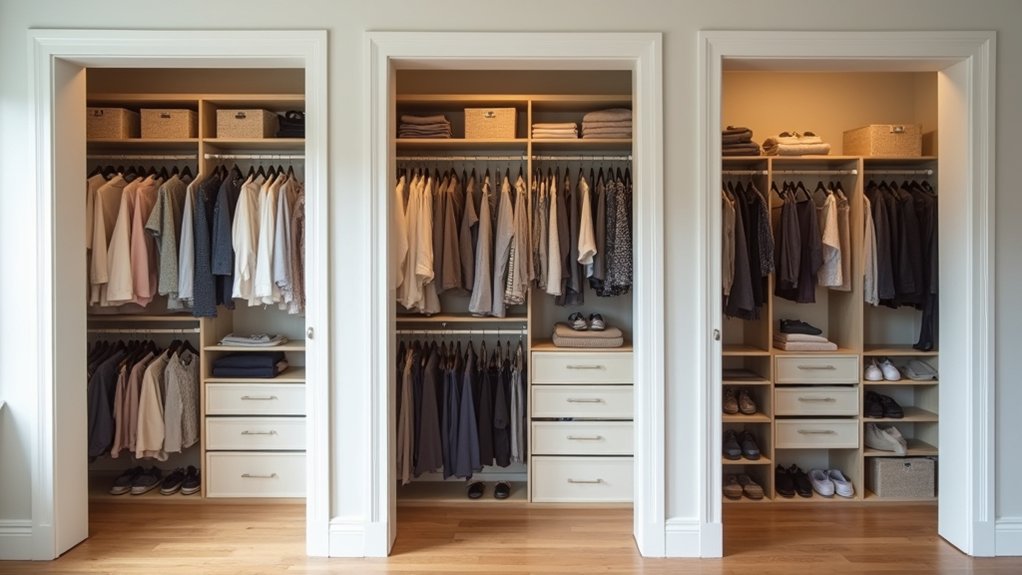
Three main closet types, reach-in, walk-in, and wardrobe, each demand specific square footage to function properly. Reach-in closets work best in spaces measuring 6 feet long, 8 feet high, and 24 inches deep, ideal for children’s or guest bedrooms. Walk-in closets require minimum dimensions of 6.5 by 10 feet for comfortable movement, though smaller 5×5 configurations remain functional. These larger closets can incorporate varied rod heights, accessories storage, and open shelving options to maximize organization potential.
When you’re working with limited space, freestanding wardrobes offer flexibility at 30-60 inches wide and 72 inches tall. You’ll want to customize hanging rod lengths based on your clothing inventory and available width. For walk-in designs, achieving 7 feet of width allows you to hang clothes on both sides of the closet. Single-sided walk-in closets with built-in storage on one wall require only 24 inches of clearance for comfortable access.
Before committing to a layout, assess your current wardrobe and plan for future storage needs. This systematic evaluation guarantees you’ll select the closet type that maximizes every square foot while accommodating growth. one effective way to approach this is by following shoe storage solutions in five steps. Start by categorizing your footwear based on frequency of use, then allocate designated spaces for each category to ensure easy access.
Organize Storage Into Prime, Upper, and Lower Zones
You’ll maximize every inch of your closet by dividing it into three strategic zones based on how often you reach for items. Your prime zone, spanning 30 to 60 inches from the floor, keeps daily essentials at eye-to-waist level for effortless morning routines. The upper zone handles seasonal and special-occasion pieces, while the lower zone organizes shoes, bags, and drawer storage beneath 30 inches. Since 44% of women can’t find an item in their closet at least once a month, this zoning approach helps eliminate frustrating searches. Arrange your work clothes near the entrance and rotate seasonal wardrobes twice yearly to streamline your daily workflow. Before implementing your zone system, remove unwanted items and start fresh with a clean canvas to ensure you’re only organizing what you truly need.
Prime Zone Daily Access
When you organize your closet into distinct storage zones, the prime zone, spanning 30 to 60 inches from the floor, becomes your most valuable real estate. This accessible storage area houses everyday clothing, work attire, and workout gear you’ll reach for during morning routines. Position items at eye-to-waist level to maximize garment visibility and eliminate unnecessary bending or stretching. creating a functional drop zone setup will further enhance the organization of your closet. By dedicating a small section to items like shoes, bags, or accessories, you can streamline your morning routine and keep essential pieces within easy reach. This thoughtful arrangement not only saves time but also helps maintain a tidy space.
| Storage Solution | Purpose | Benefit |
|---|---|---|
| Double hang rods | Short garments | Doubles capacity |
| Velvet hangers | Prevent slipping | Increases rod space |
| Shelf dividers | Stack support | Prevents collapse |
Group clothing by usage frequency, placing work clothes nearest the entrance. You’ll save time and reduce frustration when grab-and-go items remain within arm’s reach. Avoid shelves deeper than 16 inches to maintain efficient workflow. For heavier storage needs, consider shelving units with a 12-inch depth that fit neatly within closet spaces while supporting substantial weight. Units featuring height adjustable shelves allow you to customize spacing for various items, from folded sweaters to tall boots.
Upper Zone Seasonal Storage
Efficiency drives the upper zone strategy, where lofty shelves above 60 inches store seasonal items you won’t need for months. This overhead placement keeps winter coats, puffer jackets, and bulky sweaters accessible without consuming prime daily-use space. You’ll maximize vertical capacity by using vacuum-sealed bags that compress items and clear labeled bins that organize accessories like scarves and gloves.
Install pull-down rods to retrieve garments without climbing ladders. Motion-sensor lights illuminate these high shelves, eliminating the need for fumbling in the dark when accessing stored items. During seasonal shift periods, modular stackable bins make swapping wardrobes quick and uncomplicated. Protect your stored clothing with breathable bags containing cedar blocks or lavender sachets to prevent moths and maintain freshness.
Layer heavy items at bin bottoms for stability, and always clean garments before storing them. Avoid cardboard boxes in this zone since they can attract pests and retain damaging moisture. Proper labeling ensures you’ll locate everything efficiently when seasons change. This organized approach reduces choice fatigue and prevents clothes from getting lost in cluttered storage spaces.
Lower Zone Floor Items
The lower zone, spanning below 40 inches, transforms often-wasted floor space into functional storage for shoes, boots, and bulky items that don’t belong at eye level. You’ll maximize under rod clearance by positioning small dressers or shoe racks directly beneath short hanging clothes, capturing the 40 to 42 inches of dead space that typically goes unused.
Wire shoe racks, vertical organizers, and cube units work efficiently in this zone. Space shelves 10 inches apart for ideal shoe organization. Consider convertible storage components like KALLAX units with drawer inserts, they’ll adapt as your needs change. Before installing any organizers, wipe down the closet interior to ensure a clean foundation for your new storage system. Stackable baskets require no assembly and simply snap into place, making them perfect for storing workout clothes, socks, and other frequently accessed items in this zone.
For maximum efficiency, place stacking drawers in back corners for hand-me-downs or off-season items. Label bins with sizes or recipient names so you can quickly identify contents without rummaging through each container. Decluttering this zone alone can free up to 30% more usable storage capacity.
Balance Hanging Space for Different Clothing Lengths
Balancing double-hang and single-hang sections maximizes your closet’s capacity while accommodating everything from folded pants to floor-length gowns. You’ll want to allocate rod space based on your actual wardrobe, more double rods if shirts and pants dominate, more full-height sections if dresses and coats take priority. Single pole sections should be installed at least 66 inches from the floor to properly accommodate long coats and dresses. Zoning clothing by length guarantees you’re not wasting vertical inches on short garments that could share space with a second rod above or below. To further optimize storage, maximize vertical space by adding two shelves above hanging rods for off-season clothes or bulky items.
Double Hang Versus Long
When you’re mapping out your closet layout, understanding the distinction between double hang and long hang configurations will directly impact how much storage you can extract from your available space.
Double hang systems position rods at 42 and 84 inches, creating balanced rod heights that effectively double your capacity for shirts, blouses, and folded slacks. Long hang sections reserve full vertical space utilization for dresses, coats, and full-length garments requiring 48+ inches of clearance.
Consider these key differences:
- Double hang doubles short garment capacity within the same footprint
- Long hang requires 24-30 inches depth to prevent wrinkling
- Combination layouts optimize storage by minimizing long sections and supplementing with shelves
You’ll achieve maximum efficiency by measuring your existing wardrobe before committing to either configuration.
Allocate Rod Space Wisely
Allocating rod space wisely requires you to balance double-hang efficiency against long-hang necessity, a ratio that typically falls between 60-70% double-hang and 30-40% long-hang for most wardrobes.
To maximize double hang space, dedicate 70-80% of your closet to shirts, folded pants, and skirts. This configuration works best when you’ve counted your actual garments first. You’ll need at least 3-4 linear feet for long items like maxi dresses and coats.
Evaluate long garment ratios by inventorying pieces requiring over 50 inches of vertical clearance. If you own few long items, lean toward more double-hang sections for flexibility. Reserve 20-30% specifically for full-length pieces, ensuring they hang without dragging. This systematic approach prevents wasted space while accommodating every clothing category in your wardrobe.
Zone Clothing By Length
Because your wardrobe contains garments of varying lengths, you’ll achieve maximum efficiency by creating distinct zones, short, medium, and long, that prevent wasted vertical space beneath shorter items. This systematic approach guarantees clothing silhouette compatibility while maximizing every inch of your closet.
Consider these essential zoning guidelines:
- Short zone (36″ width): Install double rods for shirts on top, skirts and shorts below
- Medium zone (48″ width): Reserve for blazers, jackets, and suit pieces requiring single-rod access
- Long zone (60-70″ clearance): Dedicate to dresses, coats, and full-length garments
Proper vertical space utilization means placing frequently worn items at eye level while storing seasonal pieces on upper shelves. You’ll want to sketch your zones before installation, prioritizing the 20% of clothing you wear most often.
Select Shelf Depths Based on What You Store
Selecting the right shelf depth guarantees every inch of your closet works efficiently for your specific storage needs. You’ll optimize shelf spacing by matching depth to item dimensions, 12-inch shelves suit folded clothes and shoes, while 14-16 inch depths accommodate linens, towels, and bulky blankets.
Tailor placement by item size to maximize accessibility. Reserve shallower 12-inch shelves for reach-in closets storing everyday apparel and accessories. Dedicate deeper 14-16 inch shelving to utility supplies, bedding, and storage baskets that need extra volume.
Consider vertical spacing alongside depth. Allow 10-12 inches between shelves for folded garments, 12-15 inches for linens, and minimum 15 inches for tall cleaning supplies. Adjustable systems let you reconfigure as your storage needs evolve, ensuring nothing gets buried or wasted.
Avoid Layout Mistakes That Waste Closet Space
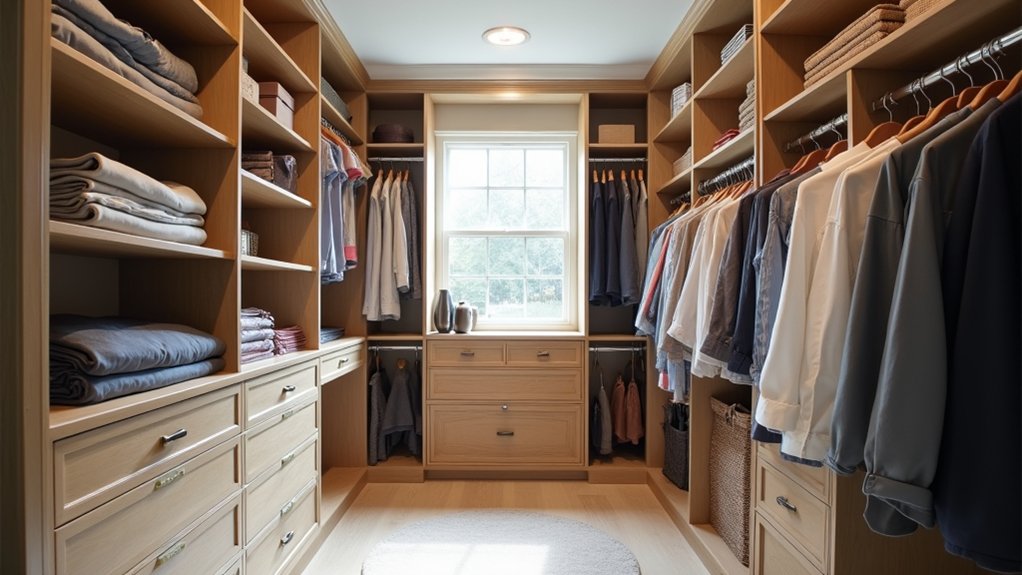
Even well-intentioned closet designs fail when common layout mistakes go unaddressed during planning. Single rod layouts waste two to three feet of vertical space below the hanging area, using only 30 percent of available capacity. Fixed shelving at arbitrary heights creates dead zones that don’t accommodate your actual belongings.
Watch for these critical errors:
- Single-purpose designs that offer all hanging space or all shelves without balance
- Poor door choices like bifolds that block side access or sliders that hide half your contents
- Neglected vertical zones in the upper 18-24 inches and lower 12 inches
You’ll achieve personalized organization by installing adjustable organizers that adapt to your wardrobe’s changing needs rather than forcing items into ill-fitting configurations. Additionally, consider incorporating efficient storage solutions for small spaces, which can maximize every inch of your home. By utilizing vertical space and multifunctional furniture, you can create a more streamlined and clutter-free environment. This approach not only enhances aesthetics but also improves overall functionality, making your living area more enjoyable.
Choose Adjustable Systems That Adapt Over Time
Adjustable closet systems solve the flexibility problem that fixed configurations can’t address. You’ll tailor functionality to lifestyle by repositioning shelves to fit tall boots, stacked sweaters, or compact boxes. Floor-to-ceiling shelving and double hanging rods maximize every vertical inch.
These systems accommodate evolving storage needs as your life changes. You can reconfigure layouts for seasonal wardrobe shifts, growing families, or new accessibility requirements without costly overhauls. Winter coats move to upper shelves during summer, freeing prime space for current items.
Adjustable components integrate seamlessly with accessories like valet rods, tie racks, and pull-out bins. You’ll protect delicate items with compartments and dividers while maintaining airflow to preserve clothing integrity. This adaptability also increases property value, making your closet a premium feature for potential buyers.
Ready to Transform Your Space?
A well-designed closet or storage system can completely change the way you live at home, and at Creative Closet Design, we make that transformation effortless. From custom closets and pantry systems to garage storage, office systems, and entertainment centers, our experienced team designs and installs solutions tailored specifically to your space and your lifestyle. Call (863) 591-4500 today to schedule your free design consultation.
Frequently Asked Questions
What Door Type Provides the Best Access to Reach-In Closet Storage?
Bifold doors provide the best access to reach-in closet storage because they fold in half, giving you nearly full-width visibility and reach. You’ll appreciate how they require minimal floor clearance while maximizing your usable space. Unlike sliding doors, which only expose half your closet at once, bifold options let you see and access everything simultaneously. This makes organizing and retrieving items much more efficient for your daily routine.
How Much Rod Space Should I Allocate per Hanging Garment?
You’ll need to allocate rod space based on garment rod density requirements: shirts and blouses need 1 inch each, pants and skirts require 1.25 inches, while suits, jackets, and dresses demand up to 3 inches per item. For rod height positioning, place double rods at 80-84 inches and 40-42 inches for short garments, reserving 70-72 inches height for long items. This systematic approach maximizes your storage capacity efficiently.
What Closet Dimensions Work Best for Wheelchair Accessibility?
You’ll need a minimum 60 inches wide by 56-59 inches deep compartment with 32-inch door openings. Guarantee clear floor space allows parallel wheelchair approach within 10 inches of storage areas. Install an adjustable rod height system, positioning rods at 48 inches maximum for seated reach, standard 60-72 inch heights won’t work. Place shelving no higher than 48 inches and drawers between 8-33 inches from the floor to maximize accessible storage throughout your space.
Should I Choose Fixed or Adjustable Shelving for My Budget?
If you’re working with a tight budget, fixed shelving saves 10-15% upfront with simpler installation. However, adjustable shelving offers better long-term value by eliminating future reconstruction costs. You’ll maximize your space with custom shelf spacing that adapts to your changing needs, and customizable shelf depth lets you create zones for specific items. For wheelchair accessibility, adjustable systems provide the flexibility you’ll need as requirements evolve over time.
How Do Two Smaller Walk-In Closets Compare to One Large Closet?
Two smaller walk-in closets offer better layout efficiency when you’re working with compact or irregular spaces, letting you zone storage by purpose, one for hanging, another for shoes or shelves. However, one large closet over 100 square feet gives you space optimization advantages like U-shaped layouts, islands, and seating areas. You’ll want to assess your square footage and whether dedicated zones or centralized access serves your wardrobe needs better.