You can create a functional drop zone in three simple steps using hooks, a surface tray, and a basket. First, install command hooks or a hook rail for coats, bags, and leashes. Next, place a small tray on your counter to corral keys, sunglasses, and wallets. Finally, add a single bin for temporary items like mail and returns. This systematic approach saves you time and keeps daily essentials organized, and there’s more to discover below. creating a drop zone for backpacks can further enhance your organization efforts. Designate a specific area near your entrance, adding hooks at a comfortable height for easy access. This not only keeps backpacks off the floor but also encourages everyone in the household to maintain their space.
Create a Drop Zone With Just Three Essential Items
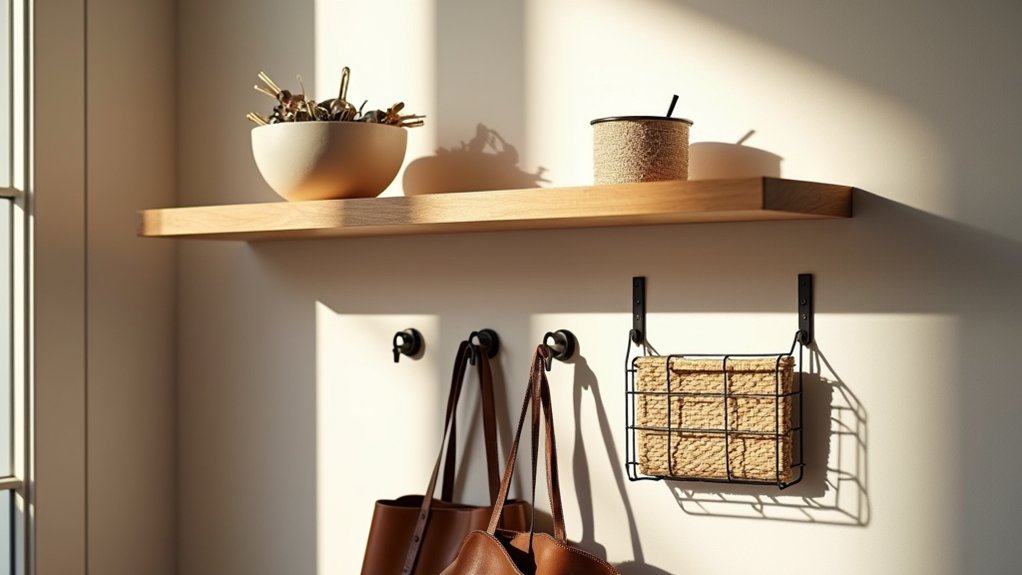
When you’re short on space or budget, you don’t need an elaborate mudroom to create an effective drop zone, just three essential items will transform any entryway into a functional landing spot.
Start with hooks. Utilize command hooks or a simple hook rail to handle coats, bags, and dog leashes. Slim hooks work perfectly for daily grab-and-go items. Keep in mind that anything not worn daily should be stored in the bedroom, ensuring your hooks remain reserved for everyday essentials.
Add a surface tray. A small bowl or tray on your counter corrals keys, sunglasses, and wallets, preventing them from migrating throughout your home. Consider adding built-in charging stations to turn your drop zone into a mini tech hub for phones and tablets.
Finish with a basket. Leverage layered storage by adding a single bin for temporary items like mail, returns, or seasonal accessories. You can also use rope bins to limit visual clutter while keeping items accessible. For maintaining the elegance of your wardrobe, it’s crucial to implement wrinkle prevention tips for luxury garments. This can include proper hanging techniques and using garment bags for optimal protection.
These three components work together to create an organized system that serves your family’s daily needs without overwhelming your space.
Give Every Item a Home so Nothing Piles Up
Because disorganization causes 80% of household clutter, assigning a specific spot for every item you own transforms your drop zone from a temporary dumping ground into a permanent organization system.
Your designated drop zone works only when each object has dedicated storage space. Keys belong on one hook, sunglasses in one tray, mail in one sorter. This systematic approach eliminates the 2.5 days you’d otherwise spend yearly searching for misplaced items. Consider that the average person spends an estimated 3,680 hours searching for misplaced items over a lifetime, making designated storage spots essential for reclaiming your time.
Label containers and compartments so family members know exactly where things go. When everyone follows the same system, you’ll avoid duplicate purchases and reduce housework by up to 40%. Without this organization, you could be wasting $1,000 per year on items you already own but simply cannot find. The result? You’ll join the 95% of people who feel their lives are organized when their homes function efficiently. This matters especially since 81% of homeowners report they cannot relax when their kitchen is messy, proving that organization directly impacts your ability to unwind at home. Label containers and compartments so family members know exactly where things go. When everyone follows the same system, you’ll avoid duplicate purchases and reduce housework by up to 40%. Without this organization, you could be wasting $1,000 per year on items you already own but simply cannot find.Applying practical systems like entryway organization tips for small spaces can further streamline daily routines by keeping frequently used items easy to locate and return. The result? You’ll join the 95% of people who feel their lives are organized when their homes function efficiently. This matters especially since 81% of homeowners report they cannot relax when their kitchen is messy, proving that organization directly impacts your ability to unwind at home.
Reset Your Drop Zone Weekly to Stay Organized
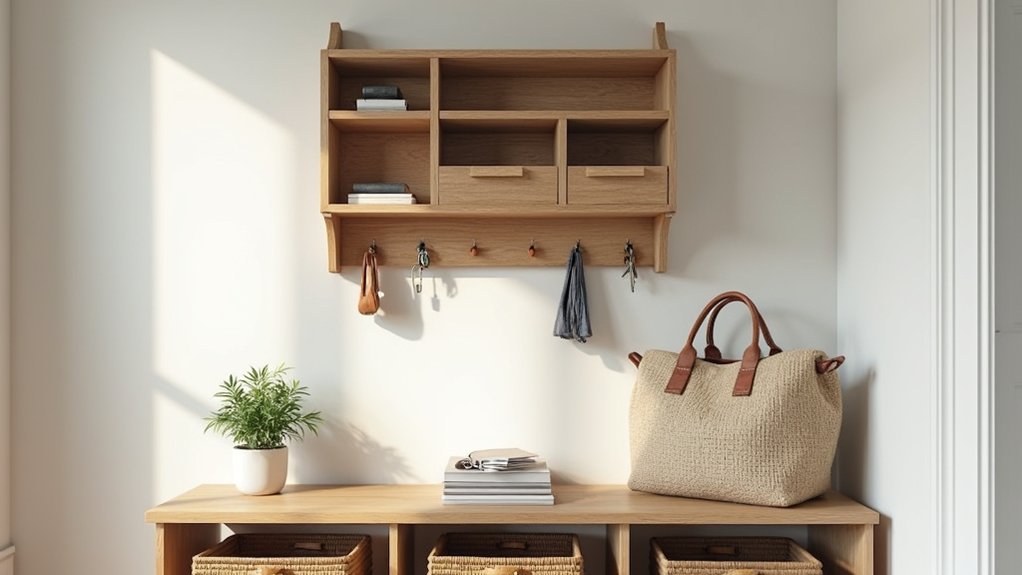
Even the most organized drop zone requires weekly maintenance to prevent gradual clutter buildup. Schedule routine decluttering every Sunday evening to empty catch-all trays and sort accumulated papers into labeled containers.
Start by evaluating what’s gathered throughout the week. Remove non-essential items from hooks, keeping only grab-and-go jackets and bags. Edit drawers holding mail, keys, and supplies, addressing papers immediately rather than letting them stack. Consider using a napkin holder to store mail near your door for easy sorting throughout the week.
Rotate seasonal decor and outerwear as needs change. Move winter gloves to closets when spring arrives, freeing prime real estate for current essentials.
Reset storage zones by reorganizing valet trays and adjusting bin dividers for each family member. Tour your household through the process weekly so everyone understands the system. This consistent reset keeps your drop zone functional and clutter-free year-round.
Ready to Transform Your Space?
A well-designed closet or storage system can completely change the way you live at home, and at Creative Closet Design, we make that transformation effortless. From custom closets and pantry systems to garage storage, office systems, and entertainment centers, our experienced team designs and installs solutions tailored specifically to your space and your lifestyle. Call (863) 591-4500 today to schedule your free design consultation.
Frequently Asked Questions
What Is the Ideal Location for a Drop Zone Near My Entrance?
You’ll want to choose a convenient hallway location right where you naturally enter and exit your home. The strategic placement near door guarantees you’ll actually use it daily. Consider your garage entry, front foyer, or mudroom, wherever your family typically dumps belongings first. You should maximize vertical wall space with hooks and shelving, then assign designated zones for each person. This approach prevents clutter from spreading throughout your entire home.
How Much Space Do I Need to Create an Effective Drop Zone?
You’ll need a minimum of 5′ x 5′ for a compact drop zone, though ideal space requirements suggest 6′ x 6′ for an average setup or 7′ x 9′ for enhanced storage. If you’re converting a closet, a 2-foot depth works well. Focus on efficient layout design by maximizing vertical space with hooks, shelves, and under-bench baskets, this approach lets you create functionality even in smaller areas.
Can I Use a Drop Zone for Organizing Mail and Important Papers?
Yes, you can absolutely use your drop zone for organizing mail and important papers. Set up labeled folders or baskets with categories like “To Do,” “To File,” and “To Shred” for efficient file organization. You’ll want to process incoming mail within five days to prevent pile-ups. Consider pairing your physical system with digital storage for important documents, maximizing your space while keeping everything accessible and clutter-free.
What Storage Solutions Work Best for Hiding Bulky Items Like Umbrellas?
You can effectively hide bulky umbrellas using freestanding umbrella stands or wall mounted umbrella holders based on your space constraints. For tight entryways, choose slim metal stands with compartments that accommodate various umbrella sizes. If you’re short on floor space, wall mounted options keep umbrellas accessible without cluttering your drop zone. Consider repurposed containers like vintage tubs or decorative vases that blend storage with your entry’s aesthetic while maximizing every inch available.
How Do I Customize a Drop Zone for Multiple Family Members?
You’ll want to assign designated cubbies for each family member with personalized storage containers labeled by name or color. Install hooks at varying heights to accommodate everyone’s reach, and place expandable drawer dividers to create individual compartments for keys and small essentials. Set clear limits, like one pair of shoes per person, to prevent overflow. Position the zone near your most-used entrance so everyone naturally adopts the system.