Your entryway’s the first line of defense against daily clutter, and a few strategic systems can transform it into a functional command center. Start by setting up a drop zone near your most-used door with a console table that has drawers for keys, wallets, and sunglasses. Add wall hooks to lift coats off the floor, and create designated spots for each family member. These tips below will help you maximize every inch.
Set Up a Drop Zone Near Your Most-Used Entryway
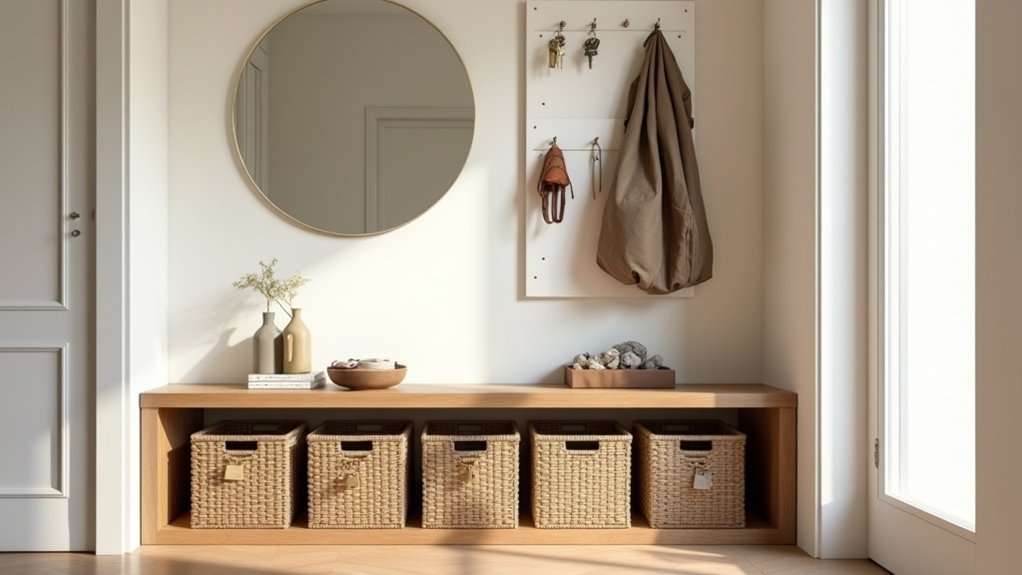
A drop zone serves as your home’s first line of defense against daily clutter. Position it closest to your primary entry point, whether that’s your back door, front door, or kitchen entrance. This strategic placement lets you unload immediately upon arrival. A functional drop zone setup for keys ensures you always know where to find your essentials as you come and go. Consider adding hooks or a bowl to keep your keys organized and easily accessible. By creating this small yet effective system, you help minimize the time spent searching for misplaced items, making your daily routines much smoother.
Start by identifying frequently accessed essentials like keys, wallets, lip balm, and sunglasses. These items need a designated landing spot to prevent them from scattering throughout your home. When something does go missing, your drop zone provides a good starting point to begin your search.
You’ll maximize space with designated zones tailored to your household’s needs. Install a small cabinet near your back door for shoes and backpacks. Use a kitchen drawer adjacent to your entry for mail and school papers. Keep part of an entry table clear for outgoing items like returns or school projects, which prevents additional trips upstairs. In smaller apartments, even a single valet tray near the door creates an effective deposit station for daily necessities. To maintain this system, encourage all household members to use the drop zone consistently so everyone develops the habit of depositing items in the same spot.
Choose a Console Table With Drawers for Daily Essentials
A console table with drawers gives you dedicated storage that keeps daily essentials organized while maintaining a clean, streamlined entryway. You’ll hide away visual clutter like mail, chargers, and masks in compartmentalized drawers, freeing up surface space and reducing the chaos that accumulates in high-traffic areas. Position your most-used items, keys, wallet, sunglasses, in the top drawer for instant grab-and-go access that simplifies your morning routine. The integration of drawers and shelves creates a seamless, uncluttered look that enhances your entryway’s aesthetic appeal. Choose a table with a depth of 12-16 inches to ensure it fits comfortably without blocking the flow of foot traffic. This approach to clutter control creates a designated spot for essentials, helping you maintain a tidy and organized entrance every day.
Hidden Storage Reduces Clutter
Hidden storage transforms a chaotic entryway into a functional command center. When you choose a console table with concealed compartments, you create designated spots for keys, mail, wallets, and sunglasses. Drawers tuck away chargers, dog leashes, and masks while keeping them within reach. You’ll eliminate countertop clutter that makes small foyers feel cramped.
Multilayered storage maximizes every inch of your entryway. Lower shelves hold shoes, woven baskets, or bins for items you’d rather not display. Cabinets stash scarves, gloves, and seasonal accessories out of sight. This approach prevents essentials from scattering across surfaces while maintaining a tidy entrance. Console tables come in various materials like wood, metal, or glass, allowing you to match your existing décor seamlessly.
Your entryway becomes a drop zone that actually works. Remote controls, magazines, and incoming mail stay organized instead of piling up, giving visitors a welcoming first impression. A narrow, streamlined console table fits in tight spots where bulkier furniture would overwhelm the space.
Grab-and-Go Item Access
When mornings turn hectic, you need essentials positioned exactly where you’ll reach for them. A console table with drawers creates streamlined accessibility for keys, wallets, sunglasses, and mail. You’ll eliminate frantic searches by designating specific compartments for each item.
Position your console at the entryway’s natural traffic flow. Drawers enable quick retrieval without visible disarray, while lower shelves hold umbrellas, bags, or leashes. This setup transforms chaotic exits into organized daily routines.
Choose a table measuring 30-36 inches high for comfortable reach. Built-in charging stations keep phones powered and ready. Families benefit most from this grab-and-go drop zone, everyone knows exactly where their items live.
You’re not just storing belongings; you’re engineering efficiency into every departure and arrival.
Mount Wall Hooks to Lift Coats and Bags Off the Floor
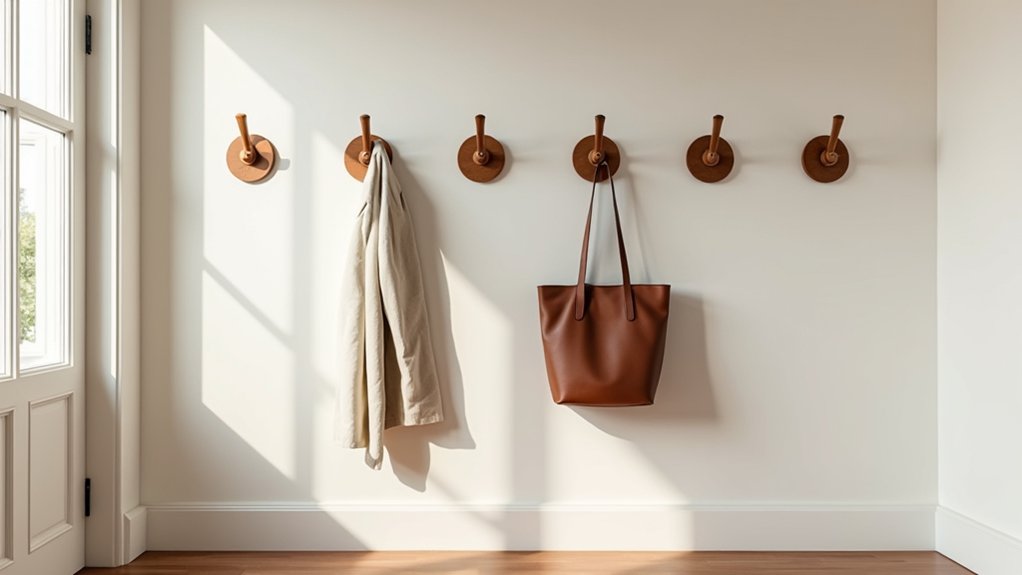
Though entryways often lack square footage, they don’t lack vertical space, and wall hooks let you capitalize on every inch of it. By mounting hooks near your door, you’ll maximize vertical space while keeping coats, bags, and leashes off the floor where they create tripping hazards and visual chaos.
Choose from swivel hooks with movable arms, classic peg rails, or budget-friendly single hooks starting at $5 each. For heavier items, use sturdy screw-in options with wall anchors. Install at varying heights, lower for kids, higher for adults, and stagger multiple rows at least six inches apart. Double J Hooks work especially well for creating a mini drop zone where you can hang everyday essentials right by the door.
The result? Enhanced accessibility that lets you spot and grab what you need instantly. Pair hooks with a shelf above for keys or décor, creating a functional command center without sacrificing precious floor space. You can also install hooks behind the door to tuck storage into narrow spaces that would otherwise go unused. This simple organizational system helps prevent clutter from spreading into the rest of your home.
Create a Personal Entryway Spot for Each Family Member
Assigning each family member a dedicated entryway spot transforms shared space into an organized system where everyone knows exactly where their belongings belong. You’ll eliminate the daily scramble for keys, backpacks, and wallets when customized storage compartments give each person their own zone. Implementing best drop zone organization strategies further enhances this system by optimizing the use of vertical space and incorporating multifunctional furniture. By integrating hooks for jackets and cubbies for shoes, you create a seamless transition from the outdoors to your living area. This thoughtful layout not only reduces clutter but also promotes a sense of personal responsibility among family members, making it easier for everyone to maintain the order.
| Family Member | Recommended Setup |
|---|---|
| Adults | Tray for keys, wallet, phone |
| School-age kids | Basket for backpack, homework |
| Athletes | Designated activity zones for gear |
| Toddlers | Low hooks within reach |
Personal trays and baskets create physical boundaries that prevent clutter from spreading. Apply the one-touch rule, items go directly into designated spots upon entry, not onto random surfaces. This habit reduces decision fatigue and keeps your entryway consistently welcoming. Locker-style storage solutions work particularly well for families with children, giving each kid a self-contained space for coats, bags, and school items. An organized entryway sets the tone for the rest of your home, making this simple system one of the most impactful organizational changes you can make. Research shows that an enhanced entryway can add up to $24,000 to a home’s perceived value, giving you even more reason to invest in this high-traffic space.
Install Kid-Height Hooks and Bins for Easy Access
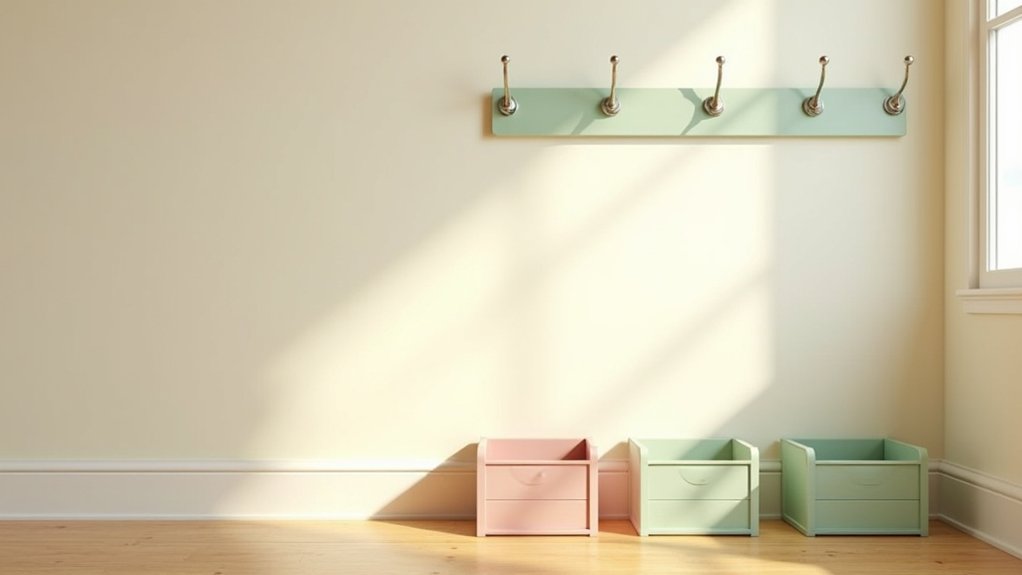
Because children can’t use what they can’t reach, installing hooks and bins at kid-height levels transforms your entryway into a functional space where independence thrives. Shaker peg rails positioned at accessible heights let kids hang coats and backpacks without adult help, keeping floors clutter-free.
Pair hooks with cubbies featuring modular storage options that adapt as your family grows. Bins organize shoes, sports gear, and dedicated toy storage essentials at reachable levels. Stagger hooks six inches apart to maximize capacity for seasonal weather shifts. These small adjustments ensure the entryway works for everyone in the family.
Installation remains budget-friendly, expect around five dollars per hook from hardware stores. Use wall anchors for heavier items like loaded backpacks. Consider adding a dedicated drop zone where kids can place keys, permission slips, and small items they need to grab on their way out. This systematic approach creates smooth after-school movements while teaching children responsibility for their belongings.
Label Every Basket and Bin for Foolproof Organization
You’ll eliminate daily confusion by adding clear, readable labels to every basket and bin in your entryway. Assign each family member their own designated bin with their name prominently displayed, so everyone knows exactly where to store and retrieve their belongings. This simple system creates accountability and keeps clutter from spreading across your carefully organized space.
Clear Labels Reduce Confusion
When every basket and bin in your entryway has a clear label, you eliminate the guesswork that leads to clutter accumulation. Labels create uncluttered aesthetics by ensuring items consistently return to their designated spots rather than forming random piles on surfaces.
You’ll experience time saving efficiency when you’re not opening multiple containers to find what you need. Labeled systems make item placement automatic, reducing the daily decision fatigue that occurs when storage locations remain ambiguous.
Apply labels to seasonal storage boxes, individual family member bins, mail organizers, and key trays. Position them at eye level where household members naturally look. This systematic approach prevents overflow issues since defined containers with clear capacity limits stop excess items from accumulating. Update your labels as routines evolve to maintain long-term organization.
Assign Family Member Bins
Assigning each family member their own dedicated bin or basket transforms entryway chaos into a streamlined system where everyone knows exactly where their belongings go. This designated family storage approach eliminates floor piles and second-guessing about placement.
Position bins strategically, lower spots for kids, higher for adults, so everyone can independently manage their items. The one-touch rule reinforces immediate placement, building lasting organizational habits.
| Family Member | Bin Contents | Placement |
|---|---|---|
| Adults | Keys, sunglasses, bags | Upper cubbies |
| Teens | Backpacks, sports gear | Mid-level hooks |
| Young Kids | Jackets, shoes, lunchboxes | Lower bins |
| Guests | Unassigned overflow | Entry basket |
| Seasonal | Off-season items | Garage storage |
Shared family organization works when each person takes accountability for their assigned space, keeping your entryway consistently clutter-free.
Use the One-Touch Rule to Prevent Entryway Clutter
You’ll experience reduced organizational stress when items consistently return to their assigned spots. No more hunting for misplaced keys or stepping over abandoned backpacks. The mantra “don’t put it down, put it away” prevents clutter accumulation before it starts. Commit your household to a one-week trial, and you’ll transform your entryway from a disorganized catch-all into a streamlined, welcoming space.
Swap Out Seasonal Gear to Free Up Entryway Space
Your entryway doesn’t need to hold every season’s gear at once, rotate items by season to keep only what you’re actively using within reach. Store off-season pieces like winter boots or beach bags in closets, under beds, or in labeled bins to free up valuable threshold space. Make swapping a monthly habit, and you’ll maintain a clutter-free zone that adapts to your changing needs throughout the year.
Rotate Gear By Season
Rotating gear by season keeps your entryway functional and clutter-free throughout the year. Swap items monthly to match current conditions, remove parkas in June and swim goggles in December. This seasonal decluttering prevents past seasons’ items from accumulating in high-traffic zones.
Focus your entryway on daily essentials only. During fall migrations, you’ll need dual seasonal gear as weather shifts between rain and cold snaps. Limit what stays to items you’re actively using.
For effective seasonal gear storage, reorganize both entryway and bedroom closets each season. This prevents overstuffed, untidy spaces that waste your time. You’ll spend fewer hours searching for buried items and less energy deciding what to grab each morning.
Label bins to guide placement and perform weekly resets to maintain your rotation system.
Store Off-Season Items
When temperatures shift, moving off-season gear out of your entryway creates immediate space for items you actually need. Heavy winter coats, bulky boots, and thick scarves don’t belong in your entryway during summer months.
To maximize off season storage, invest in entryway benches with built-in compartments that hide seasonal gear. Shoe cabinets efficiently store footwear you won’t need for months. Hybrid open-closed storage systems conceal visual clutter while keeping essentials accessible.
Utilize vertical space for off season storage by installing wall-mounted coat racks and slim console tables. These solutions work especially well in compact urban apartments where square footage is limited. Modular designs let you adapt your setup as seasons change, accommodating umbrellas in spring and heavy accessories in fall without overcrowding your entryway.
Swap Items Monthly
Monthly gear swaps keep your entryway stocked with only what you’ll actually use, eliminating the clutter that accumulates when winter boots compete with summer sandals for limited space.
Time your rotations to actual weather patterns rather than calendar dates. During changeover months, implement dual season storage to accommodate unexpected cold snaps without overcrowding your space. Keep rainwear accessible as fall approaches, then prioritize heavy outerwear and snow gear when temperatures drop consistently.
Move off-season items to garages, utility closets, or pantries. This frees vertical and horizontal space in your entryway for current necessities only.
Establish a weekly reset routine during shifts, rehang coats, relocate stray items, and maintain your system’s integrity. You’ll reduce decision fatigue and prevent the buried-item chaos that makes mornings stressful.
Layer Doormats to Stop Dirt Before It Spreads
A strategic two-mat system at your entryway can trap up to 80-90% of tracked-in dirt before it reaches your floors. Place a coarse outdoor mat to scrape debris, then add an absorbent indoor mat to capture remaining moisture and particles. This combination prevents scratches and reduces cleaning throughout your home.
Choose a bottom mat with year round durability that won’t shift underfoot. Select timeless color schemes for your base layer, reserving seasonal swaps for the top mat only. Size matters, your bottom mat should span at least 80% of your doorway width, with the top mat fitting within that frame.
Ensure proper door clearance so mats stay positioned. This layered approach maximizes function while maintaining a polished, clutter-free entrance.
Stash a Mini Cleaning Kit for Fast Entryway Touch-Ups
Keeping a compact cleaning kit tucked inside your entryway closet or beneath a console table lets you tackle smudges, dust, and spills the moment they appear. Stock yours with multi-purpose wipes, a microfiber cloth, paper towels, and a lint roller for quick debris removal. Consider implementing entryway organization tips for small spaces to maximize efficiency. Use vertical storage solutions like hooks or wall-mounted shelves to keep essentials accessible without sacrificing floor area. A small bench with built-in storage can also provide a stylish way to keep shoes and bags neatly tucked away.
Choose compact storage solutions like labeled containers or decorative baskets that blend with your décor. Position your kit at eye level to create visual maintenance reminders that encourage regular touch-ups.
Use your kit weekly to sanitize door handles, wipe mirrors, and spot-clean scuffed walls. Group items by task for faster retrieval during quick sessions. Restock supplies regularly so you’re always prepared to address messes before they spread throughout your home.
Ready to Transform Your Space?
A well-designed closet or storage system can completely change the way you live at home, and at Creative Closet Design, we make that transformation effortless. From custom closets and pantry systems to garage storage, office systems, and entertainment centers, our experienced team designs and installs solutions tailored specifically to your space and your lifestyle. Call (863) 591-4500 today to schedule your free design consultation.
Frequently Asked Questions
How Often Should I Declutter My Entryway to Keep It Organized?
You should tackle your entryway daily with a quick two-minute tidy and conduct weekly decluttering sessions lasting 20-30 minutes to prevent buildup. Each night, reset surfaces to maintain order. Every few months, focus on seasonal item storage by rotating outerwear and weather-specific gear. This systematic approach maximizes your space and keeps clutter from accumulating. By staying consistent with these routines, you’ll maintain an organized, welcoming entryway year-round.
What Should I Do With Entryway Items That Don’t Fit Anywhere Else?
Consider relocating items to other rooms or donating pieces you rarely use. For essentials that must stay, use decorative baskets** to corral odd-shaped items while maintaining a polished look. Utilize vertical wall space by installing floating shelves or slat wall systems that accommodate various items at different heights. Assign each remaining piece** a specific spot, and if something still doesn’t fit, it’s a clear sign to let it go.
How Can I Organize an Entryway That Has No Closet Nearby?
You’ll want to utilize wall-mounted storage like accordion hooks and floating shelves to keep coats, bags, and keys off the floor. Incorporate mobile storage units such as slim shoe cabinets or free-standing coat racks that you can reposition as needed. Add a cubby bench for seating and hidden shoe storage underneath. Measure your items first, then select multi-functional pieces that maximize vertical space while maintaining a clutter-free entry.
What’s the Best Way to Handle Guests’ Belongings in My Entryway?
Provide designated storage specifically for guests by adding a separate cubby, basket, or hook section near your entrance. Implement a drop zone with a console table and catchall dish where visitors can place keys and phones temporarily. Use closed storage like drawers or cabinets to keep guest items out of sight between visits. This systematic approach prevents their belongings from mixing with yours while maximizing your limited entryway space.
How Do I Maintain an Organized Entryway When My Family Won’t Cooperate?
Start by using family communication strategies to discuss what’s working and what isn’t. You’ll need to compromise on organization by letting each person choose their own labeled bin or hook placement. Keep systems simple, if it’s too complicated, no one follows through. Assign child-accessible zones so kids can participate independently. Implement a weekly five-minute family reset to declutter together, and rotate seasonal items to maximize your space effectively.