
To store sweaters for summer, clean them first so moths and other pests won’t find stains, perspiration, or body oils to feed on. Then let them dry completely, since trapped moisture can damage fibers over months. Fold each sweater instead of hanging it to prevent stretched, distorted knits. Seal them in lidded bins or moth-proof bags, and keep them in a cool, dry spot away from sunlight. Next, you’ll see why fiber type and placement matter.
Key Takeaways
- Clean and fully dry every sweater before storage, since food stains, perspiration, and body oils attract moths and trapped moisture causes damage.
- Fold sweaters instead of hanging them to prevent the knits from stretching out of shape during months in storage.
- Pack folded sweaters in lidded bins or sealed bags, which provide the strongest barrier against clothes moths and other fabric pests.
- Store containers in a cool, dry closet or drawer away from sunlight, avoiding damp areas like basements.
- Inspect sweaters periodically and before returning them to the closet for holes, moisture, larvae, shed skins, or webbing.
How Can You Store Sweaters for Summer and Keep Them in Good Condition
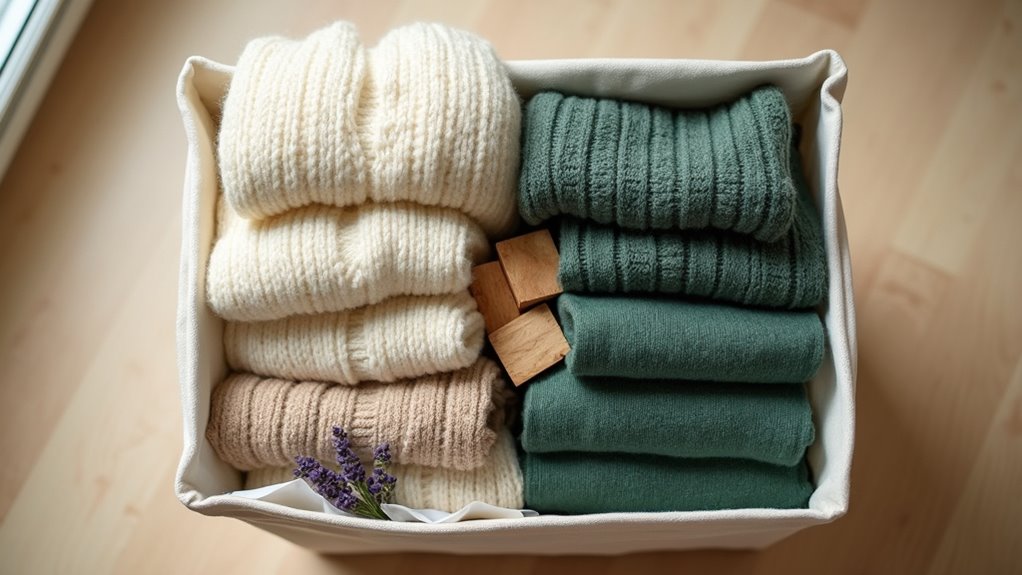
To store sweaters for summer and keep them in good condition, clean them fully, dry them completely, fold them, and pack them in sealed containers in a cool, dry spot. Food stains, perspiration, and body oils attract clothes moths, so wash or dry-clean each piece according to its care label. Trapped moisture causes damage, so don’t pack anything damp. Fold sweaters instead of hanging them, because hanging stretches knits out of shape. The best way to store sweaters in summer is in clean, tightly lidded boxes or sealed bags that block moths. Place cedar blocks nearby, not against fabric, and don’t treat repellents as a substitute for cleaning. Choose a cool, dry spot and inspect containers periodically for insects, larvae, or moisture.
Why Should Sweaters Be Clean and Fully Dry Before Summer Storage
Sweaters should be clean and fully dry before summer storage because clean, dry fibers give clothes moths and other fabric pests nothing to feed on and give moisture no chance to damage them during months in storage. Food stains, perspiration, and body oils attract moths, so wash or dry-clean each sweater according to its care label before packing it away. Empty pockets, remove accessories, and brush each garment gently while inspecting it for holes, larvae, or shed skins. If you find signs of activity, isolate the item and address the infestation first.
Drying matters just as much. Trapped moisture can cause problems in sealed containers, so let every sweater dry completely before folding it. Cleaning and drying are non-negotiable steps in storing sweaters for the summer.
Which Wool Cashmere and Natural Fiber Sweaters Need Extra Pest Protection
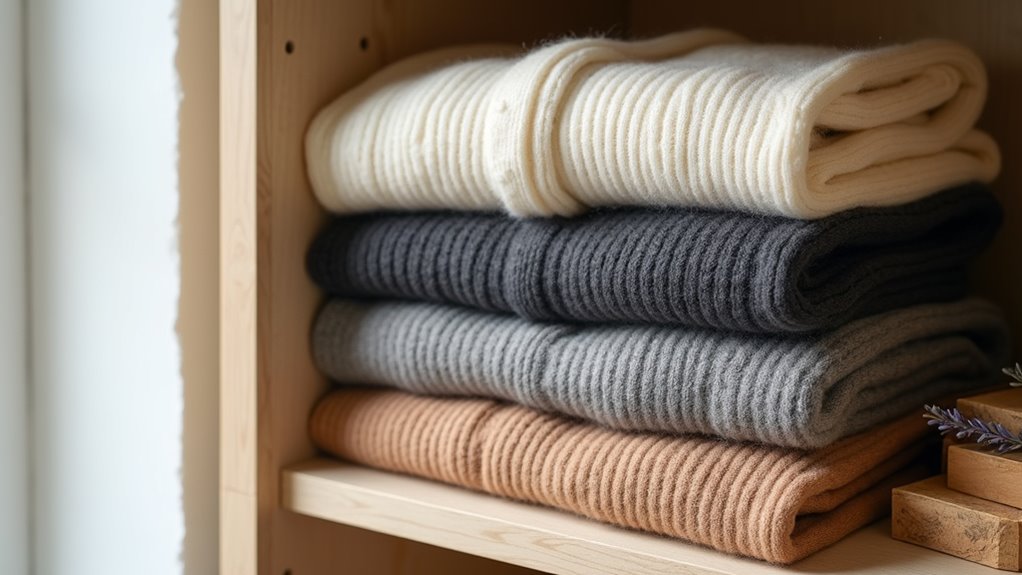
Wool, cashmere, and other animal-fiber sweaters need the most pest protection because clothes moth and carpet beetle larvae feed on keratin, the protein in hair-based fibers. Alpaca, mohair, and angora also contain keratin, so treat them with the same caution. Blends that combine wool with cotton or synthetics still attract larvae, and food stains, perspiration, and body oils make even plant-fiber sweaters more appealing to pests.
Clean these garments and inspect them for holes, larvae, or shed skins prior to storage. If you suspect activity, bag each item with the air pressed out and freeze it for four to seven days. Let it return to room temperature and dry completely. Then seal it in a tightly lidded container. Place cedar in the storage area, not directly against the fabric.
How Do Breathable Bags Lidded Bins and Closed Shelving Compare for Summer Sweater Storage
Lidded bins offer the strongest pest protection of the three, breathable bags handle moisture best, and closed shelving gives the best shape support but little moth defense. Tightly lidded bins block adult moths from reaching the fabric. Breathable bags suit spaces where moisture is a concern, but you’ll need to seal their openings securely and check garments often. Closed shelving supports folded knits evenly, yet it won’t stop moths on its own.
| Storage Option | Preservation Profile |
|---|---|
| Lidded bins | Strongest pest barrier; container and sweaters must be fully dry |
| Breathable bags | Reduce moisture buildup; inspect garments regularly |
| Closed shelving | Flat support preserves knit shape; weak moth barrier |
| Any option | Clean, dry, folded sweaters only |
Keep containers closed between inspections with any option, and check periodically for moisture, larvae, shed skins, or new holes. No container substitutes for thorough cleaning before storage.
Where Should Off Season Sweaters Be Kept to Avoid Heat Humidity and Sun Exposure
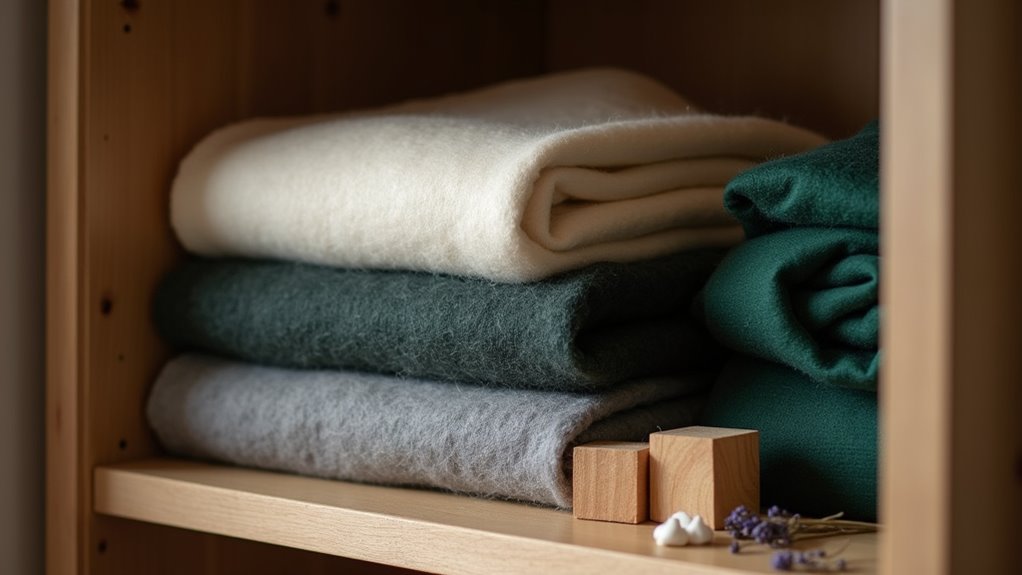
Keep off-season sweaters in a cool, dry closet or drawer away from direct sunlight, because moisture, heat, and light all degrade stored knits. Avoid damp areas such as basements, where trapped moisture can cause problems. Position containers out of window light to limit fading and unnecessary exposure. Inspect the storage space for moisture, insects, larvae, or shed skins before packing, and vacuum drawers or closet floors. Don’t overcrowd shelves, since compressed sweaters lose shape over long periods. Choose a flat shelf or drawer that supports each folded garment evenly. Make sure sweaters and containers are completely dry when they go in. Keep containers closed after storing and check them periodically for dampness or new holes, so you can remove and treat any affected item promptly.
How Should Sweaters Be Layered to Prevent Crushing During Long Storage
Layer sweaters with heavier, denser knits at the bottom of each stack and lighter, delicate pieces on top so fine fibers don’t bear excessive weight. Fold each sweater instead of hanging it, since hangers stretch shoulders and distort knits over time. Lay each sweater flat, fold the sleeves inward, then fold the body into a compact rectangle.
Use a drawer or flat shelf that supports every garment evenly, and leave space between stacks, because overcrowding compresses fibers for long periods.
Skip tight elastic bands and sharp creases, which can mark or strain the fabric. Instead, keep your folds soft and stacks low enough that nothing flattens beneath them.
What Should You Inspect Before Returning Stored Sweaters to Your Closet
Inspect each stored sweater closely for signs of pest activity: small irregular holes, surface grazing along the knit, larvae, shed skins, or silky webbing in seams, cuffs, and folds. If you find any, isolate that garment immediately so it can’t spread damage to clean pieces. Then work through these checks:
- Check for moisture. Feel for dampness and smell for mustiness. Don’t return any sweater that isn’t completely dry.
- Assess shape and fabric. Look for stretching, compression marks, or fading, and reshape knits gently by hand.
- Air and clean. Let each sweater air out, then wash or dry-clean it per its care label before wearing.
Finally, vacuum drawers and shelves so you’re returning clean garments to a clean space.
Keep Sweater Shelves Neat and Easy to Use
Sweater shelves work better when stacks stay short, divided, and sized around the way your knits are folded. Creative Closet Design creates custom closet systems for Central Florida homeowners with shelving, cubbies, drawers, and storage zones designed around real wardrobes. Serving Lakeland, Auburndale, Winter Haven, Plant City, Polk County, and Hillsborough County, our designers will look at your sweater collection, available shelf space, and storage habits before drawing anything. Call Our Team to schedule your free design consultation.
Frequently Asked Questions
Can Vacuum-Sealed Compression Bags Damage Wool or Cashmere Sweaters?
Yes, they can. Prolonged compression can flatten wool and cashmere fibers, set deep creases, and distort a sweater’s shape, so you shouldn’t squeeze knits tightly for months. Instead, fold each clean, fully dry sweater flat and place it in a sealed bag or tightly lidded box without forcing out all the air. Don’t overcrowd containers, and inspect them periodically for moisture, larvae, shed skins, or new holes throughout the season.
Is It Safe to Store Sweaters in Cardboard Boxes?
Cardboard boxes can work, but only if you choose clean, fully dry ones with tight-fitting lids that block adult moths. Keep them in a cool, dry closet, never a damp basement, and out of direct sunlight. Wash sweaters first, let them dry completely, then fold and layer them without heavy stacking. Don’t let lids gape or tear. Check boxes periodically for moisture, larvae, shed skins, or new holes, acting promptly.
How Do You Remove Storage Odors From Sweaters Without Washing Them?
You can remove storage odors by airing your sweaters thoroughly after you take them out of storage. Lay each one flat in a clean, dry, well-ventilated spot away from direct sunlight, which can fade fibers. Brush it gently while you inspect for holes, larvae, or shed skins. If the odor persists, you’ll need to wash or dry-clean it according to the care label before wearing. Don’t mask odors with perfumes.
Can Sweaters Be Stored With Mothballs, and Are They Safe?
You can, but mothballs aren’t your safest or most effective choice. They release toxic naphthalene or paradichlorobenzene fumes, leave persistent odors, and endanger children and pets. If you use any repellent, keep it in the storage area, never against garments. Don’t rely on repellents instead of prevention: clean each sweater thoroughly, dry it completely, seal it in a tightly lidded container, and inspect periodically for larvae, shed skins, or holes.
How Do You Remove Fold Creases From Sweaters After Storage?
You’ll remove fold creases most safely with gentle steam: hold a steamer or steam iron an inch or two above the knit, never pressing it flat against the fibers. Then lay the sweater on a towel, smooth it into shape by hand, and let it dry fully. Before you do, air and inspect it for holes, larvae, or moisture. Next season, fold it loosely and avoid overcrowding or sharp creases.