
You’ll keep sweater stacks neat when you fold each one into the same flat rectangle. Lay it flat, fold the sleeves across the back, then fold the bottom up in thirds. Group sweaters by thickness, put heavier knits at the base, and cap each stack at four or five. Face folded edges outward and use dividers spaced to your fold width. Once that’s set, a few habits for removal and resets keep shelves looking sharp.
Key Takeaways
- Fold each sweater into a uniform flat rectangle by folding sleeves across the back, then folding the bottom up in thirds.
- Group sweaters by thickness and color, placing heavier knits at the bottom of each stack for stability.
- Cap each stack at four or five sweaters, starting a new column instead of adding height.
- Use shelf dividers, cubbies, or clear bins spaced to sweater width to keep columns separated and upright.
- Lift sweaters above your target as one unit when removing, and re-square the stack after each wear.
How Can You Stack Sweaters on Closet Shelves Without Messy Piles
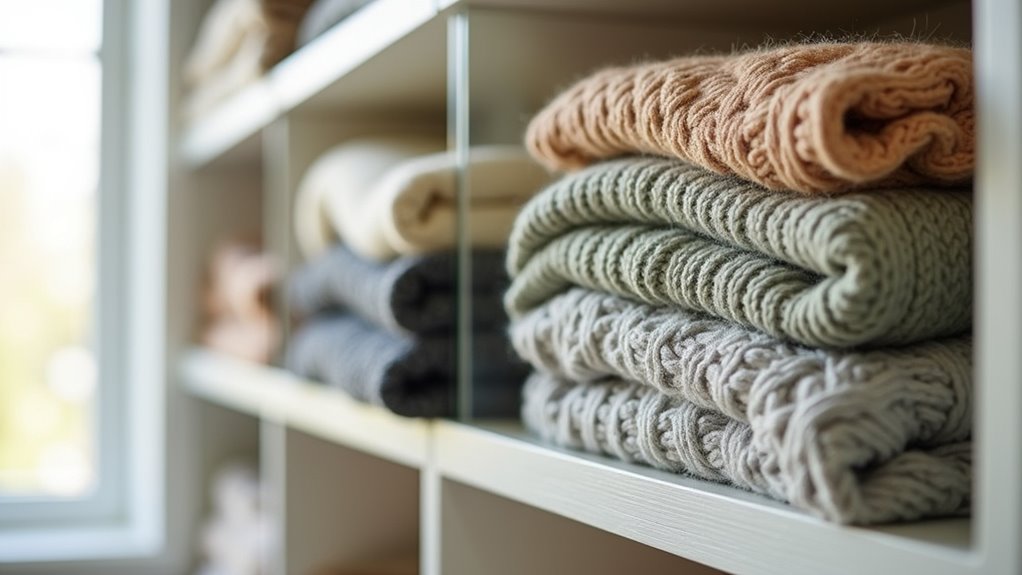
Stack sweaters neatly by using uniform folds and a firm limit on height. Lay each sweater flat, fold the sleeves across the back, then fold the bottom up in thirds to form a flat rectangle. Keep every fold similar in width and depth so each sweater stack aligns cleanly. Cap stacks at four or five sweaters, and put heavier knits at the bottom. That’s the core of how to stack sweaters in closet spaces without toppling piles. Next, install dividers on your sweater shelves, spacing them to match folded width. Group sweaters by color or weight, and keep frequently worn pieces at eye level. When you need a lower sweater, lift the stack above it; don’t tug from underneath.
How Should You Group Sweaters Before Building Separate Shelf Stacks
Group sweaters by thickness first, keeping similar-weight knits together so each pile rises evenly, since the categories you pick decide how evenly each column sits. Place heavier, chunkier pieces at the bottom to protect delicate fabrics above them. Within each weight group, sort by color so you can spot the sweater you want without digging.
Separate everyday sweaters from seasonal pieces. Put frequently worn items at eye level and move seasonal or overflow knits to higher shelves, which cuts down on routine handling.
Give each shelf section one consistent category. That way, you’ll know where to return each piece and stack sweaters into the right column.
How Many Sweaters Should Go in One Stack Before Access Becomes Difficult
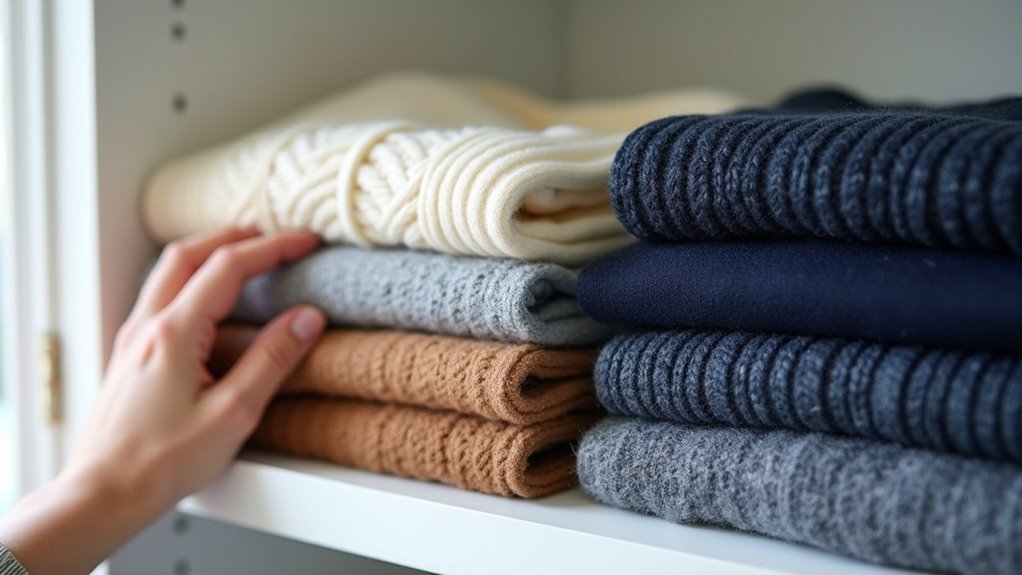
Cap each stack at about four to five sweaters, since every added sweater raises the odds of a lean or collapse. This height keeps the pile stable and lets you pull out any sweater without toppling its neighbors.
Build each stack from the bottom up. Place heavier, thicker knits at the base so they don’t crush delicate fabrics underneath. Keep every stack within easy reach, since stretching for a tall pile often disturbs the stacks beside it.
Don’t overfill the shelf. Leave enough clearance above each stack to lift garments out cleanly. Position the sweaters you wear most at eye level, and move seasonal or overflow pieces to higher shelves. When a stack creeps past five, start a new column instead of adding height.
How Do Single Stacks Cubbies Baskets and Divided Sections Organize Sweater Shelves
Single stacks, divided sections, cubbies, and baskets each contain sweater stacks differently, so match the method to your shelf depth and how often you reach for each sweater.
| Method | Best Use | Key Tip |
|---|---|---|
| Single stacks | Open shelves, everyday knits | Keep folds uniform in width |
| Divided sections | Wide shelves with several columns | Space dividers to sweater width |
| Cubbies or baskets | Piles open shelves can’t contain | Choose clear bins with sides |
If you’re on a budget, cut smooth-edged cardboard to separate columns cleanly. In cubbies or bins, you can file-fold sweaters upright because the sides hold them. On open shelves, stick with flat rectangles. Whatever you choose, assign one category per section so returns stay quick and neighboring stacks don’t lean or collapse.
How Should Fold Direction and Edge Alignment Keep Sweater Stacks Consistent
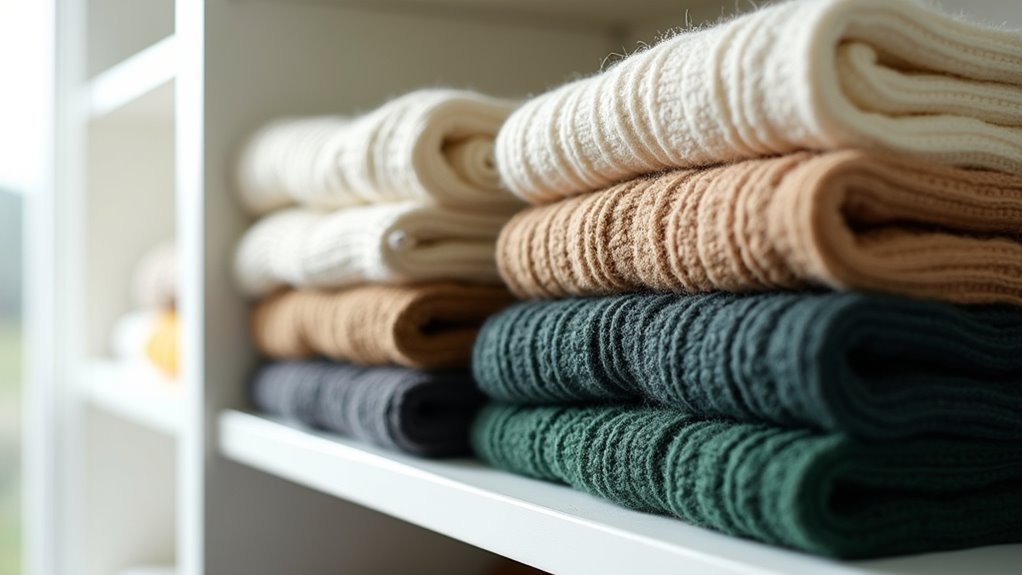
Fold every sweater in the same direction and align every edge so each piece shares the same footprint, keeping your stacks square instead of drifting into lopsided piles.
Lay each sweater flat and smooth out wrinkles first. Fold both sleeves inward across the back, then fold the bottom up in thirds and fold again to form a flat rectangle. Repeat this exact sequence every time so each sweater matches in width and depth.
Face all folded edges the same way on the shelf, ideally outward, so the front of the stack looks uniform and you can spot each piece quickly. Line up the corners as you build, and don’t let any layer overhang the one below. If edges start slipping, re-square the stack immediately before it leans.
How Can You Remove One Sweater Without Disturbing the Rest of the Stack
Lift the sweaters above the one you want instead of tugging it from the middle, since yanking will disrupt even a perfectly squared stack. Slide both hands under the sweaters on top, raise them as one unit, remove your selection, and lower the upper portion back into place.
For a faster method, keep a smooth-edged piece of cardboard on the shelf. Slip it beneath the sweater directly above the one you want, lift the cardboard with the upper stack resting on it, and draw out your sweater cleanly. Then set everything back down.
Leave enough clearance above each stack for your hands or cardboard to fit. Cap stacks at four or five sweaters so lifting stays easy and controlled. Re-square edges afterward.
What Quick Reset Keeps Sweater Stacks Neat Between Wears
A thirty-second shelf reset every time you put a sweater back keeps stacks neat, so skip dropping it on the nearest pile. Check that the sweater’s clean and dry. Lay it flat, smooth wrinkles, fold the sleeves across the back, and fold the body into the same rectangle as its neighbors. Return it to its designated section so categories stay intact. If it’s a thick knit, slide it toward the bottom. If it’s delicate, place it near the top. Re-square any stack whose edges have slipped, and confirm no pile exceeds four or five sweaters. Nudge dividers back into position if they’ve shifted.
Extend the reset once a month: vacuum the shelves, check stored pieces for pests, and restore categories and stack order.
Keep Sweater Shelves Neat and Easy to Use
Sweater shelves work better when stacks stay short, divided, and sized around the way your knits are folded. Creative Closet Design creates custom closet systems for Central Florida homeowners with shelving, cubbies, drawers, and storage zones designed around real wardrobes. Serving Lakeland, Auburndale, Winter Haven, Plant City, Polk County, and Hillsborough County, our designers will look at your sweater collection, available shelf space, and storage habits before drawing anything. Call Our Team to schedule your free design consultation.
Frequently Asked Questions
Should Sweaters Be Cleaned Before Storing Them on Closet Shelves?
Yes, you should always clean sweaters before you store them. Follow each garment’s care label, then let every sweater dry fully before you fold it. Vacuum your shelves and make sure they’re clean and dry before you place folded knits back. If you’re storing wool or other natural fibers long-term, use sealed plastic containers rather than fabric ones, and check each stored sweater periodically for any signs of clothes moths.
Is It Better to Fold or Hang Sweaters to Preserve Shape?
Fold your sweaters rather than hanging them; folding helps preserve their shape and prevents stretching. Lay each sweater flat, smooth wrinkles, and fold the sleeves inward across the back. Then fold the bottom up in thirds and fold again into a flat rectangle. Keep folds similar in width so stacks align, and cap each stack at four or five sweaters, with heavier knits at the bottom. You’ll avoid distorted shoulders.
What Containers Work Best for Long-Term Storage of Wool Sweaters?
Sealed plastic containers work best for long-term wool storage. Before you pack them, follow each sweater’s care label, clean it, and let it dry fully so you don’t trap moisture. Skip fabric storage bins if clothes moths are a concern, since they can chew right through fabric. Fold each sweater flat instead of cramming it inside. Then vacuum your closet shelves and check stored sweaters periodically for signs of pests.
Can Fabric Storage Bins Attract or Fail to Stop Clothes Moths?
They can fail: fabric bins won’t stop clothes moths, since moths can chew straight through the fabric, so you shouldn’t rely on them where moths are a concern. For long-term wool storage, you’ll get better protection from sealed plastic containers. Before storing, clean each sweater according to its care label and let it dry fully. Then vacuum your closet shelves and check stored sweaters every month or so for signs of pests.
How Often Should Closet Shelves Be Checked for Signs of Pests?
You should check your closet shelves periodically, and your monthly shelf reset gives you a practical schedule. During each reset, vacuum the shelves, inspect stored sweaters for pest damage, and confirm everything’s clean and dry before you refold it. If you’re storing wool or other natural fibers long-term, keep them in sealed plastic containers, not fabric bins, since moths can chew through fabric. Don’t skip seasonal stacks stored up high.