You can set up a yard sale after decluttering by turning your “sell” pile into clean, tested items. Pick a weekend date and check local permit and sign rules. Price things at about 10, 30% of retail, and keep tags visible. Then arrange everything in clear category zones, with large items near the curb and breakables by checkout. Stock your cash box with small bills. You’ll see how smart placement and prep make shopping a breeze.
Key Takeaways
- Sort decluttered items into keep, sell, donate, and discard piles, then clean and test everything you plan to sell.
- Choose a weekend date, check local permit and sign rules, and decide whether your goal is earning money or clearing space.
- Price items at roughly 10, 30% of original retail, keeping tags visible, and stock a cash box with small bills.
- Arrange category zones with large items near the curb, clothing on racks, and breakables near a single checkout station.
- Keep aisles clear, route cords along edges, and prepare weighted canopies, tarps, and bins for changing weather.
How Can You Set Up a Yard Sale After Decluttering Your Home
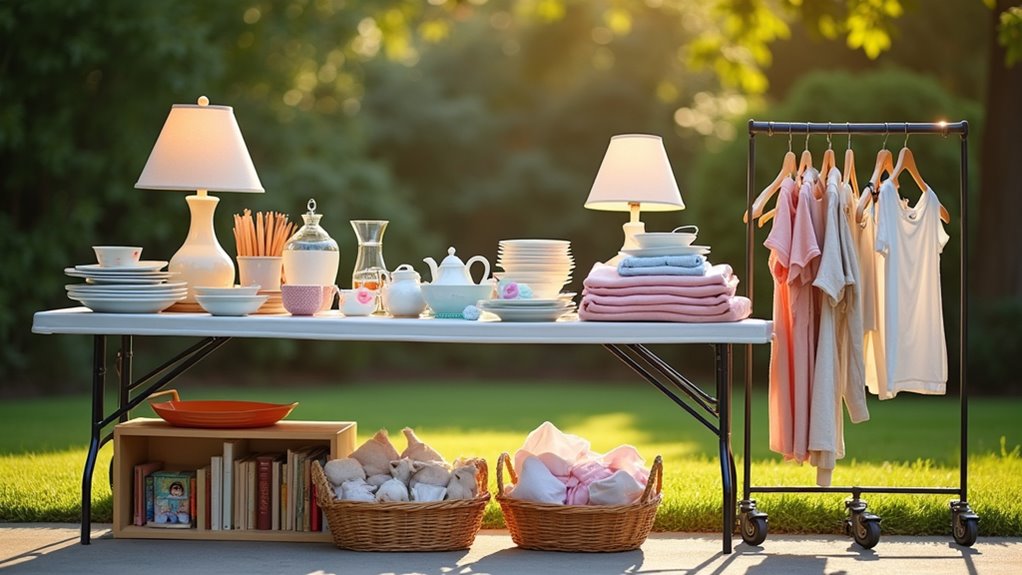
You can set up a yard sale after decluttering by turning your “sell” pile into a well-organized sale, using the belongings you sorted into keep, sell, donate, and discard groups. Start with a plan: pick a weekend date, check local permit and sign rules, and decide whether your goal is earning money or clearing space. Next, clean and test each item, then price it at roughly 10, 30% of its original retail cost. Effective yard sale setup also means gathering tables, racks, tags, bags, and a cash box stocked with small bills. For your yard sale layout, group goods by category, keep prices visible, and place larger items where they’ll catch shoppers’ eyes. With these steps, you’ll be ready to sell quickly and with confidence.
How Should You Divide the Sale Area Into Easy to Shop Zones
Divide your sale area into zones by grouping goods into categories, such as clothing, kitchenware, books, and toys, and giving each category its own table, bin, or rack. Shoppers decide quickly whether to stop and browse, so a layout that makes every item easy to find matters. When you organize yard sale zones this way, shoppers can head straight to what interests them without digging through boxes.
Next, place popular or larger items, like furniture or bikes, near the front where they’ll catch passersby’s attention. Hang clothing on racks instead of piling it on tables. Keep every price visible so no one asks.
Finally, set up a clear checkout area with bags, boxes, and a secure spot for cash. These yard sale display ideas keep traffic moving smoothly.
Where Should Large Items Clothing Small Goods and Breakables Be Placed
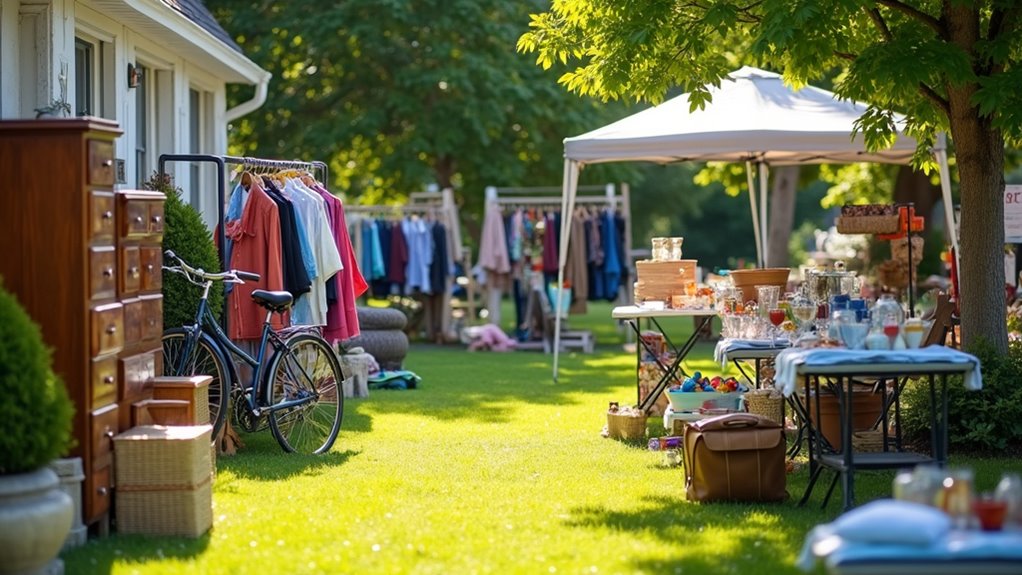
Place large items near the curb or driveway entrance, hang clothing on racks, set small goods on waist-high tables or bins, and keep breakables near your checkout area. Large items, like furniture and bikes, catch passing drivers’ eyes and draw shoppers in when they sit up front. Keeping them there also makes loading easier once they sell.
Hang clothing on racks rather than piling it in boxes, and group pieces by size or type so shoppers can flip through quickly. Set small goods, such as books, toys, and kitchenware, on tables or in shallow bins at waist height, and keep price tags visible.
Place breakables and valuable items near your checkout area, where you can watch them closely. Display them on sturdy, uncluttered tables with space between pieces. You’ll prevent costly accidents this way.
How Do Tables Clothing Racks Ground Displays and Bins Affect Browsing
Tables put small goods at eye level for quick scanning, clothing racks let shoppers flip through sizes without unfolding piles, ground displays showcase furniture and large items that draw attention, and bins group toys, books, or linens by category for easy sorting. Choose display types that keep items visible and easy to reach, since how you present goods shapes how long shoppers linger and how much they buy.
| Display Type | Browsing Effect |
|---|---|
| Tables | Put small goods at eye level for quick scanning |
| Clothing racks | Let shoppers flip through sizes without unfolding piles |
| Ground displays | Showcase furniture and large items that draw attention |
| Bins | Group toys, books, or linens by category for easy sorting |
Avoid making shoppers dig through deep boxes, since buried items often go unnoticed. Keep bins shallow and labeled with prices. Space tables so two people can pass comfortably, and set breakables toward the center. Place racks near the front to catch passing drivers’ eyes. With a few smart choices, you’ll turn browsers into buyers.
Where Should Checkout Bags Change and Sold Items Be Kept
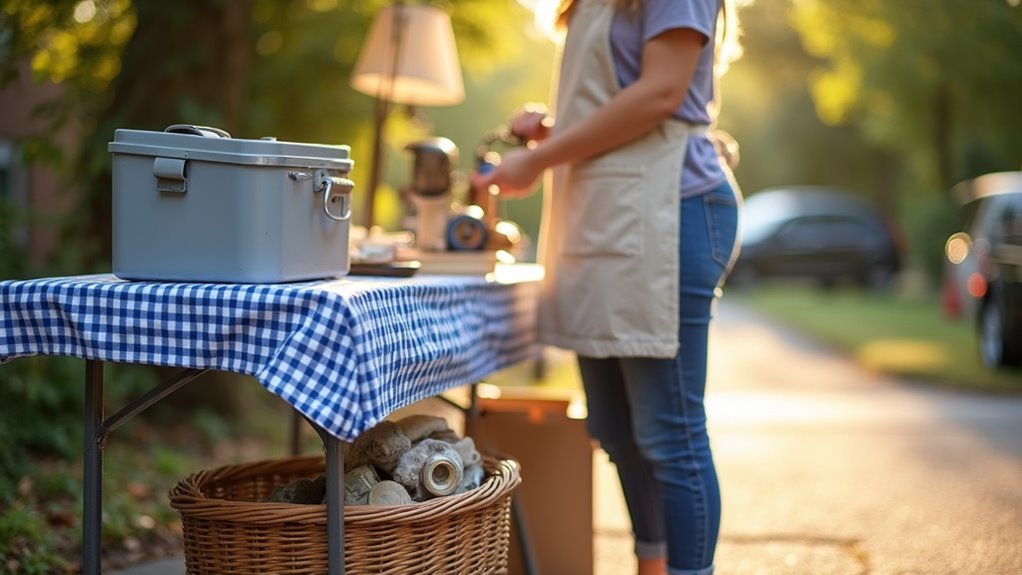
Keep checkout bags, change, and sold items at a single checkout station near the exit, where payments stay organized in one spot you can watch. Set up a sturdy table with a clear view of your displays so you can greet shoppers and spot questions quickly. Keep your cash box, calculator, and small bills within arm’s reach, but never leave them unattended. If a helper’s available, assign them to checkout while you answer questions and restock tables.
Store bags and boxes under the table for fast packing. Create a separate holding area behind you for paid items waiting for pickup, and label each with the buyer’s name. This prevents mix-ups and keeps sold goods off display tables. With everything centralized, you’ll check out every shopper faster and more confidently.
How Can You Create Safe Walking Space Through the Sale
Create safe walking space by keeping aisles clear and wide so shoppers can browse comfortably, spot more items, and move toward checkout without bumping into displays or each other. Walk the layout yourself before opening and adjust anything that blocks your way.
- Space tables and racks far enough apart for shoppers to pass each other easily.
- Use tables, bins, and racks instead of floor boxes so nobody trips while digging.
- Route extension cords for testing electronics along edges, away from walkways.
- Keep paths toward the house blocked, and guide shoppers to the sale area only.
With open, well-defined paths, you’ll keep traffic flowing smoothly, protect your belongings, and help every shopper feel welcome and safe.
What Should You Prepare for Weather Shade or a Fast Pack Up
Prepare a canopy or patio umbrella for shade, weights for anything the wind could topple, tarps or plastic sheeting for rain, and extra bins for a fast pack up. Check the forecast and plan for sun, wind, or sudden rain so your merchandise stays protected and your shoppers stay comfortable. Set up the canopy or umbrella over your checkout area and any fragile items, like books, electronics, and linens. Weigh down canopy legs, signs, and lightweight displays so gusts can’t knock them over.
Keep plastic sheeting or tarps nearby, along with clips, so you can cover tables quickly if rain starts. Store extra bins and boxes under your tables, grouped by category, so you can pack items fast and return them to the right place. If conditions worsen, secure your cash box first. With these supplies ready, you’ll handle any changing weather calmly and keep your sale running smoothly.
Set Up the Sale So Cleanup Stays Easy
A well-planned yard sale starts with organized categories, clear walkways, and a setup that makes it easy to move leftovers out afterward. Creative Closet Design creates custom garage storage systems for Central Florida homeowners so the items you keep have a proper place once the sale is over. Serving Lakeland, Auburndale, Winter Haven, Plant City, Polk County, and Hillsborough County, our designers will look at what you store, how you use the space, and where clutter tends to build up. Call Our Team to schedule your free design consultation.
Frequently Asked Questions
Do You Need a Permit Before Hosting a Yard Sale?
It depends on where you live, so you’ll want to check your local rules before you advertise. Start by contacting your city or county office, or visit its website, to see whether you need a permit. While you’re at it, confirm any limits on sale hours and sign placement, especially on public property or along roads. Once you’ve sorted out these details, you can promote your sale with complete confidence.
How Should You Price Items After Decluttering Your Home?
Start by pricing items at roughly 10, 30% of their original retail price, then adjust for condition and demand. You’ll move goods faster if you mark every price clearly before sale day, using rounded amounts that simplify payment and change. Clean and test items first, and disclose any defects honestly. Don’t worry about perfection. You can welcome reasonable bargaining and offer end-of-day discounts to clear what’s left, keeping your goal in mind.
When Is the Best Time and Day to Hold a Yard Sale?
Weekends usually work best, since they draw more shoppers, and you’ll want to open early, around 8 or 9 a.m. Pick your date well in advance so you’ve got time to prepare and advertise one to two weeks ahead. Before you commit, check local rules on permits and sale-hour limits. You can also coordinate with neighbors on a shared sale day to attract even more buyers. Plan ahead, you’ll succeed!
How Far in Advance Should You Advertise Your Yard Sale?
You’ll want to advertise your yard sale about one to two weeks ahead. Start by posting in neighborhood groups, on social media, and on sale-listing websites. Include your address, dates, hours, and examples of desirable items so shoppers know what’s worth the trip. Before sale day, put up signs with large lettering and directional arrows, but check local rules. You’ve got this: steady, well-timed promotion brings motivated buyers to your driveway.
What Should You Do With Items That Don’t Sell?
Right after the sale, separate unsold items from anything you’ve sold or decided to keep. Then donate usable leftovers, but first confirm the organization’s acceptance rules and pickup options. You can also offer suitable pieces through local giveaway groups, setting a specific collection time and place. Discard broken, unusable goods through proper local waste services. Better yet, plan each item’s destination beforehand so clutter doesn’t creep back into your home.