
Start by checking for a dry day, then lay tarps on one side of your driveway and mark five zones: sell, keep, donate, discard, and relocate. Set chemicals aside. Move oversized items like furniture and bikes first. Clear floor items, work shelves top to bottom, and take wall tools down section by section. Group everything by category so duplicates stand out. You’ll decide faster, and the steps below show smart ways to handle each area.
Key Takeaways
- Set up five sorting zones (sell, keep, donate, discard, and relocate) to give every garage item a clear destination.
- Choose a dry day, lay tarps on a cleared driveway, and wear gloves, sturdy shoes, and eye protection.
- Group items by category, such as tools, toys, and kitchenware, to reveal duplicates and anything unused for a year.
- Clear floor items first, then sort walls section by section, shelves top to bottom, and test large equipment in place.
- Sort oversized items early, keep walkways open, and decide ahead whether unsold pieces will be donated or hauled away.
How Can You Sort Through a Cluttered Garage Before a Yard Sale
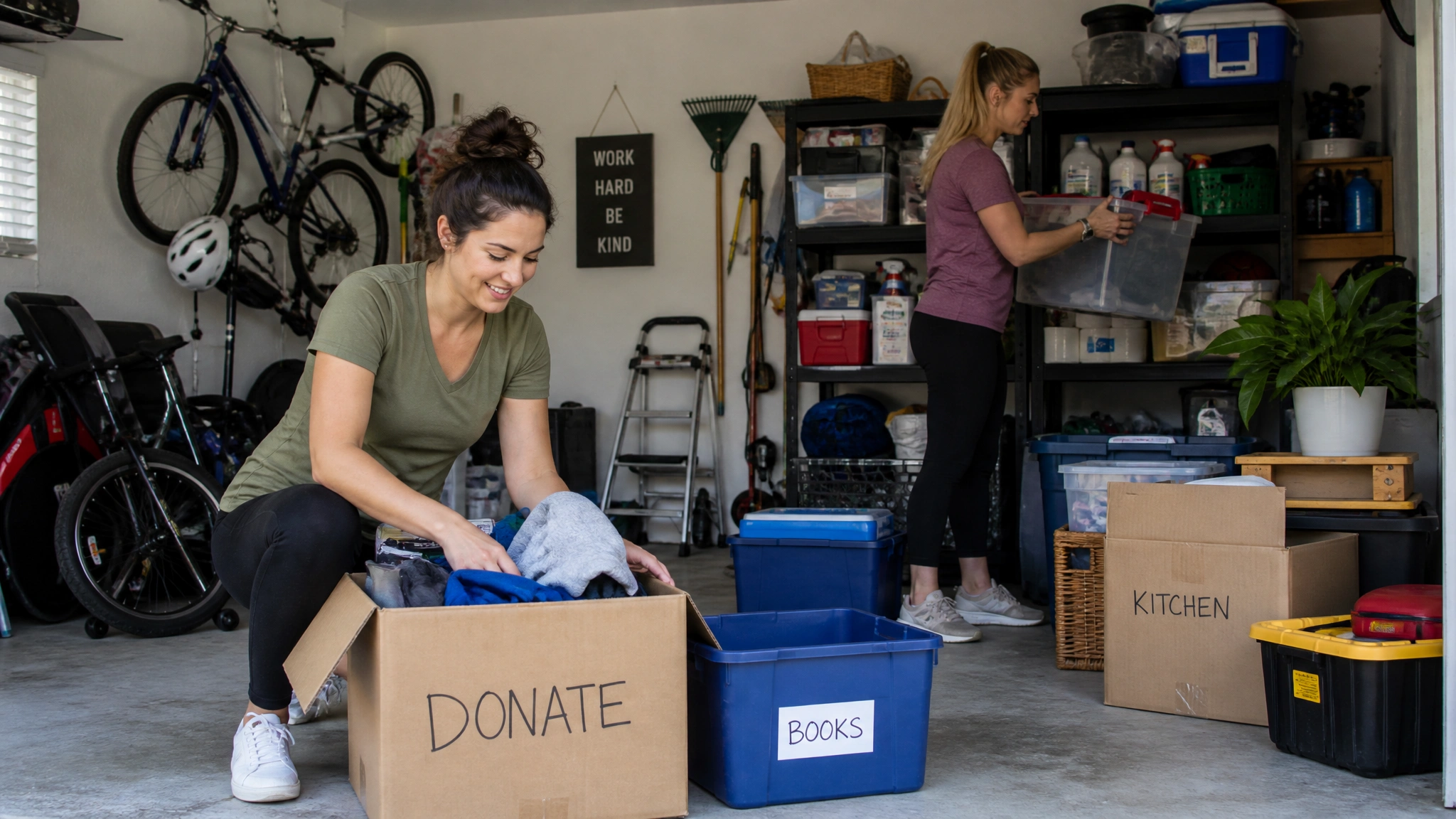
Sort a cluttered garage by moving its contents outdoors on a dry day and dividing everything into five zones: sell, keep, donate, discard, and relocate. Check the forecast first, then clear a driveway or yard area and lay down tarps or blankets to keep items clean and off the ground. Successful garage decluttering depends on this clear system.
Group items by category, such as tools, toys, kitchenware, books, furniture, and seasonal goods, as you sort your garage before yard sale day. Seeing similar things together reveals duplicates and forgotten items you haven’t used in a year. Start early, since this process takes longer than you’d expect. You’ll finish with a ready sale pile and a head start on lasting garage organization.
Which Garage Zone Should You Empty First to Create a Safe Sorting Area
Empty the zone nearest the garage door first, since clearing that entry area gives you a safe path for carrying items out and a staging spot for heavy or awkward pieces.
Check the forecast for a dry day, then lay tarps on the driveway to keep items off the ground. Wear sturdy shoes, work gloves, and eye protection, and use a dolly or a helper for bulky furniture.
Set up five zones: sell, keep, donate, discard, and relocate. Sort each item as you carry it out, grouping tools, toys, and seasonal goods together. Set old paint, fuel, and chemicals aside for hazardous-waste collection. This steady garage storage declutter method turns your cluttered garage yard sale prep into manageable, confident steps.
How Should You Separate Tools Sports Gear Seasonal Items and Household Overflow Before Making Decisions
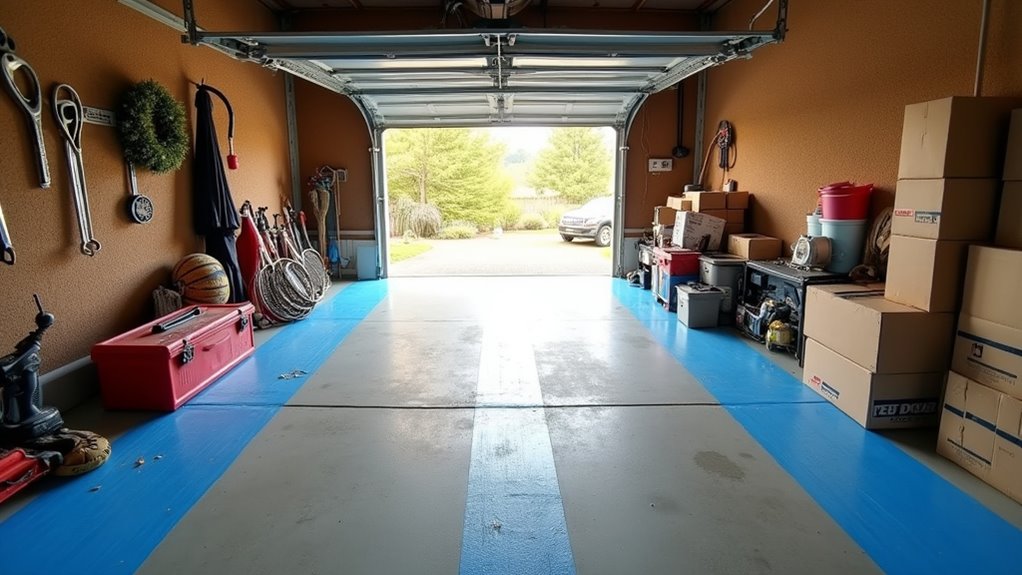
Separate them by sorting tools, sports gear, seasonal items, and household overflow into distinct piles on your tarps so you can compare similar things side by side. Don’t decide what to sell yet. Sorting by type first reveals duplicates and helps you judge each item fairly.
Within each pile, create smaller groups. Put hand tools, power tools, and garden equipment together. Sort sports gear by activity, and split seasonal goods into holiday décor, outdoor furniture, and weather-specific items. Household overflow often mixes kitchenware, books, toys, and small furniture, so break it down by category too.
Set aside old paint, fuel, and chemicals immediately rather than mixing them into any pile. With everything neatly grouped, you’ll make faster, smarter, more confident keep-or-sell decisions.
How Do Floor Items Wall Stored Items Shelved Items and Large Equipment Need Different Sorting Approaches
Floor items, wall-stored items, shelved items, and large equipment need different sorting approaches because each storage spot holds different kinds of items, and tailoring your method to where things sit helps you work faster. Start with floor items, since clearing them opens walking space and room for your sorting zones. Carry bins and loose goods straight to your tarps, and set aside old paint, fuel, or chemicals immediately.
| Storage Area | Sorting Approach | Safety Tip |
|---|---|---|
| Wall-stored items | Take down tools one section at a time | Wear gloves for sharp edges |
| Shelved items | Work top to bottom, checking boxes for duplicates | Use a sturdy step stool |
| Large equipment | Test function and assess condition in place | Move with help or a dolly |
Finish each area completely before moving on, and you’ll see steady, motivating progress toward your sale day.
How Can You Keep Parking Doors and Walkways Usable While Sorting
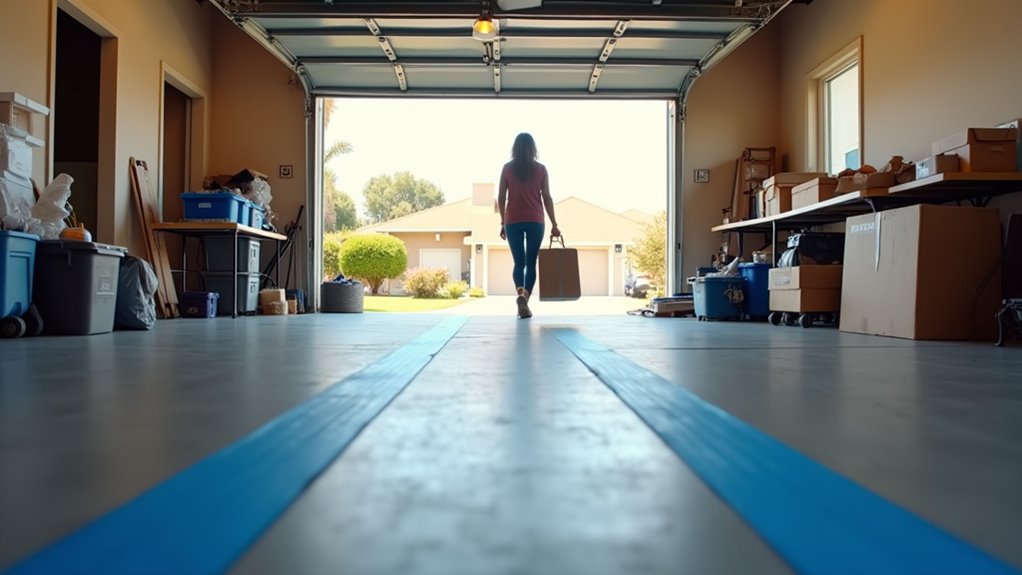
Map your sorting zones to one side of the driveway or a yard area so your car, garage door, and main walkways stay clear. Place your sell, keep, donate, discard, and relocate zones there, leaving a wide path from the garage to the house. Lay tarps or blankets inside each zone so items stay off the ground and within their boundaries.
Work one section at a time, and don’t pull out more than you can sort that day. Keep heavy pieces near the edges, where you can move them with a dolly without blocking traffic. Separate hazardous materials away from walkways. Return keep items or cover the piles before dark so you can park and move safely.
What Should You Do With Oversized Items Before Sale Day
Sort oversized items like furniture, bikes, lawn equipment, and large appliances first, and move each one directly to its final zone: sell, keep, donate, discard, or relocate. These items take up the most space and are the hardest to move twice, so they need a decision early. Get a helper or use a dolly, and lift with your legs rather than your back. If you’re selling an appliance, test it now and label it clearly if it doesn’t work. Wipe down furniture and check unusual pieces against resale listings before you set a price. Then stage sale items near the driveway so you won’t haul them far on sale day. Finally, decide now whether unsold pieces will be donated, given away, or properly hauled away.
How Should You Protect the Garage Items You Are Keeping While Sale Inventory Waits
Protect the garage items you are keeping by labeling them clearly, storing them apart from sale inventory, and covering them until sale day ends. These simple safeguards prevent keepers from getting mixed in, damaged, or sold by mistake.
- Mark keepers clearly with colored tape or “Not for Sale” labels so helpers and shoppers can’t confuse them.
- Store kept items in a separate garage corner or indoors, away from sorting and display areas.
- Cover them with tarps or blankets to guard against dust, dirt, and unexpected weather.
- Keep hazardous materials like old paint and fuel sealed and apart from everything else until you dispose of them properly.
Check your keep zone each time you move inventory outdoors. This quick habit protects what matters and keeps your whole sale running smoothly.
Turn Garage Clutter Into Usable Storage
Sorting a garage for a yard sale works best when every item has a clear destination and the pieces you keep have a proper place afterward. Creative Closet Design creates custom garage storage systems for Central Florida homeowners with cabinets, shelving, wall storage, and organized zones built around how the space is actually used. Serving Lakeland, Auburndale, Winter Haven, Plant City, Polk County, and Hillsborough County, our designers will look at what you store, how much room you have, and where clutter builds up before drawing anything. Call Our Team to schedule your free design consultation.
Frequently Asked Questions
How Far in Advance Should You Start Sorting Before Your Yard Sale?
Start well ahead of sale day, since collecting and sorting your garage’s contents takes longer than you’d expect. There’s no fixed deadline, so give yourself enough time to work steadily. Check the forecast, pick a dry day, clear your driveway, and set up zones to sell, keep, donate, discard, and relocate. You’ll want time to clean, test, and price items before shoppers arrive. You’ve got this, one zone at a time!
How Should You Dispose of Old Paint, Fuel, and Chemicals Found in Garages?
Check your local hazardous-waste collection rules first, since you shouldn’t toss old paint, fuel, or chemicals in ordinary trash or recycling where guidance prohibits it. Separate these products from your sale and discard piles, and don’t handle unknown substances. Wear gloves, eye protection, and sturdy shoes while you work. Then take everything to an approved collection site or event. You’ll clear your garage safely and keep your sorting on track.
How Should You Price Items for a Yard Sale?
Price each item based on its condition, usefulness, and how quickly you want it to sell. Keep everyday household goods affordable, and set higher prices only for items that are in especially good condition or may have stronger resale value. Use clear tags or category signs, and consider bundle pricing for small, lower-value items to make checkout faster and help more inventory move.
Do You Need a Permit or HOA Approval to Hold a Yard Sale?
You might, depending on where you live. Some cities and counties require a permit, and many homeowners’ associations limit when or how often you can hold sales. Before you pick a date, check your local government’s website or call its office, then review your HOA rules. Once you’ve confirmed you’re clear, advertise the date, time, and location with visible signs and online posts. A quick check now saves headaches later.
What Should You Do With Items That Don’t Sell?
Decide before sale day whether you’ll donate, give away, or dispose of unsold items, so you’re not stuck hauling everything back inside. Sort leftovers into those three piles as you pack up. Set aside usable goods for donation or a free pile, and discard broken or unsafe pieces properly. Don’t toss old paint or chemicals in regular trash; check your local hazardous-waste rules. You’ll finish with a cleaner, clutter-free garage.