
Sort everything that doesn’t sell into five piles the same day your sale ends: sell, donate, recycle, keep, and dispose. Relist items that drew interest and still work on local marketplaces. Call nearby thrift stores or shelters to confirm what they accept, and drop donations off within a day or two. Recycle worn textiles and electronics, and take paint and batteries to hazardous waste collection. Next, find out how to handle bulky furniture and set firm removal deadlines.
Key Takeaways
- Sort leftovers the same day into five groups: sell, donate, recycle, keep, and dispose.
- Relist items that drew interest and still work on local online marketplaces, or take quality clothing to consignment shops.
- Donate eligible items within a day or two after confirming what local thrift stores, shelters, or churches accept.
- Send worn textiles and electronics to recycling programs instead of defaulting to the trash.
- Take paint, batteries, and cleaners to hazardous waste collection, and follow municipal bulk-pickup rules for broken goods.
What Should You Do With Everything That Does Not Sell at Your Yard Sale

Split unsold yard sale items into five groups: sell, donate, recycle, keep, and dispose. Sort your leftovers the same day the sale ends, before they drift back into closets and corners. Keep something only if you’ve got a clear plan, like a scheduled listing, and label those boxes with a review date. Pull damaged or broken goods away from functional ones so you don’t waste a charity’s time.
Call local thrift stores, shelters, or churches to confirm what they accept before you donate unsold yard sale items, and ask about pickups. Send worn textiles and electronics to recycling programs, and take paint, batteries, or cleaners to hazardous waste collection. Follow your city’s bulk-pickup rules when you dispose yard sale leftovers. Then reclaim your space.
Which Unsold Items Are Worth Trying to Sell Again
Unsold items worth trying to sell again are the ones that drew interest, are in good condition, and still work. During your yard sale cleanup, pull out furniture, tools, electronics, collectibles, and brand-name clothing that buyers handled or asked about.
List desirable pieces on local online marketplaces with clear photos and detailed descriptions. Take quality clothing and accessories to consignment shops, but verify their terms first. Save smaller goods for a later clearance sale at reduced prices, or bring them to a flea market.
Label each resale box and set a review date so kept items don’t become clutter. Decide fast: if an item isn’t listed by that date, donate it or swap it.
When Is Donation Better Than Holding an Item for Another Sale

Donation beats holding an item when it’s clean and usable but drew no interest, sells for only a few dollars, or has no scheduled listing or sale date. Storing it without a plan just moves clutter from your driveway to your garage. Act within a day or two of the sale.
- Check the charity’s acceptance list first. Call or visit the website before loading your car, since accepted items vary by location.
- Ask about pickup. Some organizations collect eligible donations, saving you the trip.
- Get a receipt. Record each item’s condition, age, and quality if you plan to claim a tax deduction.
If you do keep something to sell, label the box and set a review date. When that date passes, donate it.
How Do Donation Pickup Giveaways Recycling and Disposal Compare for Unsold Items
Donation and pickup work best for clean, usable goods, giveaways and swaps suit functional items charities decline, and recycling or disposal handles worn, broken, or hazardous items, so match each item to the method rather than defaulting to the trash.
| Method | Best For | Key Step |
|---|---|---|
| Donation or pickup | Clean, usable clothing and household goods | Confirm acceptance lists and pickup availability first |
| Free giveaway or swap | Functional items charities decline | Post locally or trade with neighbors |
| Recycling or disposal | Worn textiles, electronics, broken or hazardous goods | Follow municipal, e-waste, and hazardous-waste rules |
Donate first when an item works and a charity wants it. You’ll keep a receipt for possible tax documentation. Choose giveaways when speed matters more than paperwork. Recycle only through streams that accept the specific material, and never put paint, batteries, or cleaners in ordinary trash. Try repairs before you arrange disposal.
What Should You Do With Large Furniture or Bulky Garage Items That Remain
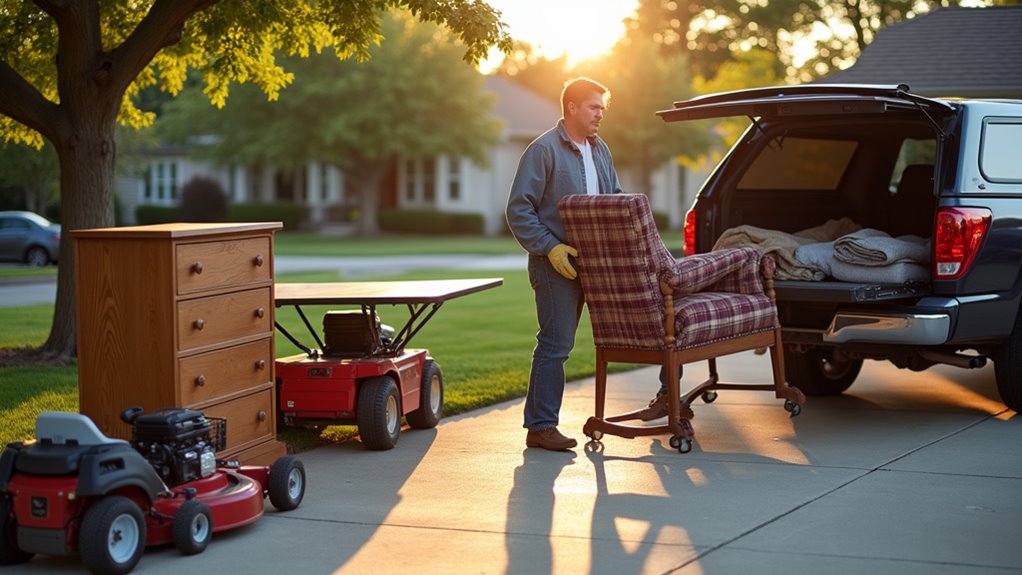
Sell, donate, or responsibly dispose of large furniture and bulky garage items based on their condition. Separate functional pieces from damaged ones, and repair anything you can restore to use. Then choose the right route for each item:
Sort bulky furniture and garage items by condition, repair what you can, then sell, donate, or dispose of each responsibly.
- Sell or swap usable pieces. List desirable furniture on local online marketplaces with clear photos and detailed descriptions, or ask consignment shops about their terms before hauling anything in.
- Donate what still works. Call charities, thrift stores, or reuse groups first, since accepted items vary. Some organizations arrange pickups for eligible donations, so confirm availability locally.
- Dispose of broken items responsibly. Check your municipality’s bulk-pickup and waste-facility rules for oversized goods. Send appliances, metals, and rigid plastics to designated recycling services where available.
Don’t let bulky leftovers linger. Schedule each drop-off or pickup immediately.
How Can You Set a Removal Deadline So Items Do Not Return to Storage
Set a removal deadline by choosing a specific date before the sale ends, ideally within 48 hours, and writing it on your calendar so leftovers leave your home instead of slipping back into the garage. Sort everything into sell, donate, recycle, keep, and dispose groups ahead of that date. Contact charities now to confirm accepted items, and book a pickup or drop-off time. Keep only items with a clear plan, such as a scheduled online listing or consignment appointment. Label those boxes and add a review date. If they haven’t sold by then, donate them. Check bulk-pickup and hazardous waste schedules so nothing lingers while you wait. Load your car the night before drop-off, and don’t let anything cross the garage threshold again without a plan.
How Can You Confirm That All Sale Inventory Has Left the Closet Garage or Storage Room
Confirm that all sale inventory has left by walking through every closet, garage shelf, and storage corner with your inventory list in hand and checking off each item as it’s sold, donated, recycled, or disposed of. Anything left unchecked needs an immediate decision, not another month on a shelf.
- Open every box. Don’t trust old labels; look inside and confirm the contents match your records.
- Compare against receipts. Match donation receipts, sale records, and drop-off confirmations to the items you’ve crossed off.
- Photograph cleared spaces. Snap pictures of empty shelves and floors so you can spot anything that creeps back later.
If you find a stray item, assign it to a group immediately and schedule its exit. Keep only goods with a clear plan and a review date written on the box.
Clear the Clutter for Good
The best yard sale cleanup plan keeps unsold items from ending up right back in closets, garages, and storage rooms. Creative Closet Design creates custom garage storage systems for Central Florida homeowners so the items you keep have a clear, organized place after the sale. Serving Lakeland, Auburndale, Winter Haven, Plant City, Polk County, and Hillsborough County, our designers will look at what you need to store and how you use the space before drawing anything. Call Our Team to schedule your free design consultation.
Frequently Asked Questions
How Should You Dispose of Leftover Paint, Batteries, or Cleaners From a Yard Sale?
Take leftover paint, batteries, and cleaners straight to a local household hazardous waste facility or collection event. Don’t toss them in ordinary trash, pour them down drains or storm drains, or dump them on the ground. Keep each product sealed in its original container when you can, and store everything safely until collection day. Before you go, check your program’s rules carefully for appointments, container limits, labeling, and set-out procedures.
Can Donated Yard Sale Items Qualify for a Tax Deduction?
Yes, they can, if you give them to a qualified charity and follow the documentation rules. Before you drop anything off, check the organization’s current acceptance list so staff don’t reject your goods. Get a donation receipt every time. Then record each item’s condition, age, and quality, since you’ll need those details to support your deduction. Donate only clean, usable items, and confirm specifics with a tax professional before filing.
What Records Should You Keep When Donating Unsold Goods to Charity?
Keep the donation receipt from every charity drop-off, and don’t leave without one. Then record each item’s condition, age, and quality right away while details are fresh. You’ll want a simple itemized list showing what you gave, where, and when. Snap photos before handing goods over so you’ve got visual proof. Store everything together in one folder, and you’ll be ready if you claim a potential tax deduction at tax time.
Where Can You Recycle Worn or Stained Clothing That Charities Will Not Accept?
Take worn or stained clothing to your municipal textile recycling program, since some programs accept worn fabric that charities won’t. Check your program’s list first; accepted categories vary, and many cover clothing, footwear, linens, curtains, and fabric scraps. Don’t assume every bin takes damaged items. Separate unusable textiles from wearable pieces before you go, then donate the clean, wearable clothing and recycle the rest. Call your program ahead if you’re unsure.
Should You Remove Batteries Before Recycling Unsold Electronics or Toys?
Yes, in most cases you’ll want to pull out batteries before recycling unsold electronics or toys, but check your local program’s instructions first. Batteries count as household hazardous waste, so don’t toss them in the trash. Take them safely to a hazardous waste facility or collection event. Then drop the electronics at a municipal e-waste site or scheduled event, or confirm a retailer’s take-back rules before you bring them in.