
You’ll declutter storage with a yard sale by following seven steps. First, sort each area into keep, sell, donate, and discard groups. Next, clean and prep your sale items. Then price everything. Check your local rules before you advertise. Run the sale, handling cash and change with care. Finally, clear every leftover by a firm deadline. Keep your focus on reclaiming space, not profit. The sections ahead show you how to make each step count.
Key Takeaways
- Set a space-reclaim goal first, choosing specific storage areas like the garage, closets, attic, or basement to clear.
- Sort each area into keep, sell, donate, or discard groups using clearly labeled bins before deciding what to sell.
- Clean sale items, remove personal papers, and store everything in one dedicated holding zone with an inventory list.
- Price items, check local yard sale rules, and advertise before sale day, keeping small change ready for cash transactions.
- Clear all unsold items by a firm deadline, then compare before-and-after photos to confirm reclaimed storage space.
How Can You Declutter Storage Spaces With a Yard Sale in 7 Steps
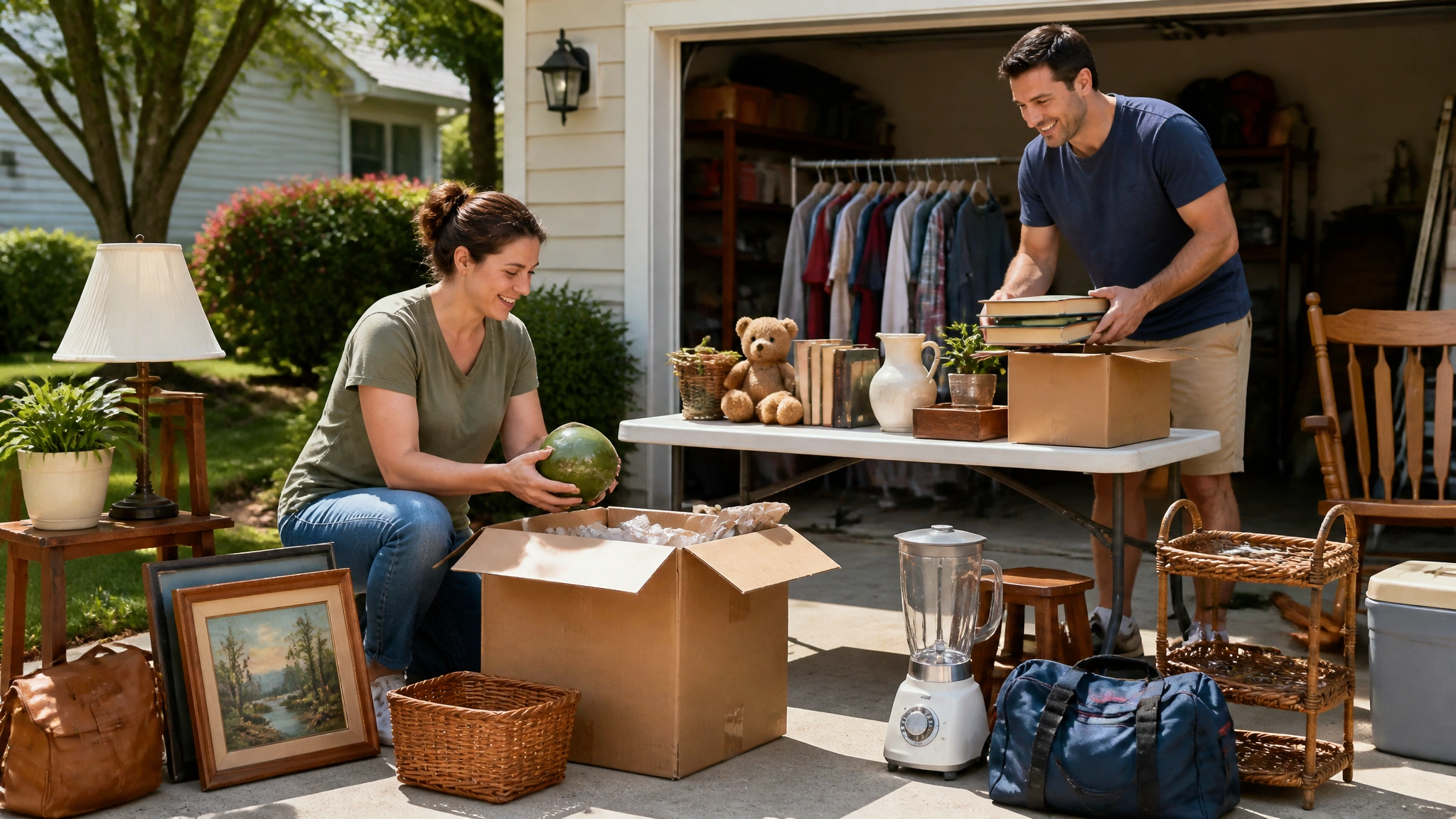
You can declutter storage spaces with a yard sale in seven steps: sort each storage area, prepare sale items, set prices, check local rules, advertise, run the sale, and clear what’s left. A yard sale creates space in overflowing closets, attics, basements, and garages while putting some cash back in your pocket. To declutter storage spaces effectively, you’ll need a plan that moves from sorting to selling to final cleanup.
Following this order keeps storage room decluttering manageable, helps you avoid last-minute scrambles, and ensures unsold goods don’t end up back on your shelves.
Work through each step one at a time, and you’ll finish with organized storage, fewer belongings to manage, and extra money in hand for your next project.
What Decluttering Goal Should You Set Before Choosing What to Sell
Set a clear goal for how much space you want to reclaim and which storage areas you’ll tackle. A defined target keeps you focused on clearing space rather than making money as you declutter with a yard sale. Pick spaces, such as the garage, closets, attic, or basement, and work through them one at a time. For garage closet decluttering, you might aim to free two shelves or empty a corner. Next, decide how you’ll sort belongings: keep, sell, donate, or discard. Finally, set a deadline for handling unsold items so they don’t drift back into storage. With a measurable goal in place, you’ll make more confident choices about what goes on your sale tables.
Which Closet Garage or Storage Area Should You Clear First
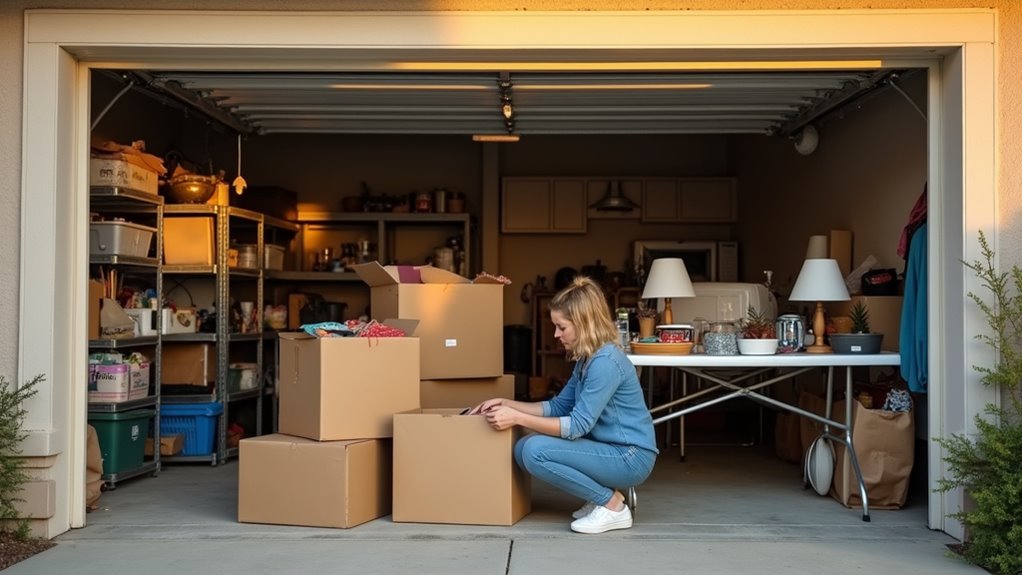
Clear the storage area that frustrates you most or holds the most sellable goods first, then finish it before moving on. Working through closets, the attic, the basement, and the garage one area at a time keeps you from scattering half-sorted piles across your home.
A bedroom closet makes a smart first choice if you’re short on time, since clothes and accessories sort quickly. If you’ve got more energy, tackle the garage, where furniture, tools, and toys hide.
Divide belongings in each space into keep, sell, donate, and discard/recycle groups. Set broken or damaged items aside for disposal, and remove personal papers before anything goes up for sale. Label separate containers for donations and sale items to prevent mix-ups.
How Do Sorting Staging Sale Day and Final Removal Fit Into the 7 Step Process
Sorting, staging, sale day, and final removal are the four phases that group the seven steps. Sorting covers steps one and two: you’ll split belongings into keep, sell, donate, and discard piles, then clean and group what’s worth selling. Staging spans steps three through five, where you’ll price items, check local rules, advertise, and set up tables. Sale day, step six, puts your cash box and change to work. Final removal, step seven, clears every leftover by a firm deadline.
| Phase | How You’ll Feel |
|---|---|
| Sorting | Relieved as clutter shrinks |
| Staging | Proud of organized, priced displays |
| Sale Day and Removal | Free, with cash and space |
Tackle each phase in order, and you’ll reclaim your storage space without ever feeling overwhelmed.
Where Should Sale Items Wait Without Re Cluttering the Home
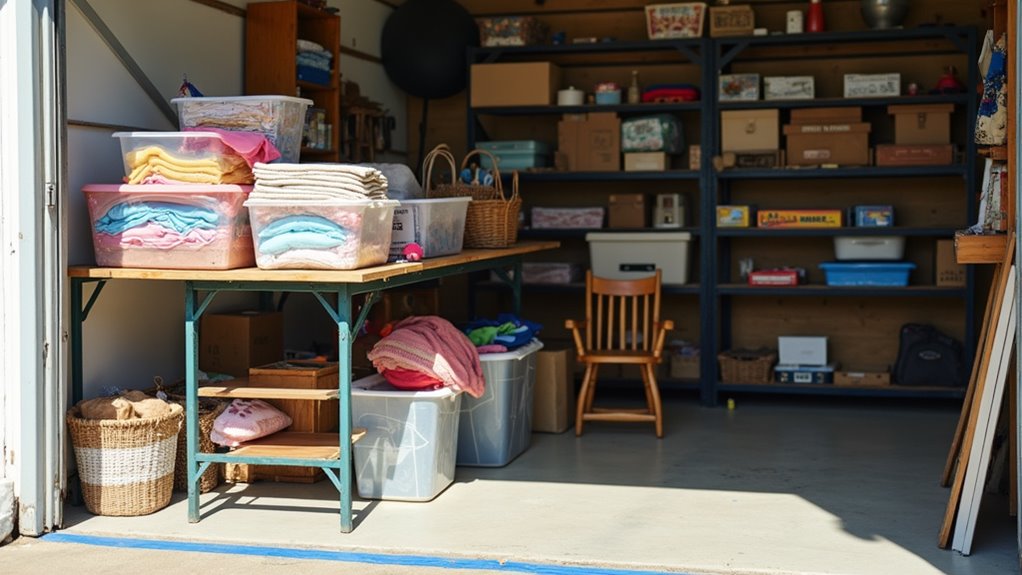
Keep sale items in a single dedicated holding zone, such as one corner of the garage, a cleared basement shelf, or a spare closet, so they don’t drift back into living spaces. Use clearly labeled bins or boxes, and keep sale items separate from donations so nothing gets mixed up.
Group related items, such as books or kitchenware, in the same container to speed up pricing and setup later. Before anything goes in, clean it and remove personal papers or identifying information. Track each item on an inventory list so you know exactly what you’re selling.
If the zone overflows, treat that as a signal to sell, donate, or discard more, not to claim another room. You’ll stay organized.
How Should You Set Deadlines for Sorting Sale Day and Final Removal
Set three firm deadlines before you start: one for sorting, one for sale day, and one for final removal, because open-ended projects tend to stall. Give sorting a fixed, realistic window, and work through one area at a time, such as closets one weekend and the garage the next.
Pick a Saturday or Sunday sale date, and plan an 8 or 9 a.m. start. Check local permit and sign rules early so approval doesn’t delay your advertising.
Decide before sale day whether unsold goods will be donated, listed for resale, recycled, or discarded. If you list items for resale, review what’s left within 30 to 60 days. Write every deadline on your calendar, and you’ll keep momentum while reclaiming your storage space sooner.
How Can You Measure Whether the Yard Sale Actually Freed Usable Storage Space
Measure whether the yard sale freed usable storage space by comparing your storage areas before and after. Photograph each closet, attic corner, basement shelf, and garage wall from the same spot prior to sorting. Note which bins, shelves, and floor areas are full. After the sale, retake those photos and compare them side by side. Use your inventory list to confirm which items sold, which went to donation, and which you discarded or recycled. Then check function, not just appearance: can you reach everyday items without moving boxes? Can you park in the garage or walk through the basement freely? Finally, review any unsold items within 30 to 60 days. If they’re still sitting in storage, you haven’t reclaimed that space yet.
Turn Decluttering Into Better Storage
A yard sale works best when the space you reclaim stays organized after the last item leaves. Creative Closet Design creates custom closet systems for Central Florida homeowners so the items you keep have a clear, practical place. Serving Lakeland, Auburndale, Winter Haven, Plant City, Polk County, and Hillsborough County, our designers will look at your storage needs, available space, and daily routine before drawing anything. Call Our Team to schedule your free design consultation.
Frequently Asked Questions
How Can You Price Yard Sale Items Without Overcomplicating It?
Keep pricing simple by grouping similar items together and using clear, easy-to-read labels. Price everyday household goods to move quickly, while setting aside anything unusual or potentially more valuable for separate research. Bundle small, low-value items when it makes sense, and avoid creating too many different price points. A simple system makes setup easier and keeps checkout moving faster.
Do You Need a Permit to Hold a Yard Sale?
It depends on where you live, so you’ll want to check your local rules before you advertise. Some communities require a permit, while others don’t. Contact your city or county office and ask about permits, limits on how many sales you can hold, sign rules, and where you’re allowed to place signs. Some areas prohibit signs on public property. Once you’ve confirmed the requirements, you can plan your sale confidently.
What Should You Keep at the Checkout Table During a Yard Sale?
Keep small bills and coins for change, along with a calculator, bags, wrapping materials, and a secure cash box or pouch. If you accept payment apps, set them up before the sale and display clear payment instructions near checkout. Keep the area organized and attended at all times so payments move quickly and cash does not get mixed in with sale items.
Which Items Should Never Be Sold at a Yard Sale?
You should never sell recalled goods, hazardous materials, prescription drugs, or anything containing sensitive personal information. You’ll also want to pull broken or visibly damaged items and set them aside for disposal instead. Before pricing anything, check each piece carefully and remove personal papers or identifying details. Then place excluded items in a clearly labeled discard or recycle bin. This quick screening keeps your sale safe, trustworthy, and running smoothly.
Can You Accept Payment Apps Instead of Cash at a Yard Sale?
Yes, you can accept payment apps, but don’t drop cash entirely. First, set up your account before sale day so you’re not scrambling. Next, print clear QR-code signs and post them near your checkout table. Then, keep a cash box stocked with small bills and quarters, since many shoppers still pay that way. You’ll close more sales by offering both options, and you’ll make checkout quick and easy for everyone.