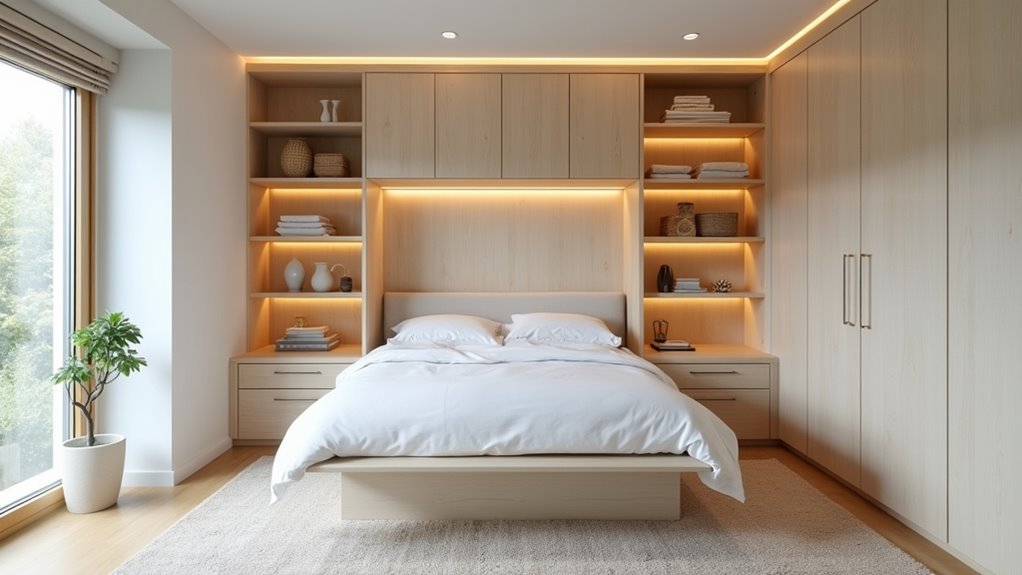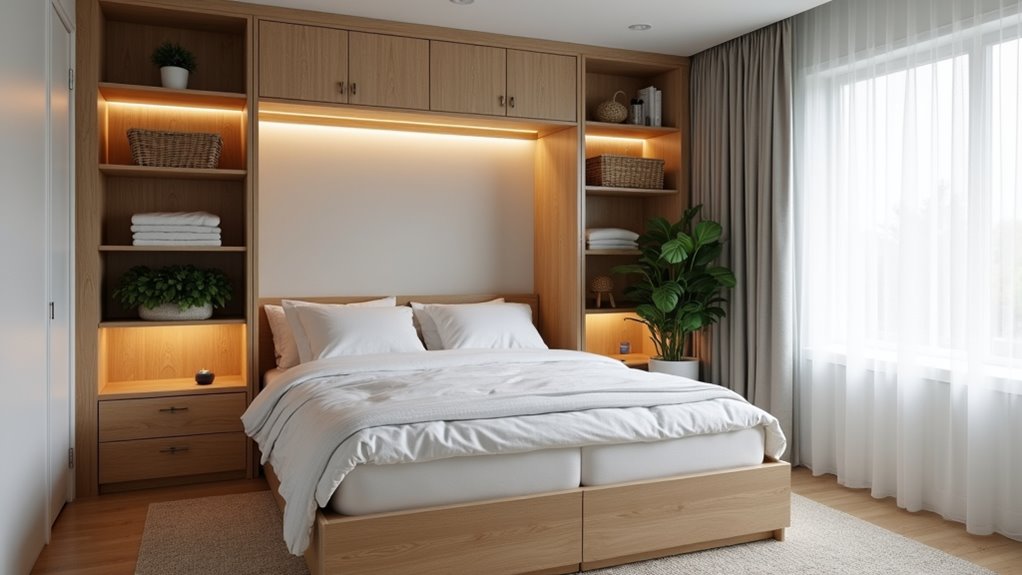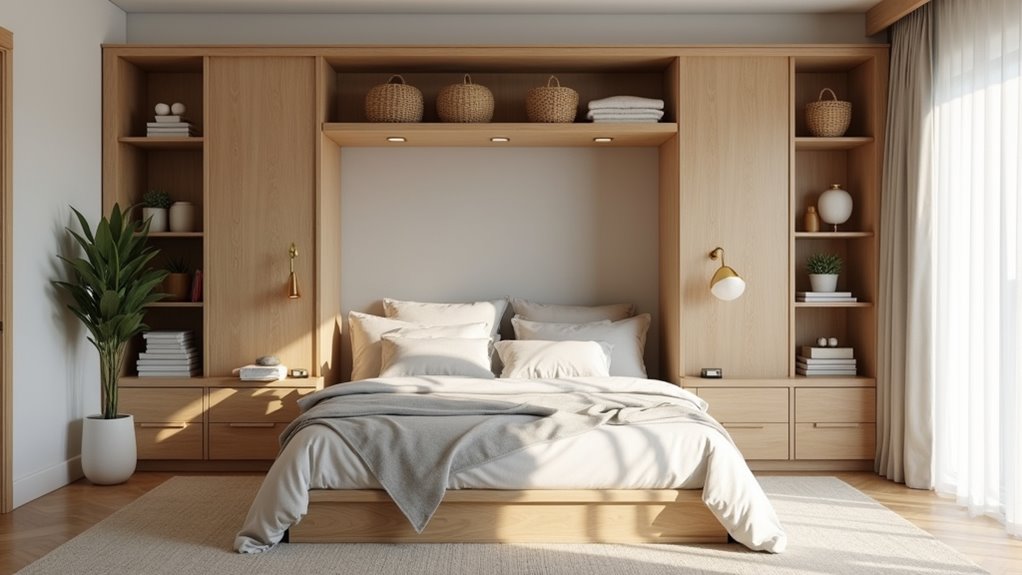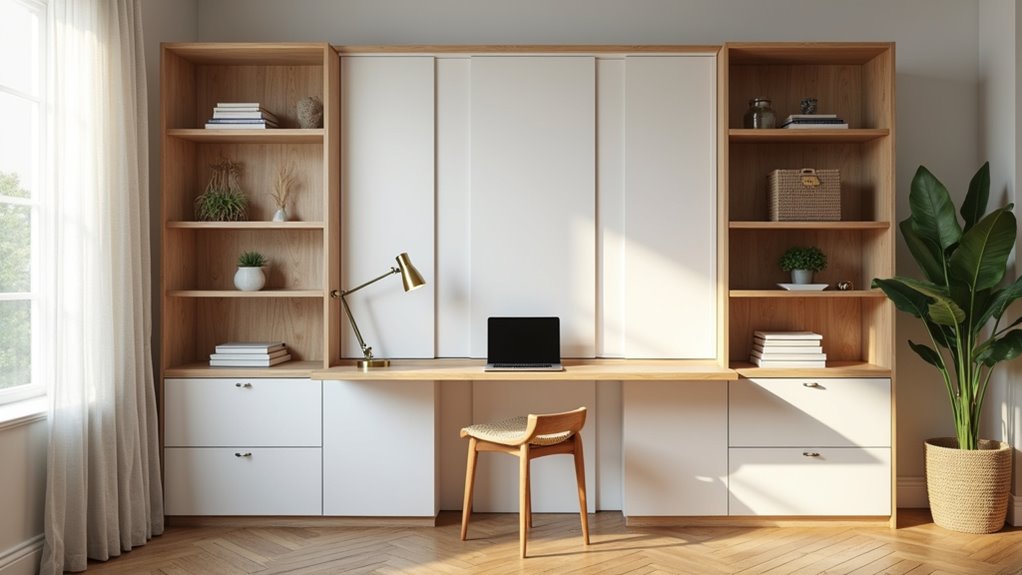
Match your built-in office cabinets to exactly what you store. Choose drawers for supplies, odds and ends, and file folders needing security. Pick shelves for books, binders, and journals you want visible. Need both concealment and display? Combine drawers and shelves in one unit. Consider your room size, materials, and finishes too, wood doors handle heavy files, while glass doors protect awards and mementos. Keep going to see how each option fits your workspace.
Key Takeaways
- Choose drawers for office supplies, sensitive papers, and file folders that need concealment and security.
- Use shelves for books, binders, and journals that benefit from visibility and easy viewing.
- Combine drawers and shelves in one unit when you need both concealment and display.
- Match cabinet type to storage needs: file cabinets for papers, bookcases for books, base cabinets for supplies.
- Select wood-door cabinets for heavy files and glass-door display cabinets for awards, photos, and mementos.
How do you choose the right built-in office cabinets
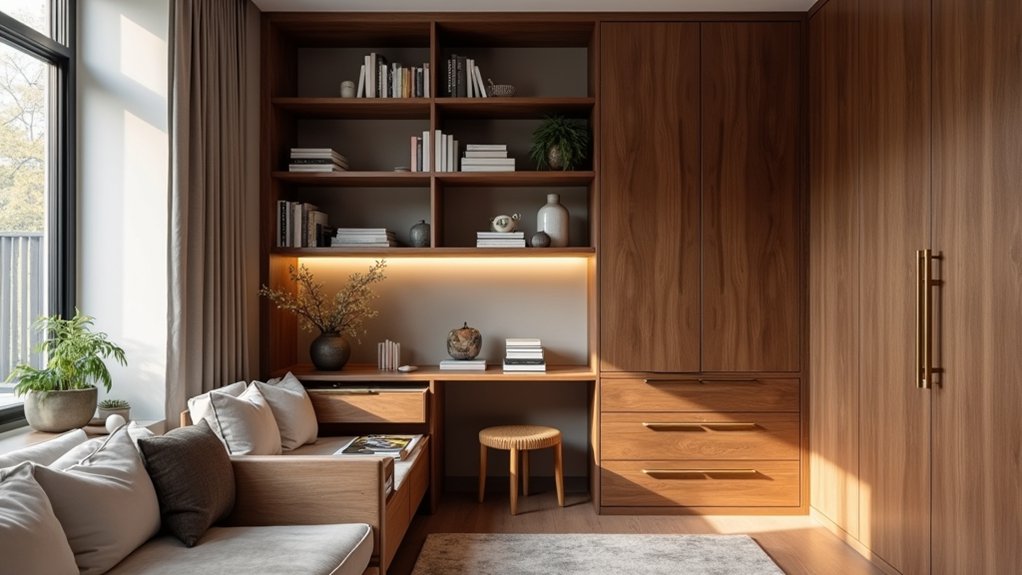
Choose the right built-in office cabinets by matching them to your specific storage needs and the available room size. If you’re storing papers and file folders, prioritize file cabinets; for books, binders, and journals, choose bookcases. Office base cabinets with drawers organize supplies and odds and ends, and display shelves showcase awards, photos, and mementos. Measure your space carefully, leaving roughly 18 inches in front of bookshelves and display cabinets, and maintain a minimum of 3 feet behind a desk so you can push back and turn your chair freely. Modular built in cabinets give you flexibility to reconfigure as needs change. When selecting cabinets for built ins, factor in material durability, security features like locked drawers, and how the unit’s cost fits your office budget.
What do base cabinets and floor cabinets offer
Base cabinets and floor cabinets offer concealed storage combined with a functional work surface, making them a versatile choice for most offices. Base cabinets for office use give you drawers ideal for organizing supplies and odds and ends, plus a durable top that doubles as a staging area. Decluttering tips for home offices can significantly enhance productivity and create a more inviting workspace. By organizing your documents and minimizing distractions, you can streamline your workflow.
Here’s what office floor cabinets deliver:
- Concealed organization: Wood-door units and drawers keep supplies and miscellaneous items out of sight.
- Functional surface: The cabinet top creates a perfect spot for a printer or reference materials.
- Cost flexibility: Unfinished office cabinets lower your initial expense, letting you match materials to your budget.
You’ll want to weigh durability against load requirements, ensuring the unit’s construction handles whatever you’ll store inside long-term.
When should you pick drawers over shelves
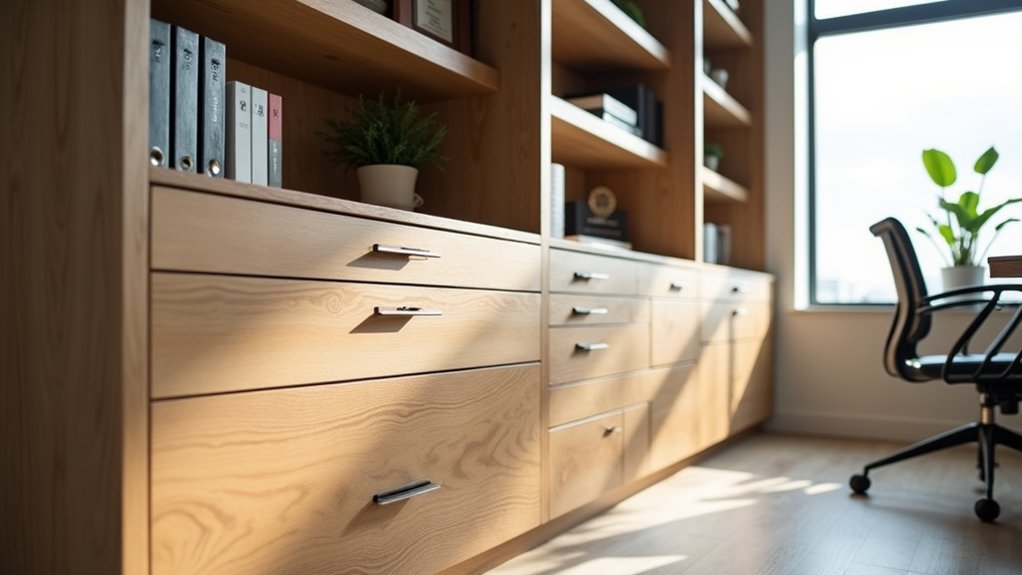
Pick drawers when you’re organizing office supplies, odds and ends, or papers you want concealed and secured. File cabinets with drawers handle folders efficiently, and locked drawers protect sensitive documents. Choose shelves when you’re displaying books, binders, journals, awards, photos, or mementos that benefit from visibility. Bookcases hold reference materials; display shelves showcase collections without concealment.
| Choose Drawers For | Choose Shelves For |
|---|---|
| Office supplies | Books and binders |
| File folders | Journals and references |
| Concealed odds and ends | Awards and photos |
| Sensitive papers | Visible mementos |
If you need both concealment and display, combine drawers and shelves in one unit.
How do modular and custom units compare
Modular and custom units differ mainly in flexibility versus fit. Modular options like wheel-around drawers and under-desk units let you reconfigure your layout as needs change, while custom built-ins integrate precisely with your walls and available room size.
Consider these factors before deciding:
- Cost: Built-in cabinets and drawers average roughly $800 for materials and construction, whereas wheel-around units present lower-cost alternatives.
- Adaptability: Modular pieces move easily. Custom units stay fixed but maximize every inch.
- Clearance: Both must leave 18 inches in front of shelves and 3 feet behind a desk for chair movement.
Match your choice to your budget limits, storage needs, and how often your office layout shifts.
What materials and finishes hold up best
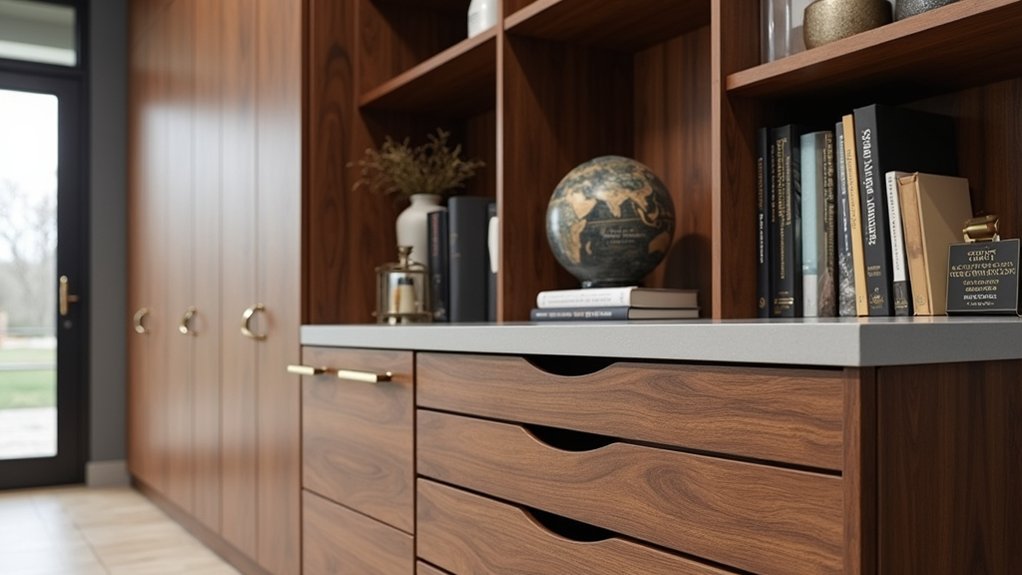
Your material choice determines how long the unit lasts and what it can safely hold. Your material directly impacts durability and longevity, so match it to what you’re storing. If you’re keeping heavy files or binders, choose robust wood-door cabinets that provide solid protection and resist toppling under load. For awards, photos, and mementos, glass-door display cabinets offer visibility while still protecting your items. Consider that higher-durability materials cost more upfront, but they’ll reduce long-term replacement expenses, a worthwhile tradeoff for heavy-use offices. Don’t overlook finish either; select materials that match your office aesthetic so the unit looks right in the space. Balance your durability requirements against your budget, and you’ll get storage that performs and lasts. Open shelving vs closed cabinets shapes your office’s overall design. Open shelving offers easy access to frequently used items for a dynamic workspace, while closed cabinets keep clutter hidden for a more polished, professional look.
How do you match storage to what you keep
Match storage to what you keep by pairing each unit type with the specific items it holds best. The type of items you store dictates which unit you should choose. Match the storage function to what you’ll actually keep inside, since papers, books, supplies, and mementos each demand different configurations. Assess your inventory before committing to any layout: Custom office storage solutions can help you optimize your space while keeping everything organized. By carefully selecting units that accommodate various office supplies, you can enhance productivity and reduce clutter.
- File cabinets store papers and file folders efficiently, keeping documents organized and accessible.
- Bookcases hold books, binders, and journals on open shelves designed for reference materials.
- Base cabinets with drawers organize office supplies and odds and ends behind concealed fronts.
If you’re displaying awards, photos, or mementos, choose open display shelves that keep items visible. When you need both concealed supplies and visible collections, combine drawers and shelves in one unit to cover every storage requirement precisely.
How does Creative Closet Design build custom office cabinets
Creative Closet Design builds custom office cabinets around your specific needs rather than forcing you into fixed configurations, because every office demands storage tailored to its exact inventory and dimensions. You start by defining what you store, files, books, supplies, or displayed mementos, so we can combine drawers and shelves accordingly. We measure your room, leaving 18 inches in front of bookshelves and 3 feet behind desks for chair clearance. You select materials matched to your durability requirements and aesthetic, whether wood-door cabinets for concealed supplies or glass-door units for visible awards. We integrate security features like locked drawers for confidential documents, and design cabinet tops sized for printers. With averages near $800 for materials and construction, we align each build against your office budget.
Get Cabinets Built Around What You Actually Store
The right mix of drawers and shelves isn’t something to guess at from a catalog. It comes from knowing what’s going in them and how you reach for it. Creative Closet Design plans custom office cabinetry for Central Florida homeowners, sizing drawers to your files, spacing shelves to your books, and building in the clearances that keep the room comfortable to work in. Serving Lakeland, Auburndale, Winter Haven, Plant City, Polk County, and Hillsborough County, our designers will walk your space, review what you need to store, and map out a configuration before anything is built. Call (863) 591-4500 to schedule your free design consultation.
Frequently Asked Questions
How deep does a file drawer need to be for hanging folders?
Deeper than most people expect, and this is where a lot of office cabinetry falls short. Hanging file folders need enough usable depth to sit properly front to back, generally in the range of 16 to 18 inches of interior space, plus extra height clearance for the suspension rails the folders hang from. Paper size matters too. Legal-size documents are longer than letter, so a drawer sized for letter files won’t accommodate them. It’s worth confirming which you use before the drawer is built, since a shallow file drawer is functionally useless for its intended purpose.
Do I need full-extension drawer slides, or is standard fine?
For file drawers and anything deep, full-extension is worth it. Standard slides only pull out part of the way, which means the back portion of the drawer is awkward to reach and tends to become a dead zone where things get lost. Full-extension slides bring the entire drawer clear of the cabinet so you can see and access everything in it. On a file drawer especially, that’s the difference between using the whole drawer and effectively paying for space you never touch. Soft-close hardware is a comfort upgrade rather than a functional one.
How many file drawers do I actually need?
Fewer than most people assume, and it’s worth being honest about it. Between cloud storage and digital records, the volume of paper most households need to keep has dropped considerably. A common mistake is building multiple file drawers based on how filing used to work, then filling them with things that could have been scanned or discarded. Take stock of what you genuinely need in hard copy, tax records, legal documents, warranties, medical files, and size from there. One well-built file drawer covers a lot of people. Extra capacity is better spent on supplies and equipment storage.
How far apart should shelves be, and how deep, for books and binders?
It depends on what’s going on them, which is why fixed spacing causes problems. Standard books need less vertical clearance than tall binders, art books, or magazine files, so a shelf spaced for paperbacks won’t hold a three-ring binder upright. Depth matters too. Shelves deeper than your books just collect clutter at the back, while shelves too shallow leave binders overhanging. This is the strongest argument for adjustable shelving in the areas holding reference material, since it lets you reset the spacing as what you’re storing changes.
Can built-in shelves and drawers handle heavy files and books?
They can, but only if they’re built for it, and this is a real difference between custom work and off-the-shelf units. Books and full file drawers are heavier than people realize, and the failure points are usually shelf span and drawer hardware. A shelf that’s too long without support will sag over time under a full row of books, and drawer slides rated for light loads will bind or fail under the weight of packed hanging folders. Telling your designer what’s actually going into each section lets them specify the right materials, span, and hardware upfront.