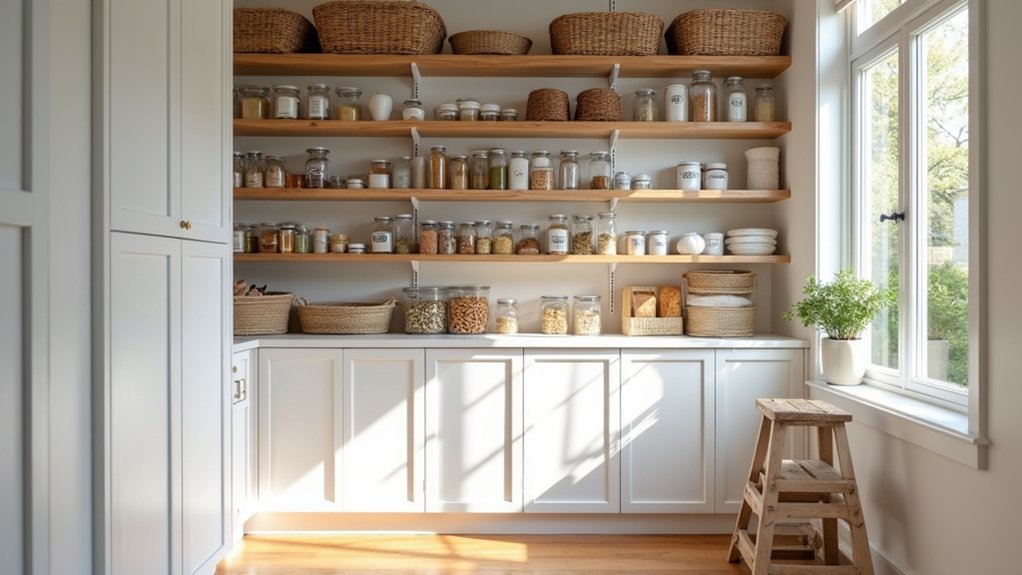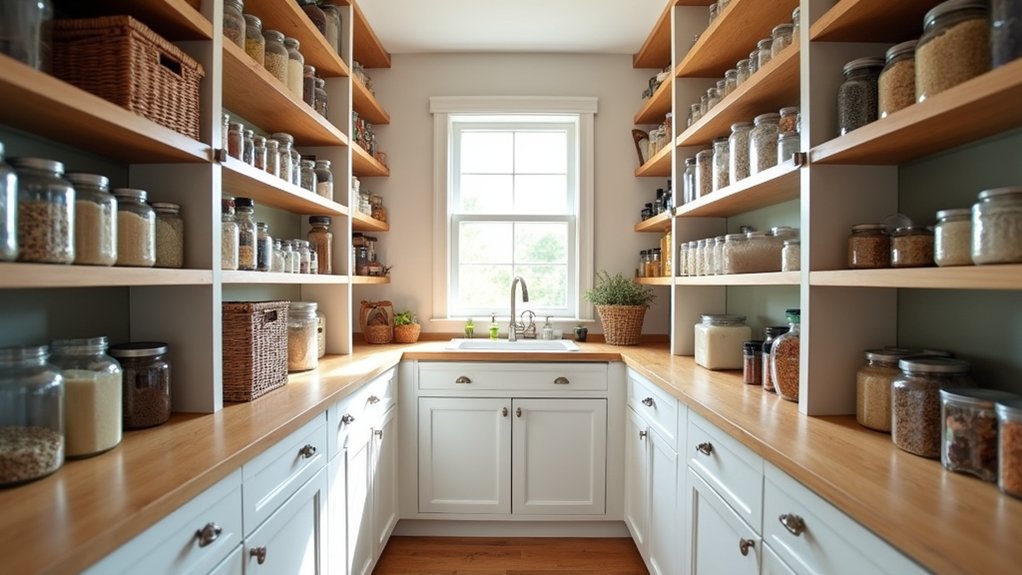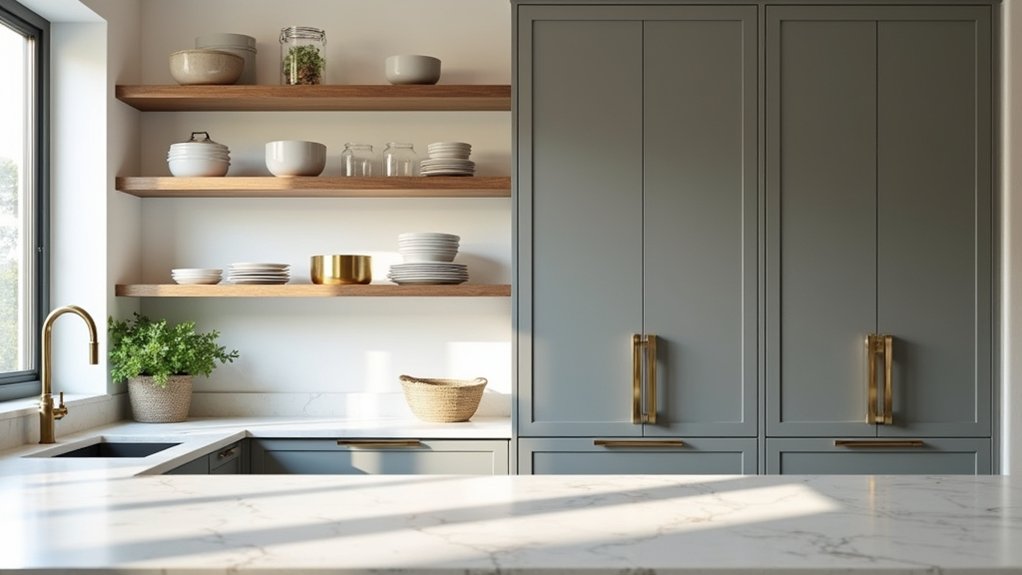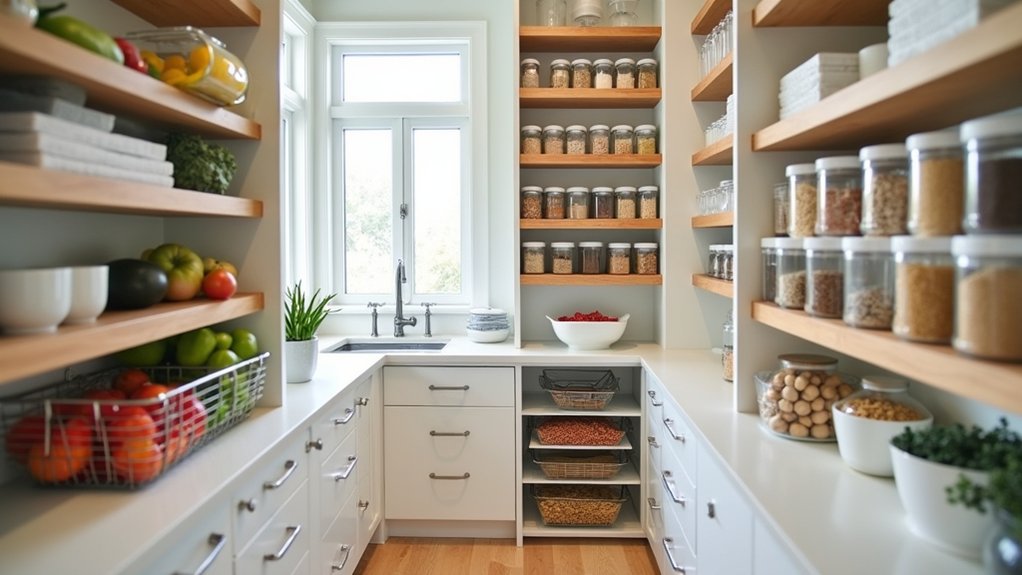
Choosing between built-in bookshelves and closed cabinets comes down to your style and how you work. Open shelving keeps daily essentials within arm’s reach and creates an airy, spacious feel that showcases your favorite books. Closed cabinets conceal paperwork and clutter for a calm, polished look. Want both? Bookshelves with drawers display above and hide storage below. Plan your highest shelf at 72 to 78 inches. Let’s explore what fits you best.
Key Takeaways
- Open built-in bookshelves create an airy, spacious feel while displaying books and decorative items within easy arm’s reach.
- Closed cabinets conceal paperwork, supplies, and confidential files for a calm, polished look free of visual clutter.
- Combination units offer the best of both: open display above with hidden drawers or cabinets below.
- Plan for comfortable reach by placing the highest shelf at 72 to 78 inches and the lowest 3 to 4 inches off the floor.
- Choose based on your work style, weighing access frequency, security needs, and visual priorities.
Should you choose built-in bookshelves or closed cabinets
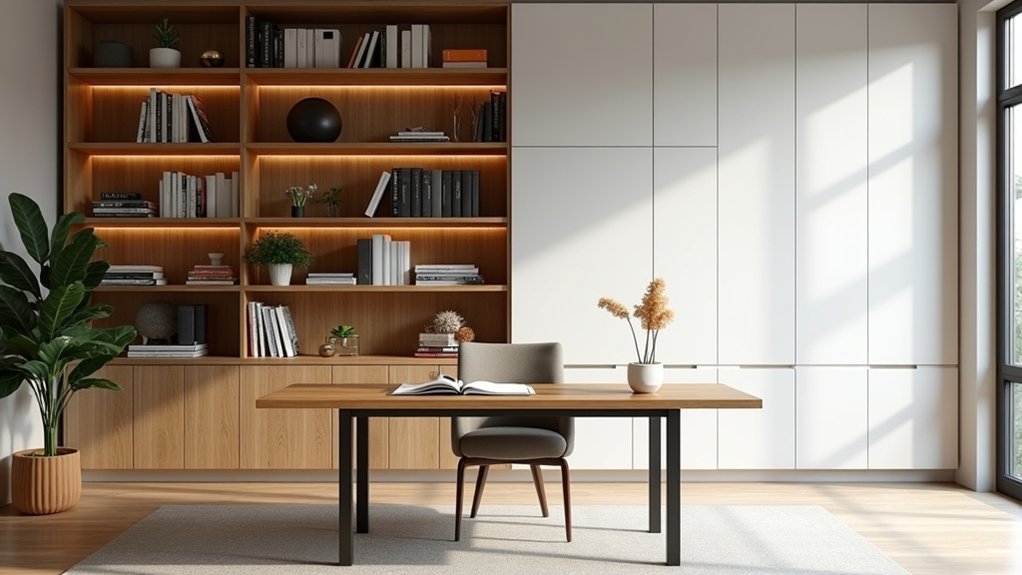
Choose built-in bookshelves or closed cabinets based on how you want your space to feel and function. Open shelving creates an airy, spacious atmosphere that showcases your treasured books and decorative objects, keeping daily essentials within easy reach. Closed cabinets, on the other hand, conceal paperwork and supplies, delivering a cleaner, more polished look. If you crave both, built in bookshelves with drawers or bottom cabinets offer the perfect compromise, display visibility up top, hidden clutter storage below. When planning office bookshelves and cabinets, consider your reach: keep the highest shelf at 72 to 78 inches and the lowest 3 to 4 inches off the floor. For built in bookshelves home office setups, balance beauty with practical accessibility. Choosing builtin office cabinets maximizes both storage and style in your workspace. They can be customized to fit any aesthetic, from modern to traditional, and equipped with organizational features that keep your office tidy and efficient.
What are the benefits of open office bookshelves
Open office bookshelves keep your daily essentials within arm’s reach, so you grab reference books and materials without opening a single door. Open built in bookshelves office designs create an airy, spacious atmosphere that showcases your treasured items and decorative objects, letting the room breathe rather than feel boxed in. Maximize space with builtins to create a functional and visually appealing environment. Utilizing built-in shelving not only enhances organization but also adds a seamless design element to your workspace.
Consider what an office built in bookcase with open shelving delivers:
Open shelving turns your office into a display, keeping daily essentials visible, accessible, and always within arm’s reach.
- Rapid retrieval of frequently used books and reference materials
- An airy, spacious feel that displays your favorite objects
- Central, accessible placement for items you reach for daily
You’ll position the highest shelf around 72 to 78 inches for comfortable reach, balancing display visibility with practical, everyday accessibility throughout your workspace.
What are the benefits of closed cabinet storage
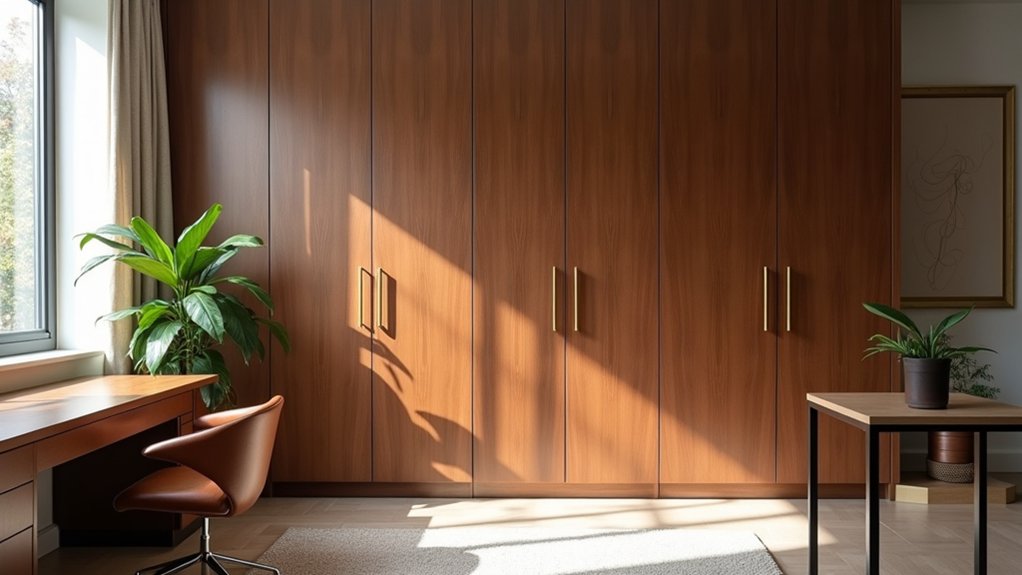
Closed cabinet storage gives your office the calm, polished look that open shelving can’t by prioritizing concealment over display. You’ll tuck paperwork, supplies, and everyday mess behind doors, cutting visual chaos instantly. Confidential files stay secure, while valuables avoid dust and physical damage. When you want structure over spontaneity, cabinets deliver.
| Priority | Closed Cabinet Solution | Best For |
|---|---|---|
| Concealment | Solid doors mask contents | General office mess |
| Security | Locking filing cabinets | Confidential documents |
| Protection | Enclosed barriers block dust | Valuables and equipment |
| Organization | File drawer inserts, dividers | Rarely accessed files |
| Aesthetics | Clean, seamless fronts | Polished, calm rooms |
Position bottom cabinets within easy reach, reserving them for clutter you’d rather keep private and out of sight entirely.
How does each option affect a room’s look
Your choice between open and closed storage reshapes how the room breathes. Open shelves lighten the space, creating an airy, spacious atmosphere that showcases your treasured items and decorative objects. Closed cabinets do the opposite, masking disorganized contents to deliver a cleaner, more polished appearance.
Open shelves let the room breathe and display; closed cabinets conceal the clutter and calm the eye.
Consider how each element shifts the visual tone:
- Floating shelves with lower built-in cabinets prevent the room from feeling boxed in while maintaining openness.
- Floor-to-ceiling, wall-to-wall built-ins make a bold architectural statement and enhance seamless integration.
- Material mixing, wood for warmth, metal for structure, glass doors for delicate display, adds a modern twist.
You’re balancing exposure against concealment. Open units invite the eye to wander; closed ones calm it. Match the atmosphere you want to project.
How do bookshelves with drawers combine both
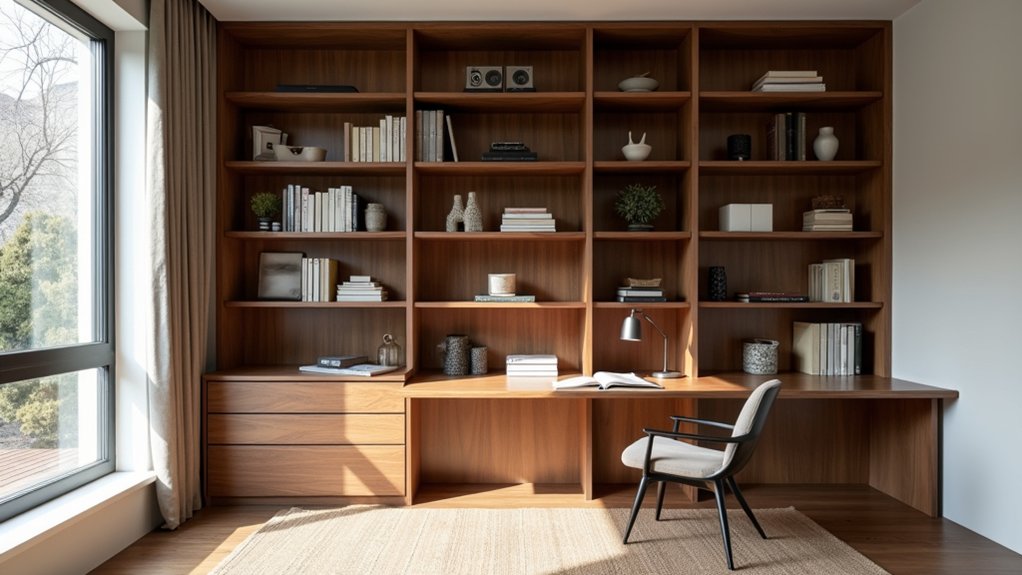
Bookshelves with drawers combine open shelving with integrated storage in a single unit, giving you the best of both worlds. The upper open shelves showcase your treasured books and decorative objects, keeping daily-use references within central, accessible reach. Below, the enclosed drawers conceal paperwork, supplies, and clutter that would otherwise disrupt the visual calm.
This vertical layering works to your advantage. Position deeper drawers at the base for stability and heavier storage, then let shallower shelves float above at eye level. Add file drawer inserts or divided sections for modularity, and you’ll gain confidential storage without sacrificing display space. Consider incorporating home office built-in storage solutions to maximize your workspace efficiency. These designs not only keep your office organized but also enhance its aesthetic appeal.
The result feels airy up top and grounded below, delivering polished concealment and open warmth in one seamless, architecturally balanced piece.
How do you decide based on your work style
Decide based on your work style by watching how you move through your space and reach for what you need. Your daily workflow reveals which choice fits best. If you grab reference books and materials constantly, open shelving keeps them centrally accessible without opening a single door. If confidential files and cluttered supplies dominate your desk, closed cabinets deliver calm concealment and security.
Consider these three factors:
- Access frequency, Daily items belong on open, central shelves; rarely touched files fit closed, less convenient spots.
- Security needs, Confidential documents demand locked cabinets, while shared materials suit open display.
- Visual priorities, Choose airy openness for treasured objects or polished concealment for a cleaner atmosphere.
Match these to your habits, and the right design becomes obvious.
How does Creative Closet Design design office bookcases
Creative Closet Design builds office bookcases as floor-to-ceiling, wall-to-wall built-ins that combine open shelves with lower cabinets. You get open shelving at eye level for daily reference materials and treasured objects, keeping them within comfortable reach between 72 and 78 inches. Below, closed cabinets conceal paperwork, supplies, and confidential files, reducing visual chaos while protecting sensitive contents from dust. This mixed approach prevents the room from feeling boxed in, maintaining an airy openness while delivering polished concealment where you need it. You choose wood shelves for warmth, metal frames for structure, or glass doors for delicate display. The result makes a bold architectural statement, filling the wall with seamless, high-end integration tailored to you.
Let’s Find the Right Balance for Your Office
Most offices land somewhere between fully open and fully closed, and the right proportion depends on what you store, how tidy you keep it, and how you want the room to feel. Creative Closet Design plans custom office built-ins for Central Florida homeowners, working out the mix of open shelving and concealed storage before anything is built. Serving Lakeland, Auburndale, Winter Haven, Plant City, Polk County, and Hillsborough County, our designers will look at your space, your habits, and your storage, then show you a configuration that works on both counts. Call (863) 591-4500 to schedule your free design consultation.
Frequently Asked Questions
What’s a good ratio of open shelving to closed storage?
There’s no fixed rule, but a useful starting point is closed storage for the majority of what you own and open shelving reserved for the portion that’s genuinely worth seeing. Most people overestimate how much they want on display, then end up with open shelves holding printer paper and cable bundles. A practical approach is to count what actually looks good and gets used often, then size the open shelving to that, and let closed cabinets absorb everything else. Your designer can help you land the proportion once they see your inventory.
What if I’m not naturally tidy? Is open shelving a mistake?
It’s worth being honest with yourself here, because open shelving demands ongoing upkeep to look the way it does in photos. Everything is visible all the time, so a shelf that isn’t curated reads as clutter rather than display, and in a workspace that visual noise can be distracting. If you know you won’t restyle shelves regularly, weighting the design toward closed storage is the smarter call. You can still get an airy feel with a smaller run of open shelving at eye level, without committing the whole wall to a display you’ll have to maintain.
Do closed cabinets actually hold more than open shelves?
Generally yes, and this gets overlooked in the aesthetic debate. Closed cabinets let you store items you’d never want on display, stack things without regard to appearance, and use the full depth without it looking messy. Open shelves are limited by what looks acceptable, which effectively reduces their usable capacity. If your main problem is that you have more to store than you have room for, leaning toward closed storage solves it. If your problem is that the room feels heavy and closed in, open shelving helps with that instead.
Which works better if I’m on video calls a lot?
This is worth planning around, since whatever sits behind you becomes part of your professional presence. Open shelving photographs well on camera when it’s styled, giving a warm, layered backdrop that reads better than a blank wall. But it also puts your storage habits on display to clients and colleagues. A common solution is placing a short run of open shelving in the camera’s field of view, styled with books and a few objects, while keeping the working storage in closed cabinets outside the frame. Deciding your desk orientation before the design is finalized makes this much easier.
What about glass-front doors? Do they solve the problem?
They’re a genuine middle ground and worth considering. Glass fronts give you the visual lightness and display quality of open shelving while still protecting contents from dust and keeping them contained behind a door. The catch is that clear glass shows everything, so it still requires the contents to look tidy. Frosted or reeded glass softens the view, giving you concealment without the solid weight of a full wood door. It’s a good option when you want to break up a long run of closed cabinetry without committing to fully exposed shelves.