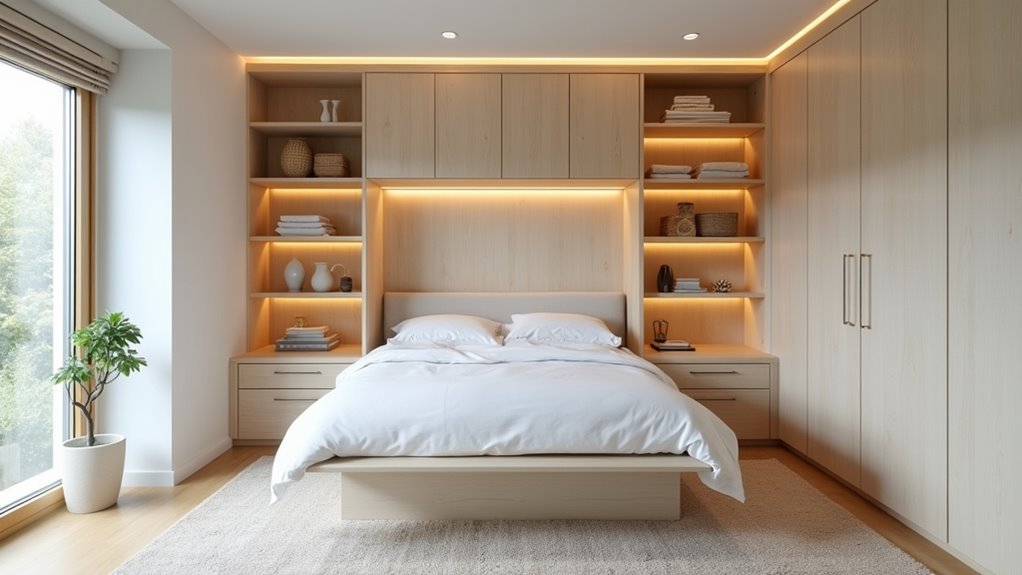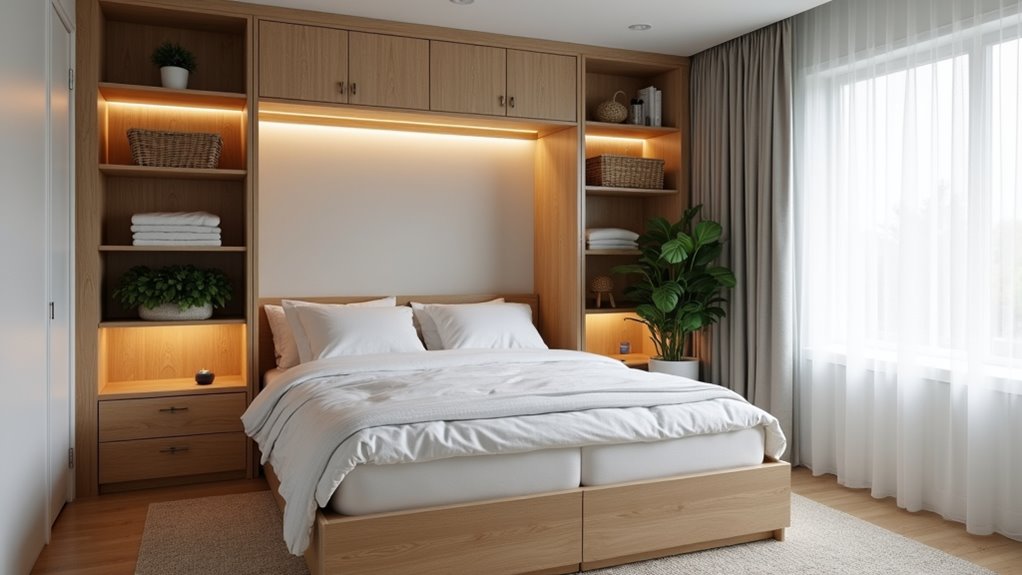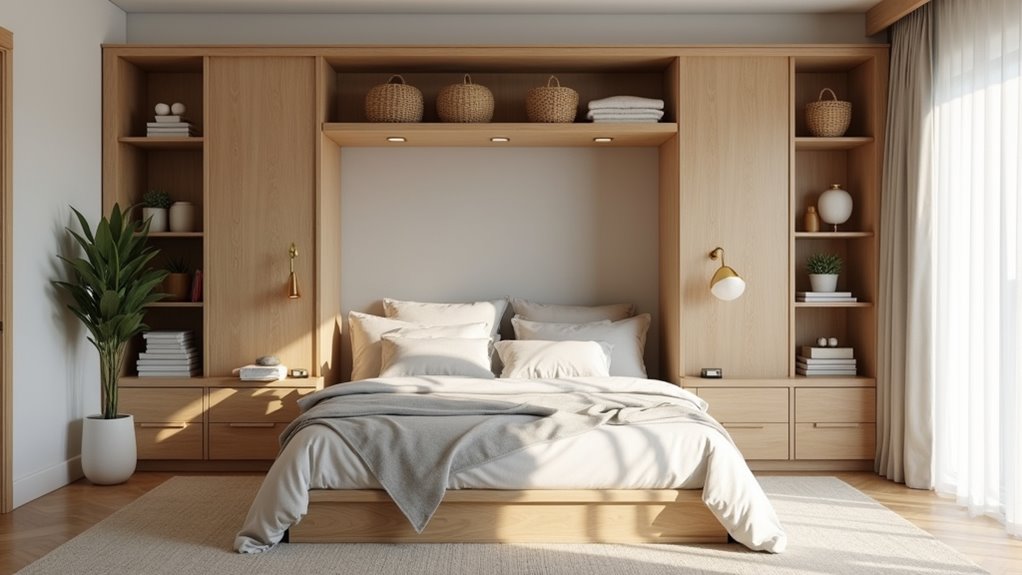
The best custom storage around a Murphy bed uses your wall’s full width and height without blocking the bed’s opening path. Flank the cabinet with wardrobe towers for hanging clothes, and add overhead cabinets to claim vertical space. Mix adjustable and fixed shelves so you can adapt as needs change. Pull-out nightstands with soft-close slides keep nights quiet. Once you’ve got the layout set, smart accessories, charging, and lighting can make every inch work harder.
Key Takeaways
- Flank the Murphy bed cabinet with wardrobe towers and overhead cabinets to create a built-in storage wall without blocking the bed’s opening path.
- Combine adjustable shelves for changing storage needs with fixed shelves that add rigidity and support steady, predictable loads.
- Install soft-close hinges and slides on bedside drawers and pull-out nightstands for quieter nighttime access and less strain on cabinetry.
- Add pull-out trays, drawer dividers, valet rods, and hidden compartments to organize linens, accessories, outfits, valuables, and chargers.
- Integrate outlets, charging points inside side cabinets, and door-activated or motion-sensor lighting to reduce clutter and improve visibility.
What Custom Storage Features Work Best Around a Murphy Bed

Wardrobe towers, overhead cabinets, adjustable shelves, linen drawers, and pull-out nightstands work best around a Murphy bed because they use wall width and height without blocking the bed’s opening path. Flank the cabinet with wardrobe towers for hanging clothes, then add overhead cabinets to claim vertical space. You’ll get a full storage wall that frames the bed and reads as built-in furniture.
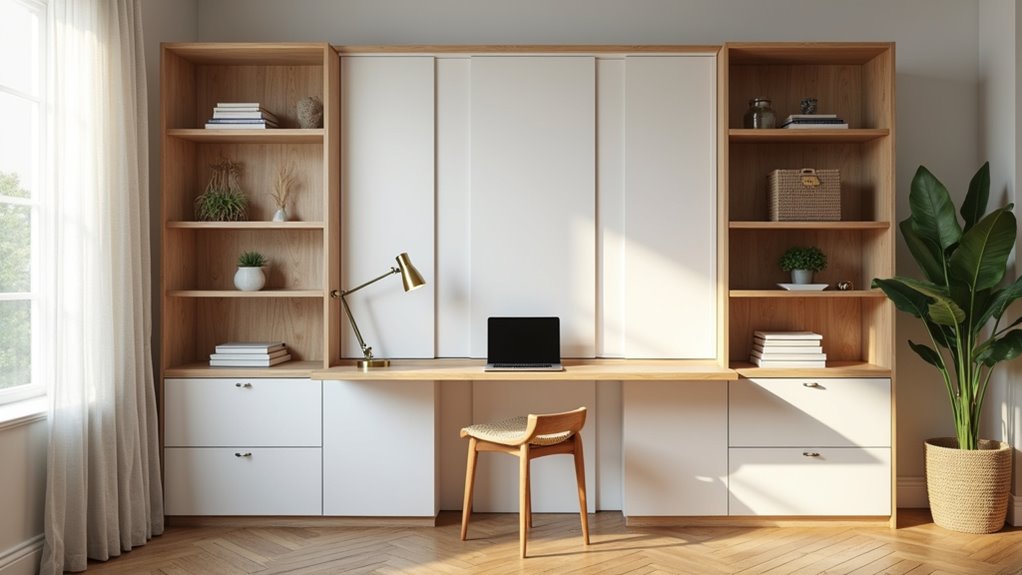
Good custom murphy bed storage also includes adjustable shelves, drawers for linens, and pull-out nightstands that give you a bedside surface. If you work from home, pair the unit with a desk or media shelving. Measure ceiling height, side clearance, and the open bed’s full projection prior to choosing wall bed storage accessories. Smart murphy bed built in storage never interferes with the mechanism or crowds your movement space.
When Are Adjustable Shelves More Useful Than Fixed Shelves
Adjustable shelves are more useful than fixed shelves when your storage needs vary in height or change over time. If you store books, baskets, and decor side by side, you can space each shelf to fit the item instead of wasting valuable vertical inches. Among murphy bed storage features, adjustable or removable shelves also let you convert a cabinet section into hanging space when your wardrobe grows. Fixed shelves still earn their place, adding rigidity and holding steady, predictable loads. Many custom wall bed cabinets mix both; one Bestar system pairs two fixed shelves with three adjustable ones, each rated for up to 30 pounds. Check each shelf’s rating and hardware instructions before loading heavy items, and keep all shelves clear of the bed’s opening path.
How Can Soft Close Hardware Improve Cabinets Used Beside a Bed
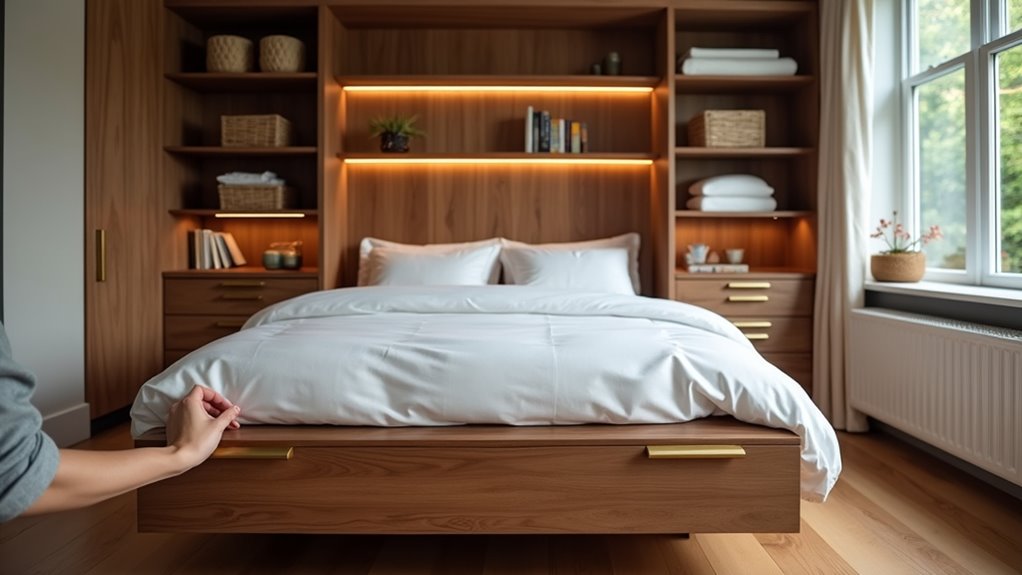
Soft-close hardware improves cabinets beside a bed by keeping doors and drawers from slamming, so you can grab linens or a phone charger at night without waking anyone.
It also protects your cabinetry. Dampened hinges and drawer slides reduce the impact that can loosen shelves, shift stored items, or strain the cabinet’s wall anchoring over time.
Use soft-close slides on bedside drawers and pull-out nightstands you’ll open daily. Full-extension versions let you reach items at the back without leaning into the bed’s opening path.
Confirm that hinges and slides fit your cabinet depth and door weight before you order. Check that open doors and extended drawers won’t collide with the lowered bed or block the 30, 36 inches of movement clearance you need around the bed frame.
How Do Pull Out Trays Valet Rods Dividers and Hidden Compartments Serve Different Storage Needs
Pull-out trays, valet rods, dividers, and hidden compartments each solve a different storage problem. Pull-out trays bring folded items and small essentials forward, so you don’t have to reach into deep, dark side cabinets. Valet rods give you a spot to stage tomorrow’s outfit inside a wardrobe tower. Dividers keep drawers neatly organized. Hidden compartments conceal valuables or chargers near your sleeping area.
| Accessory | Best Use | Planning Tip |
|---|---|---|
| Pull-out trays and dividers | Linens, accessories, office supplies | Keep trays clear of the bed’s opening path |
| Valet rods and hidden compartments | Next-day clothing, valuables, cords | Confirm cabinet depth before specifying hardware |
Measure the open-bed projection before you order, and allow 30 to 36 inches of clearance. Extended trays and rods shouldn’t block movement, bedside access, or the bed’s lift mechanism when you lower it.
Where Can Integrated Outlets and Charging Points Reduce Surface Clutter
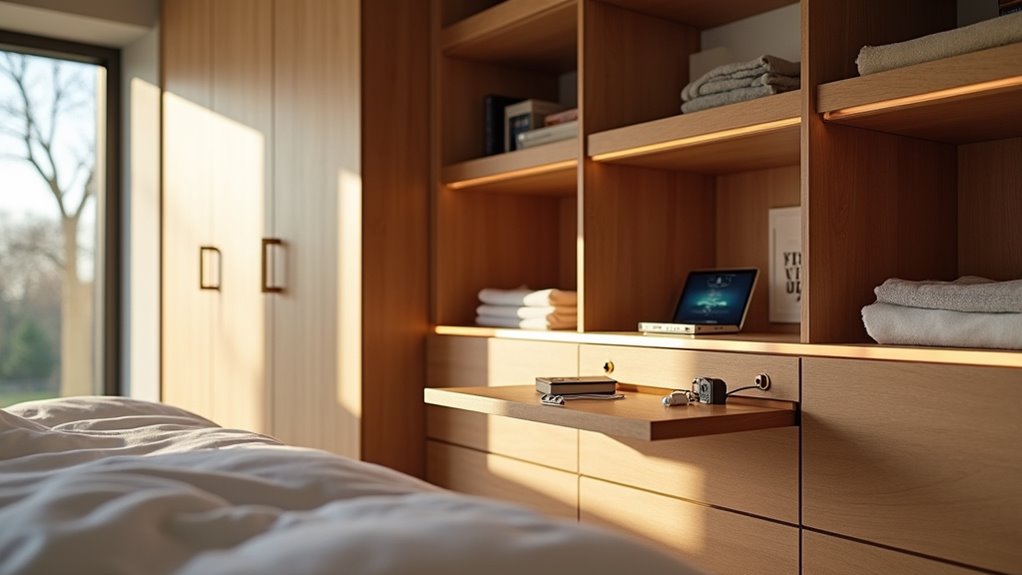
Integrated outlets and charging points reduce surface clutter when placed inside side cabinets, where devices charge behind closed doors instead of on open surfaces. Without planned power, phone, lamp, and laptop cords trail across nightstands and floors once the bed comes down. Add a charging spot near a pull-out nightstand, keeping your phone within reach when the bed’s lowered. If you’ve paired the bed with a desk, put power at desk height for your laptop and task lamp. Route cords through cabinet backs rather than across the bed’s opening path, where the mechanism could pinch them. Keep wiring clear of the anchoring area and moving parts. Check side clearance before installation, and have an electrician confirm each outlet’s placement meets local electrical code.
How Can Lighting Make Deep or Upper Storage Easier to Use
Lighting makes deep or upper storage easier to use by letting you see what’s stored at the back and on high shelves without guessing, especially in 24-inch-deep side cabinets and overhead units above an 88-inch bed cabinet. Plan it alongside shelving so fixtures don’t block the bed’s opening path.
- Add door-activated lights inside wardrobe towers so the interior brightens when you open them.
- Mount strip lighting under overhead cabinets to illuminate shelves and bedside surfaces below.
- Place fixtures near the front edge of deep shelves to light items at the back.
- Use motion-sensor lights in drawers and pull-outs so you can find linens without reaching blindly.
Keep wiring and fixtures clear of the bed mechanism and adjustable shelf supports. Confirm heat output and mounting space before installation, especially above full-height units near the ceiling.
Which Features Are Worth Customizing Based on What You Actually Store
The features worth customizing are the ones that match the items you actually own, not generic storage that fills the wall. If you hang most of your clothes, prioritize wardrobe towers with adjustable or removable shelves you can convert to hanging space. Folded linens and small items suit drawers in side cabinets, and books, baskets, and decor call for adjustable shelving. Check load ratings. One cited system allows 30 pounds per shelf, so heavy collections may need sturdier supports. If you work from home, a desk with side shelving keeps supplies close. Add pull-out nightstands for bedside essentials. Keep each component clear of the bed’s opening path and confirm tall cabinets fit your ceiling height.
Build Smarter Storage Around Your Murphy Bed
Make every inch around your Murphy bed work harder with Creative Closet Design. Our team designs custom closets and built-in storage with shelving, drawers, wardrobe towers, and space-saving features tailored to your room. Schedule a free design consultation to create a cleaner, more functional setup around your Murphy bed. Call Our Team
Frequently Asked Questions
How Much Ceiling Height Do Tall Cabinets Above a Murphy Bed Require?
You’ll need at least about 93 inches of ceiling height for a typical queen vertical cabinet: roughly 88 inches for the unit plus 5 inches above for anchoring. If you’re adding overhead cabinets, measure their height on top of that, and confirm you’ve got secure anchoring space. Don’t forget to check your manufacturer’s specs. If your ceiling’s too low, consider a horizontal bed instead, though it’ll use more wall width.
How Much Side Clearance Should Be Left Between the Bed and Wardrobe Towers?
Leave at least 3 inches on each side of the bed cabinet for installation, and plan extra room if you’re adding wardrobe towers next to it. Before you finalize widths, check that the towers won’t interfere with the bed mechanism, its opening path, or your access to both sides. Keep wardrobe doors, drawers, and pull-outs clear of the swing, so you can lower the bed fully without shifting anything nearby.
Is a Horizontal Murphy Bed Better for Rooms With Low Ceilings?
Yes, a horizontal Murphy bed usually suits low ceilings better because it doesn’t need the height a vertical unit does. A typical queen vertical cabinet stands about 88 inches, plus 5 inches above for anchoring. You’ll trade height for width, though, since horizontal beds use more wall space. Measure your wall width, confirm anchoring space, and plan side cabinets or shelves around the wider footprint without crowding the opening path.
How Far Does an Open Murphy Bed Extend Into the Room?
An open Murphy bed can extend roughly 88 inches into your room; one product specification lists an 88.2 inch extension. Since this varies by model, measure your unit’s full open-bed projection before you place desks, chairs, or storage in front of it. You’ll also want 30 to 36 inches of movement clearance around the bed. Keep drawers, pull-out nightstands, and shelves clear of its opening path so it lowers smoothly.
Does Mattress Weight Affect How Smoothly a Murphy Bed Mechanism Operates?
Yes, your mattress weight can affect how smoothly the mechanism operates. You’ll want to match the mattress to the mechanism’s specified size and weight limits, since a mattress outside that range can throw off operation. Check the manufacturer’s specs before you buy. While you’re planning, anchor the cabinet to the wall, keep 30 to 36 inches of clearance around the open bed, and make sure side cabinets don’t block the opening path.