
Most garage ceiling hoists lift 125 to 600 lb. Compact pulley systems handle about 125 lb, cargo-box hoists reach 150 lb, and motorized platform lifts run 250 to 600 lb. Your real limit, though, is the lowest-rated component in the system. That could be the hoist, the fasteners, or the ceiling joists. Don’t confuse safe working load with static test figures. Next, you’ll see how mounting, load sharing, and hoist weight shape the capacity you can actually trust.
Key Takeaways
- Garage ceiling hoists typically lift between 125 and 600 lb, depending on hoist type and published manufacturer ratings.
- Compact pulley hoists for kayaks, bikes, or ladders lift about 125 lb, while cargo-box hoists reach about 150 lb.
- Motorized platform lifts are commonly rated from 250 to 600 lb, making them suited for bulk storage.
- The real lifting limit equals the lowest-rated component, including ceiling joists, fasteners, and anchors, not just the hoist.
- Working load, safe load, and static test values differ; for example, one hoist lists 350 lb safe load versus 600 lb static test.
How much weight can a garage ceiling hoist lift
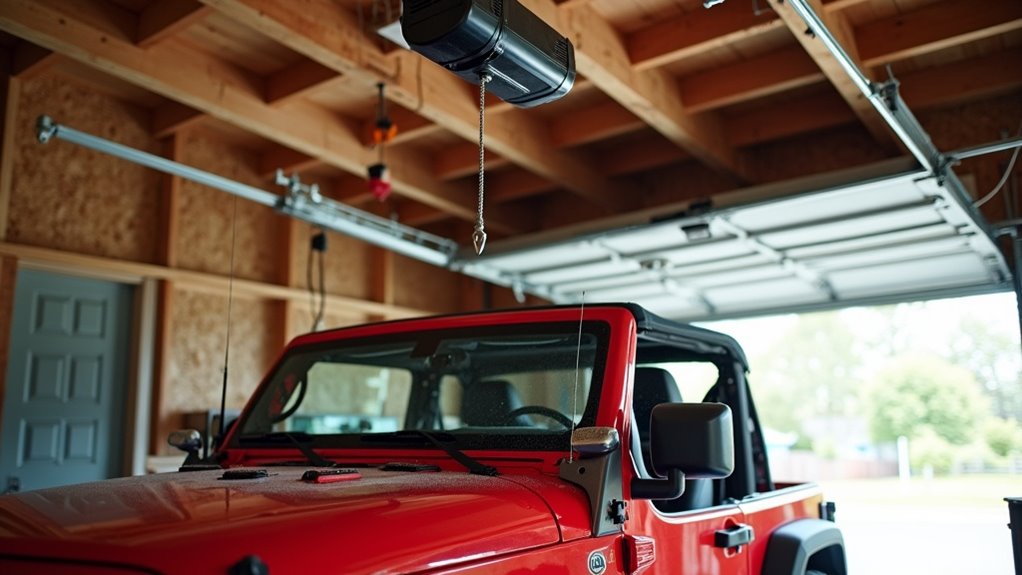
Garage ceiling hoists can lift about 125 lb to 600 lb, depending on design. Compact pulley systems for kayaks, bikes, or ladders typically carry about 125 lb, while cargo-box hoists reach 150 lb. Motorized platform lifts are commonly rated from 250 to 600 lb. Confirm what the published figure means as you choose a garage ceiling hoist. One listing may state a 350-lb safe load alongside a 600-lb static test figure, and you can’t treat those numbers as interchangeable. Your garage hoist lifting capacity also depends on even load distribution. If you’re asking, “How much weight can I hang from my garage ceiling?” remember that joists, anchors, and hardware matter too. Your safe limit is always the lowest-rated component in the entire lifting system. When installing a garage ceiling hoist, it’s crucial to consider the ceiling rack safe weight to ensure safety and efficiency. Always verify that the total weight of the items you plan to store does not exceed this limit.
How do manual and motorized hoists compare on capacity
Motorized hoists carry far more than manual ones, typically 400–600 lb versus about 125 lb for a manual pulley.
| Hoist type | Typical rating | Common use |
|---|---|---|
| Manual pulley | ~125 lb | Kayaks, bikes, ladders |
| Cargo-box hoist | Up to 150 lb | Rooftop cargo boxes |
| Motorized platform | 400–600 lb | Bulk bins, heavy storage |
Don’t assume a motorized unit’s headline number is its working load. One lift lists a 350-lb safe load alongside a 600-lb static test figure, while a 600-lb platform rating assumes evenly distributed weight. Confirm which value you’re reading. Heavier motorized lifts also add their own weight to what your ceiling must carry, and sudden powered starts and stops can raise dynamic forces. Whichever type you choose, your usable capacity equals the lowest-rated component: mechanism, platform, anchors, or ceiling joists.
What rating do most garage hoists come with
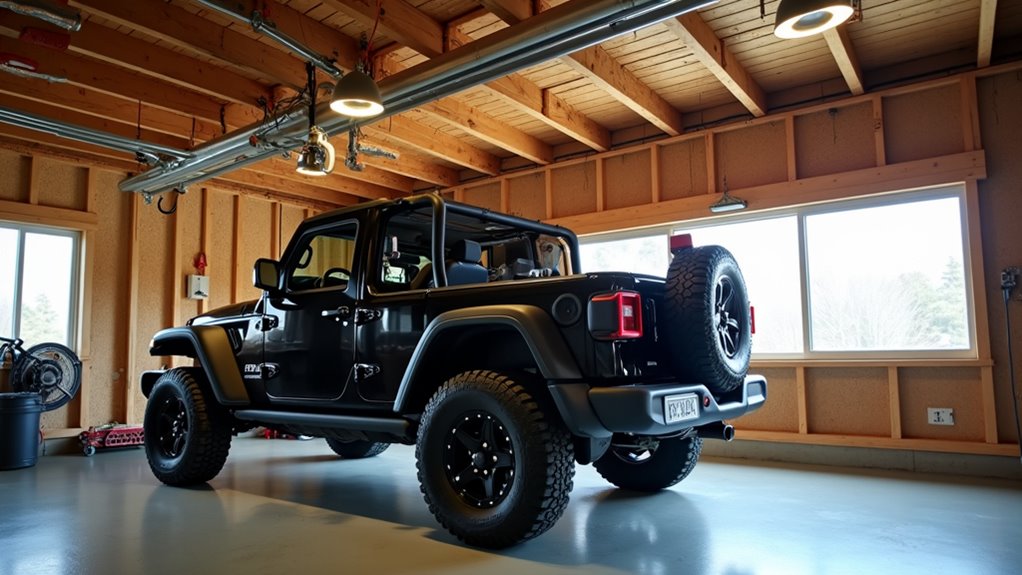
Most garage ceiling hoists carry ratings between about 125 lb and 600 lb, depending on type. Compact pulley hoists for kayaks, bikes, or ladders typically sit near 125 lb, while cargo-box ceiling hoists reach up to 150 lb. Residential platform lifts usually fall between 250 and 600 lb, with motorized models often rated at 400 or 600 lb. When considering the appropriate hoist for your needs, it is crucial to check the ceiling hook weight limit. Exceeding this limit could lead to accidents or damage to your equipment.
Confirm what each number represents, because a working load, recommended safe load, and static test figure aren’t interchangeable. One listing, for example, gives a 350-lb safe load alongside a 600-lb static test figure. Platform ratings may also assume evenly distributed weight.
Your usable capacity is the lowest rating in the complete system, including the lift, attachments, anchors, and ceiling structure. Never exceed it.
How does the mounting point cap what it can lift
A hoist can only lift as much as its weakest component, so if the mounting point is weaker than the hoist, the mounting point sets the real limit. The hoist’s rating covers only the hoist. Your usable capacity equals the lowest-rated component in the complete system: lifting mechanism, platform or track, attachments, anchors, and ceiling structure. If your joists or fasteners can’t carry the load, a 600-lb lift can still fail under a lighter load, and the 600-lb figure doesn’t apply.
Mount the hoist to structural joists, beams, or reinforced concrete, never to drywall or suspended ceiling panels. Use the anchors and hardware the manufacturer specifies, rated for the system’s load. Incorrect fasteners can pull free or damage the ceiling. Walking on ceiling joists can present unique challenges, especially when ensuring safety and stability. It is crucial to maintain an awareness of load distribution to prevent any structural compromise.
To assess what the ceiling must support, add the hoist’s own weight and attachments to the stored load. For heavy-duty or permanent installations, have a structural professional verify the framing.
How do pulleys and anchor points spread the load

Anchor points spread a hoist’s load by dividing it among themselves, but the division is rarely equal, and pulleys reduce the pull you apply to the rope without reducing the total weight the ceiling must hold. Uneven weight on the platform shifts more force to the nearest supports, so you can’t assume each anchor carries an equal fraction. You’ll need to add the hoist’s weight and attachments to your calculation. Moving loads add force, too. A sudden start or stop increases what every anchor sees. To limit stress, distribute items evenly, avoid overloading edges, and raise loads smoothly. Fasten each anchor to joists, beams, or reinforced concrete using manufacturer-specified hardware. The weakest anchor, not the combined total, sets your usable capacity.
What a hoist can store that a fixed rack cannot
A hoist can store bulky or awkward gear, such as kayaks, bikes, ladders, and cargo boxes, plus loaded platforms you’d never hand-carry overhead. It does this by bringing the storage surface down to you. A fixed rack forces you onto a ladder to lift items overhead, which limits it to light, compact objects you can safely carry up rungs. Compact pulley systems typically handle about 125 lb, cargo-box hoists up to 150 lb, and motorized platforms 250–600 lb. Still, you’re bound by the lowest-rated component and the stated conditions, such as evenly distributed load. Confirm whether that figure is a working load or static test value before you load it.
How do you pick a hoist for the weight you need
Pick a hoist by weighing everything you plan to lift and matching that total to the rating of the entire system, not by scanning ads for the highest number. Compact pulley hoists for kayaks, bikes, or ladders typically carry about 125 lb, while residential platform lifts range from 250 to 600 lb.
Check what the published figure actually means. A working load or recommended safe load isn’t the same as a static test figure. One listing pairs a 350-lb safe load with a 600-lb static test. Confirm whether the rating assumes evenly distributed weight.
Evaluate the whole system: mechanism, platform, attachments, anchors, and ceiling structure. Your usable capacity equals the lowest-rated component, and the ceiling must also carry the hoist’s own weight. Never treat a manufacturer’s built-in safety factor as permission to exceed the published rating.
Need More Garage Storage Without Relying on Ceiling Hoists?
If ceiling hoist weight limits make overhead storage impractical, Creative Closet Design creates custom garage storage systems with cabinets, shelving, and storage solutions that fit your space. Serving Lakeland, Auburndale, Winter Haven, Plant City, Polk County, and Hillsborough County, our designers assess your garage layout and storage needs before recommending a setup. Call Our Team to schedule your free design consultation.
Frequently Asked Questions
What Is the Difference Between a Working Load and a Static Test Rating?
A working load is the maximum weight you’re permitted to lift during normal use; a static test rating is the load the system held stationary during testing. You can’t treat them as interchangeable values. For example, one lift lists a 350-lb safe load but a 600-lb static test figure. Don’t infer your safe working load from the higher number, and don’t treat built-in safety margins as extra lifting capacity.
Does Uneven Weight on a Platform Lift Reduce Its Safe Capacity?
Yes. Your lift’s rated capacity often assumes you’ve distributed the load evenly, so concentrating weight on one edge or support point can overstress the platform, track, or anchors before you reach the published number. You shouldn’t treat the rating as valid for uneven loads. Spread items according to the manufacturer’s instructions, secure them before lifting, and remember that the lowest-rated component, including your ceiling structure, sets your actual usable limit.
Can Sudden Starts or Stops Overload a Garage Ceiling Hoist?
Yes. Sudden starts or stops create dynamic forces that can exceed the static load you’re lifting, pushing your hoist, anchors, or ceiling structure past their rated limits. You shouldn’t treat a built-in safety factor as extra capacity. Raise and lower loads smoothly, secure them before moving, and keep the total within the working-load rating. Remember, your usable capacity depends on the system’s lowest-rated component, including ceiling joists and anchor fasteners.
Should the Hoist’s Own Weight Count Toward the Ceiling’s Load Limit?
Yes. You should add the hoist’s weight and every attachment to the intended load when you assess what your ceiling must support. Don’t confuse this with the hoist’s rated capacity, which limits the load it lifts. Your ceiling carries the system, so verify that structural joists, beams, or reinforced concrete can handle the combined total. Remember, the lowest-rated component sets your system’s usable capacity. Use only manufacturer-specified, load-rated anchors.
How Often Should You Inspect a Garage Ceiling Hoist’s Fasteners and Supports?
Inspect your hoist’s fasteners and supports routinely; general guidance doesn’t set a fixed interval, so follow your manufacturer’s schedule. Check for looseness, movement, sagging, or damage. You’ll also need to recheck the installation after any impact or visible change in the ceiling or mounting points. Before use, test operation without a load, then increase the load gradually while you monitor the system. Stop immediately and don’t resume lifting if components shift.