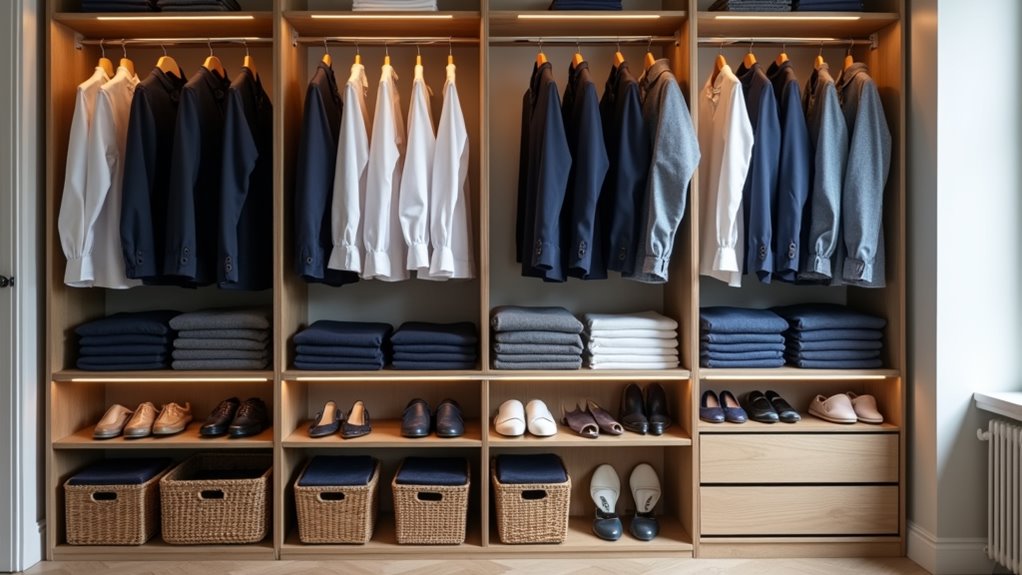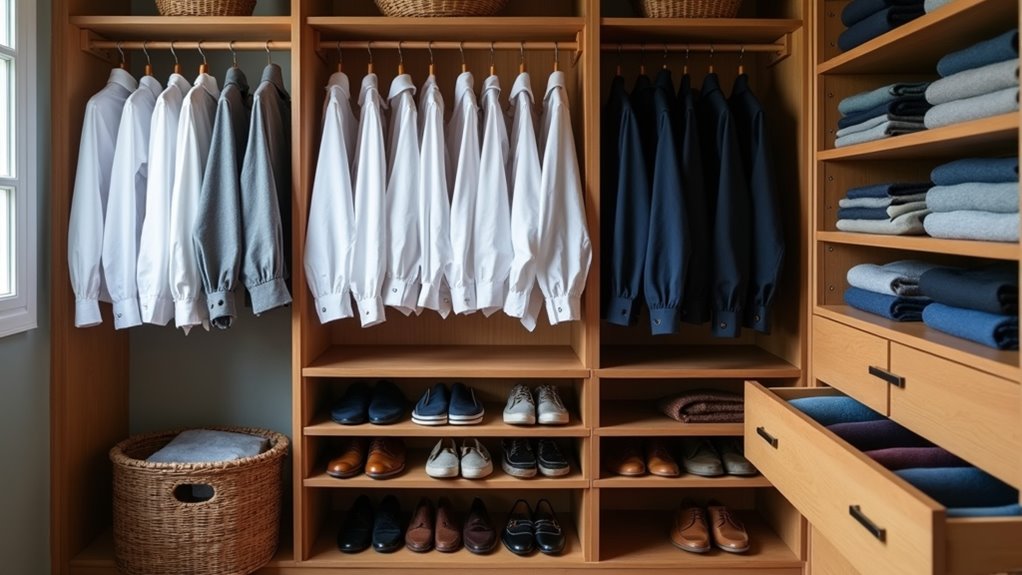
The Home Edit method has three stages. First, you edit, keeping only pieces you love, need, or use. Next, you categorize into zones like workwear, outerwear, shoes, and accessories. Then you contain everything with clear bins, dividers, and labels. Within each zone, you’ll arrange clothes in rainbow order, then brown, gray, black, and white. Color becomes a visual label, so you’ll find things faster. Keep going to see how to adapt it to your closet.
Key Takeaways
- The Home Edit method follows three stages: edit to keep only loved, needed, or used items, then categorize, then contain.
- Group clothing into zones like everyday wear, workwear, workout clothing, outerwear, shoes, and accessories before applying any color order.
- Arrange each category in ROYGBIV rainbow order, with pink joining reds, followed by brown, gray, black, and white.
- Use clear bins, drawer dividers, and labels on every container so items stay visible and always return to a set home.
- Prioritize function by sorting categories first, since color-only sorting can blur workwear with loungewear and bury everyday favorites.
What is the Home Edit closet method and how does it work

The Home Edit closet method is a three-stage organizing system (edit, categorize, and contain) that turns a packed closet into one where every item is easy to find. First, you empty the closet and keep only pieces you love, need, or use. Next, you create zones for everyday wear, workwear, workout clothing, outerwear, shoes, and accessories. Within each zone, you arrange items in rainbow order, followed by brown, gray, black, and white. Finally, you add bins, dividers, and labels so every item has a home. These home edit closet organization tips work because color acts as a visual label, helping you find outfits faster and put things back exactly where they belong.
How does the Home Edit color order compare to other systems
The Home Edit color order sorts by category first, then by ROYGBIV within each category, while most other systems rely on color alone, category alone, or frequency of wear. Color works inside the categories you’ve already created rather than serving as the main organizer.
| System | How It Sorts |
|---|---|
| The Home Edit | Category first, then ROYGBIV |
| Color-only | All items by shade |
| Category-only | Type or use, no color |
| Frequency-based | Most-worn items front |
You’ll find pieces faster because each zone stays defined, and color acts as a visual label for putting things back. Pink joins red, while brown, gray, black, and white follow the rainbow. If you’d rather sort by frequency, keep everyday wear accessible and color-sort within it. This hybrid approach gives you clear structure without forcing an overly specific system.
How do you arrange clothes in rainbow order

Arrange clothes in rainbow order by sorting them into categories, then ordering each category by ROYGBIV: red, orange, yellow, green, blue, indigo, and violet. This keeps tops, pants, and dresses separate while giving every section a clear visual flow.
- Group pink with red-toned pieces at the start of each section.
- Place brown, gray, black, and white after the rainbow shades.
- Use matching hangers and face garments the same direction.
- Keep a color wheel handy for tricky in-between shades.
- Return each item to its exact color spot after wearing it.
The home edit color order works like a built-in label, so you’ll spot what you need faster and put things away without guessing. Start with one small section if your closet feels overwhelming, and you’ll see results quickly.
How do clear bins and labels hold the system together
Clear bins and labels hold the system together by keeping every item visible and giving it a set home, which extends your rainbow order from the hanging rail to shelves, drawers, and corners where smaller items tend to pile up. Group accessories, socks, belts, and scarves by category first, then place each group in its own container. Clear bins let you spot contents at a glance, so you won’t dig through stacks to find one item. Add a label to every bin, basket, and box so you always know where things belong. Labels turn the home edit closet organization into a system you can maintain, not just admire. Use drawer dividers for smaller pieces and over-the-door organizers to claim vertical space. Leave breathing room on shelves, though; a little empty space keeps everything easy to reach and return daily.
Where does the color-first approach fall short

The color-first approach falls short because sorting by color alone can bury function under aesthetics, even though a rainbow rail looks striking. You might reach for a red blouse and find a wool coat beside it. A home edit closet works best when you set categories first and treat color as a finishing layer. Watch for these pitfalls:
Sort by category first, then color. A rainbow rail looks striking, but function should always come before aesthetics.
- Mixed uses: Workwear and loungewear blur together, slowing busy mornings.
- Neutral overload: Rows of black, gray, and white make shades hard to tell apart.
- Lost lengths: Long dresses beside short tops create an uneven hemline.
- Hidden favorites: Frequently worn pieces end up tucked away instead of within reach.
- Rigid upkeep: One new purchase can force you to shift an entire section.
Start with zones, then color-sort within each. You’ll keep the appeal while everything stays easy to find.
How do you adapt the method to a custom closet
To adapt the method to a custom closet, build the layout around your categories rather than fitting your clothes into whatever space is left. Start by decluttering, then measure what remains in each zone. Assign long-hang sections to dresses and skirts, double rods to shirts and folded trousers, and shelves or drawers to workout clothing and accessories. Place everyday wear at eye level and move off-season pieces higher. Give each zone its own footprint, then color-sort within it so ROYGBIV runs cleanly across every rail. Specify matching hangers and drawer dividers from the start, and add clear, labeled bins for smaller items. The best home edit closet ideas leave breathing room, so don’t build storage for every inch. Spare space helps your system absorb new pieces.
How do you start a Home Edit closet in your home
To start a Home Edit closet, empty your closet completely so you can see everything you own and how much space you’re working with, and hold off on buying bins or matching hangers until you’ve done this. Then follow these steps to build the home edit closet one decision at a time:
Empty your closet completely before buying bins or matching hangers, so you can see everything you own and the space you have.
- Edit first: keep only pieces you love, need, or actually wear.
- Start small: tackle one shelf or section if the whole closet feels overwhelming.
- Create zones for everyday wear, workwear, workout clothes, outerwear, shoes, and accessories.
- Color-sort within each zone using ROYGBIV, then add brown, gray, black, and white.
- Measure your space before choosing bins, dividers, or clear containers.
Leave room on shelves and rails so the system stays easy to maintain. With everything in its own home, putting items back feels natural.
Create a Custom Closet That Keeps Everything Organized
If your closet needs more than rainbow sorting and storage bins, Creative Closet Design creates custom closet systems with dedicated clothing zones, adjustable shelving, drawers, and accessory storage. Serving Lakeland, Auburndale, Winter Haven, Plant City, Polk County, and Hillsborough County, our designers consider your wardrobe collection, available space, and organizing preferences before planning your layout. Call Our Team to schedule your free design consultation.
Frequently Asked Questions
Where Do Patterned or Multicolored Garments Go in Rainbow Order?
Place each patterned or multicolored piece by its dominant shade, so a mostly blue floral blouse sits with your blues. If no single color stands out, you can file it in its own spot near the neutrals at the end, after brown, gray, black, and white. A color wheel helps with tricky blends. Whatever you choose, stay consistent within each category, and you’ll find pieces faster and return them easily.
How Often Should You Declutter a Home Edit Closet?
There’s no fixed schedule, so let your closet tell you when it’s time. Declutter whenever you swap off-season clothing out of the active space, since you’re already handling every single piece. Keep only what you truly love, need, or use. Between edits, follow a one-in, one-out rule so new items don’t crowd your zones. If returning things to their color spot gets tricky, edit again, starting with one small section.
Does the Home Edit Method Work for Kids’ Closets?
Yes, you can adapt it for kids’ closets by keeping the system simple. Start by decluttering outgrown or unworn pieces, then create broad zones like school clothes, playwear, pajamas, and shoes. Color-sort within each zone so your child can spot items and put them back. Use clear bins with labels, keep everyday pieces within easy reach, and leave breathing room so they’ll maintain it. Rainbow order becomes an easy visual cue.
Where Should Off-Season Clothing Be Stored When Closet Space Is Limited?
Move your off-season clothing out of your active closet area so everyday pieces stay visible and easy to reach. Before you pack anything, declutter: keep only what you love, need, or actually wear. Then store those pieces in clear bins or baskets so you can spot items quickly, and label each one by category. You’ll free up breathing room, keep your color order intact, and make seasonal swaps feel effortless.
How Does a One-In, One-Out Rule Keep the Closet Organized?
A one-in, one-out rule stops new pieces from crowding the system you’ve built. Each time you bring home a sweater, you donate or remove one you don’t love or wear. That keeps your categories from overflowing, preserves breathing room on rails and shelves, and protects your color order. You’ll still find items quickly and put them back easily, so your closet stays functional instead of slowly sliding back into clutter.