Start by emptying your closet and sorting everything into keep, donate, repair, and discard piles. Clean the shelves and rods, then measure width, height, and depth before you buy organizers. Next, assign zones. Hang shirts and jackets on 40-inch and 80–82-inch double-hang rods, and give coats their own long-hang space. Fold knitwear on 12–16-inch-deep shelves. Keep socks in drawers. Once your zones are set, you’ll see how small tweaks keep everything easy to find.
Key Takeaways
- Empty the closet completely, sort items into keep, donate, repair, and discard piles, then clean and measure before buying organizers.
- Install double-hang rods at about 40 and 80–82 inches for shirts, jackets, and trousers, reserving separate long-hang space for coats.
- Fold knitwear on shelves 12–16 inches deep instead of hanging, and store shoes on dedicated 12–14-inch-deep shelves.
- Keep socks and underwear in divided drawers, hang belts on hooks, and store watches in lined trays to prevent scratches.
- Place most-worn pieces at eye level, and store off-season clothes in labeled clear totes on high shelves.
How do you organize a men’s closet for better storage

To organize a men’s closet for better storage, start with a full reset, then build zones that fit how you dress. Empty everything, then sort items into keep, donate, repair, and discard piles. Clean shelves, rods, and floors, and measure width, height, and depth before buying organizers. Next, plan your wardrobe organization around zones: double-hang rods at about 40 and 80–82 inches for shirts and jackets, a separate long-hang section for coats, and 12–16-inch-deep shelves for folded knitwear. Give shoes their own 12–14-inch cubbies and add hooks or bins for belts, scarves, and jewelry. Keep everyday pieces at eye level and store out-of-season clothing in labeled, clear totes up high. Finally, adjust your men’s closet storage whenever your wardrobe’s needs change. Adjusting your women’s closet storage can greatly enhance your daily routine and make getting dressed more enjoyable. Consider using matching bins and dividers to help categorize items like shoes, accessories, and seasonal clothing.
How do you plan storage for a man’s wardrobe
Plan storage for a man’s wardrobe by matching each zone to the clothing it’ll hold. Divide the closet into short-hang, long-hang, folded-clothing, shoe, and accessory zones, then group items by type (shirts, trousers, jackets, and suits) so retrieval stays fast. An easy-access wardrobe setup not only simplifies dressing but also enhances overall organization. Implementing labeled bins or drawers can further streamline this process, making it easier to locate specific items.
| Zone | Best For | Key Measurement |
|---|---|---|
| Double-hang | Shirts, jackets | Rods at 40 and 80–82 inches |
| Long-hang | Coats, long garments | Full vertical clearance |
Fold knitwear on shelves 12–16 inches deep and store shoes on shelves 12–14 inches deep. Keep frequently used items at eye level. Reserve high or low shelves for seasonal belongings, and use drawers for socks and underwear to keep categories contained. Adjustable rods and shelves keep your organized wardrobe flexible, so your wardrobe organisation adapts as your clothing mix changes.
How do you handle suits, shirts, and work clothes
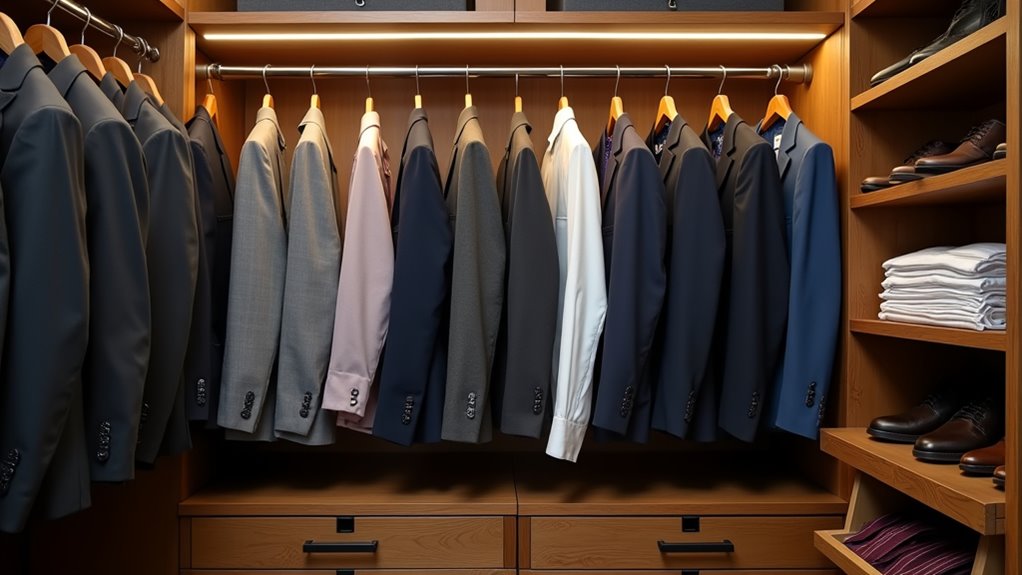
Hang suits, shirts, and work clothes in the double-hang zone, where rods set around 40 and 80–82 inches create two levels for shorter garments. Put shirts and suit jackets on the upper rod and trousers on the lower one. Move long overcoats to long-hang space. Group each category together, then sort by color or formality so you can assemble outfits quickly.
Leave enough space between hangers to remove pieces without crushing them, since compressed fabric creases. Check that your closet’s about 24 inches deep so garments don’t press against the wall. Fold knit work sweaters, such as wool or cashmere, on shelves instead of hanging them. Keep everyday work clothes at eye level, and move occasional suits or seasonal pieces to less accessible spots.
Where do shoes, belts, and watches go
Shoes go on dedicated shelves or cubbies, belts hang on hooks, and watches sit in a shallow drawer with dividers or a lined tray. Keeping footwear separate from folded clothing keeps soles away from fabric and makes each pair easy to spot. Plan shoe shelves around 12–14 inches deep, and use vertical space and small containers for accessories.
Give shoes their own shelves, hang belts on hooks, and tuck watches into a lined drawer so everything stays visible and protected.
- Keep everyday shoes at eye level or waist height; move formal and seasonal pairs to higher or lower shelves.
- Install hooks on a wall or door for belts, so you can see every option at once.
- Store watches in a shallow drawer with dividers or a lined tray to prevent scratches.
- Use small bins for cufflinks, tie clips, and sunglasses, grouping each category in its own container.
- Label bins for occasional-use accessories so you’ll find them without opening each.
How do you build a simple grab-and-go routine

Build a grab-and-go routine by keeping your most-worn pieces at eye level, grouped by type, so you can assemble an outfit without searching.
Hang your weekday shirts, trousers, and jackets on the upper and lower double-hang rods, keeping each category together and leaving space to slide hangers freely. Fold everyday knitwear on shelves at chest height, stacking no higher than you can see. Keep socks and underwear in nearby drawers with dividers, and put your regular shoes on the closest shelf. Hook your daily belt and watch beside them. Move occasional-use and out-of-season items to high or low storage in labeled clear totes so they don’t crowd the front. Once a month, check what you actually wore and adjust rods or shelves to match.
How does a compact closet still fit everything
A compact closet fits everything when you edit first, measure precisely, and assign every inch a specific job. Remove everything, sort it into keep, donate, repair, and discard piles, and cut duplicates you don’t wear. Then measure width, height, and depth before buying a single organizer.
- Double-hang shorter garments: Set rods around 40 and 80–82 inches to stack shirts and jackets on two levels.
- Isolate long-hang space: Give coats a dedicated section instead of cramming them into double-hang zones.
- Size shelves correctly: Use 12–16-inch-deep shelves so folded stacks don’t hide items at the back.
- Go vertical: Add hooks for belts and scarves, and use bins for small accessories.
- Rotate seasonally: Store clean off-season clothes in labeled clear totes on a high shelf.
What does a men’s closet need to stay organized day to day
A men’s closet needs clear zones, easy access, and a little routine maintenance to stay organized day to day. Group shirts, trousers, jackets, and suits so you can grab what you need without searching. Keep everyday pieces at eye level, and move seasonal or occasional-use items to high or low shelves. Leave enough space between hangers to pull clothes out without crushing nearby garments. Give socks, underwear, and other small items their own drawers or compartments, and use bins or dividers for accessories. Add hooks for belts and scarves, and assign shoes to dedicated shelves or cubbies. Label any storage bins you can’t see into quickly. Return items to their zones as you use them, and reassess the layout when your wardrobe changes, adjusting rods and shelves to fit. Creating a boutique closet aesthetic involves not just organization, but also personalization. Consider adding decorative elements like framed pictures or chic storage solutions to enhance the visual appeal.
Organize Your Men’s Closet Around Your Daily Routine
If shirts, suits, shoes, and accessories are competing for space, Creative Closet Design creates custom closet systems with double-hanging rods, shoe shelves, drawers, and dedicated accessory storage. Serving Lakeland, Auburndale, Winter Haven, Plant City, Polk County, and Hillsborough County, our designers assess your wardrobe, available space, and storage needs. Call Our Team to schedule your free design consultation.
Frequently Asked Questions
What Type of Hangers Work Best for Men’s Clothing?
Use wooden or contoured hangers with broad, shaped shoulders for suits, jackets, and coats. They’ll hold each garment’s structure. Choose slim velvet or flocked hangers for shirts so they won’t slip and you’ll save rod space. Pick clamp or bar hangers for trousers. Don’t hang wool or cashmere knitwear; fold it instead. Match hanger styles consistently within each zone, and leave room to remove hangers without compressing your clothing.
How Often Should a Man Declutter and Edit His Closet?
Edit your closet at each seasonal changeover, roughly twice a year, when you’re already swapping warm- and cold-weather clothing. Pull items out, then sort them into keep, donate, repair, and discard groups, cutting unworn pieces and duplicates. Clean shelves and rods before returning anything. Label out-of-season bins clearly. Between edits, reassess whenever your wardrobe mix changes, and adjust rods and shelves so you’re storing only what you’ll actually wear.
Should Wool and Cashmere Sweaters Be Hung or Folded?
Fold them. Hanging stretches wool and cashmere knits out of shape, so you’ll keep them looking better on shelves. Choose shelves about 35–40 centimeters deep with 30–35 centimeters between levels, and don’t stack folded sweaters too high or too deep. Otherwise, you’ll lose sight of the ones in back. Put your most-worn sweaters at eye level, and store out-of-season knits in labeled, clear totes on a high shelf.
How Deep Should a Closet Be for Hanging Garments Comfortably?
You’ll want a closet about 24 inches deep so hanging garments don’t press against the back wall. That depth gives shirts, jackets, suits, and coats enough clearance to hang freely. Before you buy organizers or move rods, carefully measure the closet’s width, height, and depth. Then group similar garments together and leave enough space between hangers so you can remove each piece without compressing the clothes around it easily.
How Do You Protect Stored Clothes From Moths and Moisture?
Store clean garments, since moths target body oils, sweat, and food residue. You’ll want sealed clear totes for out-of-season pieces on a high shelf away from damp floors. Fold wool and cashmere rather than hanging them, and add cedar blocks or lavender sachets. Keep the closet clean, dry, and dust-free, leave space between items for airflow, and label bins so you can check contents without opening each one.