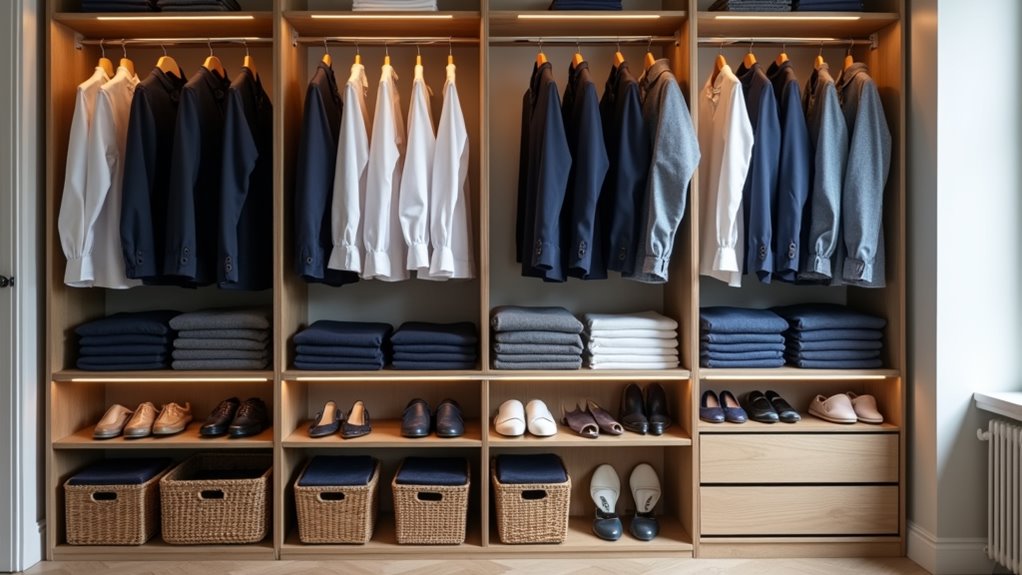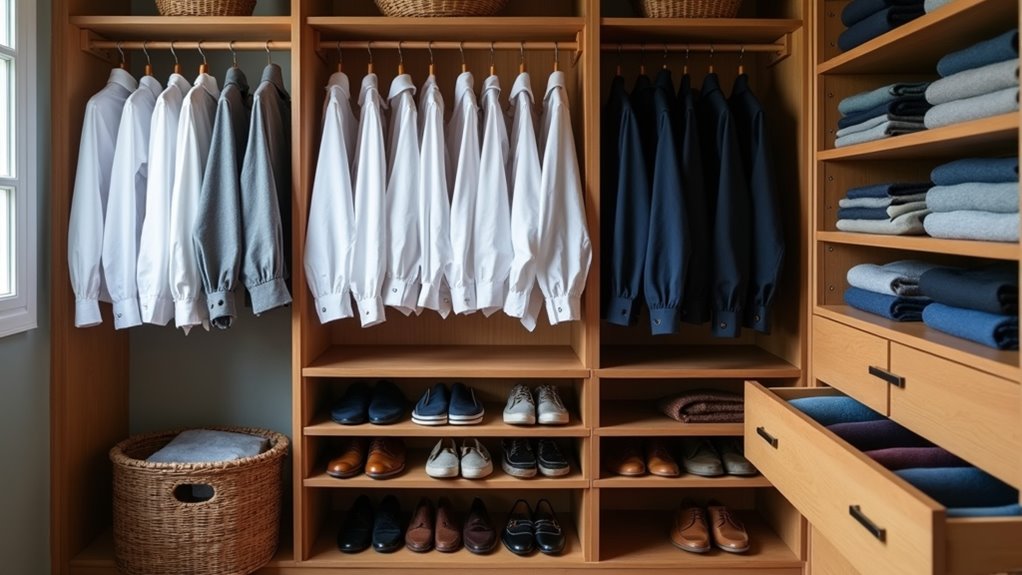
Start by emptying your closet completely so you can see every piece at once. Keep what you’ve worn in the past year, and donate or discard the rest. Wipe down shelves and rods before you put anything back. Then group clothes by type and color. Hang everyday tops, trousers, and dresses at eye level, and move seasonal or occasion pieces higher or lower. Next, you’ll see how zoning, dress storage, and accessories keep it working.
Key Takeaways
- Empty your closet completely, then sort every garment into keep, donate, and discard piles, removing items unworn in the past year.
- Divide the closet into zones for workwear, casual clothing, exercise gear, and occasion wear to speed up outfit building.
- Place everyday tops, trousers, and dresses at eye level, moving seasonal or special-occasion pieces to high or low shelves.
- Hang dresses on rods matched to their length, leaving space between hangers so delicate fabrics stay wrinkle-free.
- Maintain organization with a weekly 10-minute reset and a one-in, one-out rule for new clothing.
How do you organize a women’s closet for everyday use

Organize a women’s closet for everyday use by emptying it completely so you can see every garment at once and spot duplicates or pieces you haven’t worn in the past year. Sort items into keep, donate, and discard piles, then clean the shelves and rods. Group clothing by type, then by color, so you can build outfits quickly. Place daily-wear pieces at eye level and move seasonal items to higher shelves. Hang dresses on a long-garment rod with blazers and button-downs nearby, and fold bulky sweaters to prevent stretching. Practical women’s closet organization ideas include hooks for belts and scarves and dividers for jewelry.
How do you zone a woman’s wardrobe for daily wear
Zone a woman’s wardrobe for daily wear by dividing the closet into practical zones based on how you dress each day: workwear, casual clothing, exercise gear, and occasion wear. This is how to organize a woman’s closet so outfits come together fast.
| Zone | Placement |
|---|---|
| Workwear | Eye-level rod, grouped by color |
| Casual clothing | Reachable shelves and middle drawers |
| Exercise gear | Low bins or drawers |
| Occasion wear | High shelves or rod ends |
Within each zone, sort by garment type, then arrange by color so you can scan options quickly. Keep matching pieces and favorite combinations side by side, and store shoes with shoes and bags with bags using shelf dividers. Of women’s closet organization ideas, zoning is key if you’re learning how to organize women’s closet space, and it cuts morning decision time.
What is the best way to hang dresses so they keep their shape
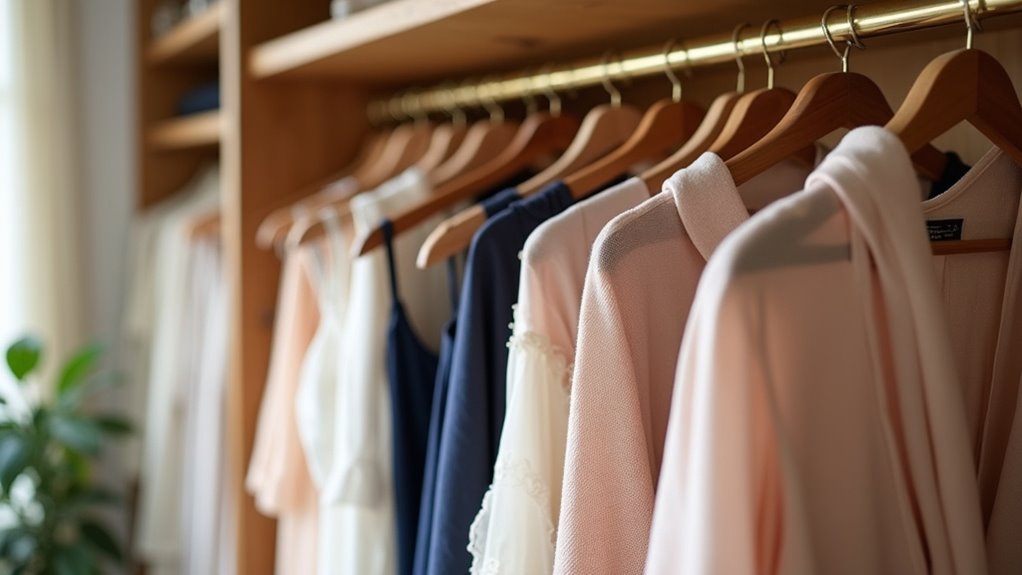
Dresses keep their shape best when they hang on a rod height that matches their length, so the hems fall freely without bunching on the closet floor or folding against shelves below. Measure your longest dresses before you set rod positions, then reserve the tallest section for maxi and gown lengths. Keep shorter dresses on a medium-height rod, and use the space beneath for folded stacks or shoes. Install adjustable rods so you can raise or lower them as your wardrobe changes. Give wrinkle-prone and delicate dresses their own hanging space rather than folding them, and leave room between hangers so fabric doesn’t crush. Group dresses by occasion, then by color, so you can scan options quickly. Move special-occasion pieces to less accessible rod sections to free up prime space.
How do you make the morning routine faster
Make your morning routine faster by organizing your closet so your daily choices sit right in front of you, and you’re not digging past occasion wear or off-season pieces. Place everyday tops, trousers, and dresses at eye level, and move seasonal or special-occasion clothing to high or low shelves. Within each category, arrange garments by color so you can scan options in seconds. Keep matching pieces and your go-to outfit combinations side by side, which cuts decision time.
Store frequently worn shoes and bags in reachable cubbies or floor-level zones. Hang belts and scarves on hooks, and use drawer trays for jewelry so nothing tangles. Finally, spend 10 minutes each week rehanging garments, refolding stacks, and clearing empty hangers so the system stays ready every morning.
Where do bags, jewelry, and accessories go
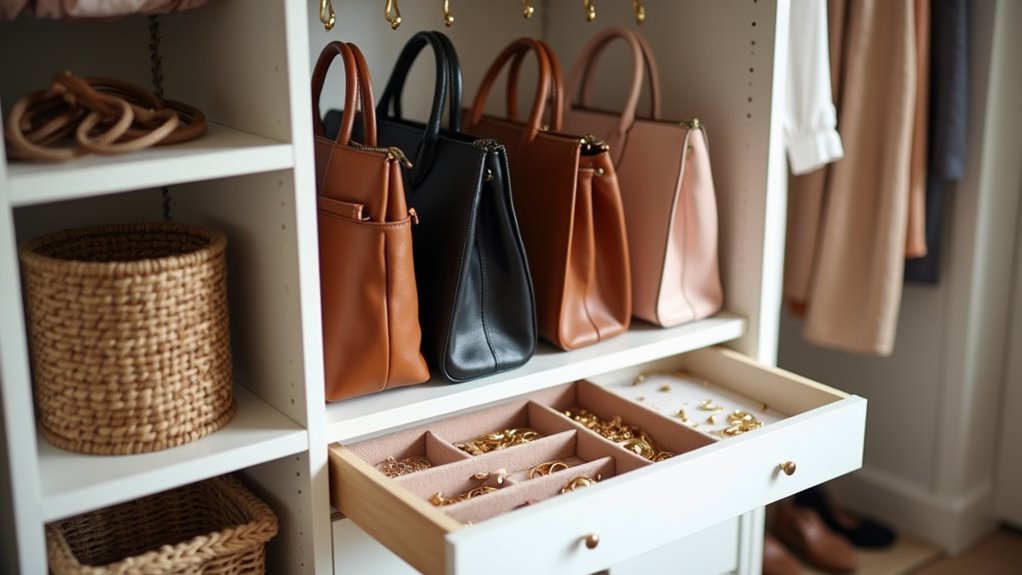
Bags go upright on shelves, belts and scarves go on hooks, and jewelry goes in divided drawers or trays, each in its own zone so nothing drifts into your clothing space or gets buried in a drawer. Store bulky handbags upright rather than hanging them by their straps, which can distort their shape. Use shelf dividers or cubbies to keep each bag standing separately, and put the ones you carry most often within easy reach. Hanging belts and scarves lets you see every option at a glance. For jewelry, choose drawer dividers or trays that give rings, earrings, and necklaces separate compartments, which prevents tangling and cuts visual clutter. Keep everyday pieces in the front sections and occasion items toward the back. After use, return each accessory to its spot so the system holds.
How do you fit seasonal pieces without crowding
Rotate seasonal pieces out of your main closet space, storing off-season clothing in labeled bins on high shelves or under the bed so only what you’re currently wearing occupies the rods and eye-level shelves. Choose clear bins when you want to identify contents at a glance, and note the season and category on each label. Measure your shelf depth and under-bed clearance before buying containers so everything fits. Add vertical capacity with extra shelves or double rods if your space still feels tight.
Swap the bins’ contents with the clothing on your rods at each seasonal change. Reassess anything you didn’t wear while packing items away, and donate pieces that no longer suit your current needs instead of storing them another full year.
How do you design a women’s closet that stays organized
Design a closet that makes putting things away as easy as taking them out, and it will stay organized instead of sliding back into chaos within weeks. Give every category a designated zone, and return clothing, shoes, and accessories there after each use. Install adjustable rods and shelves so your layout can change as your wardrobe does. Use dividers, bins, and drawer trays to keep folded stacks and small accessories from spilling into one another. Then build in upkeep: spend 10 minutes weekly rehanging garments, refolding stacks, and clearing empty hangers. Each season, reassess what you haven’t worn and donate or store it. Follow a one-in, one-out rule, so every new piece replaces an old one instead of crowding your rods.
Create a Women’s Closet That Simplifies Your Daily Routine
If dresses, shoes, bags, and accessories are taking over your closet, Creative Closet Design creates custom closet systems with adjustable hanging sections, drawers, shelving, and dedicated accessory storage. Serving Lakeland, Auburndale, Winter Haven, Plant City, Polk County, and Hillsborough County, our designers consider your clothing collection, available space, and daily storage needs. Call Our Team to schedule your free design consultation.
Frequently Asked Questions
How Do You Decide Which Clothes to Keep, Donate, or Discard?
You decide by judging each piece on fit, condition, personal style, and whether you’ve worn it in the past year. First, empty your closet so you can spot duplicates and unused items. Then sort everything into three piles: keep, donate or sell, and recycle or discard. If you’re unsure about something, try the five-outfit test. Keep it only if you can build five wearable looks. Otherwise, let it go.
What Is the Five-Outfit Test for Uncertain Clothing Pieces?
The five-outfit test helps you decide whether an uncertain piece earns its spot: if you can pair it with other items you own to create at least five wearable looks, you keep it. If you can’t, move it to your donate, sell, or discard pile. Run this test after you’ve checked fit, condition, personal style, and whether you’ve worn it in the past year, so you’re judging its versatility last.
Should Sweaters and Heavy Knits Be Folded or Hung?
Fold them. You’ll prevent the stretching and misshapen shoulders that hangers can cause in bulky sweaters and heavy knits. Stack them neatly on shelves, and use shelf dividers, bins, or baskets to keep each pile contained and upright. Keep everyday knits at eye level where you can grab them easily, and move out-of-season ones into labeled bins on higher shelves. Save your hangers for wrinkle-prone dresses, blazers, and button-down shirts.
What Should You Measure Before Buying Closet Organizers?
Measure your closet’s width, height, and depth before you buy any organizers, and take inventory of what you own at the same time. Your inventory shows how many short, medium, and long garments you’ll hang, how many folded stacks you’ll shelve, and how many shoes and bags you’ll store. Then you can plan double rods, extra shelves, or hanging organizers that’ll fit your vertical space and actual wardrobe without guesswork.
How Should You Clean a Closet Before Returning Clothes?
Clean the shelves, rods, and floor after you’ve emptied the closet and before you return anything. Work from top to bottom so dust falls onto surfaces you haven’t cleaned yet. Wipe each shelf, then wipe down every rod, and finish by cleaning the floor. With the space bare, you’ll also spot where shelf dividers, bins, or adjustable rods could help. Don’t rehang anything until every surface is clean and dry.