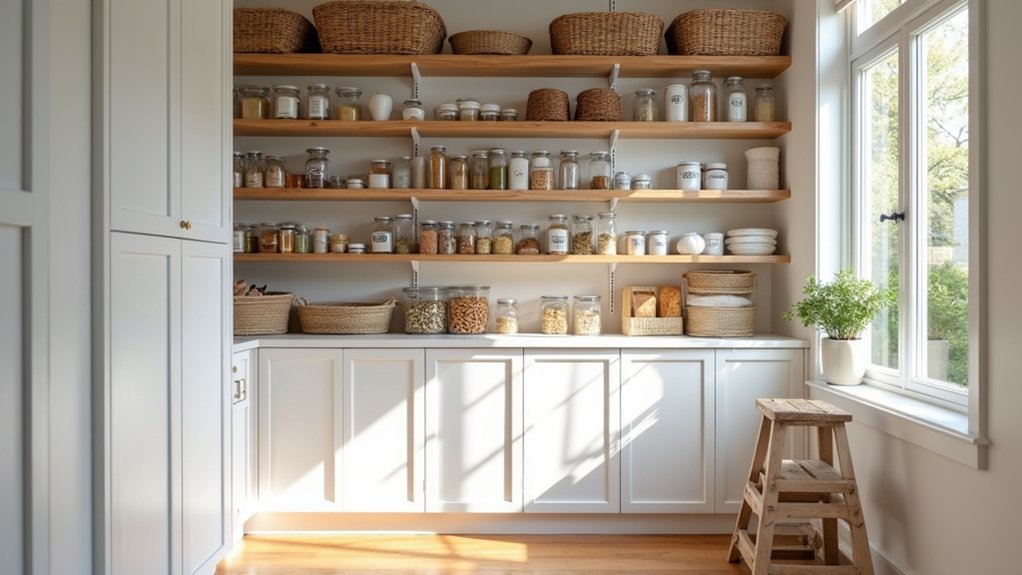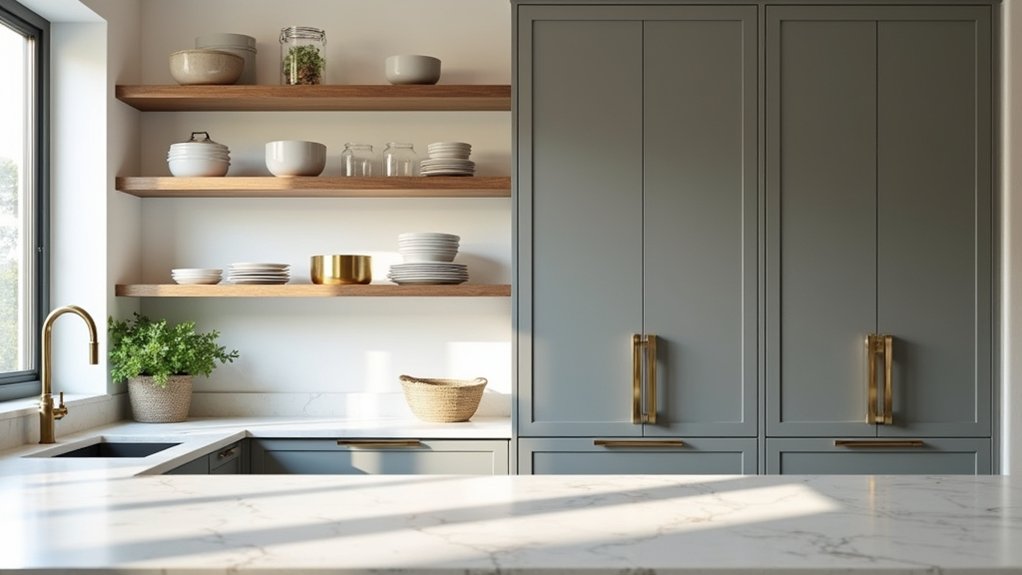
A hanger custom shoe organizer works by suspending from your closet rod using built-in hooks, creating vertical storage without drilling or tools. You’ll find multiple fabric or mesh pockets stacked downward that hold 6-20 pairs of shoes in the space of just two hanging garments. The compartments keep each pair separated and accessible at eye level, maximizing your closet’s vertical real estate while maintaining organization. You can adjust configurations to accommodate different shoe sizes, and the following sections will show you how to select materials, optimize installation, and customize your system.
Understanding the Basic Structure and Components
Load capacity concerns become critical when you’re selecting your organizer. Most units support lightweight footwear, think flats, sandals, and sneakers, rather than heavy boots. The built-in hooks or metal hangers attach directly to standard closet rods without requiring tools or permanent installation. This vertical design optimizes your available space while keeping shoes accessible and organized at eye level. The system is adjustable to varying widths, allowing you to accommodate different shoe sizes and styles within the same organizer. Multiple pockets or compartments keep each pair of shoes separated and prevent them from rubbing against each other. The sag-free metallic shelves maintain their shape even with regular use, ensuring long-lasting durability for your footwear storage.
Choosing the Right Materials for Your Needs
- Material durability: Metal and solid wood withstand heavy use long-term, while particleboard suits temporary needs at a lower cost.
- Climate conditions: Plastic excels in humid bathrooms; metal requires rust-proofing in moisture-prone areas; wood needs proper finishing for wet environments.
- Budget alignment: Particleboard and plastic offer maximum affordability for tight budgets, while bamboo balances mid-range pricing with strength. MDF presents cost-effective design variety through its smooth surface that accepts multiple finishes and painting treatments.
- Environmental impact: Bamboo provides renewable sustainability; metal’s recyclability offsets production costs; plastic involves fossil fuels with lengthy decomposition. Storage containers and organizers complement shoe cabinets by providing additional compartmentalization for accessories and smaller footwear items.
- Shelf design: Solid shelves prevent debris from dropping onto footwear stored on lower levels, while mesh designs allow airflow but may permit particles to fall through.
Match your material choice to your specific storage location, weight requirements, and long-term goals for best organizer performance.
Installation Methods and Mounting Options
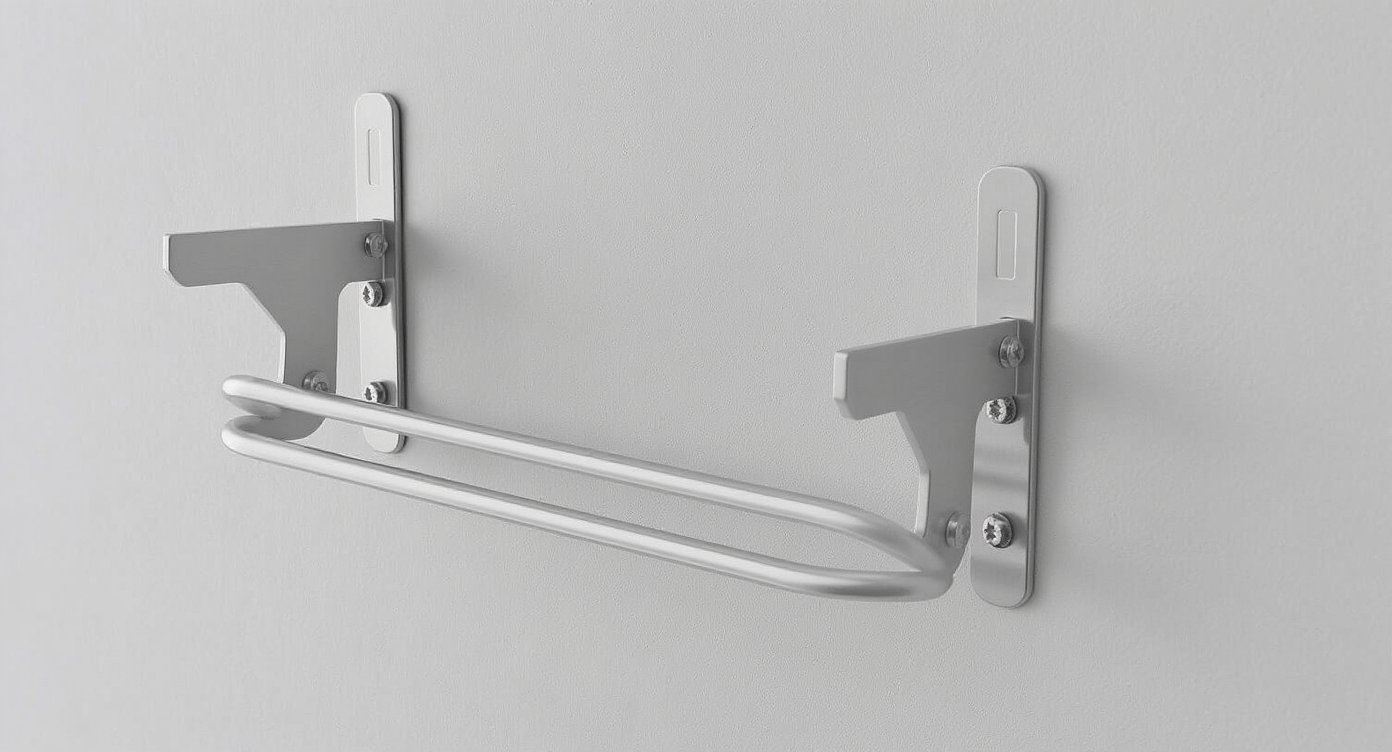
Successfully installing your hanger custom shoe organizer depends on selecting the right mounting method for your space and living situation. Wall-mounted units offer stable installation considerations through anchors and screws, supporting multiple pairs while allowing vertical or side-by-side configurations. Over-the-door hangers require no drilling, making them perfect for renters and seasonal storage shifts. Closet rod mounting uses hanger-style hooks for tool-free setup, enabling quick reorganization when switching shoe collections. Freestanding organizers need no mounting hardware and can be repositioned effortlessly. Cabinet flip-down drawers involve precise hinge installation for concealed storage. Your choice should balance permanence needs with flexibility; renters benefit from removable options, while homeowners can invest in wall-mounted systems. For those with limited space, consider utilizing dead space behind doors to maximize your shoe storage potential. Consider weight capacity, available space, and how frequently you’ll reorganize before committing to a mounting method.
Maximizing Vertical Space in Small Areas
You can transform wasted vertical space into functional storage by strategically positioning your custom shoe organizer from floor to ceiling. Over-the-door hanging solutions require no drilling while instantly creating storage capacity for 12+ pairs in otherwise unused areas. Adjustable track systems let you configure multiple organizers at varying heights, maximizing every inch of your closet’s vertical real estate to accommodate different shoe types and sizes. The stackable design allows you to create an 8-tier tower that holds 16-24 pairs while occupying just 1.47 square feet of floor space, making it ideal for compact areas. Hanging shoe organizers represent 20% of the market segment, offering efficient solutions for vertical storage optimization. These organizers help maintain a clutter-free living space while keeping your shoes accessible and well-maintained.
Utilizing Closet Height Effectively
Most closets waste up to 50% of their vertical potential because standard single-rod configurations ignore the valuable space above and below eye level. You can transform this inefficiency by measuring shelf heights and strategically utilizing ceiling space for maximum storage capacity.
Implement these proven vertical strategies:
- Install double-rod systems to separate short items below from long garments above, instantly doubling hanging capacity
- Add adjustable shelving from floor to ceiling, positioning frequently used items at arm level and seasonal storage higher
- Mount pull-down rods at ceiling height to access off-season clothing without sacrificing precious middle-zone space
- Place stacking bins on uppermost shelves for rarely needed items, keeping a step stool nearby for safe retrieval
This systematic approach guarantees every vertical inch serves a functional purpose. Configure shelving units to fit perfectly under heat ducts or other architectural obstacles that typically create dead zones in closet spaces. Vertical storage solutions create a sense of openness by drawing the eye upward and making the space feel larger than its actual footprint. Before implementing these solutions, measure your closet’s dimensions, height, width, and depth to identify specific gaps and determine which vertical storage methods will deliver the greatest impact in your unique space.
Over-the-Door Hanging Solutions
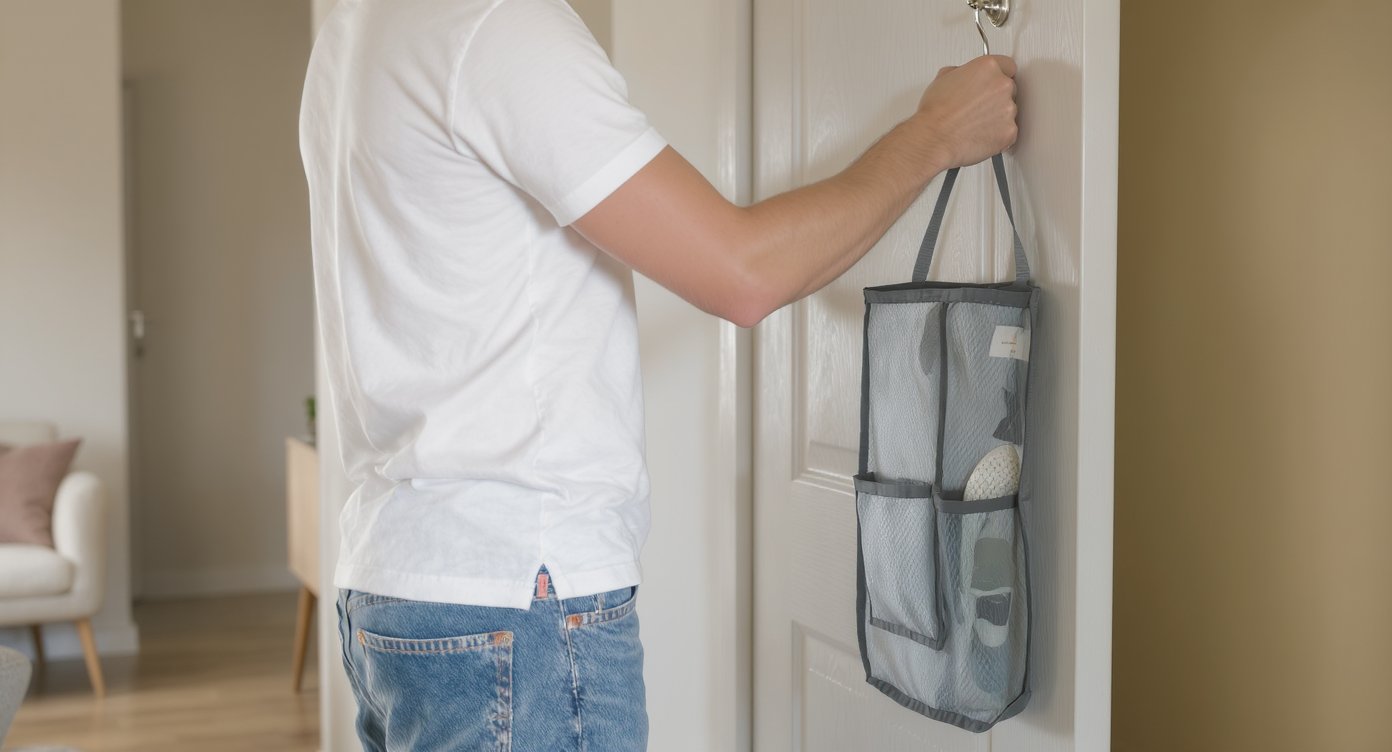
Over-the-door hanging solutions convert dead space into functional storage zones that require zero floor area and no installation expertise. You’ll hook the organizer onto any standard door using included hardware, typically compatible with 1⅜” and 1⅝” thicknesses, without drilling or damaging surfaces. This door-mounted features approach suits renters and students who can’t make permanent modifications.
Each over-the-door storage unit provides 20, 24 pockets that keep shoes, accessories, or supplies visible and accessible at eye level. You’ll reduce bending and stretching while maintaining instant visibility of contents. The lightweight construction allows easy relocation between rooms as your needs evolve. You can transfer the organizer from bedroom to bathroom to pantry, adapting your space without purchasing additional furniture or undertaking costly renovations. The clear pocket design lets you organize socks by color and length, making morning routines more efficient. Install the organizer at eye level and within arm’s reach to maintain organization of frequently used items throughout your home.
Adjustable Track Installation Options
When vertical wall real estate remains underutilized, adjustable track systems transform that height into tiered shoe storage without consuming precious floor space. You’ll mount tracks directly to walls using multiple anchor types, wall clips or heavy-duty anchors, ensuring stability across drywall, studs, or masonry. Shelves snap or twist onto the tracks at customized intervals, typically 8, 10 inches apart for standard footwear.
Key installation steps include:
- Positioning tracks 8, 10 inches apart horizontally for ideal support
- Securing brackets that hold each shelf, rated up to 30 lbs per tier
- Stacking units vertically to enhance closet height
- Placing heavier boots on lower shelves within weight capacity limitations
You can adjust shelf heights anytime, accommodating seasonal footwear changes while maintaining airflow through ventilated designs that prevent mold buildup.
Customizing Your Shoe Organizer System
You’ll achieve maximum efficiency by tailoring your hanging shoe organizer to match your specific footwear collection and available space. Start by evaluating material options, fabric, plastic, or metal, then adjust pocket configurations to fit everything from ballet flats to winter boots. Complete your system by incorporating hooks, clips, and accessory compartments that transform a basic organizer into an all-encompassing storage solution.
Selecting Materials and Styles
Four primary materials form the foundation of custom shoe organizers: wood, metal, fabric, and plastic. You’ll choose based on durability needs, weight capacity, and aesthetic preferences. Wood offers natural warmth and strength, while metal provides modern resilience. Fabric delivers lightweight flexibility, and plastic guarantees affordable maintenance.
Your style customization includes:
- Finish options, Paint, varnish, or stain to create unique color schemes matching your interior
- Hardware selection, Personalized hardware designs with stylish handles and decorative trims
- Configuration choices, Open shelving for accessibility or closed doors for concealed storage
- Design approach, Minimalist handleless panels versus ornate moldings
Consider hybrid designs combining materials, wood frames with fabric pockets or metal rods, to optimize versatility while maintaining your preferred aesthetic and functional requirements.
Adjusting Configuration and Layout
Once you’ve settled on materials and styling, the real functionality emerges through strategic configuration of your organizer’s internal layout. Shelf height maximization begins by measuring your shoes, from ballet flats requiring minimal clearance to knee-high boots needing substantial vertical space. You’ll reposition adjustable shelves to minimize wasted gaps, often achieving as little as 1″ above each pair for maximum density.
Personalized shelf spacing extends beyond height adjustments. You can incorporate modular sections with dividers separating different shoe types, install slanted shelves for showcasing favorites, or add pull-out trays for back-of-closet accessibility. Consider organizing by frequency of use, placing everyday footwear at eye level while seasonal items occupy higher or lower positions. As your collection evolves, you’ll reconfigure sections, add shelves, or expand modules to maintain ideal storage efficiency without wasted space.
Adding Hooks and Accessories
Strategic hook placement transforms a basic shoe organizer into a multipurpose storage system that adapts to your complete footwear collection and accessories. Integrated hook designs accommodate assorted attachment methods for expanding storage capacity without sacrificing floor space.
Versatile attachment methods boost your organizer’s functionality:
- S-shaped utility hooks clip onto reinforced grommets for hanging belts, bags, or scarves
- Adhesive-backed hooks provide tool-free installation for creating additional hanging points
- Clip-on bins attach directly to existing pockets for storing shoe polish and brushes
- Removable fabric pouches secure via Velcro loops for organizing laces and insoles
Snap-on fasteners and elastic attachments enable quick reconfiguration without permanent modifications. Metal and heavy-duty plastic hooks resist rust while supporting heavier items. Label holders identify sections, streamlining retrieval and maintaining organization across multiple users or footwear types.
Maintaining and Organizing Your Footwear Collection
A well-maintained footwear collection starts with proper cleaning before storage. Use a soft-bristled brush for leather, damp cloth for patent leather, and soap-water solution for canvas. Sort your shoes by season and purpose, then label storage boxes for quick access.
| Storage Solution | Best For | Key Benefit |
|---|---|---|
| Clear boxes | Display & protection | Easy identification |
| Shoe trees | Leather shoes | Maintains shape |
| Silica gel packets | All footwear | Controls moisture |
Maintain shape using shoe trees or stuffed tissue paper. Store shoes side-by-side rather than stacking to prevent warping. Place natural deodorizers like baking soda inside shoes while maintaining proper ventilation. Keep your collection in cool, dry areas away from direct sunlight. Rotate pairs regularly while inspecting for wear and damage, addressing repairs promptly to extend longevity.
Frequently Asked Questions
Can Hanger Shoe Organizers Damage Delicate or Expensive Footwear Materials?
Yes, hanger shoe organizers can damage delicate footwear through material compression and physical distortion. You’ll risk indentations on suede, warped leather from constant pressure points, and loosened embellishments from friction. To protect expensive shoes, use padded hangers with breathable fabric pockets, store one shoe per compartment, and avoid hanging fragile materials like patent leather or silk uppers. For high-value footwear, you’re better off choosing flat storage with proper support and humidity control instead.
How Much Weight Can a Typical Hanger Shoe Organizer Safely Hold?
You’ll find most hanger shoe organizers safely hold 15, 25 pounds with appropriate placement over sturdy doors or closet rods. Reinforced models can support up to 44 pounds maximum weight capacity. Distribute lightweight shoes like flats across multiple pockets to avoid overloading individual sections. For heavier boots, you’ll need sturdier construction with reinforced seams. Always check your door’s strength and mounting hardware stability before loading. Even weight distribution prevents sagging and extends your organizer’s lifespan while protecting your footwear investment.
Are Hanger Shoe Organizers Suitable for Storing Boots and Tall Footwear?
Yes, you’ll find hanger organizers suitable for boots if you choose models specifically designed for tall footwear. Look for sturdy construction considerations like reinforced metal hooks, heavy-duty fabric, and weight-rated hardware that can handle boots’ bulk. Check boot height requirements; you’ll need organizers with deeper pockets (typically 16+ inches) or extended hooks to properly accommodate shaft lengths. Over-the-door and wall-mounted options work best, while standard shoe organizers won’t provide adequate support or space.
Do Hanger Shoe Organizers Work Well in Humid or Damp Environments?
Hanger shoe organizers struggle in humid environments without proper precautions. You’ll face condensation buildup and mold growth if you’re not using ventilated designs with mesh materials. To make them work, you’ll need to add silica gel packets, guarantee adequate airflow, and regularly inspect your shoes. Place your organizer in well-ventilated areas, maintain 45-55% relative humidity, and avoid storing wet footwear. With these practical solutions, you’ll effectively prevent moisture damage.
Can Hanger Shoe Organizers Be Used in Retail Stores for Display?
You’ll find hanger shoe organizers work exceptionally well for retail display visibility. They provide space-saving organization by maximizing vertical areas while keeping merchandise accessible to customers. You can quickly reconfigure them to showcase different styles, adjust for seasonal promotions, or create eye-catching displays. They’re durable enough for high-traffic environments and simple to maintain. You’ll appreciate how they uncover product detection, encourage customer interaction, and optimize your floor space without significant fixture investments.