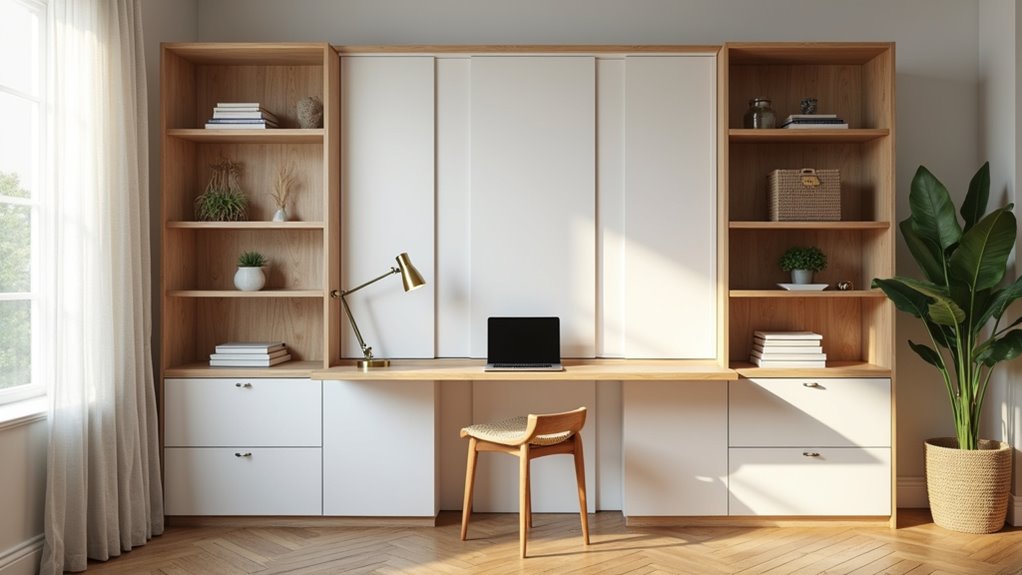
You can protect your wardrobe from damage by adding a few strategic closet upgrades. Padded or wooden hangers prevent stretching in blazers and delicates, while drawer organizers with dividers let you file-fold items upright to eliminate compression wrinkles. Shelf dividers keep sweater stacks from crushing, and breathable garment bags shield seasonal pieces from dust and moisture. Closet spacers maintain the 3cm gap needed for air circulation. Each add-on below offers specific benefits for different clothing types. If you’re considering upgrades, explore scratchresistant closet options available to safeguard your garments from daily wear. These innovative solutions not only protect your clothing but also enhance the overall organization of your space. With options designed for various needs, you can create a more functional and stylish wardrobe that stands the test of time.
Common Closet Mistakes That Damage Your Clothes
Your closet might be silently destroying your wardrobe right now. Overstuffed spaces create deep wrinkles and stretch seams beyond repair. When hangers can’t slide freely, you’ve exceeded safe capacity. Crowded conditions also make it harder to see what’s available, leading to items being forgotten and never worn.
Overstuffed closets silently destroy your clothes, when hangers can’t slide freely, your wardrobe is already suffering damage.
Neglecting pockets before storage causes serious damage. Keys tear fabrics, pens leak permanently, and coins create abrasion that distorts garment shapes over time.
Improper storage methods accelerate deterioration. Hanging heavy knits stretches fibers irreparably, while plastic bags trap moisture and cause yellowing. Without seasonal clothing rotation, items sit compressed for months, forming permanent creases. These forgotten garments often end up discarded, contributing to the 500,000 tons of clothing exported annually from the US to landfills abroad.
Excessive washing breaks down fibers unnecessarily. Many garments need only airing out with proper odor control solutions rather than constant laundering.
Poor closet design compounds these issues. Inadequate hanging space bunches dresses, dim lighting hides damage, and mismatched shelving fails your folded pieces completely. Conducting a wardrobe audit helps you categorize and quantify items to determine exactly how much long-hang, short-hang, and folded storage space your collection actually needs.
Structured Hangers That Protect Blazers and Delicates
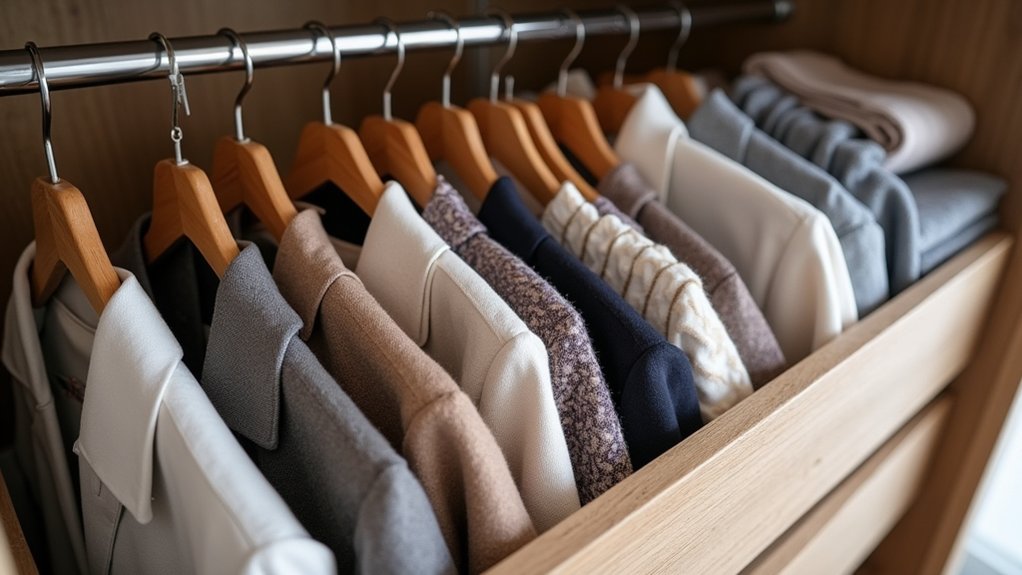
Padded hangers cradle your blazers and delicates with velvet or cushioned surfaces that prevent stretching, shoulder bumps, and fabric abrasion. You’ll protect silk, cashmere, and structured pieces from the stress points that cause permanent damage when you assign one garment per hanger. This simple rule maintains proper weight distribution and allows the 3cm spacing needed for ventilation that reduces mildew risk by 80%. Wide shoulders and contoured designs provide exceptional support for heavier items like coats and leather jackets without bending or breaking under the weight. Unlike flimsy plastic or wire alternatives, these luxury hangers outlast cheaper counterparts while maintaining their sturdy build through years of daily use. Matching hangers throughout your closet create a uniform, polished look that makes it easy to find desired garments while saving time and frustration.
Padded Hangers Prevent Stretching
When you invest in quality clothing like blazers and delicate fabrics, the right hangers make all the difference in preserving their shape and extending their lifespan.
Padded hangers eliminate stretched seams and distorted shoulders through strategic design. By hanging by clothing type, you’ll protect delicates on velvet-flocked surfaces while structured pieces maintain their silhouette on contoured frames. Maximized hanger spacing allows garments to breathe without compression.
Key benefits include:
- Soft padding prevents creases in silk, satin, and lingerie
- Contoured shoulders mirror human form, avoiding indentations
- Non-slip grips prevent shifting and sagging
- Even weight distribution preserves natural garment structure
Premium hangers crafted from European beechwood or sealed hardwood resist moisture and warping, outperforming generic options that require frequent replacement. Stylists and luxury retailers consistently rely on these premium hangers to protect high-value garments and maintain their pristine condition. For suits specifically, wooden hangers with extra width in the shoulder area provide the sturdy support needed to maintain the jacket’s structure without bending under the garment’s weight. Additionally, bamboo hangers offer a sustainable and durable alternative that is both biodegradable and environmentally friendly for eco-conscious consumers.
One Garment Per Hanger
Beyond selecting the right hanger material, how you use them determines whether your garments maintain their pristine condition. Proper hanger selection paired with the one-garment-per-hanger rule prevents crushing and guarantees each piece remains visible and accessible.
For blazers, wooden hangers with curved shoulders retain the garment’s natural arc without creating “military shoulders.” Delicates like silk and cashmere benefit from velvet-covered options that prevent slipping and stretching, extending lifespan by over 30%. This is particularly important for finish-sensitive garments that would otherwise require costly professional refinishing after improper storage.
Maintain uniform spacing of 3 cm between hangers to promote air circulation. This reduces mildew risk by 80% during humid seasons while preventing fabric-to-fabric friction. You’ll save 70% of searching time and cut morning preparation by 12 minutes daily. Single-garment hanging maximizes your closet’s efficiency while protecting your investment. Without proper hanging, a cotton shirt can require over 15 minutes of ironing to remove stubborn wrinkles caused by folding. When you’re ready to replace hangers, consider that re-using a hanger nine times reduces carbon emissions by 79%, making sustainable choices better for both your wardrobe and the planet.
Drawer Organizers That Keep Folded Clothes Wrinkle-Free
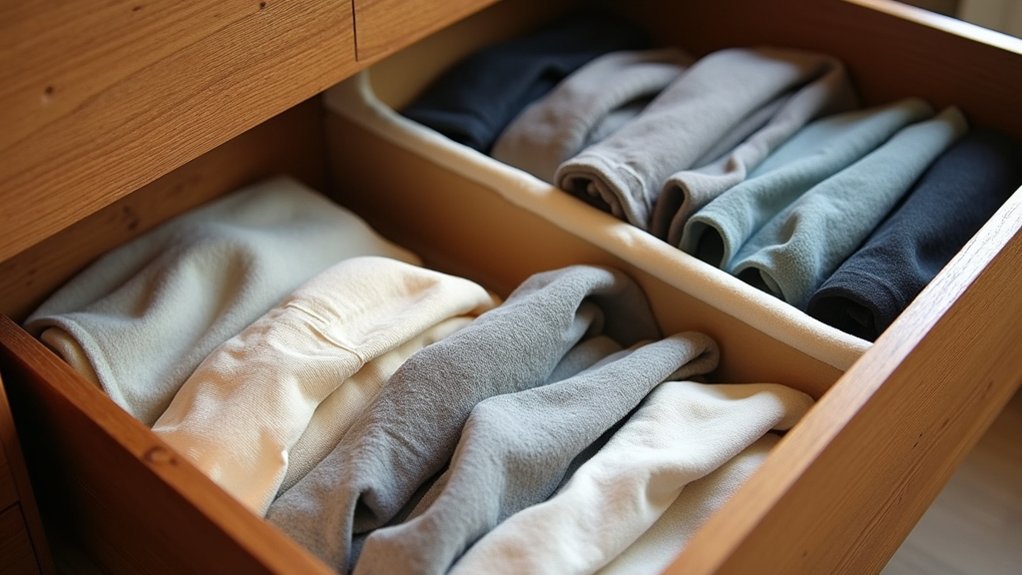
You’ll protect your folded clothes from wrinkles by adopting the file-folding method, which stands items upright in rows so you can see and grab each piece without disturbing the rest. Drawer dividers maintain these neat rows and prevent garments from rubbing against each other, eliminating friction damage that wears down fabric over time. This system reduces the compression that occurs with traditional stacking, preserving your t-shirts, sweaters, and athletic wear while maximizing every inch of drawer space. When folding sweaters for this method, fold sleeves straight across the torso before folding the body into fourths for a compact, wrinkle-resistant result. Just as Antonios Banquet & Conference Centre uses only the finest ingredients without cutting corners, investing in quality drawer organizers ensures your garments receive the premium care they deserve.
File-Folding Prevents Creases
The KonMari file-folding technique transforms how you store clothes by creating small rectangular shapes that stand upright in drawers rather than stacking flat. This improved folding technique eliminates pressure-induced wrinkles because items don’t pile on top of each other.
When you pull fabric taut during folding, you prevent initial creases from forming. The optimized storage layout increases drawer capacity by up to 50% while keeping everything visible. For bulkier items like sweaters, folding in thirds instead of half helps them stay upright and wrinkle-free.
Essential support tools include:
- SKUBB boxes from IKEA for upright stability
- Expandable drawer dividers for row alignment
- Sturdy cotton shirts to prop up slippery dri-fit materials
- Folding boards for consistent rectangle sizes
You’ll retrieve clothes faster since you can see and grab single items without disturbing others, reducing daily search time considerably. This method works well for long sleeve shirts, T-shirts, underwear, pants, shorts, socks and stockings, pajamas, and even linens.
Dividers Stop Friction Damage
Drawer dividers do more than organize, they create protective barriers that stop folded clothes from shifting, rubbing, and wearing down over time. When garments slide against each other, friction causes abrasion, stretched fibers, and seam elongation that shortens clothing lifespan.
Choose laser-cut acrylic or powder-coated steel dividers with oxidation resistant finishes, they won’t snag delicate knits like wood alternatives can. These materials also resist moisture absorption that damages fabrics.
Pair dividers with vapor permeable lining in your drawers to prevent trapped humidity while maintaining organization. Ventilated canvas bins with grommeted panels offer breathability that solid plastic containers can’t match.
You’ll maximize space by separating t-shirts from sweaters, preventing pile compression that causes permanent creases. Limit stacks to six layers between dividers to protect fabric structure and maintain wrinkle-free storage.
Reduced Compression Saves Fabric
Because traditional stacking crushes bottom-layer garments under accumulated weight, file-folding offers a compression-free alternative that stores clothes vertically side-by-side. You’ll eliminate horizontal creases while maintaining full visibility of your wardrobe.
Layered folding systems work best when paired with these compact storage solutions:
- Rectangular fabric organizers that match your drawer height, maximizing capacity without crushing delicate items
- Compartmented bins securing socks and underwear to prevent bunching and friction damage
- Bookends or tension rods keeping vertical stacks upright as contents thin
- Foldable 12-pack bins collapsing for off-season use while reducing piled pressure
You’ll protect cotton tees, heavy knits, and athletic wear from sagging and creasing. This method shortens effective stack height, distributing weight evenly and preserving fabric integrity long-term.
Shelf Dividers That Stop Sweater Stacks From Crushing
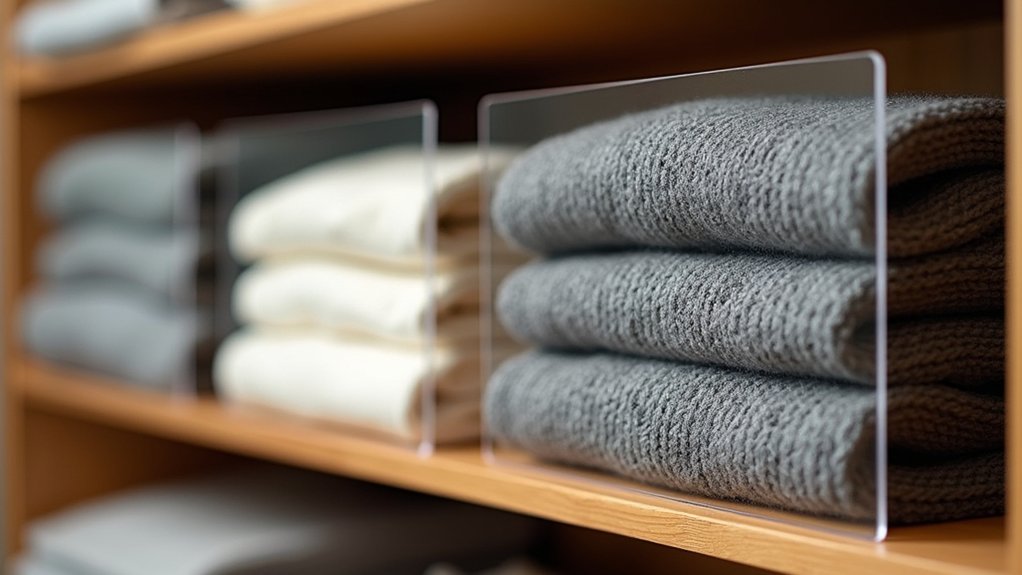
Shelf dividers serve as essential vertical barriers that prevent your carefully folded sweater stacks from toppling, crushing, and developing permanent creases. These affordable organizers create structured zones that maintain your garments’ condition while maximizing every inch of closet real estate.
You’ll find adjustable options that accommodate shelf size adjustments, ensuring compatibility with deep shelves holding bulky seasonal items. Diagonal divider configurations work particularly well for organizing purses alongside folded pajamas and linens.
For ideal results, position dividers to separate sweater categories or designate sections for shared closet spaces. You can label zones between dividers when organizing sibling bedrooms or dorms. Purchase dividers only after paring down your wardrobe to avoid unnecessary excess. Retailers like Walmart, Amazon, and Big Lots offer budget-friendly options that install easily without professional help.
Garment Bags for Long-Term Wrinkle-Free Storage
When you’re storing garments for extended periods, breathable garment bags become your first line of defense against wrinkles, moisture damage, and fabric deterioration. These breathable storage solutions allow air circulation while blocking dust and light that degrade fabrics over time.
Breathable garment bags protect your clothing from wrinkles, moisture, and deterioration while allowing essential air circulation during storage.
Choose your bag material based on your specific needs:
- Cotton or canvas bags, permit airflow, prevent mold, ideal for suits and seasonal wear
- Muslin bags, offer premium breathability for heirlooms like wedding dresses
- Tyvek bags, provide moisture resistant fabrics with waterproof yet breathable protection
- Non-woven bags, resist tears and punctures during handling and travel
Avoid plastic bags entirely for long-term storage. They trap moisture, creating conditions for mildew growth. Store your protected garments in dry, dark spaces for maximum preservation.
Closet Spacers That Prevent Overcrowding and Friction
Garment bags protect your clothes from environmental damage, but they can’t prevent the crushing and friction that occurs inside an overcrowded closet. Slim hangers offer the first solution, their uniform design allows garments to hang closer together while maintaining proper airflow preservation between pieces. Creating a stylish entryway functionality enhances the overall aesthetic of your home while also providing practical storage solutions. By incorporating decorative hooks and a practical console table, you can ensure that guests have a designated space to leave their belongings. When organizing your entryway, consider efficient backpack storage solutions to keep bags off the floor and reduce clutter. Wall-mounted racks and designated bins can help maintain order, allowing for easy access while enhancing the visual appeal of your space. By thoughtfully incorporating these elements, you can create a functional yet stylish environment that welcomes both you and your guests.
Double hanging rods maximize vertical space by creating dedicated zones for shorter items like shirts and skirts. This systematic approach prevents garments from bunching together and rubbing against each other.
Shelf dividers keep folded stacks upright and separated, eliminating the toppling that causes creases. For deep closets, pull-out rods bring items forward, reducing overstuffing.
When selecting spacers, prioritize hanger compatibility with your existing system. Zoning your closet by category reveals overcrowding instantly, signaling when you’ve reached capacity and need to rotate seasonal pieces.
Ready to Transform Your Space?
A well-designed closet or storage system can completely change the way you live at home, and at Creative Closet Design, we make that transformation effortless. From custom closets and pantry systems to garage storage, office systems, and entertainment centers, our experienced team designs and installs solutions tailored specifically to your space and your lifestyle. Call (863) 591-4500 today to schedule your free design consultation.
Frequently Asked Questions
How Often Should I Replace My Closet Hangers to Maintain Garment Protection?
You should inspect your hangers monthly and conduct a thorough review annually to maintain garment protection. Your replacement timeline depends heavily on hanger material type, wood and cedar hangers last years, while plastic and wire options need more frequent replacement. When evaluating hanger storage capacity, replace any hangers showing cracks, rust, or shape loss immediately. This systematic approach maximizes your closet space while protecting your clothing investment from damage.
Can Closet Add-Ons Help Reduce Static Cling Between Hanging Clothes?
Yes, closet add-ons effectively combat static cling between your hanging clothes. You’ll reduce static with velvet hangers, as their soft surface minimizes friction that generates electrical charges. Utilize garment bags for delicates to create protective barriers between items. Consider carbon-embedded fabric liners and antistatic pouches for maximum protection. Maintaining proper spacing between garments and ensuring adequate ventilation in your storage system also prevents static accumulation, keeping your wardrobe organized and static-free.
What Closet Temperature and Humidity Levels Best Prevent Fabric Damage?
You’ll protect your fabrics best by maintaining an appropriate temperature range of 65-75°F and ideal humidity levels between 30-50%. Keep your closet consistently cool, never exceeding 80°F, to prevent brittleness and fading. You’ll want to avoid humidity above 60%, which promotes mold growth, while staying above 20% to protect leather and rubber items. Install climate monitoring tools and use airtight garment bags to maximize protection against damaging fluctuations.
Are Cedar Closet Accessories Effective for Protecting Clothes From Wrinkles?
Cedar accessories don’t prevent wrinkles, they’re designed for pest repellency and moisture absorption. You’ll benefit from cedar’s natural humidity control systems, which keep fabrics dry and deter moths from damaging wool and natural fibers. However, you should avoid direct contact between cedar and clothing, as aged wood can yellow garments. Consider pairing cedar with proper closet lining material like Mylar D barriers to maximize protection while preventing acidic damage to your wardrobe.
Do Closet Lighting Options Affect Fabric Fading or Clothing Longevity?
Yes, your closet lighting choices directly impact fabric fading and clothing longevity. You’ll want to prioritize LED lighting placement that avoids direct shine on garments, instead, bounce light off walls or shelves. LEDs produce no UV rays, protecting your fabrics from photodegradation. Combine strategic lighting with natural ventilation options to prevent heat buildup that damages leather and delicate fibers. Use motion-activated fixtures with short timeouts to minimize cumulative light exposure.