Yes, entertainment centers are still in style, they’ve just evolved. You’ll find early-2000s wall-dominating units have given way to sleek, low-profile media walls that read as architecture. Today’s designs favor built-ins under 24 inches tall, floating components, and modular flexibility that keep rooms feeling open and airy. Fresh finishes like fluted wood, honed stone, and woven cane replace high-gloss lacquer. Want to modernize your space? The trends below show you exactly how.
Key Takeaways
- Entertainment centers remain in style, but bulky early-2000s wall-dominating units have given way to sleeker, low-profile designs.
- Modern media walls act as architectural focal points, prioritizing warmth and integration over sheer size.
- Floating and built-in designs under 24 inches tall reduce visual weight, keeping rooms feeling open and airy.
- Modular components and open shelving offer flexible, rearrangeable layouts with easier access than closed cabinetry.
- Fresh finishes like fluted wood, honed stone, and woven cane replace high-gloss lacquer for organic, tactile appeal.
Are entertainment centers still in style
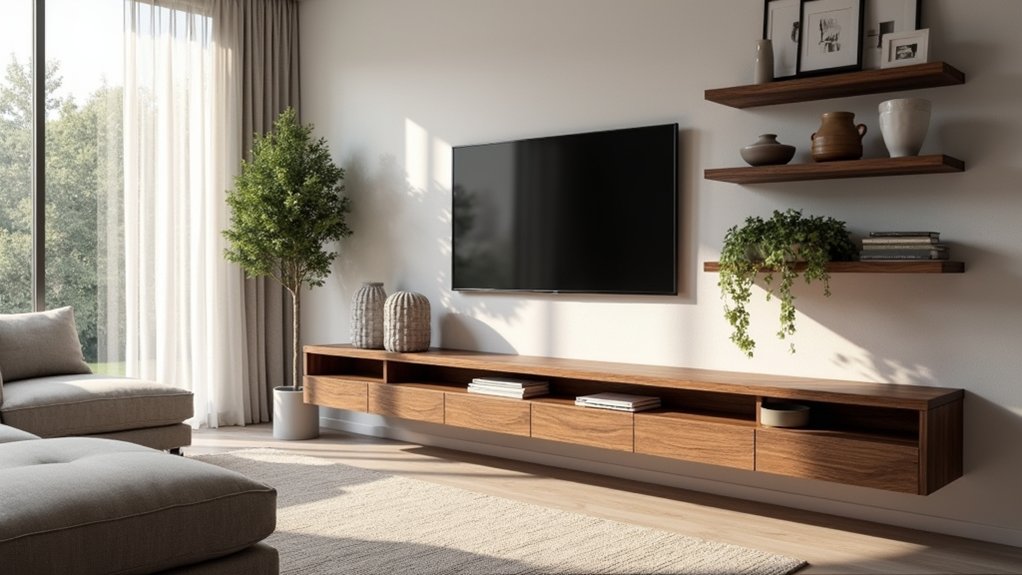
Entertainment centers are still in style, they’ve just evolved. If you’re asking whether entertainment centers are out of style, the answer’s no; those heavy, wall-dominating units from the early 2000s are what’s outdated. Today’s designs have transformed into sleeker, low-profile media walls and built-in units under 24 inches tall.
A modern contemporary entertainment center prioritizes flexibility, smart technology integration, and eco-friendly materials to match your dynamic lifestyle. You’ll find modular components you can rearrange and floating designs that reduce visual weight, keeping smaller rooms from feeling crowded. Exploring living room style inspiration can help you create a space that is both functional and aesthetically pleasing. Consider incorporating various textures and colors to enhance the overall ambiance.
The best modern entertainment center ideas embrace fluted wood, honed stone, and woven cane while concealing cables completely. The core need for a central media hub remains, just curated and minimalist. Consider incorporating cozy space built-ins that provide both functionality and charm. These elements can enhance the overall aesthetic while offering practical storage solutions.
Why are bulky furniture units falling out of favor
Bulky furniture units are falling out of favor because open floor plans now dominate modern homes, and those heavy, wall-dominating units from the early 2000s simply don’t fit anymore. If you’ve wondered whether entertainment centers are out of style since 2023, the answer lies in shifting spatial priorities. Bulky boxes create visual weight that crowds your room, making even generous spaces feel cramped and dated. You’re now drawn to sleeker, lower-profile alternatives that under 24 inches tall and float against the wall, reducing their footprint dramatically. Traditional closed cabinetry blocks light and interrupts sightlines, working against the airy aesthetic you want. Modern designs favor flexibility, letting you rearrange modular components rather than commit to fixed, immovable furniture. As lifestyles grow more dynamic, you need adaptable media walls, not monolithic units anchoring you to outdated layouts.
What modern entertainment center trends are popular now
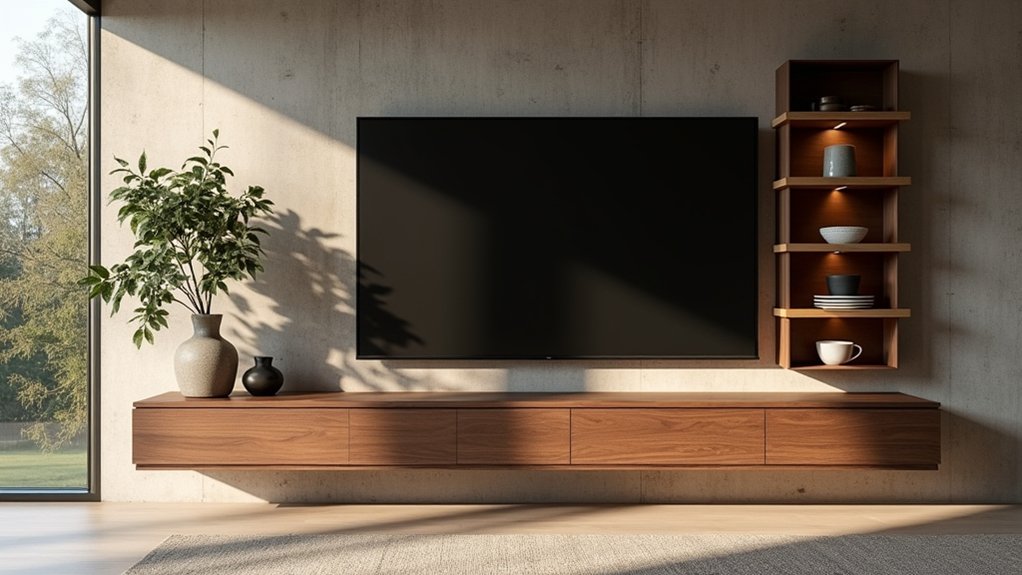
Modern entertainment centers now favor media walls that transform into architectural focal points prioritizing warmth over sheer size. You’ll gravitate toward modular components that let you rearrange units on demand, while floating designs reduce visual weight and keep smaller rooms feeling open. Built-in units blend seamlessly into your wall architecture, and open shelving replaces closed storage for spaciousness and easy access. The advantages of custom media centers are evident in their ability to cater to individual preferences. Homeowners can choose materials and finishes that reflect their unique style, creating a personalized entertainment experience.
| Trend | Function | Aesthetic Impact |
|---|---|---|
| Modular Components | Rearrangeable flexibility | Dynamic, adaptable |
| Floating Designs | Reduced footprint | Lighter, airier |
| Built-in Units | Wall integration | Seamless, curated |
Fluted wood, honed stone, and woven cane define surfaces now, replacing high-gloss lacquer. Keep everything under 24 inches tall, and you’ll nail today’s low-profile, minimalist media hub perfectly.
How do built-ins create a cleaner, current look
Built-in units create a cleaner, current look by integrating into your wall architecture so they stop reading as furniture and start functioning as curated parts of the wall itself. This seamless blending eliminates the visual bulk that once dominated early-2000s rooms, replacing it with a lighter, more architectural presence. You’ll want to keep profiles low, under 24 inches tall, so the unit reinforces your open floor plan rather than crowding it. Cable management matters most here: built-in raceways and hidden storage conceal every wire, preserving that clean line. Layer in fluted wood doors or open shelving, and you introduce texture without weight. Add LED strip lighting to graze surfaces and highlight decor. The result feels intentional, immersive, and current, an entertainment hub that disappears into your design instead of dominating it.
Which finishes and colors look fresh today
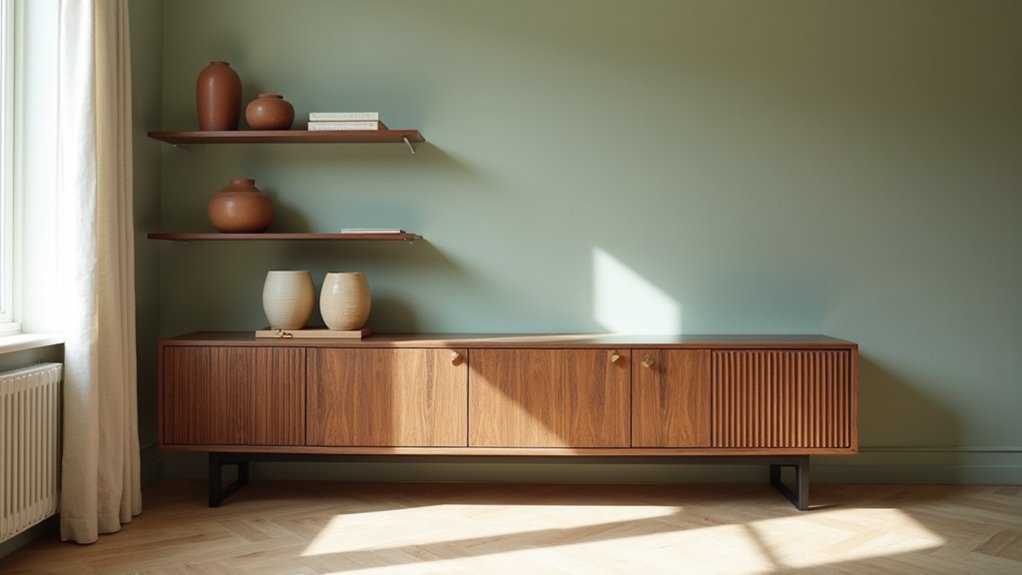
Fresh finishes today trade high-gloss lacquer for tactile, natural surfaces that invite touch. You’ll want fluted wood, with its vertical grooves adding rhythmic depth to cabinet doors, it’s still the top trend heading into 2026. Pair honed stone and woven cane for surfaces that read organic rather than slick. Mixing wood and metal creates visual interest that aligns with contemporary tastes, while eco-friendly wood finishes deliver sustainability alongside warmth.
For color, follow the 60-30-10 ratio: 60% primary, 30% secondary, 10% accent, keeping your palette harmonious. Consider material drenching, wrapping your entire media wall in a single wood or stone, for cohesive, immersive impact. This hypertextural approach emphasizes touch, layering varied materials so your space encourages genuine physical engagement.
How do you future-proof the design
Future-proof the design by choosing modular units you can rearrange as your needs shift rather than fixed cabinets that lock you into one layout. Prioritize cable management above everything else. Build in raceways, management boxes, and labeled systems so visible wires never date your setup. Integrate smart home features that connect with your other systems, and add LED strip lighting for adaptable ambient effects. Lean on eco-friendly wood finishes and mixed materials like wood and metal, since sustainable elegance holds its value as trends turn over. Keep floating, low-profile designs under 24 inches to preserve visual lightness. Layer in flexible touches like a game station or open shelving you can restyle seasonally, rotating 30% of your decor while keeping 70% neutral year-round.
How does Creative Closet Design create modern entertainment centers
Creative Closet Design creates modern entertainment centers with custom media walls built around your room’s architecture, featuring low-profile units under 24 inches tall and floating components that lighten the visual weight. Fluted wood doors, honed stone surfaces, and woven cane textures replace dated high-gloss finishes, while mixed wood and metal add depth. Your cables disappear into built-in raceways and management boxes, and integrated smart home features keep everything connected. LED strip lighting highlights open shelving and modular sections you can rearrange as needs shift. Eco-friendly wood finishes bring sustainable elegance to the build. You end up with a curated, hypertextural focal point that prioritizes warmth, flexibility, and function over bulk.
Update Your Media Wall Without Overbuilding It
The units that read as dated aren’t dated because they’re built in. They’re dated because they were designed for equipment nobody owns anymore. Creative Closet Design builds custom entertainment centers for Central Florida homeowners around how you actually watch and what you actually store, keeping proportions light, cables hidden, and finishes current. Serving Lakeland, Auburndale, Winter Haven, Plant City, Polk County, and Hillsborough County, our designers can plan a new media wall or rework an existing one that no longer fits the room. Call (863) 591-4500 to schedule your free design consultation.
Frequently Asked Questions
I already have a bulky built-in entertainment center. Should I remove it or update it?
It depends on the bones. If the structure is sound and reasonably proportioned, it can often be modernized rather than demolished, by removing dated trim, reworking the shelf configuration, updating hardware, refinishing the doors, and improving cable management. That’s usually far less disruptive and less expensive than tearing it out and repairing the wall behind it. Removal makes more sense when the unit is genuinely oversized for the room, blocks natural light, or was built around a deep older television and can’t accommodate a modern screen without major surgery.
Why do older built-in units feel dated even when they’re well made?
Because they were designed for media that no longer exists. Units built twenty or thirty years ago allotted specific shelving for VHS tapes, DVDs, CDs, stereo receivers, and stacked components. Now those compartments sit half empty or filled with random decorative objects, which is the clearest sign the unit is larger than what the household actually needs. The craftsmanship may be fine. The layout logic just belongs to a different era of watching television, which is why reconfiguring the interior often does more for the look than any finish change.
What’s the biggest mistake to avoid when building a new one?
Sizing the TV opening too tightly. Once you’ve built a niche of a fixed dimension, you’re limited to a screen that fits it, and televisions have gotten steadily larger over the years. Homeowners regularly find themselves stuck with a beautiful built-in that can’t accept the TV they want to buy. Leaving generous clearance around the screen, or planning an open recess rather than a snug frame, keeps your options open. The same logic applies to shelf heights, since adjustable shelving ages far better than fixed compartments sized for today’s equipment.
Does a built-in still make sense if I’m wall-mounting the TV?
Yes, and it’s a common combination now. Wall-mounting handles the screen, but you still need somewhere for the soundbar, streaming devices, game consoles, and remotes, plus a way to hide the cabling running to the mounted screen. A low cabinet run beneath the TV handles all of that while giving the wall visual grounding, so the television doesn’t read as a black rectangle floating on bare drywall. This is generally the lighter, more current approach compared to fully enclosing the screen in cabinetry.
Will a built-in entertainment center help or hurt when I sell?
Usually neither, in the sense that most buyers don’t treat it as a deciding factor. What matters far more is whether the room reads as well designed and current. A proportionate, cleanly finished media wall contributes to that impression, while an oversized dated unit works against it, which is really a judgment about the room rather than the category. So the practical guidance is to build what genuinely serves you while you live there, keeping the design restrained enough that it doesn’t read as a personal quirk to whoever tours the house later.