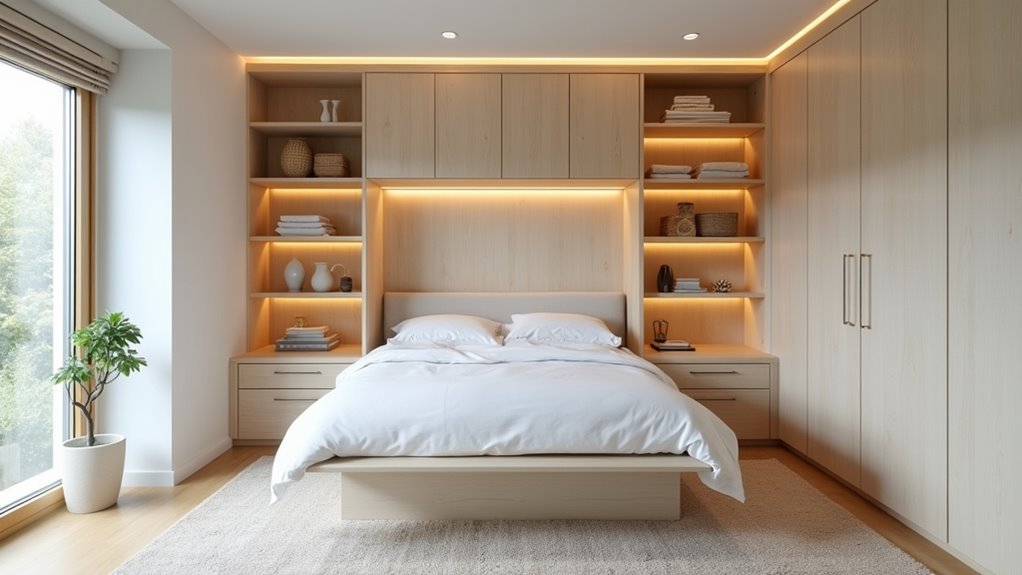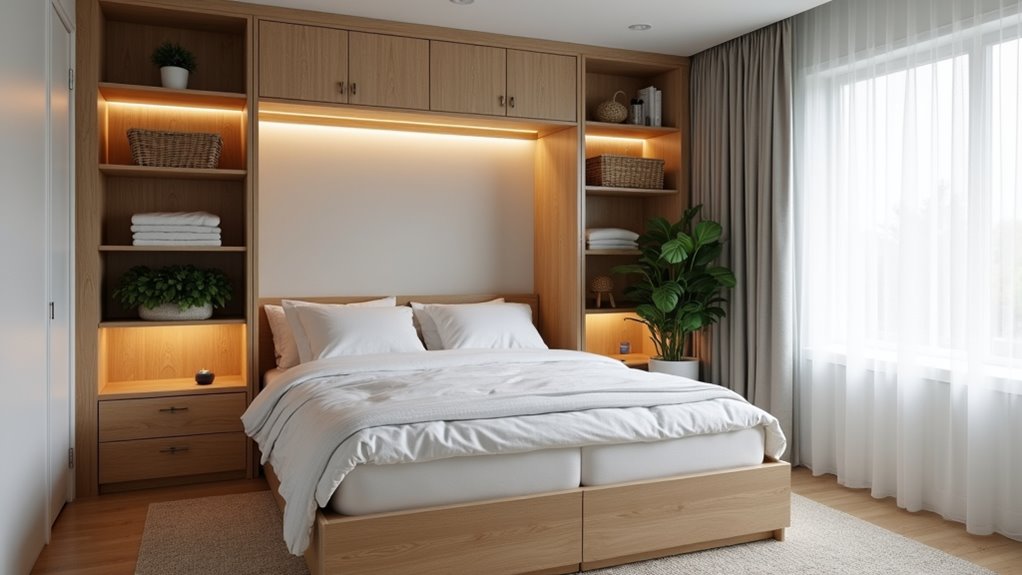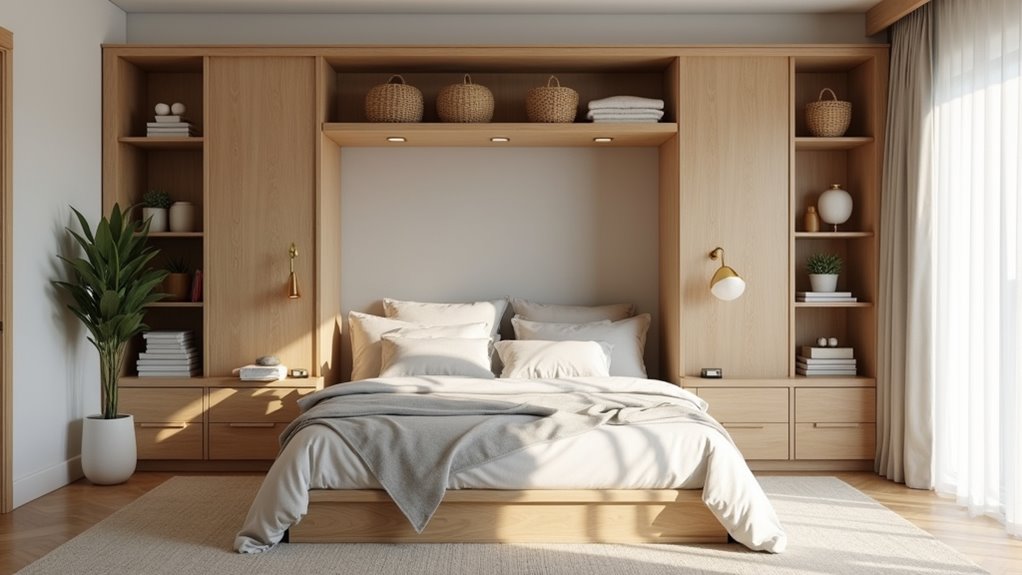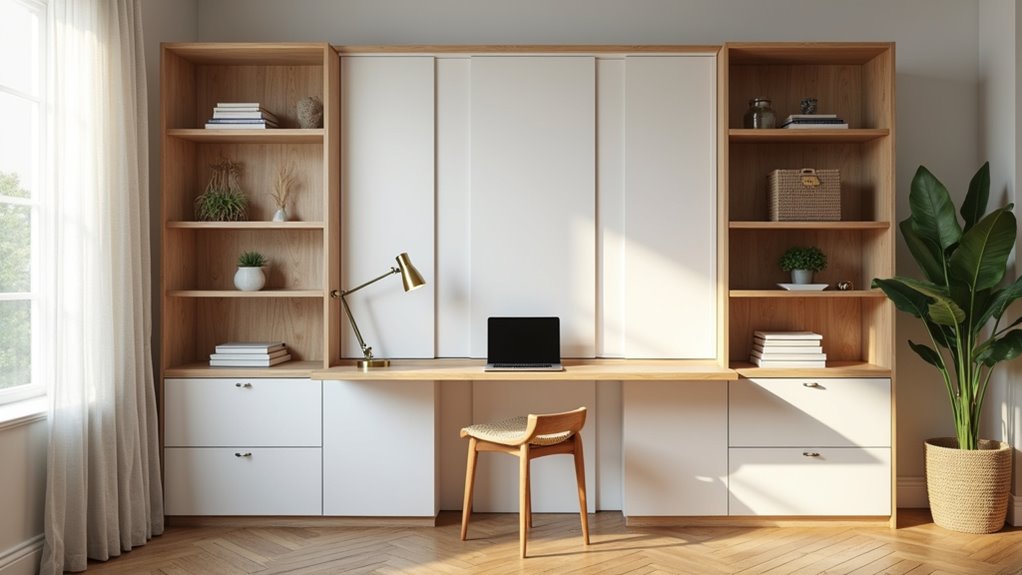
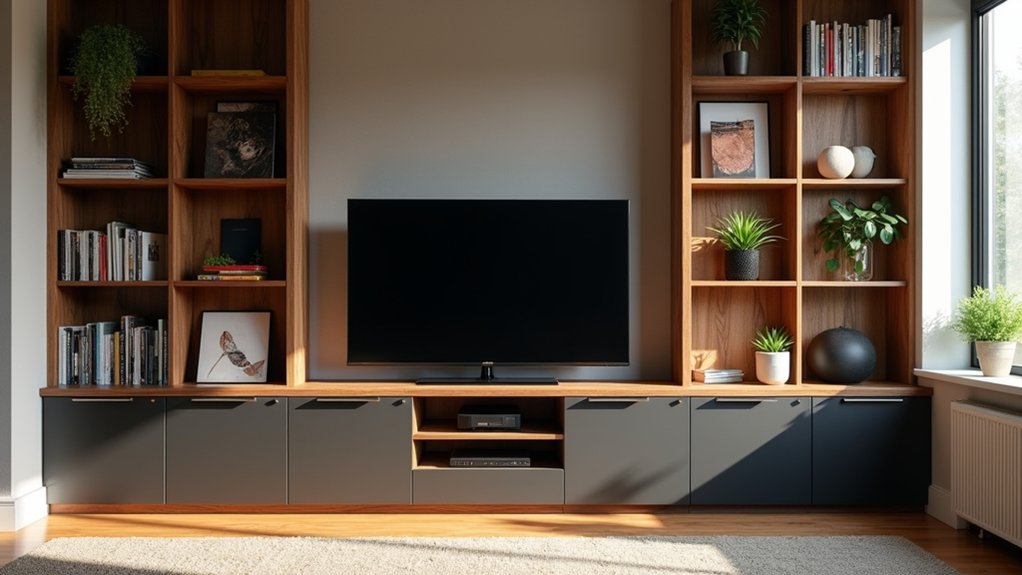
Choose open shelves when you want an airy, lighter feel that showcases your personality and brightens smaller spaces. They’re budget-friendly and handle bulky items easily. Pick closed cabinets when you’d rather hide consoles, routers, and clutter behind sleek doors for a minimalist look with higher usable storage. Can’t decide? A hybrid pairs closed lower cabinets with open upper niches, balancing expression against order. Let’s explore how each option transforms your media wall below.
Key Takeaways
- Open shelves create an airy, lighter feel with easy device access and cost 40, 60% less than closed cabinetry.
- Closed cabinets deliver a minimalist look, higher storage volume, and protect electronics from dust behind sleek doors.
- Choose open shelving for simple, display-led setups and bulky items; choose closed cabinets for multiple devices, toys, and low-maintenance order.
- Hybrid designs pair closed lower cabinets to hide clutter with open upper niches for curated decor and ventilation.
- Twin bookshelves beside the TV add balance, grounding the media wall so the screen doesn’t float alone.
Should you choose open shelves or closed cabinets
Choose open shelves or closed cabinets based on the mood you want and how much you like to maintain your space. Open shelves create an airy, lighter atmosphere that brightens the room and lets you showcase personality through curated displays. Positioning bookshelves next to your TV adds an expressive, display-led feel that suits simpler setups with just a few devices. Closed cabinets deliver a pristine, minimalist look, hiding consoles, routers, and clutter while offering higher usable storage volume. As you weigh the types of entertainment center available, consider your space and habits. If you love styling and dusting, go open. If you crave order and low maintenance, closed cabinets keep everything calm and concealed. Functional entertainment centers can enhance the visual appeal of your living space while providing practical storage solutions. They often serve as a focal point for gatherings, allowing family and friends to enjoy their favorite media together.
What are the benefits of open display shelving
Open display shelving offers display-led expression, an airy atmosphere, easy device access, and budget-friendly prices. It transforms your media wall into an expressive canvas, letting you showcase personality through curated arrangements of decor, books, and treasured pieces. You’ll immediately notice how open shelves create an airy, lighter atmosphere that brightens the room, opening up smaller spaces where hidden storage matters less than lightness. Among various entertainment cabinet ideas, open stands offer instant physical access to your devices with no doors to open, making them ideal for simpler setups with only a few components. They’re also perfect for storing large, bulky objects that won’t fit inside enclosed cabinets. Open shelving typically costs 40-60% less than closed cabinetry. Among types of entertainment centers, open designs deliver display-led expression at budget-friendly prices.
What are the benefits of closed cabinet storage
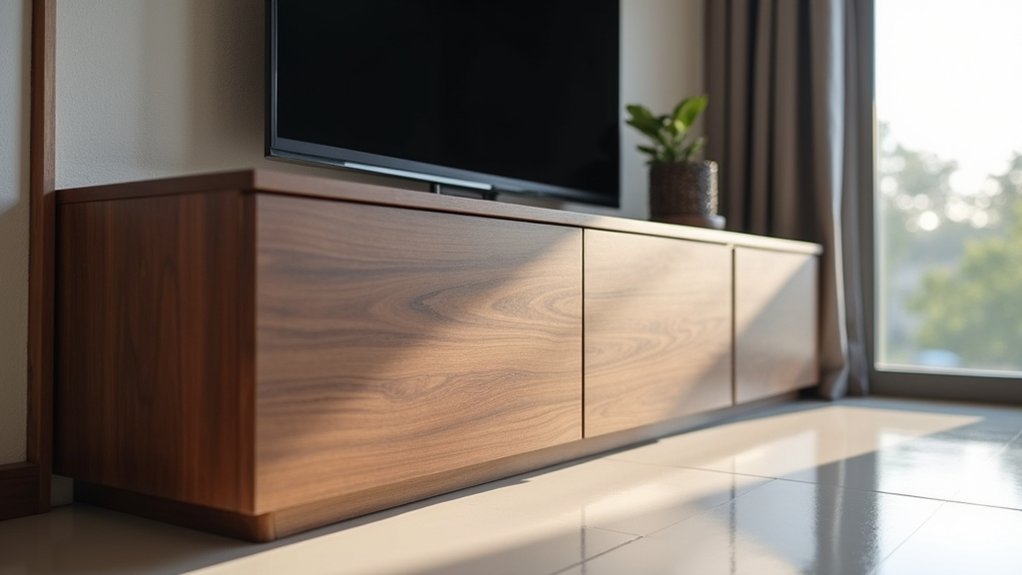
Closed cabinet storage delivers a pristine, minimalist aesthetic by hiding all clutter behind sleek doors. You gain higher usable storage volume, since items pack tightly without breathing space. Cabinets conceal consoles, routers, toys, board games, and spare throws, giving multiple devices structured organization. Doors protect valuable electronics from dust, reducing your cleaning routine, ideal if you’d rather skip frequent dusting.
| Benefit | What You Get |
|---|---|
| Minimalist look | Zero visible clutter |
| Protection | Safety from kids, pets, dust |
| Capacity | Tightly packed storage |
Closed doors also shield electronics from curious children and pets, securing your valuables. Just remember: shut doors can block remote signals or trap heat, so ventilate during use. For high-traffic households, cabinets keep visual noise minimal.
How do you combine both in one unit
Combine both in one unit with a hybrid design that pairs closed lower cabinets with open upper shelves. You get storage that hides everyday clutter while framing your favorite pieces near the TV. This layout balances calm and character, giving your media wall visual relief without sacrificing personality.
To build a hybrid that works, focus on placement and proportion:
- Anchor solid cabinets on the lower half to conceal consoles, routers, and games.
- Reserve open niches around the TV for curated decor and ventilation.
- Keep bulky, awkward items on open shelves where they fit freely.
- Style upper displays sparingly to maintain that airy, expressive feel.
You’ll end up with a unit that’s both practical and beautifully composed.
How do bookshelves beside the TV add balance
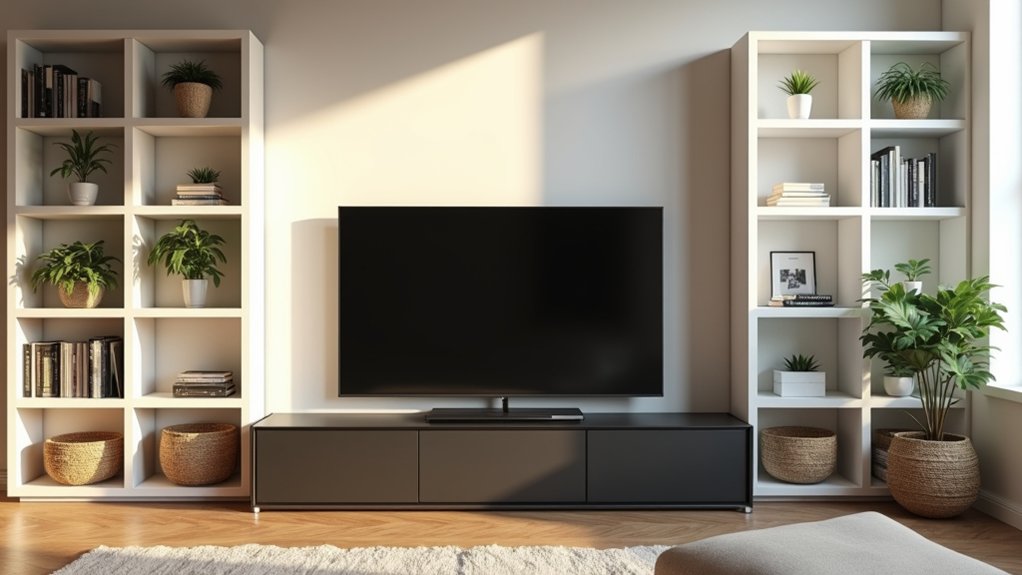
Bookshelves beside the TV add balance by grounding the media wall with symmetry. Twin open shelves on either side draw the eye upward and outward, keeping the screen from floating alone against a bare wall. You gain display-led space to showcase personality through curated books, decor, and a few treasured pieces, brightening the room with an airy, lighter feel.
Pair these open niches with closed lower cabinets and you’ll balance expression against order, concealing consoles, routers, and everyday overflow while the upper shelves stay expressive. Keep both sides visually even, matching heights and spacing, so nothing tips the arrangement off-center.
For small spaces, slim vertical shelves add lightness without crowding. You’ll frame the TV, add character, and maintain a calm, intentional composition. Style your built-in without clutter. Consider adding decorative boxes or baskets to keep items organized yet accessible. This approach enhances the overall aesthetic while maximizing your storage solutions.
How do you decide based on what you own
Decide based on what you own by taking honest inventory of your devices, media, and accessories, then match storage to the reality of your collection: More than just storage, your setup should serve your needs effectively. The right solution enhances workflow and keeps everything organized, so prioritizing efficiency and accessibility helps you make the most of your space.
- Multiple devices and gaming collections thrive in closed cabinets that hide consoles, routers, and controllers while offering structured organization.
- Simple setups with only a few devices suit open shelving, which offers sufficient space without visual clutter.
- Bulky or large objects that won’t fit inside enclosed cabinets belong on open shelves for practical access.
- Board games, toys, and spare throws disappear neatly behind doors and drawers, reducing everyday overflow.
After you’ve tallied your belongings, you’ll see whether concealment or curated display serves your space and lifestyle best.
How does Creative Closet Design design entertainment storage
Creative Closet Design designs entertainment storage around how you actually live, not a one-size-fits-all box. You’ll start with what you own, consoles, gaming collections, board games, spare throws, then map each item to the right home. If you crave a minimalist look, we’ll hide clutter behind closed cabinets that protect electronics from dust and small hands. If you want an expressive media wall, we’ll add open niches to showcase curated decor.
Most often, you’ll land on a hybrid: solid lower cabinets that conceal everyday overflow, open upper shelves that display treasured pieces and improve ventilation. We tailor proportions to your room’s scale, so lightness meets order. The result balances calm and character, precisely fitted to your space and lifestyle.
Get the Mix Right for How You Live
Open, closed, or a bit of both is less an aesthetic question than a practical one, and it comes down to what you own, how you use it, and how much upkeep you actually want. Creative Closet Design plans custom entertainment storage for Central Florida homeowners, mapping your equipment and belongings to the right kind of compartment and handling the details that make concealed storage work properly. Serving Lakeland, Auburndale, Winter Haven, Plant City, Polk County, and Hillsborough County, our designers will walk your space and work through the configuration with you. Call (863) 591-4500 to schedule your free design consultation.
Frequently Asked Questions
Will closed cabinet doors stop my remote from working?
Solid doors usually will, and this is the most common regret with concealed media storage. Infrared remotes need a clear path to the device, so a closed wood door blocks the signal, and people end up leaving the doors permanently open, which defeats the point of having them. There are real fixes. An IR repeater catches the signal outside the cabinet and relays it to the equipment inside, so everything works with the doors shut. Alternatively, glass, mesh, slatted, or perforated door fronts let the signal through while still keeping the cabinet visually tidy. Devices controlled by app or Wi-Fi sidestep the issue entirely.
Do enclosed cabinets cause equipment to overheat?
They can, and heat is a genuine cause of electronics failure over time. Receivers, game consoles, and cable boxes generate real heat, and a sealed compartment traps it. The solution is designing airflow in rather than hoping for the best: vents in the back or base, adequate clearance around each component rather than cramming them in, and a quiet cooling fan for anything that runs hot. This is worth flagging early, since venting is straightforward to build into cabinetry and awkward to retrofit once the unit is finished.
Which items should go behind doors and which are fine on open shelves?
The sorting is easier than it sounds. Behind doors: anything with cables attached, anything that looks like equipment, plus the overflow categories like board games, controllers, spare remotes, and blankets. On open shelves: books, framed pieces, a few objects with some visual weight, and genuinely bulky items that won’t fit inside a cabinet anyway. The test is whether you’d be happy seeing it every day. If the honest answer is no, it belongs behind a door, and if you’d have to restyle it constantly to look presentable, closed storage will serve you better.
Is open shelving really that much more upkeep?
Somewhat, though it depends on your household. Open shelves collect dust on every surface and on the items themselves, and there’s no door protecting anything from curious children or pets. There’s also the styling maintenance, since open shelves only look intentional when they’re curated, and they slide into clutter quickly when things get piled on. Closed cabinets ask far less of you day to day. If you know you won’t keep up with it, weighting the design toward concealed storage is a more realistic choice than committing to a display you’ll have to maintain.
Can I change the mix later if I get it wrong?
Partly, and planning for that helps. Adding doors to open shelving later is possible but the result rarely looks as integrated as building them from the start, since the cabinet openings weren’t proportioned for door fronts. Going the other way, removing doors from cabinetry, is simpler but leaves you looking at compartments that were designed to be hidden. What genuinely does adapt is what you put where, which is why adjustable shelving matters. The most flexible approach is deciding the open-versus-closed split carefully up front, then letting the contents shift over time.