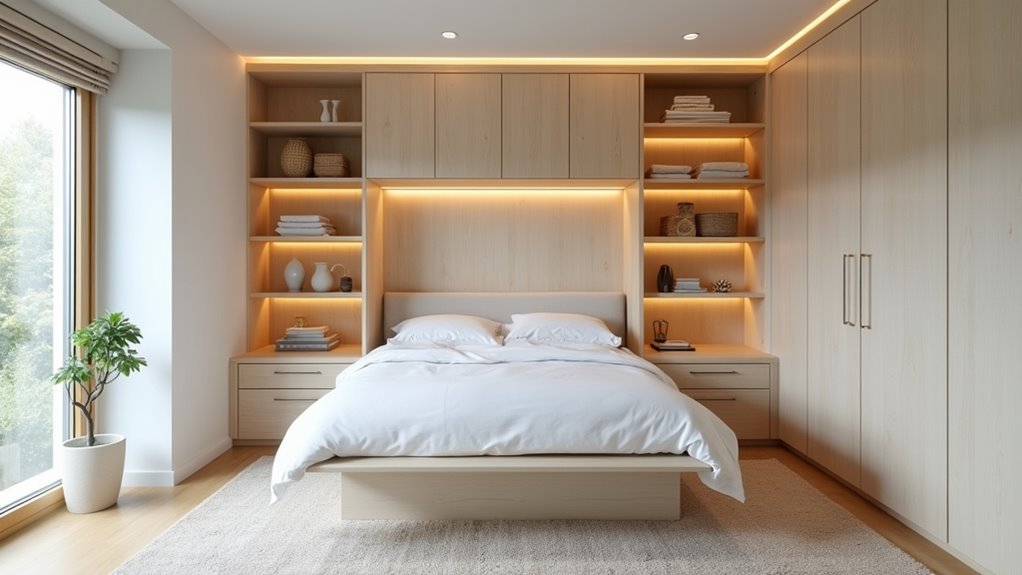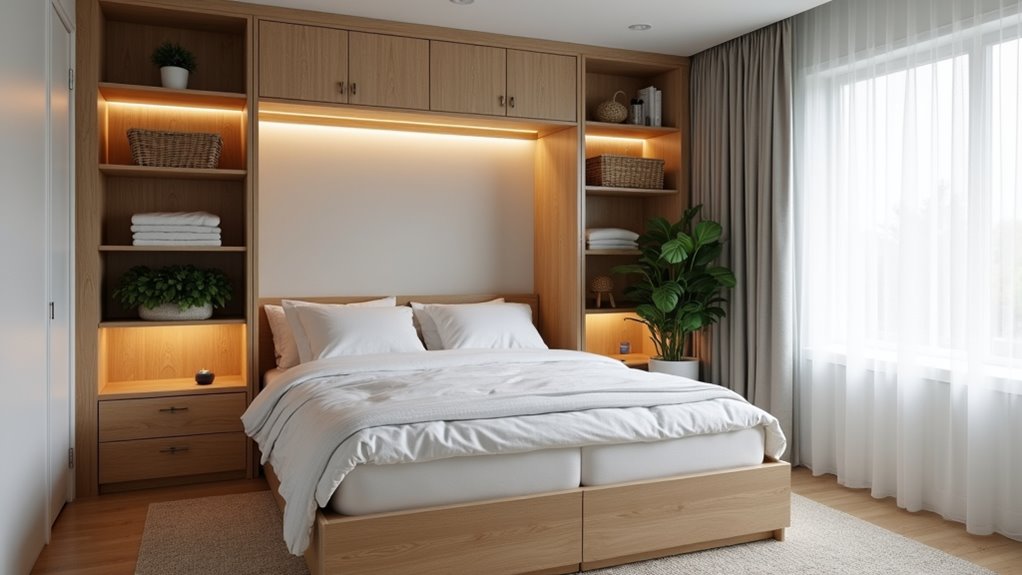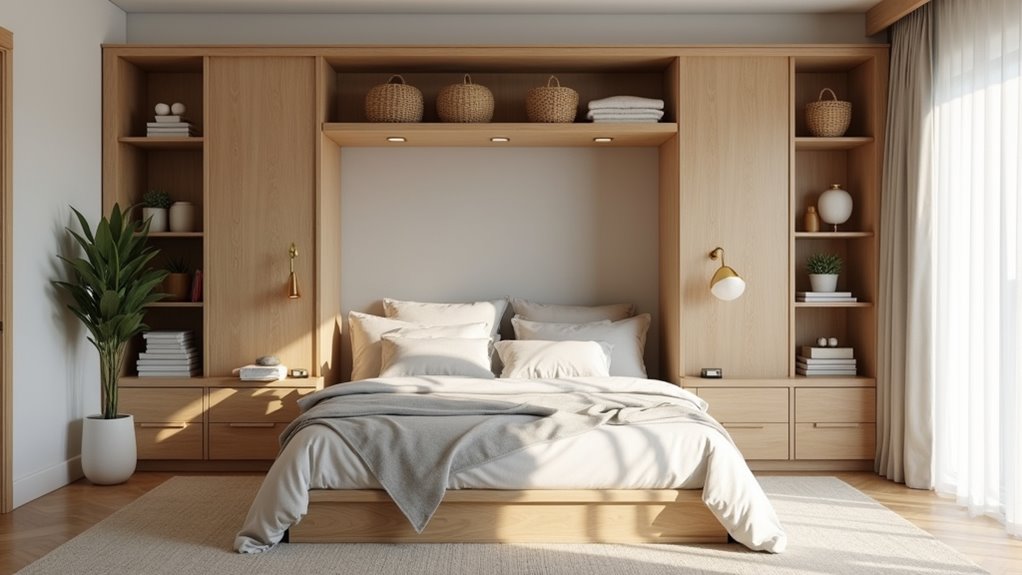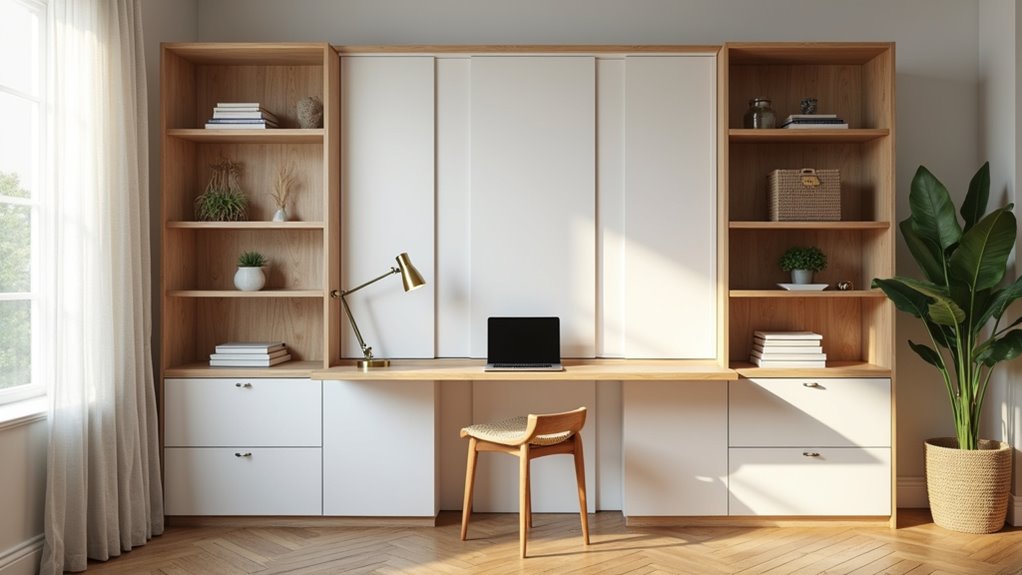
Start with structure, then layer decor outward. Center your TV at eye level, roughly 42 to 48 inches to center, and keep the wall behind it neutral. Group 3 to 5 items in odd numbers per shelf, leaving 2 to 3 inches between clusters for breathing room. Build visual triangles with tall, medium, and low pieces. Lean on negative space so nothing feels crowded. There’s more that ties it all together below.
Key Takeaways
- Group 3 to 5 items in odd numbers per shelf, leaving 2 to 3 inches between clusters for breathing room.
- Rely on negative space and avoid filling every inch to prevent a crowded, heavy appearance.
- Build visual triangles using a tall piece on the outer edge, medium decor in the middle, and low accents up front.
- Commit to one color palette or material, wood, ceramic, or metal, for a cohesive, curated look.
- Keep the wall behind the TV neutral, conceal cords with covers, and maintain a 70% neutral, 30% seasonal rotation.
How do you style a built-in entertainment center
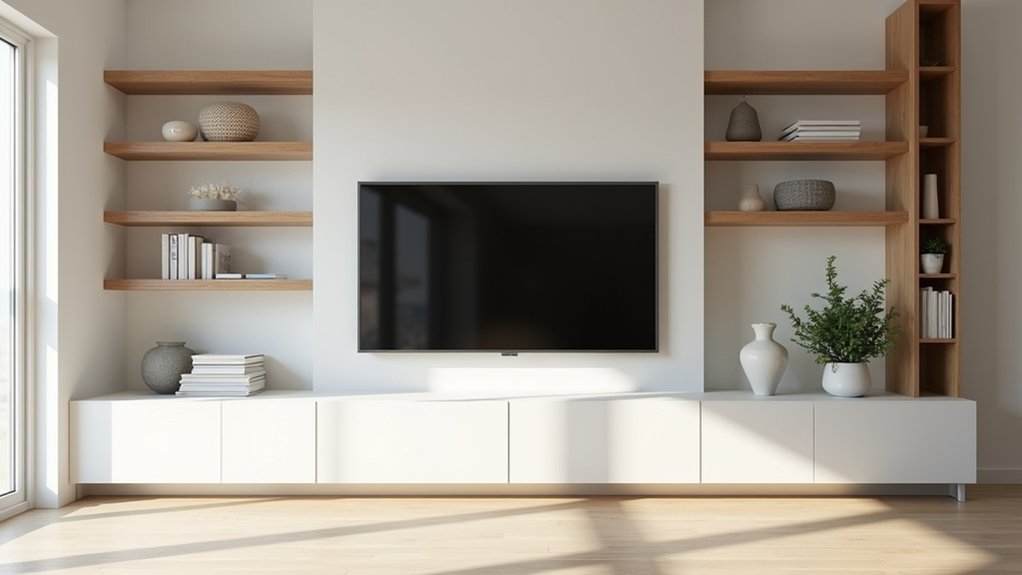
Start with the screen itself, centering it roughly 42, 48 inches to the center, at eye level when seated. Choose a console at least 6 to 10 inches wider than the TV for visual balance. Work from structure outward, keeping the wall behind the TV neutral and clutter-free. Explore entertainment center color ideas by painting storage cabinets the same shade as the wall, letting them disappear into the room. Then layer in entertainment center decor ideas: cluster items in visual triangles using tall, medium, and small pieces. Leave negative space between groupings so each object breathes, and let your eye rest comfortably across the whole arrangement. Stylish entertainment center designs can further enhance the overall aesthetic of your living room. Consider incorporating mixed materials, such as wood and metal, to bring texture and interest to the space.
How much should you actually put on the shelves
Put 3 to 5 items grouped in odd numbers on each shelf, then step back and study the balance. Leave 2 to 3 inches between groupings so each cluster breathes. Don’t fill every inch. Negative space does the heavy lifting, letting your eye rest and preventing a crowded, heavy look.
Picture each shelf as a small stage. Place a tall piece around 10 to 12 inches on the outer edge, add medium decor between components, and tuck a low accent in front. This visual triangle creates rhythm without overload. If a shelf feels tight, remove one object. You’ll notice the whole composition instantly looks more intentional and curated.
How do you balance decor, books, and media
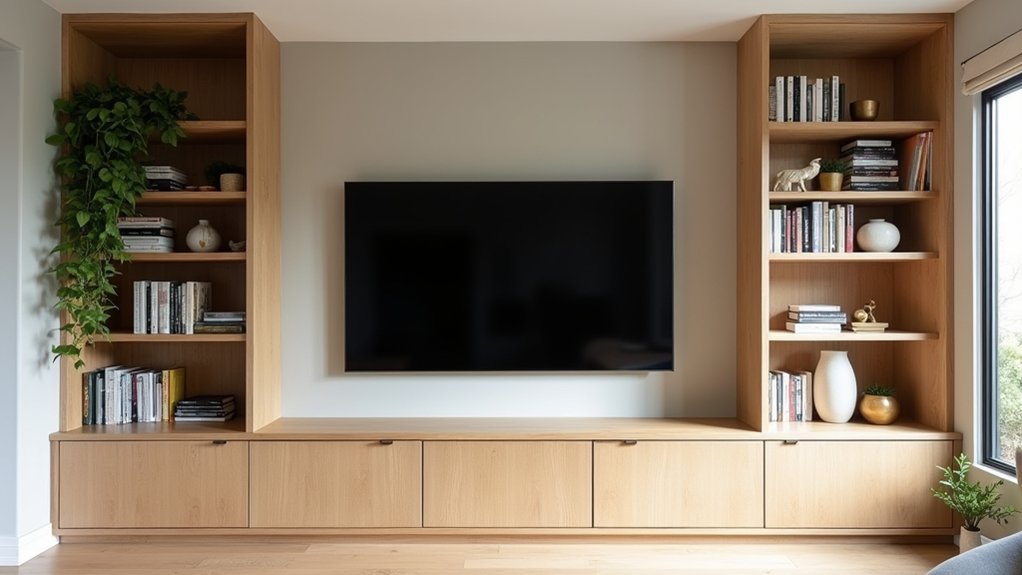
Balance decor, books, and media by committing to one color palette, wood, ceramic, or metal, so everything reads as a cohesive collection instead of a random pile. Build visual triangles: pair a tall vase, medium stacked books, and a low bowl to guide the eye with rhythm. Position tall pieces on outer edges, medium decor between electronics, and small accents up front. Group items in odd numbers, three to five per cluster, leaving breathing room between each.
| Item Type | Height | Placement |
|---|---|---|
| Tall vase | 10, 12″ | Outer edges |
| Medium books | 6, 8″ | Between electronics |
| Small bowl | 3, 4″ | Front, layered |
Balance function with negative space, letting media recede while curated decor and books anchor each shelf beautifully.
How do you style the wall around a mounted TV
Style the wall around a mounted TV with restraint, letting the screen anchor the composition without competing distractions. Keep the space behind the TV neutral and clutter-free. Center the screen roughly at eye level when seated, typically 42 to 48 inches to the center, so the wall frames it naturally. Conceal any dangling cords with simple cord covers, keeping the surface clean and uninterrupted. If you want subtle depth, tuck LED strips behind the unit to wash the wall with soft, indirect light. Layer preserved botanicals behind tech components for organic texture, and add a small tabletop lamp beside the TV for warmth. Let the negative space breathe, so the mounted TV feels intentional, not crowded. A maximum TV viewing experience can be achieved by selecting the right seating arrangement. Position your furniture to face the screen directly, ensuring comfortable sightlines for everyone in the room.
What color and finish choices create a polished look
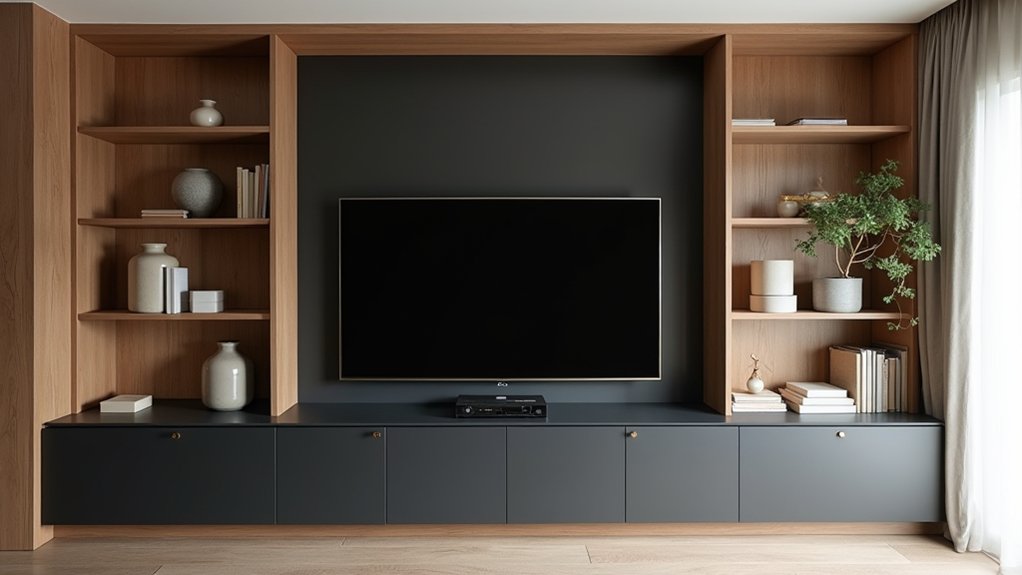
Paint your storage cabinets the same shade as the wall so they recede from view and let the composition breathe. This monochromatic base keeps bulky storage from competing for attention, drawing the eye instead toward your curated groupings. Stick to one cohesive palette, wood, ceramic, or metal, so every shelf feels intentional rather than scattered. Layer finishes for depth: pair smooth ceramics against rough metals, and weave in metallic or glass elements that catch and reflect light. Keep the wall behind your TV neutral and uncluttered, letting the screen anchor the space without visual noise. Finish gaps near the ceiling with scribe molding or a top panel, so the built-in reads seamless, polished, and permanent. When choosing open shelves or closed cabinets, consider your room’s aesthetic. Open shelves showcase decor for a personal touch, while closed cabinets offer a clean, streamlined look.
How do you keep the styling easy to maintain
Keep styling easy to maintain by building a system around simple swaps and consistent negative space. Start by grouping decor in odd numbers, three to five items, so revitalizing means swapping a single piece, not rearranging everything. Leave two to three inches between groupings, giving each cluster breathing room that’s easy to maintain visually.
Keep 70% of your shelves neutral and reserve 30% for seasonal rotation. This ratio lets you refresh the space without overhauling your entire palette. Prioritize closed storage for routers, consoles, and cables, so clutter stays hidden and cleaning stays quick.
Stick to one cohesive palette, wood, ceramic, or metal, so new additions blend seamlessly. When your system’s built around simple swaps and consistent negative space, upkeep becomes a five-minute refresh, not a chore.
How does Creative Closet Design create styled built-ins
Creative Closet Design creates styled built-ins by treating structure and decor as one continuous system. You start by installing the entertainment center flush with the wall, painting storage cabinets to match so they disappear into the surrounding surface. You center the screen at eye level, roughly 42 to 48 inches to center, and size the console 6 to 10 inches wider than the TV for balance. You hide ceiling gaps with scribe molding or a finished top panel. Then you layer decor into visual triangles, tall pieces on outer edges, medium items between components, small accents in front. You conceal routers and cables inside closed storage and raceways, leaving negative space between groupings. The result reads as an integrated, curated space rather than assembled furniture.
Built-Ins That Look Good Before You Style Them
The easiest shelves to style are the ones designed with proportion in mind from the start, with enough closed storage to absorb everyday clutter and shelf spacing that suits what you actually own. Creative Closet Design plans custom entertainment centers for Central Florida homeowners so the structure does most of the work and the decor just finishes it. Serving Lakeland, Auburndale, Winter Haven, Plant City, Polk County, and Hillsborough County, our designers will look at your room, your storage needs, and your collection before drawing anything. Call (863) 591-4500 to schedule your free design consultation.
Frequently Asked Questions
Where do I start if my shelves already look like a mess?
Take everything off first. It feels like overkill, but working around what’s already there gives you tunnel vision, and you end up rearranging clutter rather than editing it. With the shelves empty, gather everything in one place so you can see what you actually have, then be honest about what’s worth displaying. A fair amount usually gets donated or moved elsewhere. Building back from empty, one shelf at a time, produces a far better result than shuffling objects that were never right for the space.
Why do my shelves look cluttered even when I don’t have that much on them?
Usually because the pieces are too small. Lots of little objects read as visual noise no matter how carefully you arrange them, since each one is too minor to hold its own and the eye can’t rest anywhere. Swapping several small items for one larger piece with real presence generally solves it immediately. The same shelf with three substantial objects will look calmer and more intentional than one holding a dozen small ones, even though it’s technically emptier.
Is there a limit to how many statement pieces I should use?
Yes, and this trips people up. Think of your standout pieces as the leading actors on a shelf, and remember that a scene with too many leads is chaos. Choose one or two things you genuinely want noticed, then let books, simple objects, and negative space support them rather than compete. When every item on a shelf is trying to be the focal point, none of them land. Restraint about what gets to be the star is what separates curated from crowded.
Can I put family photos on the shelves?
A few, spread out. Framed photos tend to read as visually heavy, and a cluster of them on one shelf pulls the whole composition down and makes it feel busy quickly. If you have a lot you want displayed, a gallery wall in a hallway or a dresser in a bedroom handles the volume better than open shelving in the main living space. On a media wall, one or two frames worked into a grouping is plenty, with the rest of the collection living somewhere it can breathe.
How does this work with kids and a house that’s actually lived in?
By building concealment into the plan rather than fighting the mess. Baskets and bins on lower shelves are the practical answer, since they hide controllers, toys, chargers, and everyday overflow while keeping it all within reach. Reserve the higher, more visible shelves for the pieces you want on display, out of small hands. Closed lower cabinets do the heavy lifting for anything you’d rather not see. The goal isn’t a showroom, it’s a system where the visible portion stays calm because the rest has somewhere to go.