Start by sorting your clothes into broad categories like tops, bottoms, dresses, outerwear, activewear, and shoes. Give each category its own shelf, drawer, or closet section. Next, split each group by garment type, keeping T-shirts, sweaters, and button-downs apart. Arrange every type from light to dark so you’ll scan faster. Then place what you wear most at eye level and push rarely worn pieces back or up high. Seasons and upkeep add a few tweaks.
Key Takeaways
- Separate clothing into broad categories like tops, bottoms, outerwear, activewear, and sleepwear, giving each a defined shelf, drawer, or section.
- Sort each category by garment type, such as grouping T-shirts, sweaters, and blouses separately, then arrange by color from light to dark.
- Store frequently worn items at eye level or front and center, placing rarely used pieces on high shelves or toward the back.
- Create distinct zones for workwear, casual wear, exercise clothing, and formal outfits, moving special-occasion garments away from the main dressing space.
- Use the hanger trick to track what you actually wear, then donate, sell, or discard pieces that no longer fit your routine.
How do you organize clothes by category, type, and use
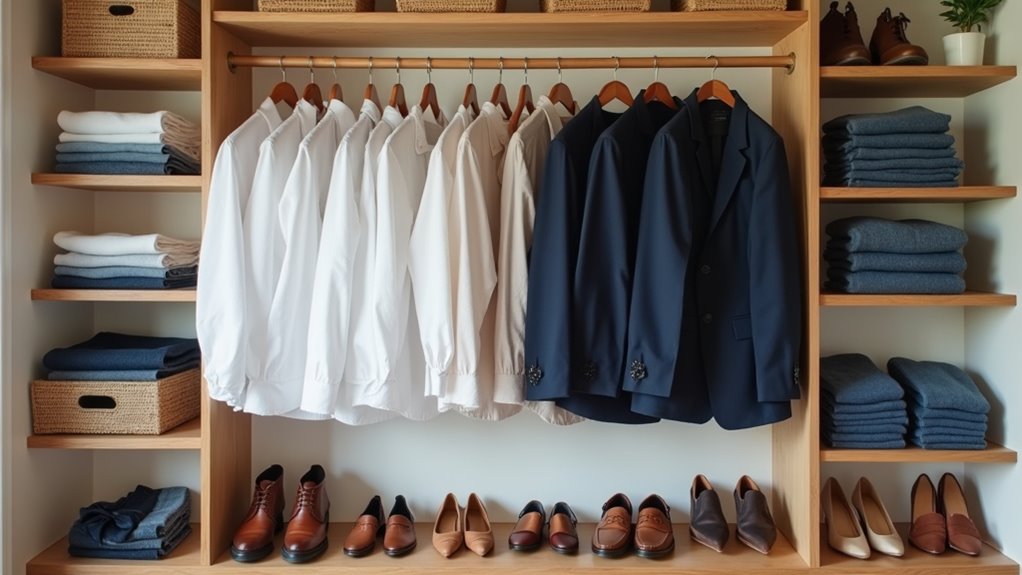
Organize clothes by sorting everything into broad categories, then by garment type, and then storing each piece according to how often you use it. Start with these categories: tops, bottoms, dresses, outerwear, activewear, sleepwear, underwear, shoes, and accessories. Assign each group a defined zone, such as a shelf, drawer, or closet section. Within these closet categories, sort by garment type, such as shirts, jeans, skirts, and coats, then arrange each type by color from light to dark. Home Edit closet ideas can also inspire you to utilize storage bins and labels for better categorization. A well-organized closet not only saves time but also enhances your overall space, making it feel more inviting.
Match storage to use. Keep everyday pieces in the easiest-to-reach spots, and put socks, underwear, and sleepwear in top drawers. Move bulky or rarely worn items to lower drawers or high shelves. Hang blouses, blazers, dresses, and dress pants to prevent creasing, but fold sweaters and knits so they don’t stretch. Store special-occasion outfits separately so they don’t crowd your everyday clothes. Easier wardrobe access allows you to find what you need without delay, enhancing your daily routine. When everything is organized, you can mix and match outfits effortlessly for any occasion.
Which sorting system fits your wardrobe best
Category sorting fits most wardrobes best, especially when paired with a second system such as frequency. The right combination depends on how you get dressed and how your wardrobe is built, so match the method to your routine, closet layout, and clothing mix.
| System | Best For | How It Works |
|---|---|---|
| Category | Large, varied wardrobes | Group tops, bottoms, dresses, outerwear |
| Frequency | Busy daily routines | Store favorites within easy reach |
| Garment type | Mixed fabrics | Hang structured pieces; fold knits |
| Activity | Work, gym, formal | Create separate zones per occasion |
| Season | Limited closet space | Rotate off-season items to storage |
Start with category sorting, then layer in frequency or season if space is tight. If you don’t reach for an item regularly, move it out of prime space so daily choices stay clear.
What goes into sorting clothes by category first
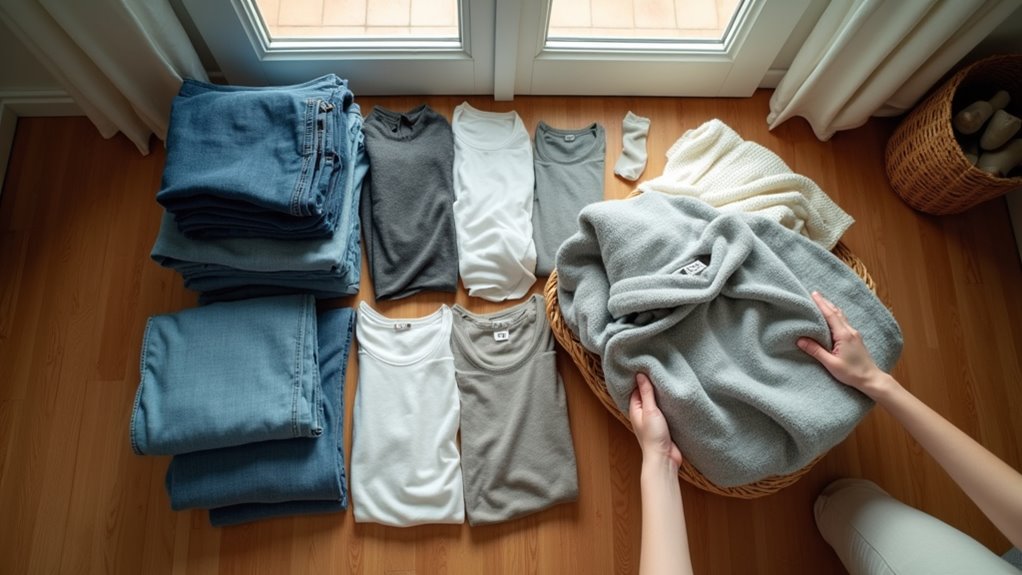
Sorting clothes by category first means separating your clothing into broad groups: tops, bottoms, dresses, outerwear, activewear, sleepwear, underwear, shoes, and accessories. Do this before you fold or hang anything, and assign each category its own closet section, shelf, or drawer so every item has a defined home.
Next, sort within each category by garment type. Split tops into T-shirts, blouses, and sweaters, and divide bottoms into jeans, skirts, and dress pants. Then arrange each group by color, from light to dark, so you can scan your options quickly.
If you’re unsure how to sort clothes in closet zones, separate everyday, work, special-occasion, and rarely used pieces. This step matches storage to actual use and keeps formal or seldom-worn garments from crowding the items you reach for daily. Consistent categories simplify every later step. Consider incorporating boutique closet finishes to enhance the overall aesthetic of your spaces. These tailored details can elevate the design and functionality of your storage solutions.
How do you break each group down further
Split each broad category by garment type so similar pieces sit together. Within tops, separate T-shirts, button-downs, blouses, and sweaters. Within bottoms, group jeans, dress pants, and skirts. Hang outerwear by coats, then jackets.
Next, arrange each type by color, moving from light to dark. You’ll scan faster and spot gaps or duplicates at a single glance.
Then sort by how often you wear each piece. Separate everyday, work, special-occasion, and rarely used items, and keep the everyday ones in the easiest-to-reach spots. Organizing clothes this way makes storage match real use rather than guesswork. To track what gets worn, turn hangers backward after laundering. Any still facing forward at season’s end flags an item you should review.
How do you arrange by how often you wear it
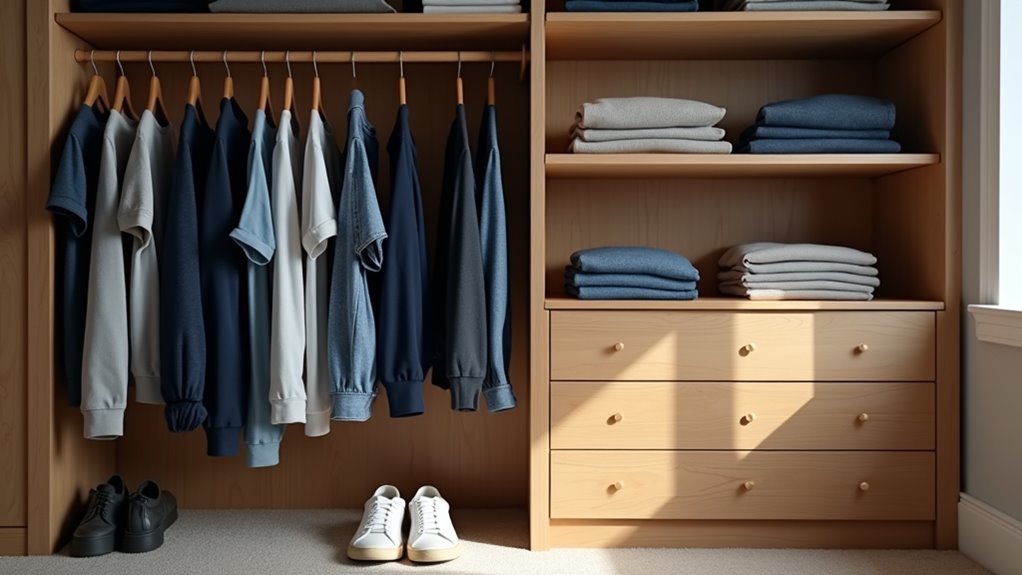
Give your most-worn clothes the easiest-to-reach spots. Keep current, frequently worn pieces at eye level or front and center in your closet. Push rarely used items toward the back or onto high shelves.
Assign your drawers by priority. Put daily essentials such as socks, underwear, accessories, and sleepwear in the top drawers. Use the middle drawers for folded everyday clothing, including T-shirts, jeans, and workout clothes. Reserve the lower drawers for bulky or less-used items like hoodies and seasonal pieces.
To find out which clothes you actually wear, try the hanger trick. Turn your hangers backward, then flip each one after you launder and rehang that garment. By season’s end, you’ll see what you wear and what you don’t.
How do season and occasion change the system
Season and occasion divide your wardrobe into an active closet holding only what you’ll actually wear now and secondary storage for everything else, so getting dressed takes less time. Create distinct zones for workwear, casual wear, exercise clothing, sleepwear, and formal outfits. Group pieces you wear together for a routine in one easy-to-reach area, and move special-occasion garments away from your main dressing space.
At each seasonal change, shift off-season items to secondary storage. Sort them into coats, sweaters, swimwear, and cold-weather accessories. Clean everything according to care labels and let it dry completely before packing. Fold knits and casual pieces into bins, and hang structured garments in breathable bags. Label each container with its season and contents, then store it somewhere cool, dry, and dark.
What keeps clothes from drifting out of their categories
A few fixed upkeep habits keep clothes from drifting out of their categories, because even a well-zoned closet slips out of order without regular maintenance. Return every garment to its assigned zone immediately after each laundering, and turn its hanger backward to track what you actually wear.
Review clothing as you put it away: separate frequently worn items, pieces you haven’t worn recently, and items you no longer want. Set aside anything that doesn’t fit your current routine for donation, sale, or disposal. Don’t overcrowd drawers or bins; leave enough space so similar garments stay grouped and visible.
Schedule seasonal rotations on your calendar every three months. Repeating these steps matters more than knowing how to organize clothes, and it keeps active storage aligned with current needs year-round.
Organize Your Closet Around What You Wear Most
If your clothes are difficult to find despite regular sorting, Creative Closet Design creates custom closet systems with dedicated clothing zones, adjustable shelves, drawers, and hanging sections. Serving Lakeland, Auburndale, Winter Haven, Plant City, Polk County, and Hillsborough County, our designers consider your wardrobe categories, available space, and daily routine before planning your layout. Call Our Team to schedule your free design consultation.
Frequently Asked Questions
How Do You Organize Clothes in a Small Closet Without Drawers?
You’ll organize a drawerless small closet by sorting clothes into categories and zones. Hang dresses, blouses, button-downs, blazers, coats, and skirts, arranging each category light to dark. Fold sweaters, T-shirts, and jeans on shelves, and store socks and underwear upright in labeled boxes. Keep everyday pieces at eye level, put accessories in a dedicated bin, and move off-season clothing to labeled containers elsewhere so you don’t overcrowd your limited space.
Which Types of Hangers Work Best for Different Garments?
Use wooden or contoured hangers for coats, blazers, and jackets so they keep their shoulder shape. Choose clip or bar hangers for skirts and dress pants to prevent creases. Slim velvet hangers work well for blouses, button-downs, and dresses, since they grip fabric and save space. Don’t hang sweaters or stretch knits; fold them instead. For delicate structured pieces, you’ll want breathable garment bags over sturdy hangers to protect them.
How Should Two People Organize Clothes in a Shared Closet?
Split the closet into two defined zones, giving each person their own hanging section, shelves, and drawers. Within your zone, sort by category, then garment type, then color from light to dark. Put frequently worn items at eye level and daily essentials in top drawers. Keep shared accessories in a labeled bin. Don’t let off-season clothing crowd either side. Rotate it into labeled storage each season, and review both sides.
How Do You Organize Children’s Clothes as They Outgrow Sizes?
Sort your child’s clothes during each seasonal rotation, separating items that fit now, items they’ll grow into, and items they’ve outgrown. Keep current sizes in easy-to-reach drawers, grouped by category. Pack larger sizes in bins labeled with size and season, and store them somewhere cool, dry, and dark. Set outgrown pieces aside for donation, sale, or hand-me-downs, and don’t overcrowd containers so you’ll find things fast when you need them.
How Do You Keep Folded Clothing Stacks From Toppling on Shelves?
Keep your stacks short and uniform: fold each garment to the same width, then place heavier, thicker pieces like jeans and sweaters at the bottom. Add shelf dividers to brace each stack’s sides. For small items, you’ll get better stability by filing them upright in boxes or bins, which also lets you see everything. Don’t overcrowd shelves, and group similar garments together so you’re pulling from neat, consistent, stable piles.