
Fold your bulky sweaters instead of hanging them, since hangers waste rod space and stretch shoulders. Tuck the sleeves in, fold the sides toward the center, and form a compact rectangle. Stack three to five per pile, with the heaviest on the bottom. Keep current-season knits on eye-level shelves and move off-season pieces to higher shelves or under-bed bins. Next, you’ll find a smart way to match shelves, cubbies, drawers, and bins to each knit.
Key Takeaways
- Fold bulky sweaters instead of hanging them, since heavy knits stretch at the shoulders and waste rod space.
- Stack three to five folded sweaters per pile, placing the heaviest at the bottom to prevent toppling and pressure.
- Use shelf dividers, cubbies, or stackable bins to contain piles and keep them from spreading into neighboring space.
- Keep current-season sweaters on eye-level shelves and move off-season knits to higher shelves or under-bed containers.
- Avoid long-term vacuum compression, which can flatten wool fibers and distort the shape of bulky sweaters.
How Can You Store Bulky Sweaters Without Taking Over Your Closet
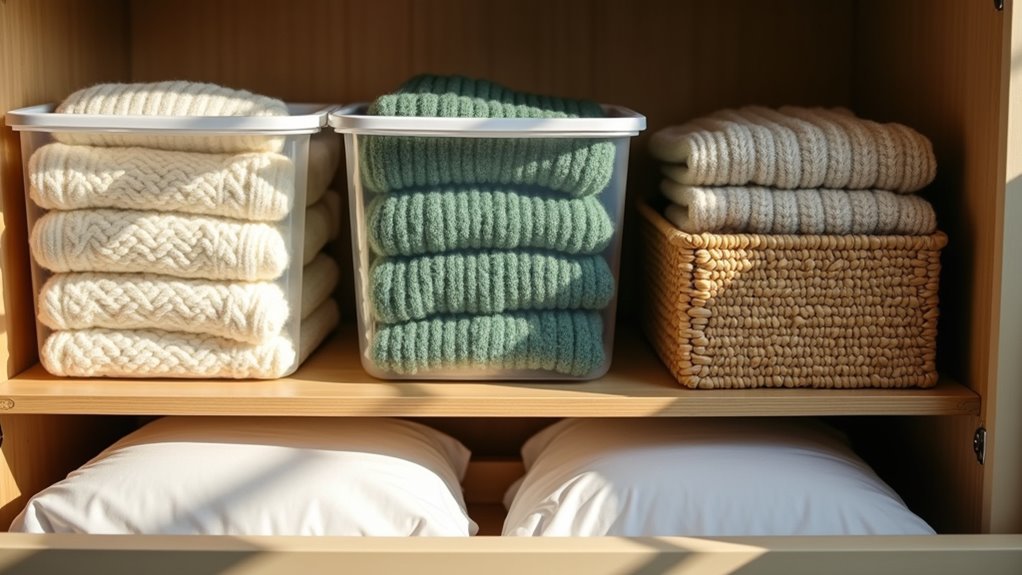
Fold bulky sweaters instead of hanging them, and store them on shelves, in bins, and in spaces you’re already ignoring so they don’t take over your closet. Learning how to store bulky sweaters starts with folding. Lay each sweater flat, fold the sleeves inward, then fold the sides toward the center to form a compact rectangle. Stack three to five per pile, with the heaviest at the bottom, so you won’t fight toppling towers.
The best bulky sweater storage ideas use space you’re already ignoring. Put folded stacks on upper shelves, add stackable bins or cubes, and use shelf dividers to keep piles contained. Move out-of-season knits to higher shelves or under-bed bins. For bulky sweater closet storage, reserve rods for lightweight pieces only, and skip long-term vacuum compression, which can flatten wool fibers and distort shape.
Why Do Bulky Sweaters Require More Storage Volume Than Lightweight Knits
Bulky sweaters require more storage volume because their thick yarns trap air, giving each sweater loft that a thin cotton knit simply doesn’t have. You can’t safely squeeze that loft out. Long-term vacuum compression can flatten wool fibers and change the garment’s shape, so you need to preserve its natural volume.
Weight adds another constraint. Heavy knits stretch at the shoulders when hung, which pushes them onto shelves and into bins instead of onto rods. There, you’ll fold them loosely, and you’ll keep stacks to three to five pieces so they don’t topple and heavier pieces sit lowest.
Plan your storage for sweaters around these limits, and you’ll choose containers that fit.
How Can You Limit the Number of Bulky Sweaters Kept in Prime Closet Space
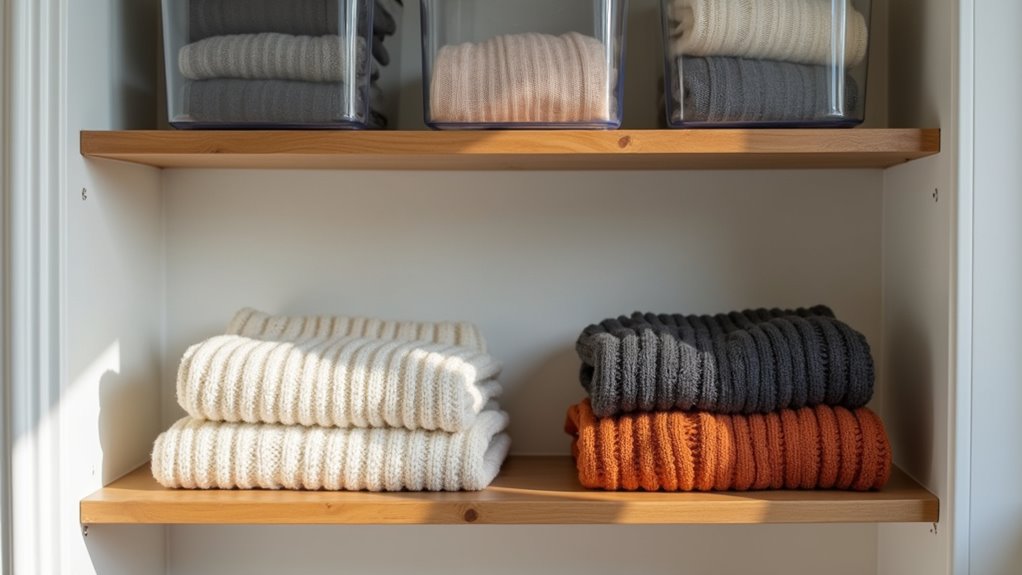
Keep only current-season sweaters on eye-level shelves, and limit each stack to three to five sweaters. Sort your collection into current-season and off-season piles. Move the off-season knits to higher shelves, stackable bins, or under-bed containers so they don’t compete for the shelves you reach daily. Wash each sweater and let it dry completely prior to packing it away.
Set a firm limit for your prime shelf: three to five sweaters per stack. Place the heaviest knits at the bottom to protect lighter ones from pressure. Use shelf dividers or bins to stop stacks from spreading into neighboring space. Group sweaters by color or pattern so you can spot what you need quickly. Rotate one sweater back into storage whenever a stack exceeds its limit.
How Do Deep Shelves Large Cubbies Wide Drawers and Overflow Bins Compare for Bulky Sweater Storage
Deep shelves suit everyday chunky knits, large cubbies keep sorted stacks contained, wide drawers let heavy sweaters rest flat, and overflow bins hold out-of-season pieces, so choose each storage type based on how often you reach for its contents.
| Storage Type | Best For | Why You’ll Love It |
|---|---|---|
| Deep shelves | Everyday chunky knits | Stacks of three to five stay tidy and easy to grab |
| Large cubbies | Sorted colors or patterns | Contained stacks never spill into neighboring space |
| Wide drawers | Loosely folded or rolled sweaters | Heavy knits rest flat, free from shoulder stretch |
| Overflow bins | Out-of-season wool and cashmere | Under-bed storage frees your closet for today’s favorites |
Put heavier sweaters at the bottom of every stack, and use dividers to keep shelves orderly. For bins, pick breathable containers, keep them elevated and dry, and check them periodically so moths or moisture never surprise you.
How Can You Use Vertical Space Without Building Unstable Tall Stacks
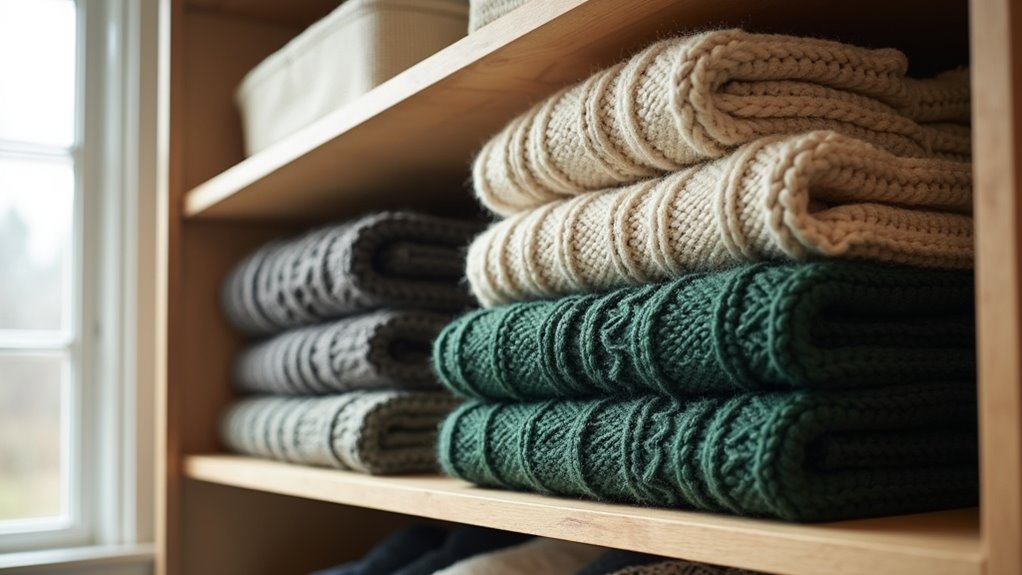
Add structure instead of height: keep each sweater stack to three to five sweaters and use shelf dividers to contain each stack and stop it from spreading into neighboring space. Place the heaviest knits at the bottom so they don’t crush lighter ones. Piling sweaters high on an upper shelf is tempting, but structure gives you more usable space.
For more levels, add stackable bins or cubes rather than taller piles. Each compartment holds its own small stack securely. Sort sweaters by color or pattern so similar items stack neatly together. Reserve the highest, hardest-to-reach spots for out-of-season sweaters you rarely need. Clear away hanging clothes that block flat shelf surfaces, and use the open area above existing bins for folded stacks.
How Should Heavy Knits Be Separated From Delicate Sweaters to Prevent Compression
Store heavy knits and delicate sweaters in separate stacks, or place the heaviest wool and chunky knits at the bottom of any shared stack with lighter sweaters on top. Weight flows downward, so this order keeps delicate knits from getting crushed under bulk. When weights vary widely, separate them entirely instead of stacking them together.
- Cap stacks at three to five sweaters. Short stacks limit pressure on bottom layers and won’t topple when you pull one out.
- Use shelf dividers or bins. They keep heavy and delicate stacks from spreading into each other.
- Give cashmere its own space. Store it in breathable cotton or muslin bags instead of under wool.
- Skip vacuum compression for lofty knits. Long-term compression can flatten fibers and distort shape.
Fold chunky sweaters loosely, and roll them if they need to fit into bins.
When Is a Custom Shelf or Cubby Layout Worth Considering for Bulky Sweaters
A custom shelf or cubby layout is worth considering when your sweater stacks keep toppling, spilling into neighboring space, or climbing past five sweaters because you don’t have enough shelf area. Cubbies hold three to five folded sweaters each, so stacks stay contained and you can pull one without disturbing the rest. Look first at unused vertical space: upper closet shelves and the gap above existing bins often fit stackable cubes or added shelves. Size each compartment for loosely folded chunky knits, not tightly pressed rectangles, and give heavy wool its own lower cubbies so it doesn’t crush lighter pieces. Place out-of-season sweaters in the highest sections. Clean the shelves and let them dry completely before installing anything. Then fill them by color.
Give Bulky Sweaters the Space They Need
Bulky sweaters stay easier to access when shelves, cubbies, and drawers are sized for folded knits instead of forcing everything onto hanging rods. Creative Closet Design creates custom closet systems for Central Florida homeowners with storage designed around clothing type, season, and available space. Serving Lakeland, Auburndale, Winter Haven, Plant City, Polk County, and Hillsborough County, our designers will look at your wardrobe, shelf space, and storage habits before drawing anything. Call Our Team to schedule your free design consultation.
Frequently Asked Questions
Can Vacuum Storage Bags Damage Wool Sweaters if Used for Several Months?
Yes, they can. If you compress wool sweaters for months, you’ll risk flattening the fibers and distorting their shape. Save vacuum bags for short-term space crunches, and use them cautiously with lofty knits. For off-season storage, you’ll do better with breathable cotton or muslin bags. Clean and dry each sweater first, add cedar blocks, and slide the bags under your bed, away from sunlight and heat, then check them periodically.
Should Sweaters Be Washed Before Being Packed Away for the Off-Season?
Yes, you should wash or clean your sweaters before packing them away, and you’ll want them completely dry before they go into storage. Lingering moisture can cause odors, so don’t rush it. Clean and dry your shelves too, then store sweaters somewhere cool, dry, and dark. Add cedar blocks or sachets, set clothing moth traps near wool and cashmere, and check all your stored knits periodically for pests or dampness.
Do Cedar Blocks Actually Help Protect Stored Sweaters From Moths?
Yes, cedar blocks can help, but you shouldn’t rely on them alone. Treat them as a deterrent, not a guarantee. Tuck a block or sachet into each bin or breathable bag, then add clothing moth traps near your wool and cashmere for early warning. Since you’ve already cleaned and fully dried your sweaters, keep your storage cool, dry, and dark, and check your stored garments periodically for pests or moisture.
Is It Safe to Store Bulky Sweaters Under the Bed?
Yes, it’s safe if you prep and protect them properly. First, wash your sweaters and let them dry completely. Next, pack them in containers that block dust and pests, and keep those bins elevated if leaks or pests are a concern. Choose a cool, dry spot, and skip long-term vacuum compression for wool. Finally, don’t forget them: check periodically for moisture or moths. Under-bed bins also free up closet shelves.
What Type of Hanger Works Best if a Sweater Must Be Hung?
Choose wooden or padded hangers, not wire ones, when you’ve got to hang a sweater. Don’t hook the hanger at the shoulders. Instead, fold the sweater in half lengthwise, drape it over the hanger’s bar, and tuck the sleeves across. You’ll avoid shoulder stretching. Save rod space for lightweight or sturdy knits only, and fold heavy wool, cashmere, and thick sweaters onto shelves or into bins to reclaim closet space.