You’ll organize your closet best by emptying it completely to see everything you own. Group similar pieces, then sort them into keep, donate, repair, and discard piles. Keep only items that fit, get regular wear, and work with your outfits. Wipe shelves, vacuum the floor, and measure your space. Then return keepers to defined hanging, folding, shoe, and accessory zones. Next, you’ll see which organizing method fits your routine and how to keep it working.
Key Takeaways
- Empty the closet completely, grouping similar items together to spot duplicates and assess everything you own.
- Sort items into keep, donate/sell, repair, and discard piles, keeping only pieces that fit and get regular wear.
- Clean the empty closet by wiping shelves and rails, vacuuming the floor, and measuring existing rods, shelves, and drawers.
- Organize keepers by type, occasion, season, or color, combining methods to suit your daily routine and available space.
- Create hanging, folding, shoe, and accessory zones, then maintain them by returning items to designated spots after use.
How do you organize your closet from start to finish
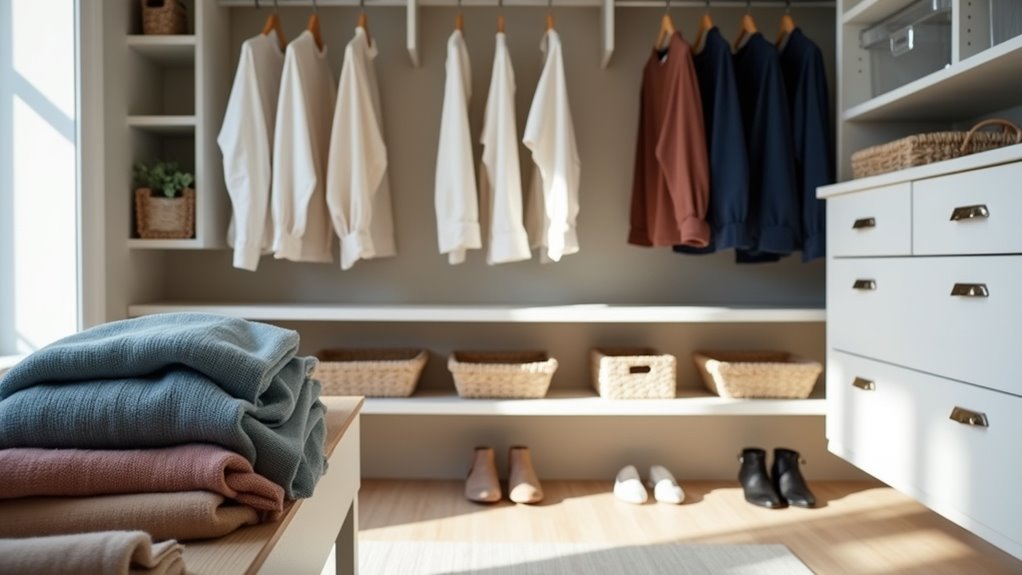
Organize your closet by emptying it completely so you can see everything you own, then sorting, cleaning, and setting up zones before returning only the items you keep. Group similar items, measure the space, and note what’s already installed inside. Next, sort each category into keep, donate, sell, repair, and discard piles, and remove rejects promptly. Clean the empty closet, wiping shelves and rails and vacuuming the floor. Home edit organizing steps can help streamline your process and ensure that you make the most of your space. By following these steps, you can create a more functional and aesthetically pleasing environment.
Then set up zones: hang garments by length, fold sweaters onto shelves, and store shoes in cubbies. Leave space between garments for better airflow and visibility. Return only keepers, grouping them by type, season, or color, with everyday pieces within easy reach.
How do the main organizing methods compare
The four main organizing methods are grouping by type, occasion, season, or color, and each suits a different need.
| Method | How It Works | Best For |
|---|---|---|
| Type | Hang tops, pants, and dresses separately | Quick daily selection |
| Occasion | Separate work, casual, and formal pieces | Varied schedules |
| Season | Keep current-season items accessible | Limited space |
| Color | Arrange shades light to dark | Visual outfit planning |
The best way to organize closet space depends on your routine. Combine methods for precision: group by type first, then sort each section by color. Within tops, separate sleeveless, short-sleeved, and long-sleeved pieces. Move out-of-season clothing to secondary storage, and keep everyday items within easy reach. Pick the system you’ll actually maintain. Organizing women’s clothes can also involve creating designated zones for different occasions, such as work, casual outings, or formal events. By doing this, you can ensure that you quickly find the appropriate outfit for any situation.
How do you empty and declutter before you start

Remove everything from the closet, including clothing, shoes, accessories, bins, and stored items, to get a clear view of what you own. Cover your bed or floor, then group similar pieces so you can spot quantities and duplicates. Measure the space and note existing rods, shelves, and drawers, since your layout is central to how to organize a closet. Set aside items that belong elsewhere, and remove empty hangers.
Next, review each category and sort items into piles:
- Keep: pieces that fit, get regular wear, and match your outfits
- Donate or sell: uncomfortable or rarely worn clothing
- Repair: damaged items worth saving
- Discard: worn-out or expired items
Examine undecided pieces individually, and remove unwanted piles promptly so they don’t mix back with your keepers.
What belongs in the keep pile
Your keep pile should include only items that fit, that you wear regularly, and that work with outfits you already own. Check each piece against these three standards, and resist holding on to pieces “just in case.” If an item feels uncomfortable or you rarely reach for it, reconsider it before it goes back.
Handle undecided pieces one at a time instead of returning them to the closet automatically. Try it on, inspect it for stains, tears, or stretching, and ask whether you’d buy it today. Move damaged items you’ll fix to the repair pile, and clear donations and discards from your sorting area right away so they don’t drift back.
How do you set closet zones for hanging, folding, and shoes
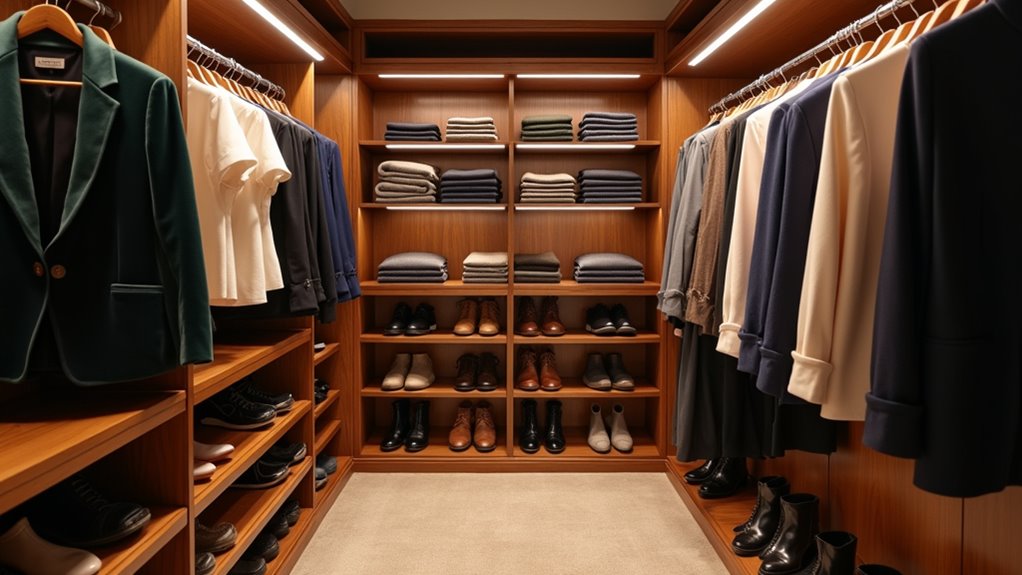
Set closet zones by assigning each type of item its own area: a hanging zone for garments on rods, a folding zone for shelves or drawers, and a shoe zone on low shelves or cubbies. Study the empty closet, measure the space, and note existing rods, shelves, and drawers so you can match each zone to what you own. Assigning zones first prevents clutter from creeping back.
- Hanging zone: Set separate rod heights for short, medium, and long garments, and leave space between hangers for airflow.
- Folding zone: Place sweaters, jeans, and knits on shelves or in drawers, using dividers to keep stacks upright.
- Shoe zone: Store pairs on low shelves or in cubbies where you can see them.
- Accessory zone: Mount hooks for belts, scarves, and jewelry.
Put everyday items at eye level, within easy reach.
What keeps the system working week to week
Small daily habits keep your closet organized week to week, long after the initial cleanout. Return each item to its designated category and storage location right after you use it. Don’t leave clothes draped over chairs or piled on the floor, since one stray stack quickly invites more.
Air worn clothing before you put it away, and store garments only when they’re clean and completely dry. Damp fabric can trap odors and damage the space. Keep folded stacks manageable and leave room between hangers so you can see and reach everything.
Clean the closet regularly and air it out periodically. At each seasonal change, reassess your clothing and remove pieces you haven’t worn. These reviews stop clutter from building and keep everything accessible.
How do you decide when to bring in a custom closet design
Bring in a custom closet design when the closet’s structure, not your habits, keeps it from holding everything you’ve chosen to keep. If you’ve decluttered, grouped items, and added dividers, hooks, and bins, yet clothing still crowds together, the structure itself may be the problem. Measure the closet’s dimensions and review existing rods, shelves, and drawers. Consider a custom design when you notice these signs: Exploring boutique closet trends can provide inspiration for maximizing space and enhancing functionality. These trends often focus on tailored solutions that cater to individual styles while optimizing storage.
If you’ve decluttered, grouped items, and added organizers, yet clothing still crowds together, the closet’s structure may be the problem.
- Long garments touch the floor because rod heights don’t fit them.
- Folded stacks topple despite shelf dividers.
- Shoes and bags lack dedicated cubbies or shelves.
- Garments press together with no room for airflow.
A custom layout lets you set rod heights for short, medium, and long pieces, place drawers where you need them, and keep everyday items within reach. Compare quotes against your inventory.
Get a Custom Closet That Stays Organized
If decluttering and storage bins aren’t enough to keep your closet organized, Creative Closet Design creates custom closet systems with hanging sections, adjustable shelves, drawers, and dedicated shoe storage. Serving Lakeland, Auburndale, Winter Haven, Plant City, Polk County, and Hillsborough County, our designers assess your available space, wardrobe collection, and storage needs before planning your layout. Call Our Team to schedule your free design consultation.
Frequently Asked Questions
How Long Does It Typically Take to Organize a Closet Completely?
You’ll typically need a few hours to a full day, depending on your closet’s size and how much you own. You’ll spend the most time emptying shelves, grouping similar items, and sorting keepers from donations. Next, you’ll clean surfaces, measure the space, and choose dividers, hooks, or bins. Finally, you’ll arrange garments by type, color, or season. Break large closets into sessions so you don’t rush decisions about undecided pieces.
What Should You Do With Sentimental Clothing You Never Wear?
Pull sentimental pieces you never wear into their own pile and examine each one individually instead of automatically returning it to your closet. Keep only items you truly value, then make sure they’re clean and completely dry. Store them in a labeled bin in secondary storage, away from everyday clothing, so they don’t crowd your hanging space. Reassess them during seasonal changes or routine closet reviews, releasing what’s lost meaning.
How Can You Organize a Closet Shared Between Two People?
Divide the closet into clearly assigned zones so each of you knows exactly where your things belong. Start by emptying everything, grouping items by owner and type, and decluttering separately. Then note the rods, shelves, and drawers, and split them evenly, using separate rod heights for short and long garments. Add dividers, bins, and hooks, keep each person’s everyday pieces within easy reach, and don’t ever overcrowd the shared space.
What Are the Best Ways to Prevent Moths in Stored Clothing?
You’ll prevent moths best by storing only clean, completely dry clothing, since body oils, stains, and dampness attract pests. Air worn garments before putting them away. Vacuum the floor and wipe shelves, rails, and corners regularly, and periodically air the closet. Don’t overcrowd: leave space between garments so air circulates and you can spot damage. During seasonal reviews, inspect stored items for holes and remove anything you no longer wear.
How Do You Organize a Small Closet Without Any Shelves?
Start by emptying the closet, decluttering, and noting its dimensions so you know exactly what space you’ve got. Then group garments by length and hang them in separate zones, leaving gaps for airflow. Since you don’t have shelves, add hooks for belts, scarves, and bags, and fold sweaters into bins or drawers with dividers. Keep your everyday pieces within easy reach, and store your out-of-season items elsewhere to prevent overcrowding.