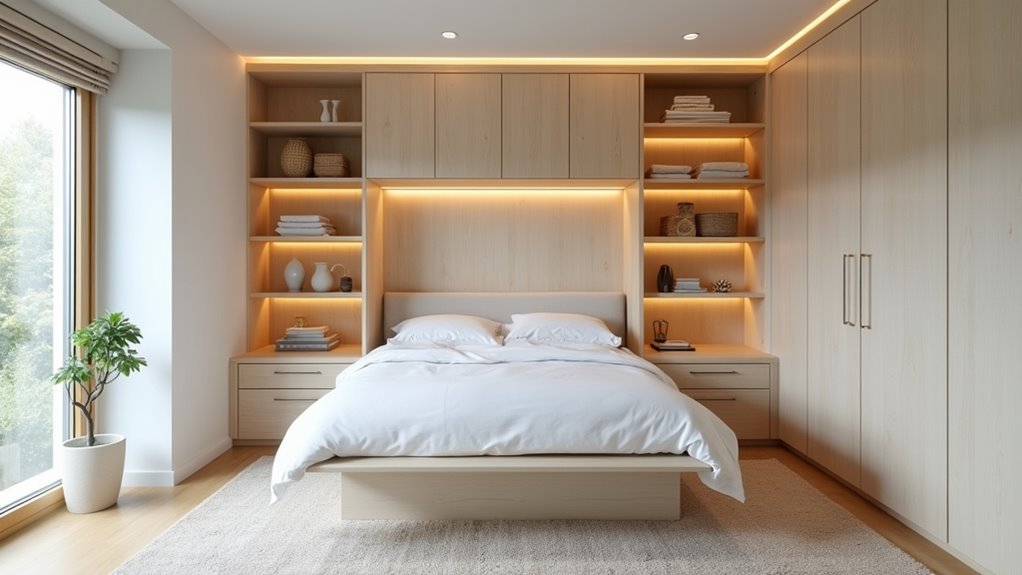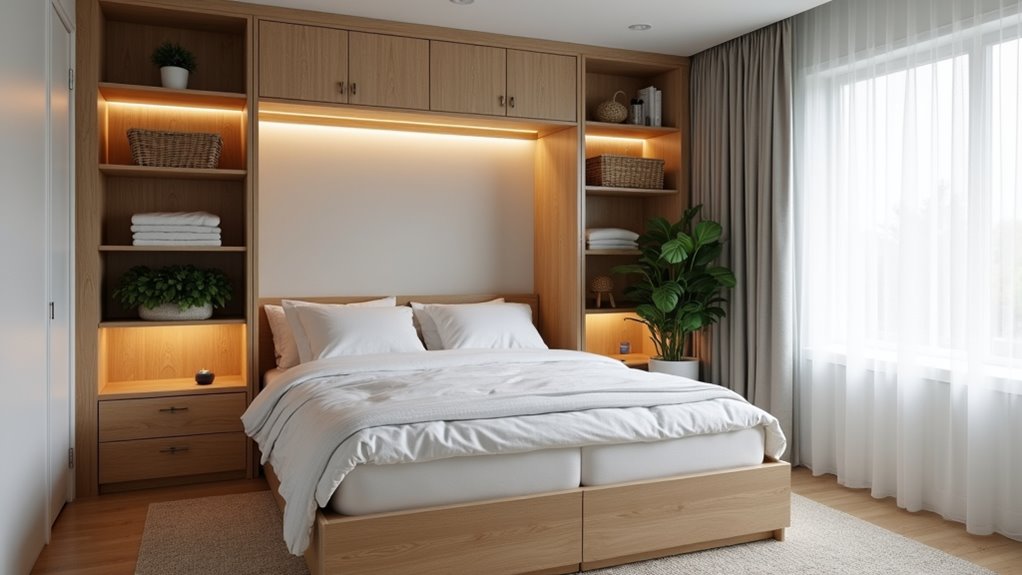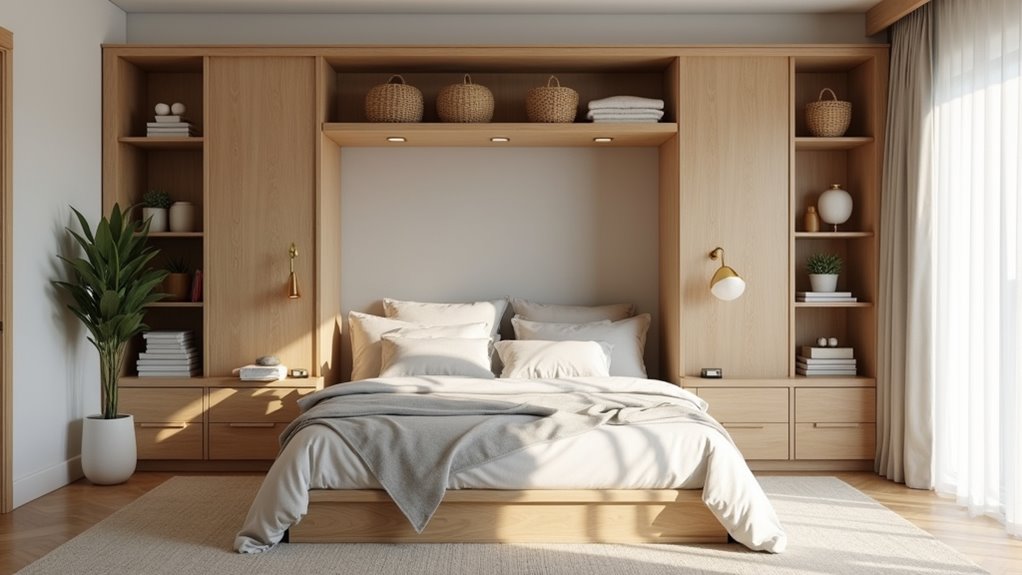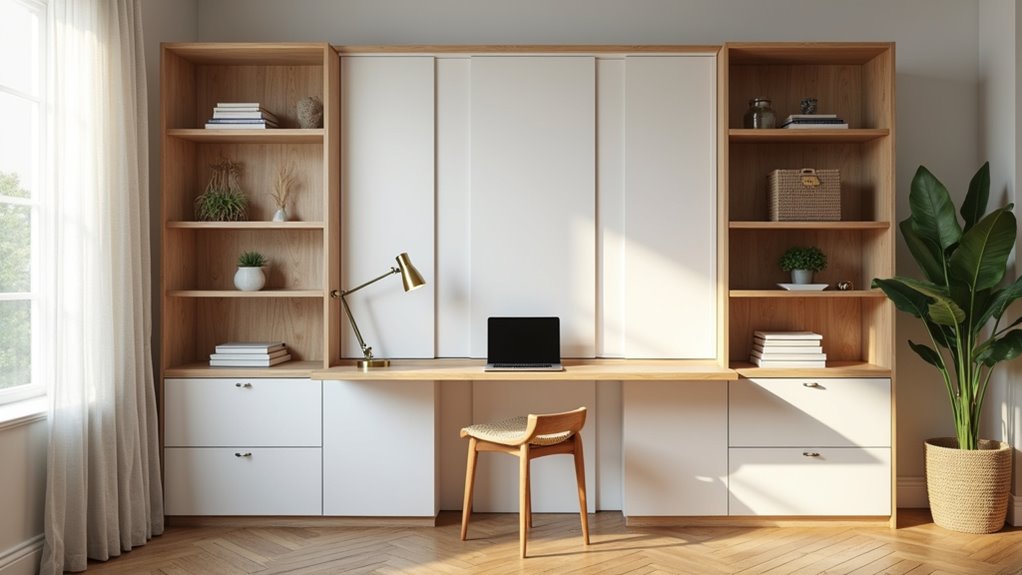
To keep your closet organized long-term without constant redoing, you’ll want to position daily essentials at eye level between 30 and 60 inches from the floor. Switch to matching velvet hangers to gain about 12 inches of rod space while preventing slippage. Add freestanding shelves for flexible storage without drilling, and choose bins that actually fit your shelf dimensions. Purge seasonally and keep floors clear, these five strategies below will transform your closet maintenance routine.
Organize by Reach: Daily Items at Eye Level
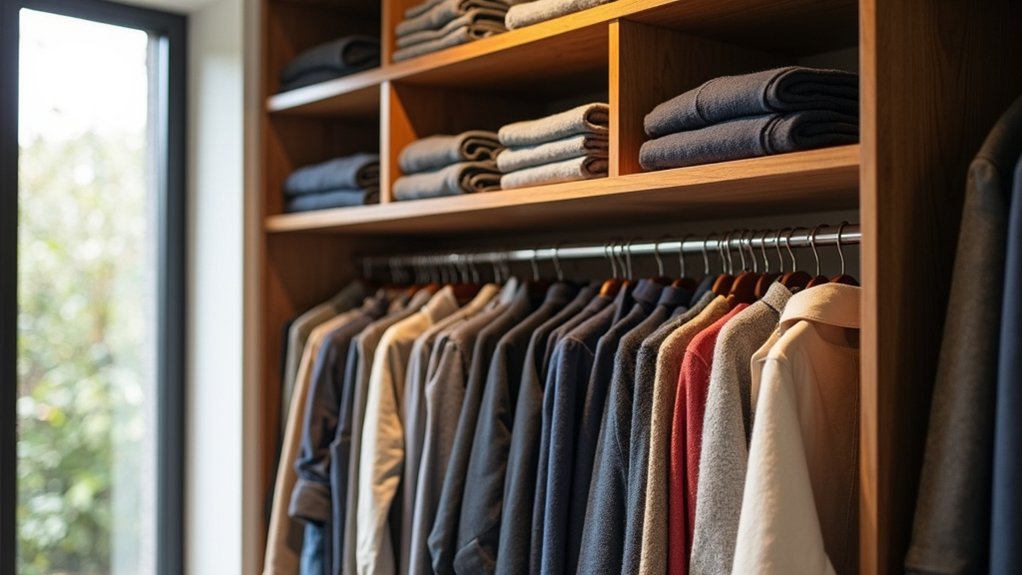
When you’re standing in front of your closet each morning, the items between 30 and 60 inches from the floor should be your everyday essentials. This prime zone, equivalent to closet real estate gold, houses your work attire and morning routine grabs at eye to waist level.
Since you likely wear only 25% of your wardrobe regularly, position these pieces for immediate visibility. Rotate frequently used items into this accessible space while moving seasonal clothing above 60 inches. Streamline folding techniques to maximize shelf stacking, keeping eye-level shelves spaced 12 to 16 inches apart. For efficient vertical organization, consider installing double hang systems with an upper rod for shirts and pants and a lower rod for skirts and jackets. With the average person owning around 148 clothing pieces, strategic placement becomes even more critical for maintaining daily order. When considering tips for organizing your entryway, start by maximizing the use of vertical space with hooks for bags and coats, which keeps the floor clear and visually appealing. Incorporating baskets or bins can help manage shoes and other small items, ensuring everything has a designated spot.
Place winter footwear and daily accessories within this grab-and-go section. This systematic approach reduces the average lifetime hours wasted searching, time you’ll never get back. When organizing a child’s belongings, consider implementing backpack storage solutions for kids. These options not only keep items in order but also encourage responsibility and independence in your little ones. By creating a designated space for backpacks, you streamline morning routines and ensure everything is easily accessible.
Switch to Matching Velvet Hangers for a Cleaner Look
Uniformity transforms a cluttered closet into a streamlined system. When you swap mismatched plastic and wire hangers for velvet alternatives, you’ll gain approximately 12 inches of rod space. This space saving functionality lets you fit more garments without crowding.
The velvet texture grips fabric lightly, preventing silky tops and tank tops from slipping during your morning rummage. You’ll maintain garment position and reduce wrinkles through better separation and ventilation.
Choose a minimalist color scheme, black, gray, or soft pastels, to create visual calm and enable color-coding by category. Black velvet provides a refined background that makes outfit selection easier. The consistent appearance creates a cohesive, luxurious look that elevates your entire wardrobe space.
Reserve wooden hangers for heavy coats and sweaters. For everything else, velvet delivers durability without warping or rust while keeping your closet magazine-worthy. Unlike metal hangers that can deform or plastic options that snap under pressure, velvet hangers feature a sturdy design that contributes to their impressive longevity. For suits that require extra care, consider dedicated suit hangers with curved shoulders that support the natural shape of jackets while keeping pants paired together.
Add Freestanding Shelves Without Drilling
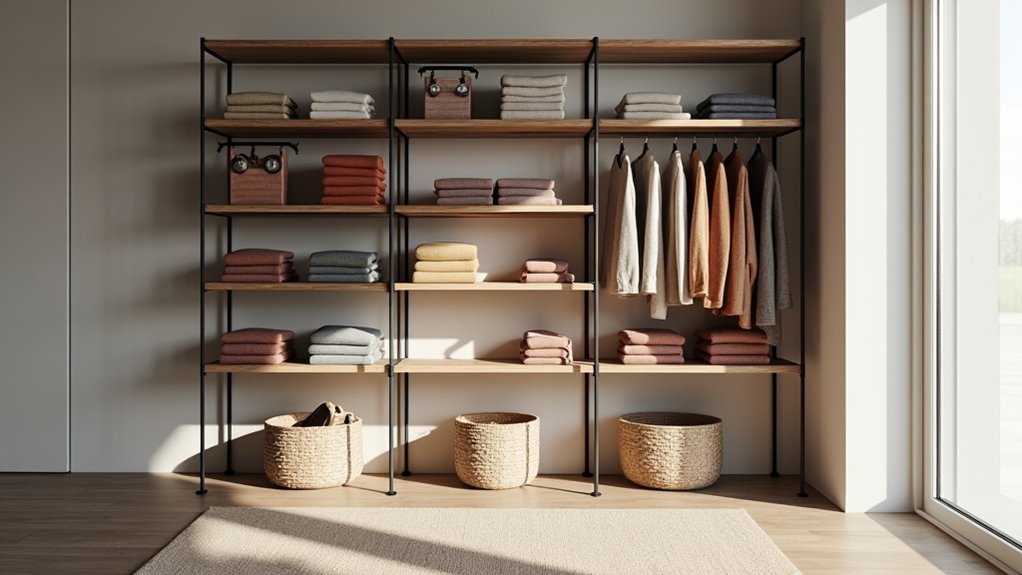
Freestanding shelves offer renters and homeowners a practical storage solution that requires zero wall modifications. You can position these units anywhere in your closet and relocate them as your needs evolve. This flexibility lets you customize for changing space needs without permanent commitments.
To maximize your closet organization, leverage multi functional storage units that include:
- Adjustable shelving with compartments up to 24 inches deep for bulky items like bedding and luggage
- Built-in drawers and hanging rails for clothing and accessories
- Modular designs that combine with other units for hybrid configurations
You’ll save time on installation since assembly follows simple manufacturer instructions. When you move, disassemble everything without leaving structural damage behind. These portable units are an excellent choice for renters or anyone who frequently relocates to new spaces. Consider adding corner shelf units to make use of awkward closet corners that often go underutilized. This approach keeps your closet organized while preserving your walls intact. With everything in designated sections, you’ll enjoy quick retrieval of items without searching through cluttered spaces.
Choose Bins That Actually Fit Your Shelf Dimensions
Your shelving setup means nothing if your bins don’t match your shelf dimensions. Proper shelf depth selection determines which containers work in your space. Standard shelves at 12-16 inches deep accommodate most right sized storage bins, while chrome baskets fit shelves up to 15-20 inches deep.
| Shelf Depth | Best Bin Type | Vertical Spacing Needed |
|---|---|---|
| 12 inches | Small accessories | 10-12 inches |
| 14-16 inches | Linens/towels | 12-15 inches |
| 18-24 inches | Bulk storage | 18-24 inches |
Measure your shelf depth from back wall to front edge before purchasing containers. Walk-in closets benefit from 16-inch deep shelves for standard bins. Allow 24 inches between shelves when storing boxes. For folded clothing like sweaters and jeans, maintain 12 inches between shelving to keep stacks accessible without crushing items. Test your items’ stack heights to confirm spacing works before committing to a system. Using adjustable shelving systems allows you to reconfigure shelf depths as your storage needs change over time.
Purge Seasonally and Keep Floors Clear for Easy Cleaning
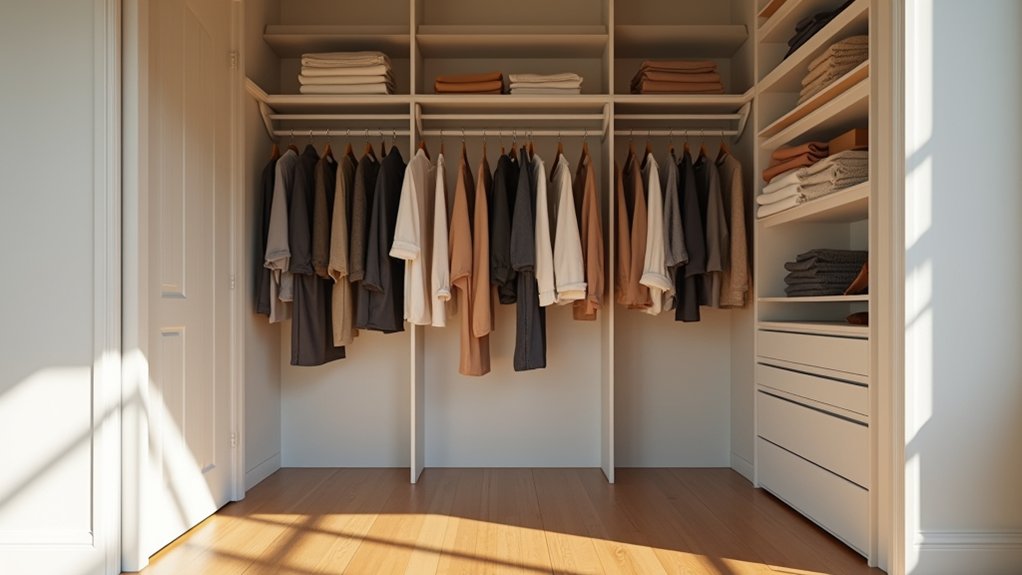
Because closets function best when they’re not stuffed to capacity, maintaining a systematic purging routine every season prevents the clutter buildup that derails even the most thoughtful organization systems. Keep your closet no more than 80% full to maximize air flow and give garments room to breathe. innovative closet designs for efficient organization can dramatically enhance your storage potential. By incorporating smart shelving, multifunctional furniture, and tailored accessories, you can transform disarray into a streamlined haven. Embracing creativity in your closet setup allows for both functionality and style, ensuring that your space truly reflects your needs.
A closet at 80% capacity isn’t empty, it’s breathing room for your wardrobe to thrive.
During each seasonal shift, pull everything out and sort into three categories:
- Keep: Items that fit, flatter, and suit the current season
- Store: Off-season pieces that are clean and dry
- Donate: Clothing that’s worn, outdated, or never worn
Clear floors completely, this makes vacuuming simple and lets you monitor for pests that can damage stored clothing. For off-season items you’re storing away, consider climate-controlled storage units to protect delicate fabrics from extreme temperatures and humidity damage. This routine also helps you rediscover forgotten pieces that have been buried in the back of your closet, giving you fresh outfit options without spending money. When you return items to their designated spots immediately after wearing, you’ll maintain the organization structure without constant re-doing. To stay on top of your system, reassess your closet organization monthly to catch small issues before they become overwhelming clutter problems.
Ready to Transform Your Space?
A well-designed closet or storage system can completely change the way you live at home, and at Creative Closet Design, we make that transformation effortless. From custom closets and pantry systems to garage storage, office systems, and entertainment centers, our experienced team designs and installs solutions tailored specifically to your space and your lifestyle. Call (863) 591-4500 today to schedule your free design consultation.
Frequently Asked Questions
How Do I Organize a Shared Closet With a Partner Who Has Different Habits?
You’ll succeed by creating designated zones that give each person their own vertical sections from top to bottom. Start by sorting together using the Keep, Donate, Discard method, then communicate preferences about storage needs openly. Install dual hanging rods and drawer dividers to accommodate different clothing types. Establish compromise habits by labeling shelves, scheduling weekly tidying sessions, and setting clear rules for returning items to designated spots.
What’s the Best Way to Store Shoes Without Taking up Floor Space?
You’ll maximize space by installing hanging shoe organizers on the back of your closet door, mesh versions hold 13+ pairs while keeping shoes visible. Alternatively, mount vertical shoe racks directly on walls to eliminate floor clutter entirely. For shared closets, assign each partner a dedicated over-door organizer or wall section. Choose adjustable systems you can expand as your collection grows, and group shoes by frequency of use for quick access.
How Can I Prevent Musty Odors From Developing in My Closed Closet?
To prevent musty odors in your closed closet, you’ll want to control humidity systematically. Start with dehumidifier usage or place DampRid containers to pull excess moisture from the air. Add moisture absorbing materials like activated charcoal bars, which purify air over several days. Guarantee all clothing dries completely before storing, and avoid packing items tightly, leave space between hangers for airflow. Finally, place coffee grounds on shelves to neutralize developing odors.
Should I Organize Clothes by Color, Type, or How Often I Wear Them?
You’ll get the best results by combining all three methods. Start by sorting clothes by type (pants, shirts, dresses), then arrange each category by color for visual appeal. Within those groups, organize by frequency of wear, place daily essentials at eye level and store less-used items toward the back. Finally, rotate by season, moving off-season pieces to higher shelves or storage bins to maintain easy access year-round.
How Do I Maintain Closet Organization When My Wardrobe Changes Frequently?
You’ll maintain organization by installing modular shelving systems that adjust to your growing wardrobe needs. Apply the one-in-one-out rule, when you add something new, remove an old piece immediately. Schedule monthly 15-minute audits to eliminate items that no longer work. During seasonal shifts, swap categories systematically, storing off-season pieces in labeled breathable bags. Break reorganization into timed 1-2 hour sessions by category to prevent overwhelm and keep your system functional.