
To organize sweaters in drawers for easy access, fold each one into a uniform rectangle sized to your drawer’s depth. Button cardigans first, tuck sleeves inward, and smooth wrinkles. File them upright, fold edges up, so you see every piece at a glance. Group them by type, use dividers to stop leaning, and keep your most-worn knits up front. You’ll want to know which sweaters belong on shelves and when a drawer’s too full.
Key Takeaways
- Fold each sweater into a uniform rectangle sized to your drawer’s depth, folding sleeves inward and buttoning cardigans first.
- Store lightweight knits like merino and cotton in drawers, reserving shelves for bulky cable knits and chunky wool.
- Group sweaters by type, then weight, using dividers to keep pullovers, cardigans, and turtlenecks in separate sections.
- File sweaters upright with fold edges up in deep drawers for quick visibility, placing most-worn pieces at the front.
- Avoid overcrowding, and rotate sweaters seasonally or when rows lean, neighbors drag along, or the drawer resists closing.
How Can You Organize Sweaters in Drawers for Easy Access
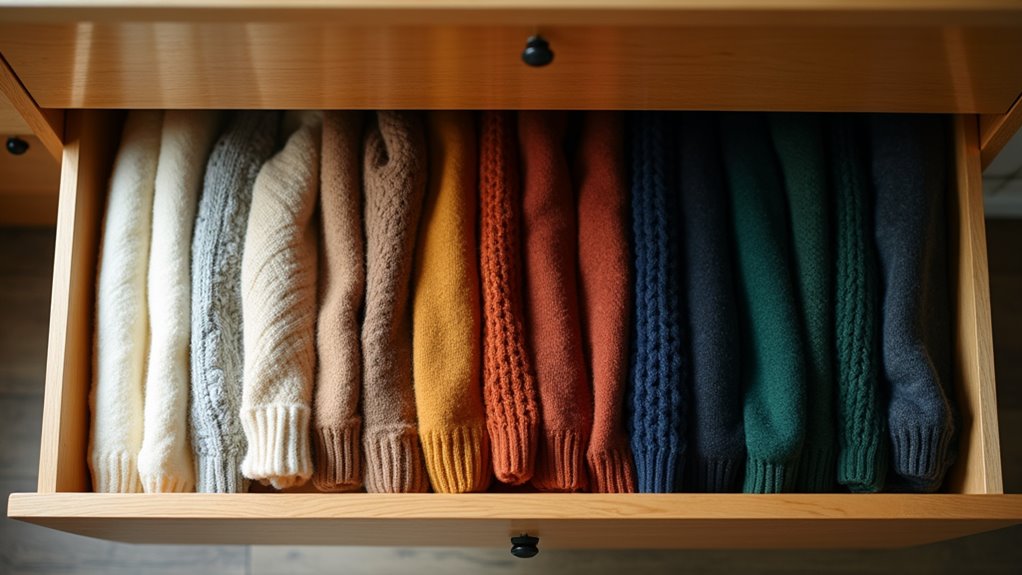
To organize sweaters in drawers for easy access, fold each one into a uniform rectangle and stand it upright like a file so you can see every option at a glance. Lay each piece flat, smooth wrinkles, fold the sleeves inward, and fold the bottom up to match your drawer’s depth. Button or zip cardigans first so they keep their shape.
Measure your drawer’s width and depth, then arrange rows with fold edges facing up. Add dividers to stop rows from leaning, and group sweaters by weight, color, or type. This way, you’ll pull one out without disturbing the rest of the row.
Which Sweaters Work Well in Drawers and Which Are Better on Shelves
Lightweight and midweight knits like merino, cotton, and fine-gauge cardigans work best in drawers, while bulky cable knits, chunky wool, and oversized pullovers are better on shelves. The lighter knits fold into slim, uniform rectangles that stand upright without slumping. Button or zip cardigans first so they hold their shape in the row. Measure your drawer depth, then fold these pieces to a consistent size for efficient sweater drawer organization.
Shelves let you stack bulkier sweaters flat without crushing drawer rows. Place the heaviest sweaters at the bottom of each stack and lighter ones on top. Keep stacks short so you can remove one sweater easily. Don’t hang either type; hangers stretch shoulders. Store delicate knits in drawers with tissue between them to reduce friction.
How Should You Group Drawer Stored Sweaters by Type or Wear Frequency
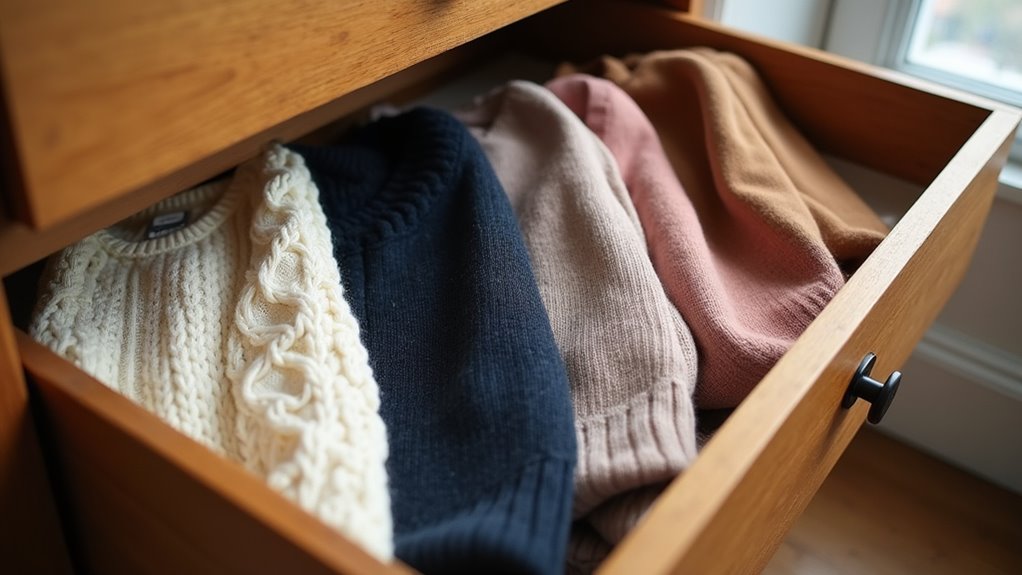
Group drawer-stored sweaters by type first, then arrange each group by how often you wear it. Sort pullovers, cardigans, turtlenecks, and lightweight knits into separate sections, and use dividers so upright rows don’t lean or blend together. Within each type, you can separate sweaters by weight, keeping chunky knits apart from thin layers.
Place the sweaters you wear most at the front of each section or in the easiest-to-reach drawer area. Push occasional pieces toward the back. If you wear certain colors often, group similar shades together so you can scan the row quickly.
Keep current-season sweaters in the drawer and move off-season ones to labeled bins. After each rotation, reassess placement, and return every sweater to its assigned row after wearing it.
How Do Flat Rows Side by Side Stacks and Drawer Bins Compare for Sweater Drawers
Upright rows show every sweater at a glance, side-by-side stacks suit shallow drawers, and drawer bins separate categories by weight or color. Measure your drawer’s width and depth first. Choose upright rows when your drawer’s deep enough to file sweaters with fold edges up. Use side-by-side stacks in shallow drawers, placing heavier sweaters beneath lighter ones. Pick smooth-edged bins when you want to separate categories by weight or color.
| Method | Best For | Drawback |
|---|---|---|
| Upright rows | Deep drawers, quick visibility | Needs dividers to stay upright |
| Side-by-side stacks | Shallow, wide drawers | Lower sweaters get disturbed |
| Drawer bins | Delicate or bulky knits | Takes more drawer space |
Whichever method you choose, don’t overcrowd rows, and return each sweater to its assigned spot after every use.
How Can You Keep Every Sweater Visible Without Compressing the Drawer
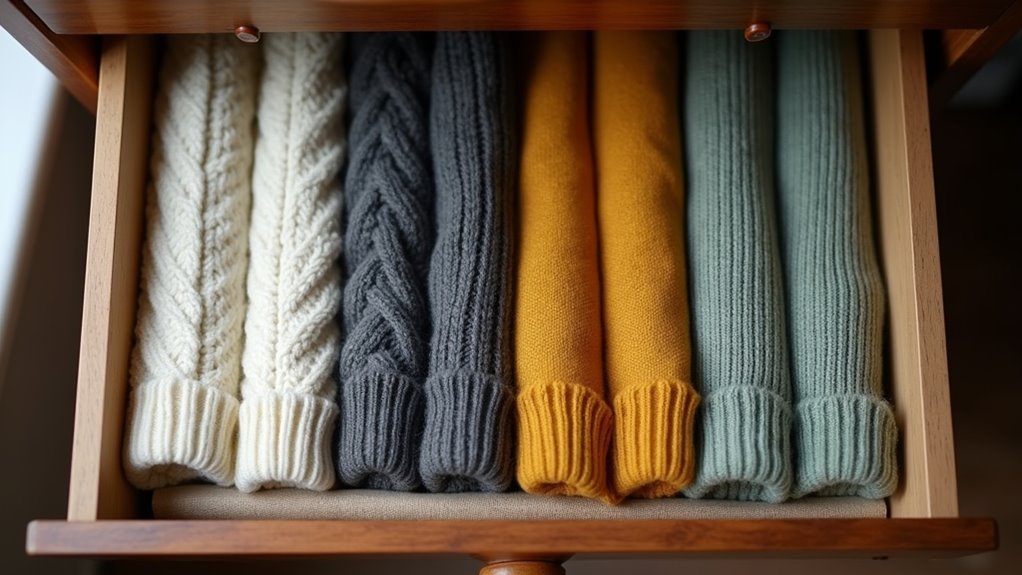
File your sweaters upright with fold edges facing up, and leave enough room that you can lift one out without shifting the others. This vertical layout shows every option at a glance, but it only works if you don’t overload the rows.
- Measure the drawer’s width and depth, then fold each sweater to a consistent size that fits standing upright.
- Add dividers so rows don’t lean or collapse as you remove pieces.
- Group sweaters by weight, color, or type, keeping each category in its own section.
- Keep current-season sweaters in the front, and move off-season knits to labeled bins elsewhere.
If a row feels tight, pull a sweater out rather than squeezing it back in. Return each sweater to its assigned row after use.
What Signs Show That a Sweater Drawer Is Too Full
A sweater drawer is too full if you can’t lift one sweater out without dragging its neighbors along. Watch for rows that lean or collapse even with dividers in place. If you have to force the drawer shut or press sweaters down to close it, you’re compressing the knits and creasing their folds. Check the fold edges, too. If you can’t read each sweater at a glance, or refolded garments no longer match your standard size, the system is breaking down. Snags, pilling, and new wrinkles also signal too much friction between pieces. When you spot these signs, move off-season sweaters to labeled bins, then reassess each row so everything you wear often stays easy to reach. Leave enough space to slide a hand between sweaters.
When Should Sweaters Move From Drawers to Another Storage Zone
Move sweaters out of your drawers at each seasonal change, or sooner once the drawer shows signs of overcrowding. Rows that lean, jam, or resist when you pull a sweater mean it’s time to relocate some items. Use this sequence to decide what goes and where:
- Sort by season. Pull off-season sweaters first to free everyday drawer space for current-season options.
- Check wear frequency. Move sweaters you haven’t worn recently to a secondary zone, keeping favorites in the most accessible sections.
- Prepare for storage. Make sure each sweater is dry, then fold it gently and add tissue between delicate knits.
- Label bins clearly. Group relocated sweaters by category or season in labeled bins, avoiding rough-edged containers that snag fabric.
Reassess your drawer layout after rotating and return each remaining sweater to its assigned row.
Make Sweater Storage Easier to Use
Sweater drawers work best when each knit has enough room to stay visible, folded, and easy to reach without crowding. Creative Closet Design creates custom closet systems for Central Florida homeowners with drawers, shelving, dividers, and storage zones designed around how their wardrobes are actually used. Serving Lakeland, Auburndale, Winter Haven, Plant City, Polk County, and Hillsborough County, our designers will look at your clothing, available space, and storage habits before drawing anything. Call Our Team to schedule your free design consultation.
Frequently Asked Questions
Should Sweaters Be Washed Before Storing Them in Drawers for the Season?
Yes, you should wash sweaters before storing them for the season, since lingering body oils, food residue, and perspiration can set stains and attract moths over the months. Follow each garment’s care label, then let it dry completely; storing damp knits invites mildew and odors. Once they’re fully dry, fold them gently, place tissue between delicate pieces, and file them upright in labeled bins or your dedicated off-season drawer section.
How Can You Prevent Moths From Damaging Sweaters Stored in Drawers?
You’ll prevent moth damage by storing only clean, completely dry sweaters, since moths target body oils, food residue, and moisture. Before folding, wash or dry-clean each piece. Line drawers with cedar blocks or lavender sachets, invigorating cedar by sanding it every few months. Don’t overcrowd rows; open space lets you spot problems faster. Check drawers monthly for larvae or small holes, vacuum drawer corners, and move off-season sweaters into sealed, labeled bins.
Do Cedar Blocks or Lavender Sachets Help Protect Sweaters in Drawers?
They help a little, but you shouldn’t rely on them alone. Cedar and lavender mainly repel adult moths; they won’t kill eggs or larvae already in your knits. You’ll need to refresh cedar by sanding it every few months and replace sachets once the scent fades. For real protection, clean sweaters before storing, keep them dry, avoid overcrowding rows, and check drawers every few weeks for holes or silky webbing.
How Do You Remove Drawer Odors That Transfer to Stored Sweaters?
Start by emptying the drawer and wiping it with mild soapy water or a diluted white vinegar solution, then let it air-dry completely with the drawer open. Place an open box of baking soda or activated charcoal inside for a few days to absorb lingering smells. Wash or air out affected sweaters, and make sure they’re fully dry before you fold and return them, since trapped moisture worsens musty odors.
Can Drawer Liners Help Protect Delicate Knitwear From Snags and Stains?
Yes, a smooth drawer liner can help, since it covers rough wood, splinters, or seams that might snag your knitwear. Choose a liner with a clean, even surface, and check that its edges lie flat. For extra protection, you’ll want to place tissue between delicate sweaters to reduce friction. Make sure each sweater’s completely dry before folding, and don’t overcrowd rows, so you can remove garments without pulling the fabric.