
Fold nearly every sweater you own. Wool and merino stretch on hangers, and fine cashmere loses shape under tension. Bulky knits suffer most, since their weight concentrates at the shoulders and leaves stubborn bumps. Store sweaters flat, stacking heavier pieces beneath lighter ones. If you can’t avoid hanging one, use a padded or felt hanger and fold it over the bar. There’s more to learn about which hangers and warning signs protect each knit’s shape.
Key Takeaways
- Fold nearly all sweaters instead of hanging them, since flat folding spreads weight evenly and keeps knit loops relaxed.
- Store cashmere and fine-gauge knits folded flat in a drawer or shelf, because hanger tension easily stretches delicate fibers.
- Fold wool, merino, and bulky sweaters after airing and drying, since their weight concentrates at the shoulders and causes stretching.
- If hanging is necessary, use a padded or felt hanger with a broad bar and fold the sweater over it.
- Switch to folded storage if you notice shoulder bumps, a sagging hem, lengthened body, or a loosened neckline.
Should You Hang or Fold Sweaters for Different Sweater Types
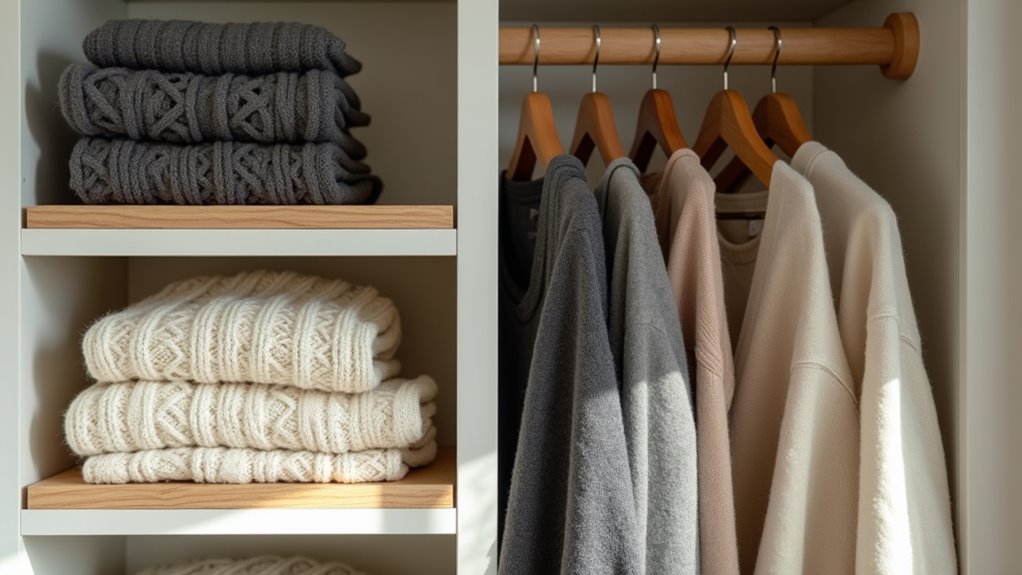
Fold nearly every type of sweater instead of hanging it, and let fiber and weight guide how you store each one. Cashmere and fine-gauge knits need a flat drawer or shelf; stack them loosely, with heavier pieces beneath lighter ones. Wool and merino stretch on hangers, so fold them flat once they’ve aired and dried completely. Bulky sweaters put their weight on the shoulders when hung, so fold the sleeves inward and store them on a shelf.
Lighter, sturdier knits should also be folded when you can. If you must hang one, drape it over a padded hanger instead of suspending it by the shoulders. Leave room between stacks for every sweater type.
Why Do Some Sweaters Stretch or Develop Shoulder Marks When Hung
Sweaters stretch or develop shoulder marks when hung because their entire weight pulls down from two narrow points at the shoulders. Knit fabric is built from interlocking loops, and gravity gradually elongates those loops, so the body and sleeves lengthen while the shoulders stretch out of shape. Hanger tips also press into the fibers, leaving bumps that don’t relax easily. Heavy, bulky knits suffer most because they carry more weight, while fine cashmere and merino strain under constant tension. Should I hang sweaters? Generally, no. Folding them flat supports weight across the body. Can you hang sweaters when space runs short? Yes, if you fold lighter knits over the hanger’s bar, use felt or padded hangers, and remove them from below, not through the neckline. Keep them dry.
Which Sweater Constructions Are Safer to Hang
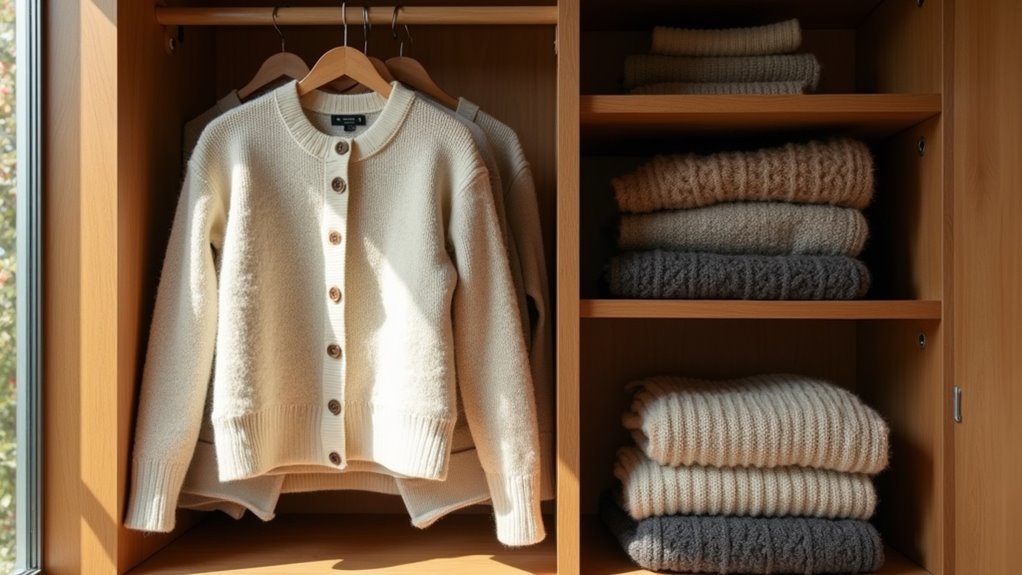
Lighter, sturdier knits are the safest sweaters to hang, because they carry less weight to pull down on the interlocking loops. Folding remains the lower-risk choice for any knitwear, so you’ll want to hang only when space demands it. Skip hanging for cashmere, fine-gauge, merino, and bulky wool, since their fibers stretch under their own weight.
To protect the shape of a lighter knit on a hanger:
- Fold the sweater over the hanger’s bar instead of suspending it from the shoulders, so weight spreads evenly across the body.
- Choose felt or padded hangers to reduce bumps where fabric meets the frame.
- Slide the hanger out from below rather than pulling it through the neckline, which can stretch the collar.
Always hang sweaters completely dry.
How Do Flat Folding Over Hanger Folding and Conventional Hanging Affect Sweater Shape
Flat folding preserves a sweater’s shape best, over-hanger folding limits stretch, and conventional hanging stretches and distorts the knit by concentrating weight at the shoulders.
| Method | Effect on Shape |
|---|---|
| Flat folding | Spreads weight across the body, so loops stay relaxed and proportions hold |
| Over-hanger folding | Distributes weight more evenly than a conventional hang, limiting stretch |
| Conventional hanging | Concentrates weight at the shoulders, stretching the knit and distorting its shape |
Fold most sweaters flat on a shelf or in a drawer, and you’ll protect cashmere and heavy knits. If you must hang one, fold it over a felt or padded hanger to reduce bumps. Keep stacks loose, since dense compression creases knitwear, and store only clean, fully dry pieces. Remove hung sweaters from below rather than pulling them through the neckline.
What Hanger Features Are Least Likely to Distort a Sweater
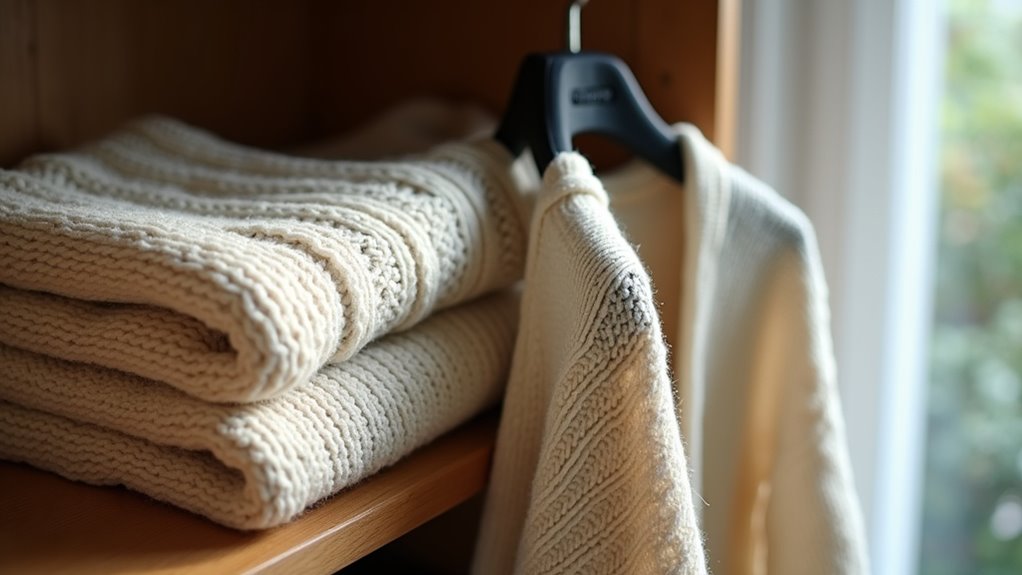
Felt or padded hangers are the least likely to distort a sweater, because their soft surface reduces the bumps that form where knit fibers press against a hard edge. The hanger’s material matters less than how you use it. If you must hang a sweater, look for these features:
- A soft, cushioned surface that won’t leave shoulder dimples in the knit.
- A broad, flat bar you can fold the sweater over, so weight spreads evenly instead of pulling from the shoulders.
- A shape you can slide out from below, so you don’t stretch the neckline removing it.
Folding stays the lower-risk choice for knitwear. Reserve hangers for lighter, sturdier sweaters, and make sure they’re always completely dry before hanging them.
How Should Delicate or Embellished Sweaters Be Stored to Avoid Snags
Store delicate knits like cashmere and fine-gauge sweaters folded flat in a drawer or on a shelf, where fragile fibers aren’t strained by a hanger. Air each worn sweater briefly and make sure it’s completely dry before folding. Stack folded pieces loosely, placing heavier sweaters beneath lighter ones so dense knits don’t crush fine fibers. Leave room around each stack, since compression creates creases and stresses delicate yarns. For seasonal storage, choose breathable cotton bags or boxes instead of sealed plastic.
If you must hang a sweater, fold it over a felt or padded hanger rather than suspending it from the shoulders. Slide the hanger out carefully from below instead of pulling it through the neckline.
What Signs Mean a Sweater Should Move From Hanging to Folded Storage
Shoulder bumps, a lengthening body or sagging hem, and a loosened or pulled neckline are signs a hung sweater should move to a drawer or shelf. Even a careful fold-over-hanger method can’t fully protect knitwear, so watch for these signs of strain:
- Shoulder bumps or stretching: The hanger’s concentrating weight where knit fibers can’t recover, distorting the garment’s shape.
- A lengthening body or sagging hem: Heavy or bulky knits pull downward over time, so fold them flat to support weight across the body.
- A loosened or pulled neckline: Removing the sweater carelessly stretches the collar; always slide the hanger out from below.
Fold a strained sweater flat with sleeves tucked inward across the body. Store it clean and completely dry first, and keep stacks loose so the fibers aren’t compressed or creased in storage.
Give Every Sweater the Right Storage Spot
Sweaters hold their shape better when they are folded, supported, and stored in spaces sized for the weight and type of each knit. Creative Closet Design creates custom closet systems for Central Florida homeowners with shelving, drawers, and storage zones designed around real wardrobes. Serving Lakeland, Auburndale, Winter Haven, Plant City, Polk County, and Hillsborough County, our designers will look at your sweater collection, available space, and storage habits before drawing anything. Call Our Team to schedule your free design consultation.
Frequently Asked Questions
What Is the Best Way to Store Sweaters Between Seasons?
Clean each sweater first, let it dry completely, then fold it flat with the sleeves tucked inward. Keep heavier knits at the bottom and lighter sweaters on top. Store them in a cool, dry area with enough room to avoid compression. Label seasonal storage clearly so you can rotate sweaters back into your main closet without disturbing the rest of your wardrobe.
Can Cedar Blocks or Lavender Sachets Protect Folded Sweaters From Moths?
Cedar blocks and lavender sachets may deter adult moths, but they won’t reliably kill eggs or larvae, and my storage guidance doesn’t cover them directly. What you can control: store only clean, completely dry wool and cashmere, since residue and dampness invite damage. Fold each sweater, stack it loosely, and use breathable cotton bags or boxes instead of sealed plastic. Treat scents as a supplement, not as your primary defense.
How Do You Remove Hanger Bumps From a Sweater’s Shoulders?
You can usually relax hanger bumps by lightly steaming the shoulders or dampening them, then gently reshaping the knit with your hands and letting the sweater dry completely flat. Never hang it while it’s damp. To prevent new bumps, fold wool, cashmere, and bulky knits flat on a shelf. If you must hang lighter knits, fold them over a felt or padded hanger instead of suspending them from the shoulders.
Should Sweaters Be Washed Before Being Stored for the Season?
Yes, you should store sweaters clean, since stored soil raises the risk of odor or fiber damage. After washing, let each piece dry completely; damp wool, merino, or cashmere shouldn’t go into storage. Fold every sweater flat rather than hanging it, placing heavier knits beneath lighter ones. Then pack them in breathable cotton bags or boxes, not sealed plastic, and leave room so you don’t tightly compress or crease them.
Is Vacuum-Sealing Bulky Sweaters Safe for Long-Term Storage?
No, you shouldn’t vacuum-seal bulky sweaters for long-term storage. Sealed plastic traps the fibers without airflow, and heavy compression crushes knit loft and sets creases. Instead, make sure each sweater’s clean and completely dry, then fold it with the sleeves tucked inward across the body. Place it in a breathable cotton bag or box, and leave enough room so you don’t tightly compress the stack, letting the wool fibers breathe.