Start by emptying your wardrobe and splitting garments into keep, donate, and out-of-season piles. Group what stays by type, then sort each category by color or how often you wear it. Put everyday shirts and trousers at eye level and arm’s reach. Fold knitwear onto shelves, file small items upright in drawers, and space hangers so they slide easily. Below, you’ll see how rails, shelves, and internal fittings can match your daily routine.
Key Takeaways
- Empty the wardrobe, sort garments into keep, donate, and out-of-season groups, then group kept items by type and color.
- Place frequently worn shirts and trousers at eye level and arm’s reach, keeping daily shoes on low racks nearby.
- Hang shirts, dresses, and coats on uniform hangers with space between them, and fold sweaters, knitwear, and denim onto shelves.
- File-fold small items upright in drawers, using dividers so socks, underwear, and accessories stay visible in top drawers.
- Store seasonal bins and occasion wear on upper shelves, swapping them into prime zones when the weather changes.
How do you arrange clothes in a wardrobe for easier access
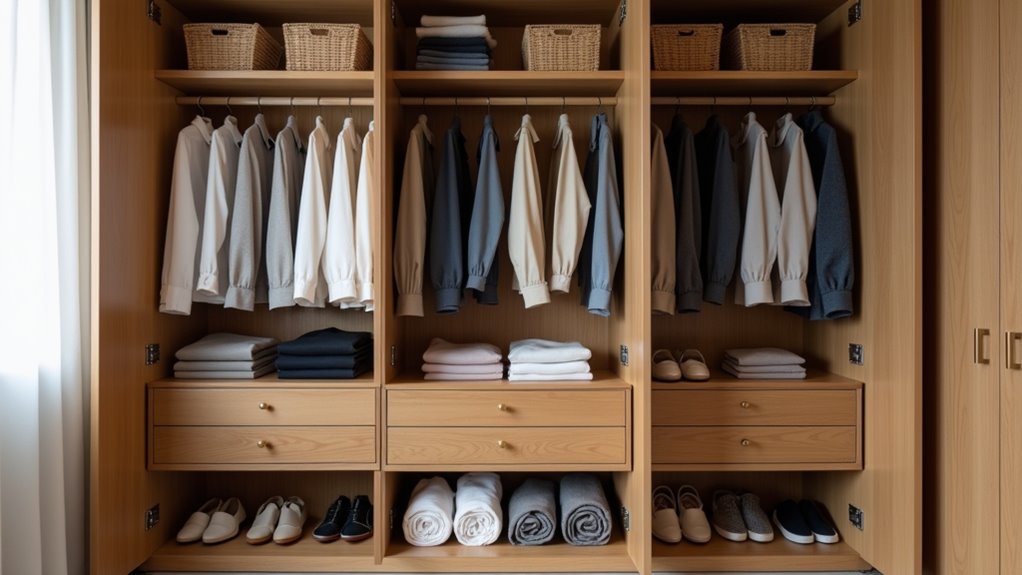
You arrange clothes in a wardrobe for easier access by sorting them first, then placing them according to how often you wear them and how each garment is best stored. Empty the wardrobe completely and divide garments into keep, donate, and out-of-season groups. Group what you keep by type, then sort each category by color or wear frequency. Reserve eye-level and arm’s-reach space for everyday pieces, and push occasional items higher or lower. Hang crease-prone shirts, dresses, and blazers, and fold knitwear and denim. Return every garment to its assigned spot after use to keep the wardrobe organized for the long term. Sorting clothes by type can enhance the overall organization and make it easier to find specific items when needed. By maintaining this system, your wardrobe will stay tidy and functional for a longer period.
How do rail, shelf, and drawer layouts compare
Rails, shelves, and drawers differ in visibility, fabric care, and retrieval speed. Rails keep crease-prone garments fully visible, shelves support stacked items without stretching them, and drawers keep small items visible through upright filing.
| Layout | Best For | Access Advantage |
|---|---|---|
| Rail | Shirts, dresses, blazers, coats | Full-length visibility; no creasing |
| Shelf | Sweaters, denim, folded knitwear | Stacks stay supported; shoulders don’t stretch |
| Drawer | Socks, underwear, small accessories | Upright filing keeps items visible |
To organize wardrobe space, give rails to crease-prone pieces and keep them uncrowded so you can scan garments quickly. Use shelves for items that stack well, placing daily pieces at eye level. Assign each drawer one category. If you’re learning how to organise cupboard storage with limited hanging room, add a second rail for shorter items and move denim from hangers onto shelves. Men’s closet storage can also benefit from the use of bins or baskets for smaller items like accessories and socks. Consider labeling each bin to ensure everything has its place, making it easier to maintain order.
What belongs at eye level versus up high
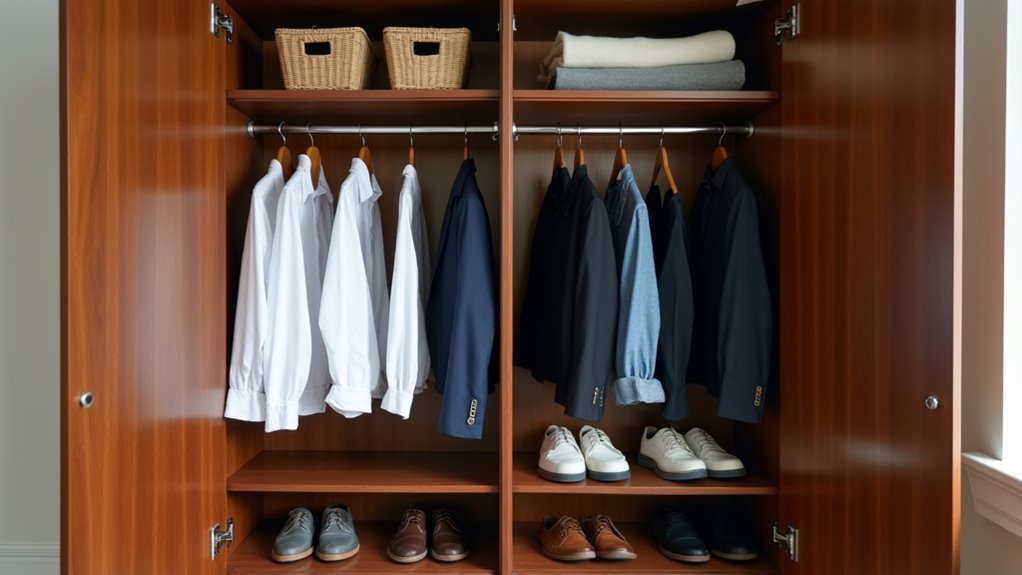
Eye level and arm’s reach belong to the clothes you wear most often, such as everyday shirts, trousers, and folded staples like knitwear and denim. This space is the easiest to see and reach. Push everything else outward from this prime zone based on how rarely you use it, with the least-used items going up high.
- Eye level and arm’s reach: Hang regular shirts, blazers, and dress pants here, and keep daily folded items on nearby shelves.
- Top drawers: Store underwear, socks, and everyday accessories in organizers you can open without bending.
- Low shelves: Place daily shoes on a rack close to your main clothing zone.
- Upper shelves: Reserve these for labeled seasonal bins, formalwear accessories, and less-used folded pieces.
When the weather changes, swap seasonal bins into the prime zone so it always holds current clothes.
What is the easiest way to reach everyday pieces
The easiest way to reach everyday pieces is to keep them at eye level and arrange them so you can pull out what you want without moving everything around it.
Start with your drawers. File-fold T-shirts, leggings, and casual tops upright so you can see every item at once and lift one out without toppling a stack. Give each drawer a single category, and use small boxes or dividers for socks and underwear in the top drawers.
On the rail, leave enough space between hangers to slide garments apart easily. Uniform hangers move more smoothly side to side and keep shoulders level, so you can scan colors quickly. Keep daily shoes on a low rack beneath your everyday clothes, and hang belts and scarves on door hooks you can grab in one motion.
How do you free up rail space in a tight wardrobe

The quickest way to free up rail space is to take off everything that doesn’t need to hang. Hanging space should go to garments that wrinkle easily or need structure, so move anything that folds well to shelves or drawers. Use these steps to clear the rail:
Reserve hanging space for garments that wrinkle easily or need structure, and move anything that folds well to shelves or drawers.
- Fold sweaters and knitwear, which protects them from stretched shoulders.
- Stack denim and other sturdy items on shelves instead of hanging them.
- Pack off-season pieces into labeled bins and store them outside the main wardrobe.
- Switch to slim, uniform hangers so garments slide easily and take up less width.
If you have vertical room, add a second rail for shorter items like shirts. Keep the rail loose enough to see and remove each piece without pulling others off.
How do internal fittings make a wardrobe easier to use
Internal fittings make a wardrobe easier to use by giving every item a fixed, logical place, so you can find and return clothes without searching. Add a second rail for shorter items when vertical space allows, and keep a full-height section for long dresses. Fit drawers for frequently worn folded clothes, and assign each drawer one clear category. Inside them, use boxes or dividers to store socks, underwear, and small garments upright so you can see everything at a glance. Mount hooks or organizers on the wardrobe door for belts, ties, and scarves. Install a low shoe rack near your daily clothing zone, and use upper shelves for labeled seasonal bins and less-used accessories. Choose broadly uniform hangers so garments slide easily along the rail. Incorporating boutique closet design elements can enhance both functionality and aesthetics. This approach allows for personalized touches that reflect your style while optimizing storage space.
How do you lay out a wardrobe around your routine
Lay out a wardrobe around your routine by noting which clothes you reach for most often, then building the layout outward from them. Assign each zone by how often you use it:
- Put everyday clothes at eye level and arm’s reach, grouped by type and color.
- Keep daily shoes on a low rack beside that zone.
- Store socks, underwear, and everyday accessories in top drawers or organizers.
- Move occasion wear, formalwear, and off-season pieces to high shelves, low corners, or labeled bins.
If your workwear and casual clothes serve different routines, give each its own section so you can dress quickly on busy mornings. When seasons change, swap seasonal items into prime space, and return everything to its assigned spot after use.
Make Your Wardrobe Easier to Organize Every Day
If your wardrobe feels crowded despite regular organizing, Creative Closet Design creates custom closet systems with double-hanging rods, adjustable shelves, drawers, and dedicated shoe storage. Serving Lakeland, Auburndale, Winter Haven, Plant City, Polk County, and Hillsborough County, our designers assess your clothing collection, available space, and daily routine before planning a practical layout. Call Our Team to schedule your free design consultation.
Frequently Asked Questions
How Often Should You Reorganize Your Wardrobe to Keep It Accessible?
Reorganize your wardrobe whenever the seasons change, swapping off-season clothes into labeled bins like “Winter, Sweaters” and moving weather-appropriate pieces into eye-level, arm’s-reach space. Between swaps, you’ll return every garment to its assigned hanger, drawer, shelf, or bin right after use. During each seasonal reset, you’ll sort items into keep, donate, or sell, check that rails aren’t overloaded, and confirm daily essentials still occupy prime spots, so they’re always quick to grab.
Should You Use Velvet, Wooden, or Plastic Hangers for Different Garments?
You can mix types, but keep them broadly uniform so garments slide easily along the rail. Use wooden hangers for coats, blazers, and suits, since they support structured shoulders. Choose slim velvet hangers for silky blouses and dresses that tend to slip. Plastic hangers work for everyday shirts and casual tops. Don’t hang sweaters or knitwear at all. Fold them to avoid stretched shoulders and free up rail space.
How Do You Share One Wardrobe Between Two People Fairly?
Divide the wardrobe by usage, not just in half. First, you’ll both declutter, then compare how many hanging and folded items each of you owns. Assign rail and drawer space proportionally, giving each person their own eye-level zone for daily clothes. Split shoe shelves and door hooks the same way. Store off-season and occasion pieces in shared, labeled bins up high, and return everything to its assigned spot after use.
How Do You Prevent Moths and Mildew in Stored Seasonal Clothes?
Wash or dry-clean everything before storing, since moths target body oils, sweat, and food stains. Let garments dry completely to prevent mildew. Pack them in sealed, labeled bins, like “Winter Sweaters,” and add cedar blocks or lavender sachets. Store bins in a cool, dry, ventilated spot, not a damp basement or hot attic. Use silica gel packets to absorb moisture. Check bins every few months, and you’ll catch any problems early.
How Do You Organize a Children’s Wardrobe so Kids Can Reach Clothes?
Lower the rail or add a second, shorter rail so your child can grab everyday shirts, dresses, and trousers at arm’s reach. Keep daily shoes on a low rack and socks and underwear in bottom drawers or open baskets. Assign each drawer one category and file-fold clothes upright so they’re visible. Store out-of-season and special-occasion items on upper shelves that you’ll manage, and swap seasonal clothes when the weather changes.